
Review · AROUND THE WORLD
Microfinance family farm tour – all proceeds to charity
The most moving part of this Arusha experience is not a staged cultural show. It is a visit with Mama Max, a woman who built her way out of severe poverty through business training and microfinance. Her farm shows you what those words can mean in daily life: banana trees, coffee plants, chickens, goats, and a cow, each business helping the next one take shape.
I like the clear link between your visit and family stability. The Small Things works to help families keep children at home, rather than relying on orphanages when poverty becomes overwhelming. I also like the simple farm activities: cutting vegetation for animals, checking chicken nests, and milking a cow make the visit more personal than a talk alone.
The main consideration is the uneven, sometimes hilly ground and the modest setting. This is a private community visit, not a polished attraction, and you should not expect direct contact with children at Happy Family Children’s Village. Guides Reuben and Andrew can add useful context, but the focus remains on listening, asking questions, and meeting Mama Max respectfully.
Key points to know before you book
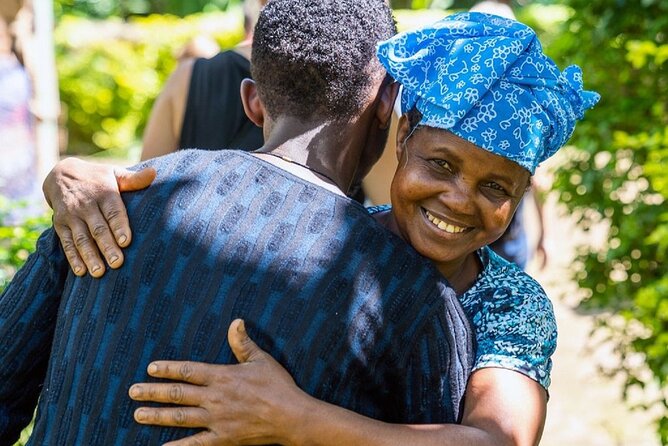
- Meet Mama Max and see her working farm: Her businesses include bananas, coffee, chickens, goats, and cattle.
- Learn how microfinance supports families: The discussion connects small businesses with the goal of keeping children at home.
- Share Tanzanian chai and local coffee: Tea and a snack are included, with lunch available for an extra $5.
- Choose to walk or drive to the farm: The route from The Small Things site can be adapted to your preference.
- Enjoy a private, small-group visit: Only your own group participates, making it easier to ask questions.
- Take in the view toward Lake Duluti: The visitor’s hut at the starting point offers a broad view toward the lake.
Why this farm visit feels different from a safari day
Arusha is often treated as a staging point for wildlife trips. You arrive, rest, and move on to the national parks. This tour gives you a reason to stay close to town and see another side of Tanzania, one based on work, family, and local enterprise rather than animals.
The visit is built around a real person and a real home. Mama Max is not there simply to demonstrate a traditional chore. She is presented as a businesswoman and mentor who once held a very different position in her community. Her progress is the point of the visit, and the farm gives you a clear way to see it.
I find that useful because poverty programs can sound abstract. Terms such as microfinance and business development are easy to nod at without understanding how they affect a household. Here, you can connect those ideas to the practical work of tending animals, growing crops, selling produce, and building one income stream after another.
The Small Things also provides the wider setting. At the start, you receive an overview of work with children, families, and communities at Happy Family Children’s Village. Child protection rules mean you should not expect to meet or interact directly with children. That boundary is important, and it keeps the focus on responsible support rather than turning children into part of a sightseeing experience.
More farm tours around the world:
- Half-Day Thai Cooking Class at Organic Farm in Chiang Mai
★ 5.0 · 19,087 reviews - Florence Pizza or Pasta Class with Gelato Making at a Tuscan Farm
★ 5.0 · 6,801 reviews - From Porto: 2 Wine Regions, Farm-to-Table Lunch & Boat
★ 4.9 · 5,724 reviews
Starting at The Small Things near Lake Duluti
The tour begins at Happy Family Children’s Village on an unnamed road in Nkoaranga. The first stop lasts about 30 minutes, so you get a short introduction rather than a long institutional tour.
At The Small Things site, you learn how the organization works to support children, families, and communities. The central idea is that helping a child means looking at the household around that child too. Business training and microfinance can give parents a better chance to provide care at home, which is a more lasting answer than simply moving children elsewhere.
You also get time at the visitor’s hut, where you can see toward Lake Duluti. That view gives the opening conversation a pleasant setting and helps you get your bearings in the Arusha area. It is worth taking a moment here before the farm visit begins.
Guides Reuben and Andrew have been specifically involved in explaining the work of the nonprofit and related social enterprises. If one of them leads your visit, use the introduction as a chance to ask direct questions. You can ask how the business program works, what kinds of enterprises families build, and how supporting adults can help children remain at home.
The short length of this first stop is a strength for most people. You learn the essential context without spending half the outing in a presentation. If you want a long institutional tour or direct work with children, though, this is not the right format.
Walking or driving to Mama Max’s home
After the introduction, you go to Mama Max’s house in Nkoaranga. You can walk or drive, depending on your preference. That choice matters because the route includes uneven or hilly ground, and not everyone will want to walk it after a morning of sightseeing or before a demanding safari schedule.
If you walk, the route gives the guide time to explain how the business development program works. You hear how families can use training and small loans to begin or expand income-producing work. The walk also makes the transition from the organization’s visitor site to a family home feel natural.
If you prefer to drive, you still receive the same explanation and farm visit. The tour is open to most participants, but you need to be comfortable with some uneven ground at the activity itself. Service animals are allowed.
This is a private activity, so only your own group takes part. That is a practical advantage. You can ask a basic question without worrying about holding up a busload of people, and you can spend more time on the parts that interest you. It also calls for good manners. You are entering a working home, not a display built for visitors.
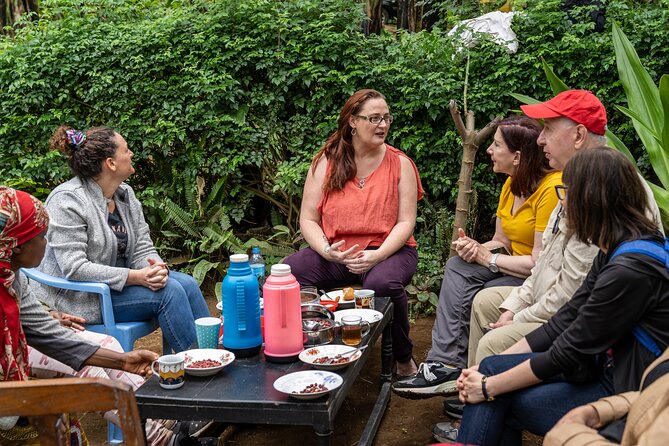
Meeting Mama Max over chai and coffee
Mama Max welcomes you at her house with traditional chai tea and locally grown coffee. Tea and a snack are included, making this a pleasant pause before you look around the farm.
The food and drink are simple, but they help set the right tone. You sit, talk, and meet the person behind the program before focusing on the animals or crops. Mama Max is happy to answer questions and show how far she has come through hard work.
You can ask about her businesses and the steps that helped them grow. Her story moves from banana trees to coffee, then to chickens, goats, and cows. That sequence is useful because it shows that escaping poverty does not always happen through one large breakthrough. It can come from adding manageable sources of income over time.
You should treat the conversation as an exchange, not an interview conducted at speed. Ask questions that help you understand the work, such as how one enterprise supported the next or what she learned from business training. The supplied details do not promise a fixed question-and-answer session, so the pace may depend on your group and on the day’s farm work.
The setting also keeps the encounter grounded. You are not being shown a model farm built only for tourism. You are seeing a home and the enterprises Mama Max uses to support her family. That makes the visit more revealing, but it also means conditions may be basic and activity levels may vary.
Same countryside, another kind of harvest:
- Cooking Class and Lunch at a Tuscan Farmhouse with Local Market Tour from Florence
★ 5.0 · 4,831 reviews - Chiang Mai: Authentic Cooking Class with Market & Farm Visit
★ 4.9 · 4,546 reviews - Tromsø: Reindeer Camp and Sami Cultural Tour with Lunch
★ 4.7 · 3,326 reviews - Maui Pineapple Farm Tour in Haliimaile
★ 5.0 · 2,855 reviews
Seeing the farm businesses one by one
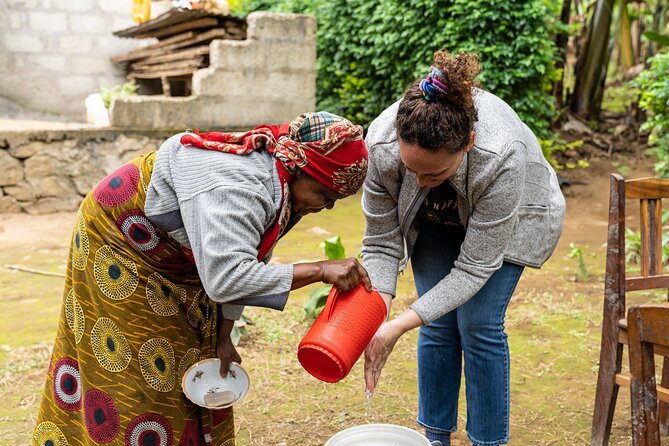
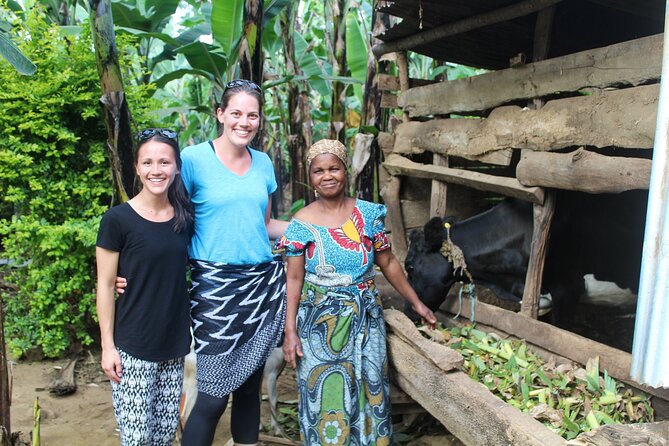
The farm is the heart of the experience. Mama Max can show you her banana trees, coffee, chickens, goats, and cow. Each part gives you a different picture of how a small household business can grow.
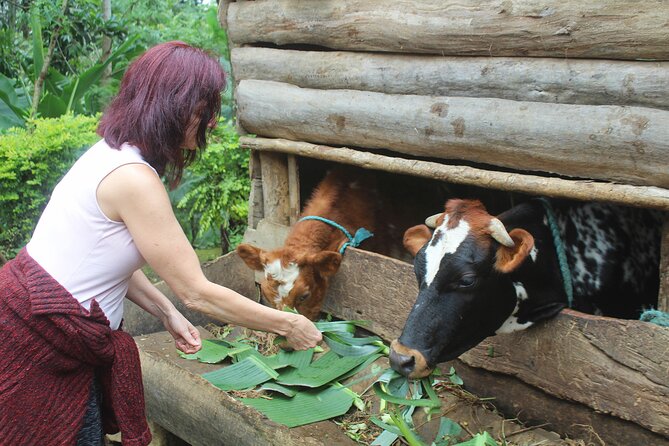
Bananas and coffee connect the visit to local agriculture. Chickens, goats, and cattle add other possible sources of food or income. The important point is not that every family follows the same path. It is that training and access to finance can help a person make practical choices, test an idea, and build from an existing success.
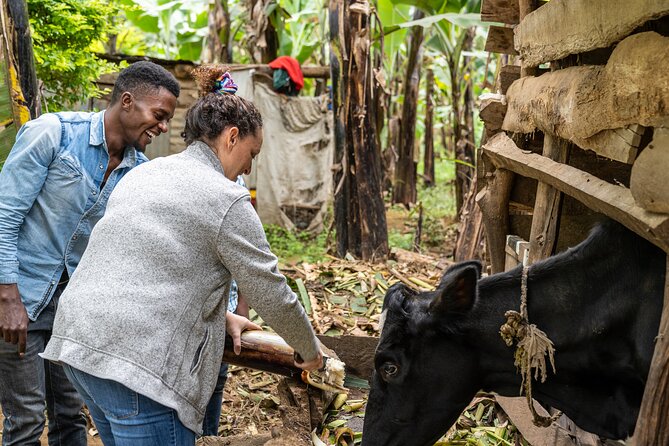
You may be invited to help cut vegetation for the animals. This is a small task, but it gives you a better sense of the daily labor involved in keeping livestock. You can also check chicken nests for eggs and milk the cow if you like.
These activities are optional. You do not need to perform for the group, and you can simply watch and ask questions. If you do take part, follow Mama Max’s instructions and keep the focus on her work rather than treating the farm as a photo set.
The tour’s strongest lesson is the connection between enterprise and family life. The stated goal is to help families keep children at home. The farm visit lets you see that goal in human terms: a mother gaining more control over her income, supporting her household, and later mentoring young women who once occupied the position she had before.
What the charity connection means for the price
The tour costs $35 per person, and all proceeds go to charity. For a private two to three hour experience in the Arusha area, that is a fair price, especially when you consider that your payment supports the work of The Small Things as well as the visit itself.
Value here should not be measured by the number of sights you tick off. You are paying for time with a local family, an explanation of a community program, transport flexibility between the two stops, tea and coffee, and a direct connection to a charity-supported project.
Lunch is not included, but it can be provided for an extra $5. Since the full activity lasts only about two to three hours, you may not need it. If the visit fits between other plans and you want to stay for a meal, the small extra cost makes that option easy.
Group discounts are offered, though no discount amount is specified. Since the activity is private, ask about the rate for your group when booking. A larger family or friend group may find the per-person cost easier to justify, while a solo participant should decide how much value they place on the personal conversation and charitable purpose.
Practical planning for a comfortable visit
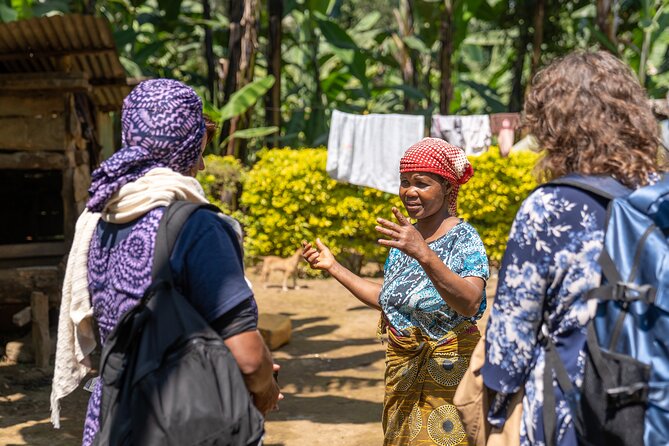
Pickup is offered, but the stated meeting point is Happy Family Children’s Village in Nkoaranga. Confirm the pickup details when you book so you know where the day begins and how the return works. The activity ends back at the meeting point.
Wear shoes you can use on uneven or hilly ground. The supplied information does not specify a dress code or weather plan, so keep your clothing practical and suitable for a farm visit. You may also want to protect your phone or camera from dust and keep your hands free for the short farm tasks.
A mobile ticket is accepted, and confirmation arrives at booking. Most people can participate, but the walk and farm setting may not suit anyone who needs smooth paths or a fully accessible route. You can choose to drive to Mama Max’s home, which helps, but the ground at the farm may still be uneven.
The experience has free cancellation up to 24 hours before the start time. Changes or cancellations made less than 24 hours before the start time are not accepted for a refund, and the cutoff follows local time.
Who will get the most from this Arusha experience
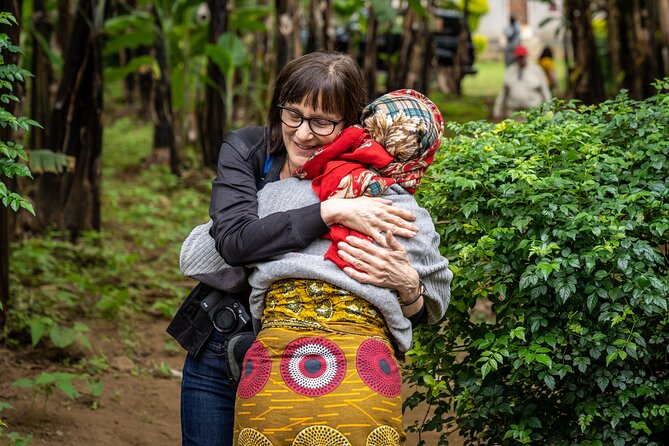
I would choose this tour if you want cultural context beyond a safari and prefer meeting people through their work. It suits families, couples, and private groups who want a calm, personal activity rather than a large organized excursion.
It is also a good fit if you care about how charitable programs operate. The visit gives you more than a donation button or a short speech. You can learn why The Small Things moved away from relying only on orphanages and toward solutions that support families and communities.
Parents may appreciate the careful child protection boundary. You can learn about the organization’s work without expecting access to children. That is both more respectful and more useful than a visit designed around viewing vulnerable children.
You may want to skip it if you have no interest in development work, household farming, or a quiet conversation. The experience does not promise a large market, a long list of attractions, or a dramatic performance. Its appeal comes from the person you meet and the practical story behind her farm.
Should you book the Mama Max farm tour?
Book it if you want to spend a few hours understanding how microfinance and business training can affect one family in Nkoaranga. The $35 price is reasonable for a private visit, included tea and snack, guide support, and charity funding. The chance to walk or drive, ask questions, and try simple farm tasks adds useful flexibility.
Go with realistic expectations. You may walk on rough ground, the setting is a working home, and the visit does not include direct contact with children. If those points suit you, this is one of the more thoughtful ways to add a human story to an Arusha itinerary. You leave with a clearer sense of how a banana tree, a chicken coop, or a cow can become part of a family’s plan for a more secure future.
FAQ
Where does the tour begin?
The tour begins at Happy Family Children’s Village on an unnamed road in Nkoaranga, Tanzania.
How long does the experience last?
The full experience takes approximately two to three hours. The introduction at The Small Things site lasts about 30 minutes, followed by around two hours at Mama Max’s home.
Can I be picked up?
Pickup is offered. The stated meeting point is Happy Family Children’s Village, so confirm your pickup details when booking.
Will I meet children at Happy Family Children’s Village?
You should not expect direct contact with children. Child protection rules apply during the introduction to the organization’s work.
What food and drink are included?
Tea and a snack are provided on all tours. Traditional chai tea and locally grown coffee are served at Mama Max’s home.
Can I have lunch during the tour?
Lunch can be provided for an additional $5 USD.
Can I walk to Mama Max’s home?
Yes. You can choose to walk or drive to her home. You need to be able to manage uneven or hilly ground, and service animals are allowed.
Is the activity private?
Yes. Only your group participates in this private activity.
Can I cancel for a full refund?
Yes, if you cancel at least 24 hours before the experience begins. Cancellations or changes made less than 24 hours before the start time are not accepted for a refund.
Newly listed farm visits around the world
- Half-Day Farm Visit and Cow Milking Experience★ 5.0 · 16 reviews
- Cozy Farm Experience with Wagon Wheels and Acoustic Meal★ 5.0 · 2 reviews
- Boutique tour , Mt Maunganui, NZ farm, Rotorua lakes/geothermal★ 4.5 · 50 reviews
- Gourmet Mushroom Farm Tour in Tennessee★ 5.0 · 5 reviews
- Animal farm park with free hotel pickup★ 5.0 · 2 reviews
- Alpaca Farm Tours with Toffeemont★ 5.0 · 8 reviews
- Private, via beaches, Kiwi farm to Rotorua 8 lakes & Geothermal★ 5.0 · 20 reviews
- 1D Tour to Cingjing Farm from Taichung★ 4.5 · 3 reviews