
Review · ITALY
Cagliari Olive Oil Farm & Tasting (Since 1600, 20 Min Away)
The unusual part of this Cagliari-area outing is that it joins a working olive oil mill with a 400-year family museum. You move from modern production equipment to a 17th-century stone mill, then down into an old underground cistern filled with oil lamps and storage vessels. It feels more personal than a standard tasting room.
I like the easy location, only about 20 minutes from Cagliari by car, and I like the tasting lesson led by Francesco Locci, which explains how to spot a good extra virgin olive oil. The possible drawback is timing: the booking information calls the activity one hour in one place and a 90-minute masterclass in another, so confirm the exact schedule before you go.
Key points to know before you book
- A rare museum collection: Sa Mola de Su Notariu houses Sardinia’s only olive oil museum, including a 17th-century stone mill and old oil-making tools.
- Three very different products: Taste classic EVO, lemon-infused Limolio, and the spicy nine-herb Rogo del Tempio.
- A real working estate: The family produces oil from about 6,000 organic olive trees across 20 hectares.
- Food makes the lesson practical: Salsiccia sarda, carasau bread, olives, cheese or other local bites, and sparkling wine help show how each oil works at the table.
- Simple access from Cagliari: You can park at the museum in Dolianova, or take bus 108 from central Cagliari in about 54 minutes.
- Allow extra time for shopping: You receive a 20 percent discount on oil bought directly at the mill compared with the online price.
Why this mill is worth the short trip from Cagliari
Cagliari has plenty of restaurants where olive oil arrives in a small dish, but a tasting here gives you the missing part of the story. You learn what happens before the bottle reaches your table, how oil was made in earlier centuries, and how to taste the difference between ordinary oil and certified extra virgin oil.
The setting in Dolianova also makes sense for a short food outing. You are not committing to a full day in the countryside, yet you leave the city and see an active family business. The transfer from Cagliari is listed as about 20 minutes by car, while the bus takes longer at around 54 minutes. If you drive, the museum has a free parking lot in the town center.
Francesco Locci is the named experience provider and guide. The tone of the visit is friendly and family-run rather than formal. Several of the strongest comments about the experience focus on his warmth, humor, clear explanations, and enthusiasm for olive oil. That matters here because the subject can sound technical. A good guide turns acidity, bitterness, harvest methods, and storage into useful information for your own kitchen.
More farm tours around Italy:
- Florence Pizza or Pasta Class with Gelato Making at a Tuscan Farm
★ 5.0 · 6,801 reviews - Cooking Class and Lunch at a Tuscan Farmhouse with Local Market Tour from Florence
★ 5.0 · 4,831 reviews - Sorrento Farm and Food Experience including Olive Oil, Limoncello, Wine tasting
★ 5.0 · 2,524 reviews
Start with the modern mill and the path from tree to bottle
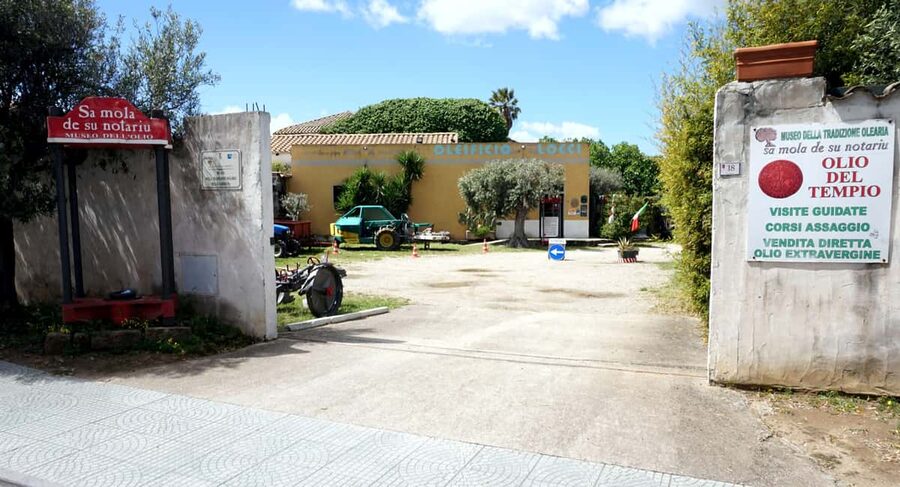
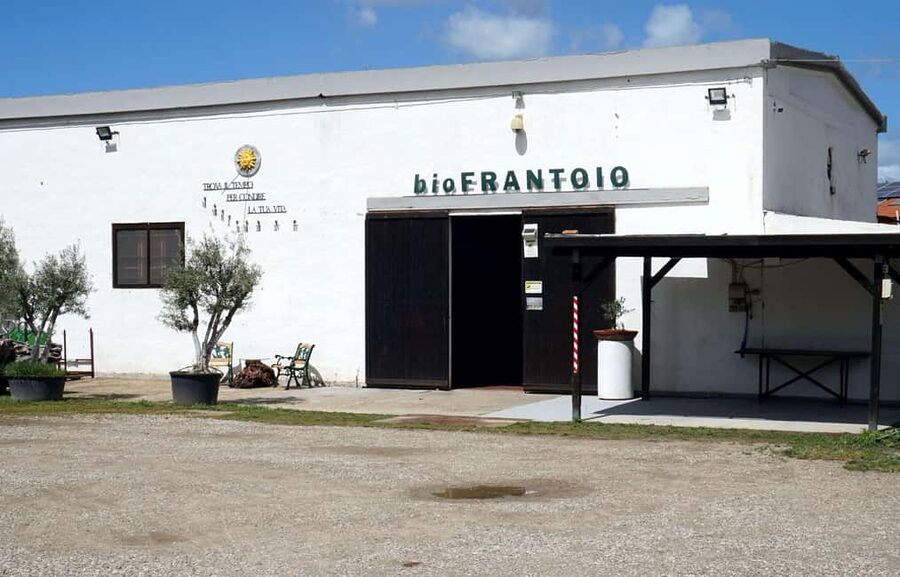
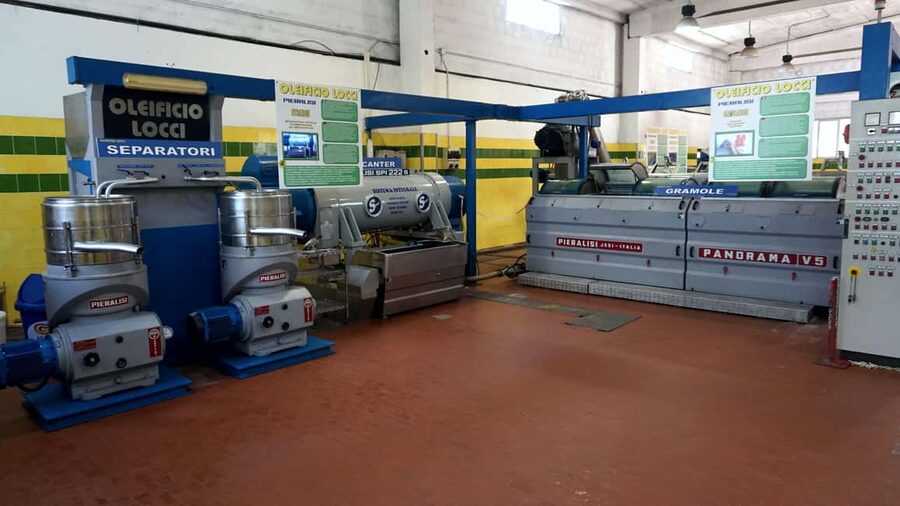
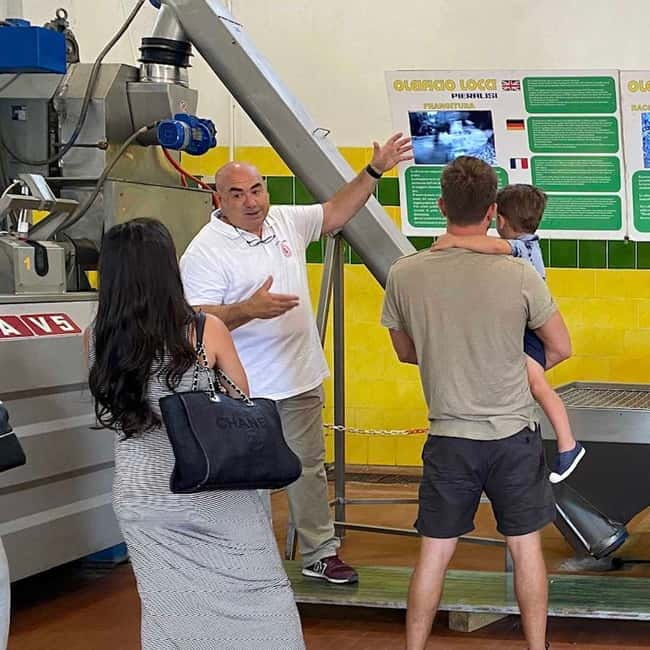
The visit begins at Olio del Tempio, the family production and sales site. A short guided tour introduces the current mill and shows how the oil moves from harvest to bottling. Video presentations are also used to explain the full process.
The estate has about 6,000 organic olive trees on 20 hectares, and the oil is certified extra virgin. You are not simply tasting a brand with a decorative farm story attached. The family makes its products from its own substantial olive-growing operation, then sells them at the mill.
The modern equipment gives useful context for the older objects that follow. You can see that olive oil production is not frozen in the past. The family uses current methods while preserving the tools and spaces that explain how Sardinian households produced and stored oil before modern machinery.
The listed tour portion is about 10 minutes, though the full presentation is longer when the teaching and food tasting are included. This is not a huge industrial tour. It is a compact introduction, which suits you if you have only a few hours near Cagliari.
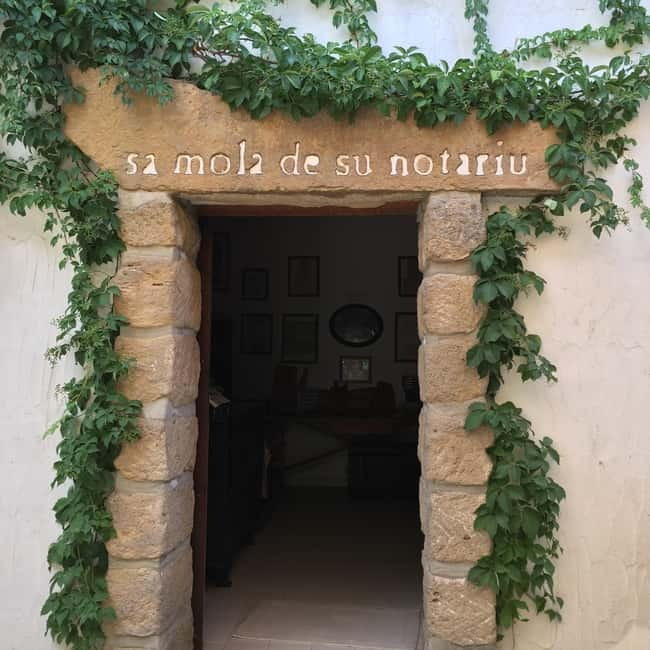
Sa Mola de Su Notariu, a small museum with a strong local story
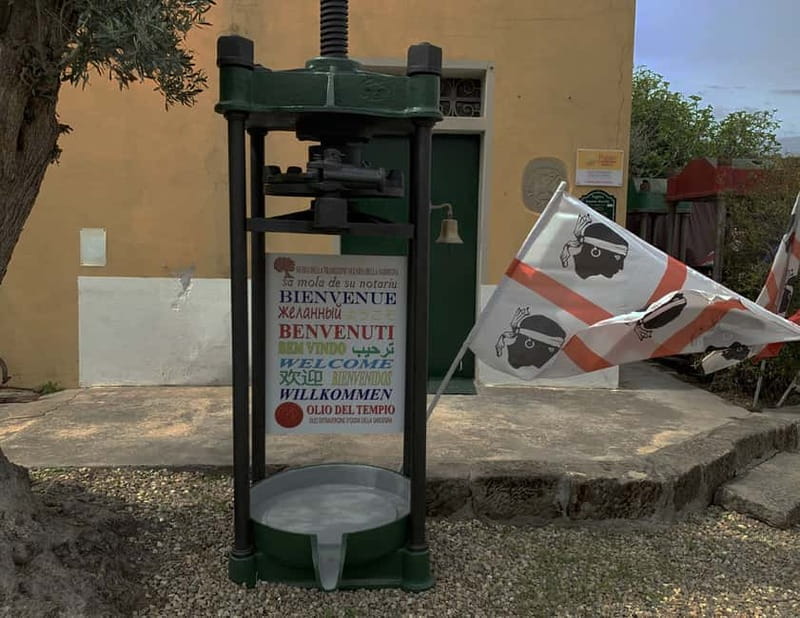
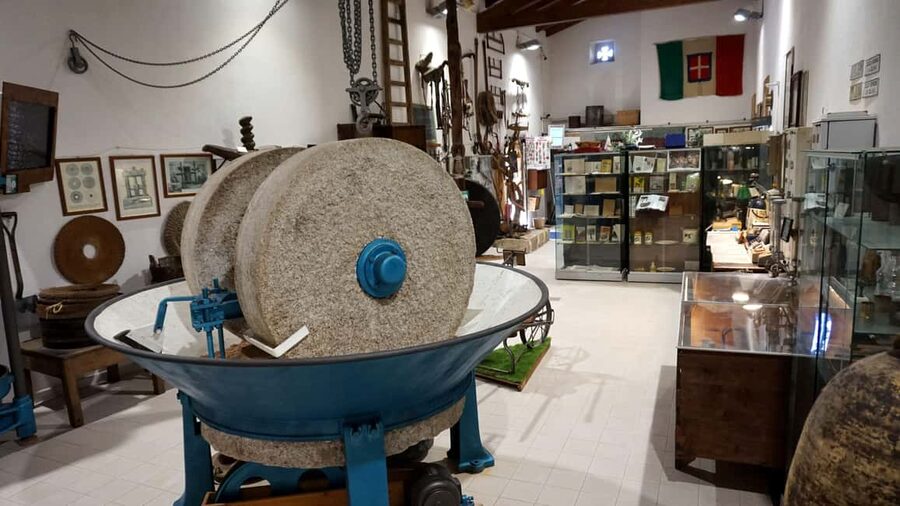
The museum is called Sa Mola de Su Notariu, and it presents four centuries of family connection with olive oil. Its central objects include an original 17th-century stone mill, ancient presses, and traditional tools.
I would not come expecting a large museum with room after room of displays. The appeal is more specific. You see the physical equipment that made oil in another era, then connect it with the bottle you have just learned about in the modern mill. That side-by-side contrast gives the visit its character.
The old machinery also helps explain why olive oil was such a valuable part of Sardinian life. Oil was food, a cooking ingredient, a trade product, and fuel for lamps. The museum’s objects are not just old farm tools. They show the work behind a staple that shaped daily life on the island.
A few hours in Cagliari will not teach you much about rural food production. This visit fills that gap without requiring a long journey. If you are especially interested in family history, agricultural traditions, or traditional tools, the museum may be the most memorable part of the stop.
The underground cistern and its oil lamps
The most distinctive section is the underground cistern. You descend into an old storage vault where oil lamps, amphorae, and other artifacts illustrate how oil was preserved in earlier centuries.
This is a practical part of the story, not just a photo stop. Storage affects the quality and life of olive oil, and the cistern shows how families protected a precious product before modern containers and climate-controlled facilities. The old lamps also connect oil production with everyday lighting.
The information supplied for the experience calls this an exclusive part of the visit. It is worth asking about the route if anyone in your group has mobility concerns, even though the overall activity is listed as wheelchair accessible. The accessibility note is positive, but it does not give detailed information about the underground section itself.
Same countryside, another kind of harvest:
- Sorrento: Pizza Lesson, Wine, and Limoncello at a Local Farm
★ 5.0 · 1,513 reviews - Florence: Pizza or Pasta Class with Gelato at a Tuscan Farm
★ 4.9 · 1,181 reviews - Hands-On Cooking Class & Farmhouse Tour on the Amalfi Coast
★ 5.0 · 956 reviews - Pizza School with Wine and Limoncello Tasting in a Local Farm
★ 5.0 · 845 reviews
The tasting lesson: three oils, three jobs in the kitchen
The tasting is the heart of the visit. You sample three products with different flavors and uses, rather than trying several bottles that all taste alike.
Olio del Tempio EVO is the classic extra virgin olive oil. It is described as balanced between fruitiness, bitterness, and peppery heat. You can use it for dipping, drizzling, and everyday cooking. This is the bottle to consider if you want one all-purpose Sardinian oil at home.
Limolio combines olives with lemon zest. Its bright citrus character suits seafood carpaccio, raw fish, salads, caprese, and grilled vegetables. This is the most immediately distinctive product of the three, and one tasting note specifically praised the way it changed the way the taster cooked fish. If you enjoy simple seafood dishes, this is likely the bottle that gives you the clearest new idea.
Rogo del Tempio combines nine Sardinian herbs with controlled spice. It is meant for grilled meat, pizza, pecorino, and roasted potatoes. Think of it as a finishing condiment rather than a plain cooking oil. A little should add herbs and heat to familiar food without requiring a complicated recipe.
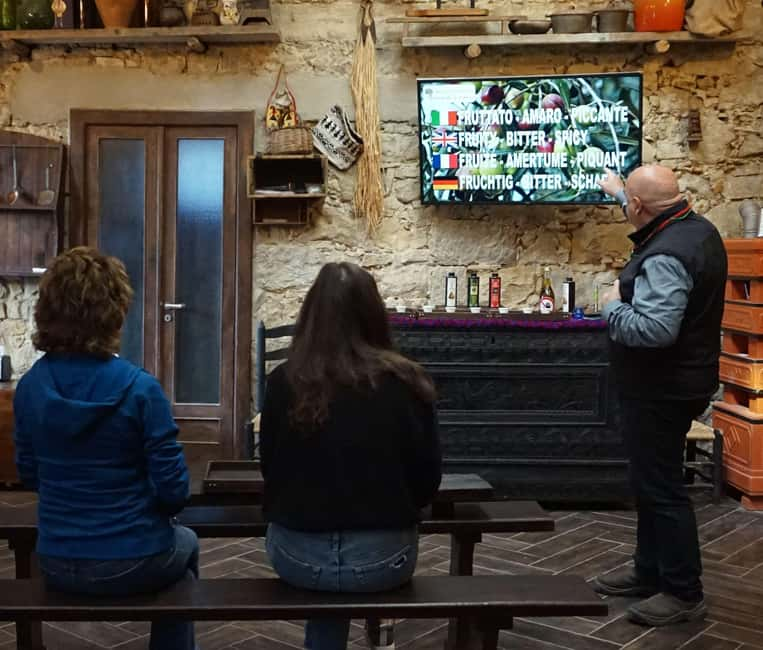
The lesson is useful because you can compare the oils on food, not just sip them from a cup. You learn why one oil works with raw fish while another belongs on meat or cheese. The class also covers how to identify premium extra virgin oil, a skill that can save you from buying a fancy bottle based only on its label.
One small gap is worth noting. A recent German-language comment wished for more information about the olive tree itself. If you want a botany lesson about varieties, pruning, or the life cycle of an olive grove, you may need to ask questions. The strongest focus is on production, tasting, and use at the table.
The Sardinian platter makes the tasting feel complete
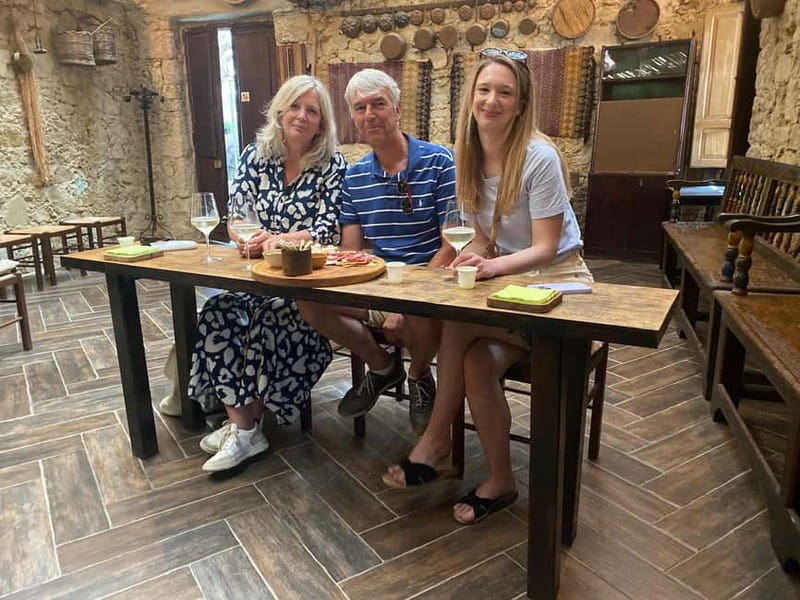
Food is served family-style with the oil tasting. The standard selection includes salsiccia sarda, natural olives from the estate, thin carasau bread, and chilled local sparkling wine. Other tasting details can vary, with cheese and a small pizza also mentioned as sample foods.
Carasau is especially useful here. This crisp Sardinian bread has a light texture that lets you notice the oil rather than burying it under a heavy crust. The cured sausage and cheese give you richer foods for the herb-infused oil, while the bread and olives let you focus on the EVO itself.
The sparkling wine is a pleasant touch, but it is also practical. It clears your palate between samples and turns the lesson into a relaxed social meal. You are not expected to treat this like a laboratory exercise.
Portions are described as a tasting platter rather than a full lunch. I would plan a proper meal later if you arrive hungry. For most people, the food is enough to make the 60 to 90-minute visit feel generous without turning it into a long restaurant sitting.
Buying oil at the mill
The final portion of the visit allows time for shopping. Buying directly at the mill gives you a 20 percent discount compared with the online price, which improves the value if you already know what you like.
This is also the point where the tasting earns its keep. Instead of guessing between attractive labels, you can choose the plain EVO for daily use, the lemon oil for fish and salads, or the spicy herb blend for cheese, pizza, and grilled food. You can also buy more than one because each product has a different role.
Think about transport before purchasing several bottles. The supplied information does not state luggage rules or packaging arrangements, so ask the staff how they recommend carrying your oil if you are flying or using public transport.
How to get there and how much time to allow
By car, the museum is about 20 minutes from Cagliari, and free parking is available on site. That makes the visit easy to fit between sightseeing in the city and another stop in southern Sardinia.
By public transport, bus line 108 runs from central Cagliari and takes about 54 minutes. The bus is possible, but it leaves less flexibility if your appointment changes or you want to continue exploring after the tasting.
The information gives several time figures. The general activity details list one hour, while the masterclass is described as exactly 90 minutes. The listed program also breaks into 10 minutes for the tour, 20 minutes for the class, 20 minutes for food and wine, and 20 minutes for shopping, which adds up to 70 minutes. I would reserve roughly 90 minutes and confirm the start and finish time when booking.
English, French, and Italian are offered. The venue is listed as wheelchair accessible, and dogs are welcome with water bowls available. Free Wi-Fi is also provided, though it is hardly the reason to make the trip.
Private transfers from Cagliari and nearby parts of southern Sardinia are available as an extra. The base price does not include those transfers or services not listed as included.
Is $64 a fair price?
At $64 per person, this is not the cheapest olive oil tasting near Cagliari. The price includes the mill visit, museum access, teaching session, three product samples, food, sparkling wine, and parking. It also gives you the option to buy directly at a discount.
I consider it a fair price if you value the history and the lesson as much as the food. A simple tasting with bread and oil should cost less. Here, you are paying for the working estate, the old stone mill, the underground cistern, and a guide who explains how to use what you taste.
The value is strongest for couples, food-focused visitors, and anyone staying in Cagliari without time for a full rural excursion. It also works for cruise passengers who have two or three hours free and can arrange transport. Families may appreciate the short format, though very young children may not care much about oil terminology or old presses.
The optional transfer can change the total cost. If you need door-to-door transport, compare the package price with the cost of reaching Dolianova on your own.
Who should choose this experience?
I would choose this visit if you want an authentic Sardinian food activity with a clear local connection. It gives you a product you can taste, understand, and use at home rather than a general sightseeing stop.
It suits you particularly well if you:
- Like regional food and want to understand olive oil beyond the label.
- Want a short trip from Cagliari rather than a full-day excursion.
- Enjoy small museums, old tools, and family-run businesses.
- Prefer a tasting that includes food and wine.
- Want to bring home products after trying them first.
- Need English, French, or Italian guidance.
- Are traveling with a dog.
You may want something else if you are looking for a long walk among olive trees, a full meal, or a broad tour of Sardinian agriculture. The olive grove itself is part of the family operation, but the supplied program focuses on the mill, museum, tasting, and shop rather than an extended orchard walk.
Should you book it?
Book this Cagliari olive oil experience if you want a compact, personal food lesson with genuine historical objects and practical tasting advice. Francesco Locci’s warm presentation, the underground cistern, and the three very different oils give the visit more substance than a quick sample at a shop.
Before paying, confirm the actual duration and ask about access to the cistern if mobility is important. If those details work for your schedule, $64 is reasonable for the combination of museum, working mill, food, wine, and tasting. The best reason to go is simple: you leave knowing which bottle to buy and what to do with it.
FAQ
How far is the olive oil mill from Cagliari?
It is about 20 minutes from Cagliari by car. The museum is in Dolianova and has its own parking lot.
Can I reach the mill by bus?
Yes. Bus line 108 runs from central Cagliari and takes about 54 minutes.
How long does the experience last?
The information lists the activity as one hour in one place and describes the masterclass as exactly 90 minutes elsewhere. The scheduled sections also total 70 minutes, so confirm the precise timing when you book and allow about 90 minutes.
What oils will I taste?
You will taste Olio del Tempio extra virgin olive oil, Limolio made with olives and lemon zest, and Rogo del Tempio, a spicy blend with nine Sardinian herbs.
Is food included?
Yes. The tasting includes Sardinian cured sausage, olives, carasau bread, and sparkling wine. Cheese and a small pizza may also be included among the tasting foods.
Is the visit guided in English?
Yes. Live guidance is available in English, French, and Italian.
Is the venue wheelchair accessible?
The activity is listed as wheelchair accessible. Ask ahead for specific information about the underground cistern area.
Can I bring my dog?
Yes. Dogs are welcome, and water bowls are provided.
Can I buy the olive oils after the tasting?
Yes. You can shop at the mill, with a stated 20 percent discount compared with the online price.
Newly listed farm visits around Italy
- Sorrento Half-Day Farm Experience: Pizza, Cheese Making and Wine★ 5.0 · 17 reviews
- Farm-to-Table Experience: Olive Oil, Garden Tour & Nonna’s Lunch★ 5.0 · 35 reviews
- Amalfi Coast & Sorrento Cooking Class School at Farmhouse★ 5.0 · 25 reviews
- Sorrento: Authentic Lemon Experience at a Farm with Tastings★ 5.0 · 6 reviews
- Cooking Class & Guided Farm Tour On The Hills Of Sorrento★ 5.0 · 10 reviews
- Tasting Limoncello, Oil and Typical Products in Farmhouse★ 5.0 · 13 reviews
- Marì Cooking Class in a Family Farm with Amalfi Coast view★ 5.0 · 11 reviews
- Sorrento Villa Cooking Class with Fresh Harvest Lunch★ 5.0 · 25 reviews
Italy Farm Tours, compared.

Florence Pizza or Pasta Class with Gelato Making at a Tuscan Farm
Read our review →
Cooking Class and Lunch at a Tuscan Farmhouse with Local Market Tour from Florence
Read our review →
Sorrento Farm and Food Experience including Olive Oil, Limoncello, Wine tasting
Read our review →
Pizza Lesson, Wine, and Limoncello at a Local Farm
Read our review →
Hands-On Cooking Class & Farmhouse Tour on the Amalfi Coast
Read our review →
Pizza School with Wine and Limoncello Tasting in a Local Farm
Read our review →
Authentic Farm Tour with Pizza, Cheese, Wine & Limoncello Tasting
Read our review →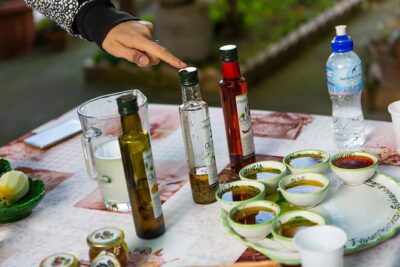
Sorrento Farm by Tuk Tuk: Cheese, Limoncello & Hands-On Pizza
Read our review →Browse the lists this tour appears in