
Review · CANADA
Farm-to-Flask Tasting Experience in Vernon
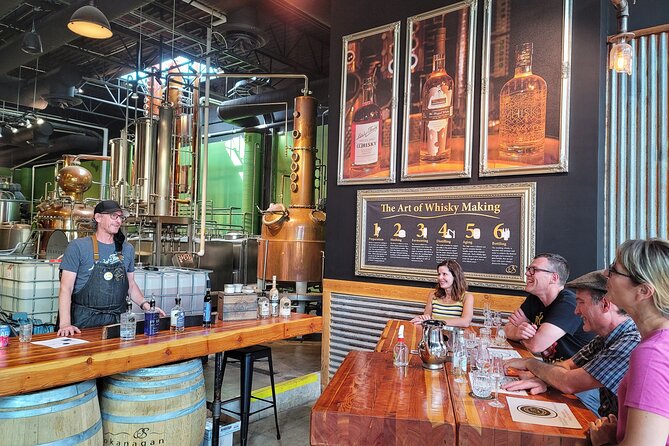
The most interesting part of this Vernon tour is the look behind the bottle. You’ll see the copper-pot stills, condensing still, fermentation vessels, and mash cooker used to turn local ingredients and careful technique into craft spirits, then sit down for four guided tastings.
I like the compact 45-minute format, which fits neatly into a day of exploring the Okanagan. I also like the tasting lineup: four spirits from four categories, including a vodka, bourbon, and color-changing gin. The guide also explains local history, Canadian liquor rules, and how cocktails come together.
The main drawback is that this is a short introduction, not a long distillery workshop. You’ll get a clear tour and a focused tasting, but anyone hoping to watch a full batch being made or spend hours sampling will find the visit brief.
Key points to know before you book
- Four spirit categories in one tasting: You sample four different styles rather than four versions of the same product.
- Working production equipment: The route includes copper-pot stills, a condensing still, fermentation vessels, and a mash cooker.
- A small group setting: The maximum group size is 12, making it easier to hear explanations and ask questions.
- Useful Canadian context: The talk covers local history, Canadian culture, liquor laws, and the growth of craft distilling.
- Easy half-hour-plus stop: The tour lasts about 45 minutes and begins and ends at 5204 24 St in Vernon.
- Strong value at $18.73: The price covers the guided distillery visit and four tastings, with free cancellation up to 24 hours before the start.
Inside Okanagan Spirits Craft Distillery in Vernon
This is a production-focused visit, not a generic tasting-room stop. You begin at Okanagan Spirits Craft Distillery, located at 5204 24 St in Vernon, and the tour brings you close to the equipment that gives the business its character.
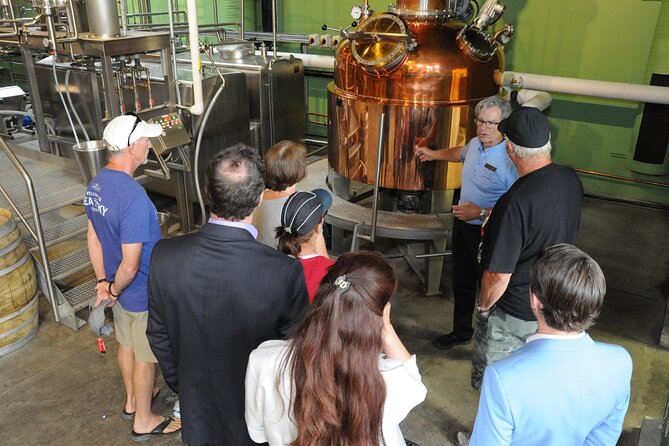
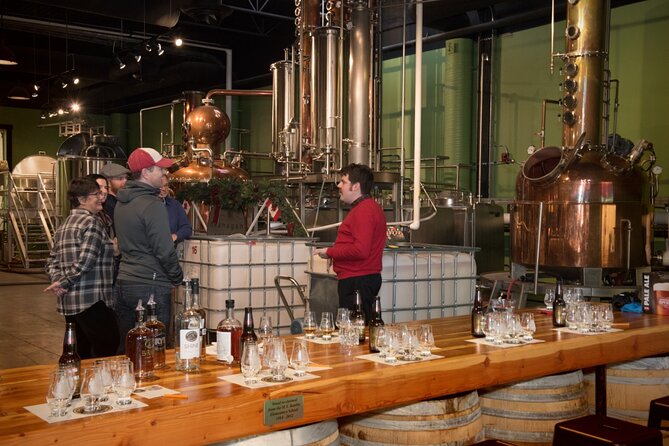
The route includes copper-pot stills, the traditional-looking vessels that many visitors expect to see in a distillery. You’ll also get a look at the condensing still, fermentation vessels, and mash cooker. Each piece has a different role, and the value of the tour comes from seeing how those stages connect.
If you have tasted spirits without knowing much about how they are made, this layout helps. Fermentation comes before distillation, and the still determines how alcohol and flavor compounds are separated and refined. The mash cooker is part of the early production process, while the condensing equipment helps turn vapor back into liquid.
The tour does not promise a full production demonstration, so you should not expect every machine to be running during your visit. Still, the close look at the equipment gives you a better sense of the work behind a finished bottle than a tasting alone.
More farm tours around the world:
- Half-Day Thai Cooking Class at Organic Farm in Chiang Mai
★ 5.0 · 19,087 reviews - Florence Pizza or Pasta Class with Gelato Making at a Tuscan Farm
★ 5.0 · 6,801 reviews - From Porto: 2 Wine Regions, Farm-to-Table Lunch & Boat
★ 4.9 · 5,724 reviews
What the 45-minute route feels like
The short length is one of this tour’s best practical features. You can fit it into a Vernon itinerary without giving up most of an afternoon, and the return to the same meeting point keeps the logistics simple.
Expect the visit to move in two parts. First comes the distillery walk-through and explanation of the production process. Then the focus shifts to a guided tasting of four spirits from four categories.
That order makes sense. You first learn what the equipment does, then you taste the result. You do not need to be a spirits expert to follow along. The guide answers questions clearly and explains the process in plain terms.
The small maximum of 12 people also matters. A group this size should make it easier to stand near the equipment, hear the guide, and ask about a bottle or production method. It is still a group activity, so the pace may not suit someone who wants a private lesson, but it should feel more personal than a large commercial tour.
The tour is offered in English. Confirmation arrives when you book, and mobile tickets are accepted, which makes this an easy stop to add while you are out exploring the Okanagan Valley.
The stills, vessels, and mash cooker
The equipment portion gives the tour its substance. A tasting room can tell you what a spirit tastes like, but the production area shows you how much work happens before the bottle reaches the shelf.
The copper-pot stills are likely to attract the most attention. They are visually striking and help explain why distillation is not simply a matter of heating alcohol. The guide can use the stills to discuss how spirit makers control flavor, strength, and character.
The condensing still adds another useful piece to the explanation. Visitors often understand fermentation and distillation as broad ideas, yet the conversion from vapor back into liquid is less familiar. Seeing the equipment makes the process easier to picture.
The fermentation vessels and mash cooker shift the discussion earlier in the process. This is where the raw material is prepared and transformed before distillation. Even if you already know the basics, the equipment gives the talk a practical focus.
I would pay attention to how the guide connects the machines rather than treating each one as a separate display. The strongest part of this visit is the chain from mash to fermentation, from distillation to finished spirit.
The four-spirit tasting
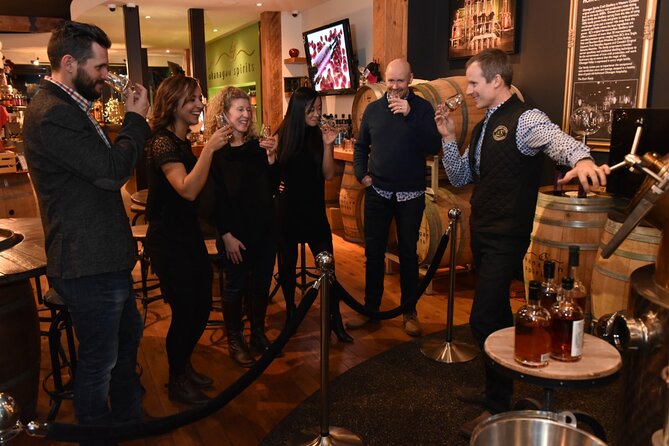
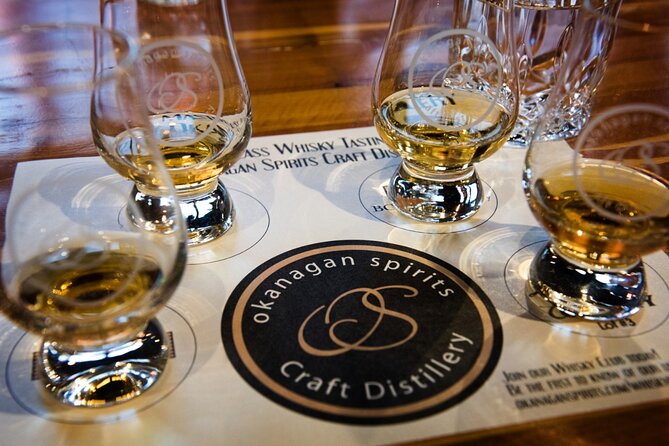
The tasting includes four award-winning spirits from four different categories. That variety is more useful than a flight built around one spirit type because it lets you compare different production methods, aromas, textures, and finishes.
The specific spirits highlighted in the tasting feedback are especially appealing:
- Vodka, praised for its clean and impressive character
- Bourbon, described as exceptional
- A color-changing gin, which adds a visual surprise to the tasting
- Canadados, a Canadian take on Calvados
The color-changing gin is the most playful item in the lineup. It gives the tasting a bit of theater without turning the visit into a gimmick. You get to see that spirits can change not only in flavor but also in appearance when mixed or served in different ways.
Canadados is another unusual point of interest. It connects a familiar European style with a Canadian identity, and it gives the guide a natural opening to talk about how local producers adapt established traditions.
The tasting is guided, so you are not simply handed four samples and left to guess what you are drinking. The explanations help you notice how each category differs. If you are new to spirits, this structure gives you useful reference points. If you have visited other distilleries, the four-category format keeps the tasting from feeling repetitive.
The tour does not state the pour sizes or provide a full food pairing program. If those details matter to you, ask when booking. The stated focus is a guided tasting, not a meal or cocktail class.
Same countryside, another kind of harvest:
- Cooking Class and Lunch at a Tuscan Farmhouse with Local Market Tour from Florence
★ 5.0 · 4,831 reviews - Chiang Mai: Authentic Cooking Class with Market & Farm Visit
★ 4.9 · 4,546 reviews - Tromsø: Reindeer Camp and Sami Cultural Tour with Lunch
★ 4.7 · 3,326 reviews - Maui Pineapple Farm Tour in Haliimaile
★ 5.0 · 2,855 reviews
More than a tasting: local stories and Canadian rules
One reason to choose this visit over a quick sample at a shop is the range of subjects covered. The guide discusses the local area, distilling history, Canadian culture, liquor laws and practices, and the growth of craft distilleries.
The Canadian liquor system can be unfamiliar to visitors from the United States or Europe. A short explanation of how spirits are sold and regulated gives the bottles a wider setting. It also explains why small distilleries operate differently from producers in other countries.
The local history adds another layer. The tour connects the distillery to Vernon and the Okanagan rather than treating it as an isolated factory. That does not mean you should expect a full regional history lesson, but the setting becomes part of the story.
The guide’s role is important here. The strongest feedback describes answers as clear and accurate, with no dull stretches. That suggests the visit works best when you ask questions. Bring them. Ask about a spirit category, Canadian liquor practices, the color-changing gin, or how craft distilling has grown.
How the value compares with the price
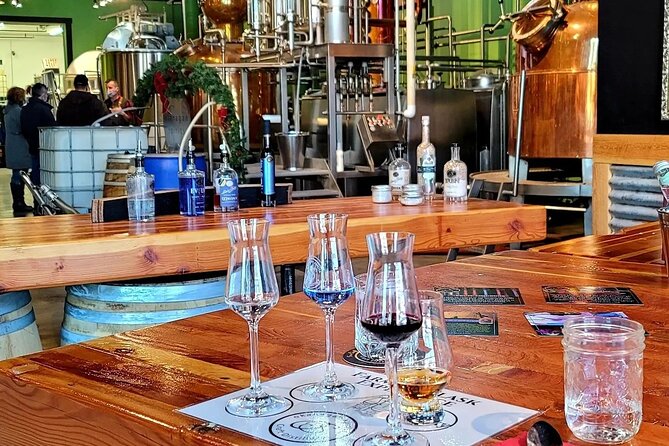
At $18.73 per person, this is a modestly priced activity. You are paying for a guided look at the production area, an explanation of how spirits are made, and four tastings.
The value is strongest if you want both education and samples. A tasting alone may cost less at some venues, but it would not necessarily include access to the stills, fermentation vessels, mash cooker, and production explanation. A longer distillery tour could offer more detail, but it would also take more time and may cost more.
The short duration keeps the price practical for a busy Okanagan day. You can pair the visit with other stops in Vernon without building your schedule around a half-day commitment.
There are limits. This is not a complete spirits course, and the available details do not promise bottle discounts, cocktail instruction, food, or a full production day. If your main aim is to learn advanced distilling techniques, you will need a more specialized class.
For most people, though, the price works because the visit covers several bases at once: local context, working equipment, a small-group guide, and a varied flight of spirits.
Who will enjoy this Vernon stop
I would recommend this tour to adults who like knowing how a product is made. It also suits anyone building a drinks-focused itinerary through the Okanagan Valley.
You do not need previous tasting experience. The clear explanations make the visit approachable, and the four categories let you compare styles without requiring technical knowledge.
It is also a good choice for people who have already visited distilleries elsewhere. The mix of Canadian liquor context, Canadados, and the color-changing gin gives the visit its own identity. You may recognize the general production sequence, but the local angle and lineup can still make the stop worthwhile.
The compact format helps couples, small groups, and visitors with a full day planned. The maximum of 12 people is helpful if you prefer a quieter visit with room for questions.
People who want a long, leisurely tasting should adjust their expectations. Forty-five minutes goes quickly. You will learn the basic process and taste four spirits, but the schedule leaves little room for an extended visit at every piece of equipment.
Most people can participate, and service animals are allowed. The location is near public transportation, which helps if you do not have a car. The tour begins and ends at the same address, so you do not need to arrange a separate return point.
Booking, timing, and cancellation details
The activity is offered in English and uses a mobile ticket. Confirmation is provided at the time of booking, so you can keep the admission details on your phone.
It is typically booked about 13 days ahead. That average is a useful planning clue, especially if your Vernon dates are fixed. I would not treat it as a strict rule, but booking ahead is sensible if you want a particular time.
The maximum group size is 12 people. The activity also requires a minimum number of participants. If that minimum is not met and the tour is canceled, you are offered another date or activity, or a full refund.
Free cancellation is available up to 24 hours before the scheduled start time. Cancel at least 24 hours ahead for a full refund. Changes or cancellations made less than 24 hours before the start are not accepted for a refund, and the cutoff uses local time.
My advice for making the most of the visit
Arrive ready to listen as well as taste. The equipment tour is the part that separates this from a simple flight at a bar, so give the production explanation your attention.
If you have a favorite spirit style, mention it during the tasting. The guide can help you compare the four categories and explain why one bottle tastes or looks different from another.
Do not skip the unusual pours. The vodka and bourbon offer familiar reference points, while the color-changing gin and Canadados bring more surprise. The unusual items may be the ones you remember after the tour.
You should also leave room in your day for the possibility that you will want to continue exploring local products afterward. The tour itself lasts about 45 minutes, but it can sharpen your interest in the region’s craft food and drink scene.
Should you book the Farm-to-Flask Tasting Experience?
Book it if you want a short, well-organized introduction to Okanagan Spirits with real production equipment, clear explanations, and four different spirits to taste. The price is fair, the small group limit is useful, and the Canadian context gives the visit more depth than a standard tasting flight.
Skip it if you want a long technical workshop, extensive food pairings, or a full day inside a distillery. For a first look at how craft spirits are made in Vernon, though, this is an easy activity to fit into your plans and a good way to taste the region with some understanding behind each pour.
FAQ
Where does the tour begin?
The tour begins at Okanagan Spirits Craft Distillery, 5204 24 St, Vernon, British Columbia V1T 8X2, Canada.
Where does the tour end?
The activity ends back at the meeting point at the distillery.
How long does the experience last?
The tour lasts approximately 45 minutes.
How many spirits are included in the tasting?
You taste four award-winning spirits from four different spirit categories.
What equipment will I see?
The tour includes an up-close look at copper-pot stills, a condensing still, fermentation vessels, and a mash cooker.
Is the tour offered in English?
Yes. The experience is offered in English.
How many people can join the tour?
The maximum group size is 12 people.
Can I cancel for a full refund?
Yes. You can cancel for a full refund up to 24 hours before the experience starts. Cancellations or changes made less than 24 hours before the start are not accepted for a refund.
Newly listed farm visits around the world
- Half-Day Farm Visit and Cow Milking Experience★ 5.0 · 16 reviews
- Boutique tour , Mt Maunganui, NZ farm, Rotorua lakes/geothermal★ 4.5 · 50 reviews
- Gourmet Mushroom Farm Tour in Tennessee★ 5.0 · 5 reviews
- Cozy Farm Experience with Wagon Wheels and Acoustic Meal★ 5.0 · 2 reviews
- Animal farm park with free hotel pickup★ 5.0 · 2 reviews
- Alpaca Farm Tours with Toffeemont★ 5.0 · 8 reviews
- Private, via beaches, Kiwi farm to Rotorua 8 lakes & Geothermal★ 5.0 · 20 reviews
- 1D Tour to Cingjing Farm from Taichung★ 4.5 · 3 reviews
Canada Farm Tours, compared.
Humberstone Ranch Visit with Mini Domestic Animals
Read our review →
Calgary Food Walking Tour: Calgary Farmers Market
Read our review →Love Local! Taste the Okanagan Artisan Farm Tour
Read our review →
VIP Agritourism Tour of Île d’Orléans & Montmorency Falls (Lunch)
Read our review →
Toronto: Muskoka Cranberry Farm and Hardy Lake Hike
Read our review →
Pontiac Farm Tour – Day Trip From Ottawa & Gatineau
Read our review →
Jean Talon Farmer’s Market Tour x Michelin-Trained Chef
Read our review →Browse the lists this tour appears in