
Review · PHUKET
Old Phuket Farm Ticket – Countryside Local Life Culture
At Old Phuket Farm, Phuket’s countryside comes into focus through hands-on work: rubber tapping, rice farming, and tin panning. I like that the visit connects several parts of local life rather than showing only one craft. I also like its compact two-hour length, which fits neatly into a busy Phuket day and gives families something active to do.
The main thing to consider is that this is a staged cultural attraction, not a working farm visit where you simply wander on your own. A further concern is the use of nose-pierced buffaloes, which one visitor found upsetting. That detail may matter if animal welfare is important to you.
Key points to know before booking
- See several sides of rural Phuket: The visit covers buffalo care, rubber production, rice farming, tin panning, pineapple growing, rice milling, coconut grating, and curry paste-making.
- Expect hands-on demonstrations: You do more than watch. Tin panning and parts of the farming process invite direct participation.
- A short cultural stop: The visit lasts about two hours, making it easy to pair with other Phuket plans.
- Small groups: The maximum group size is 10 people, which should make demonstrations easier to follow.
- Good for families: Children aged 4 to 11 have a child ticket, and the activities give younger visitors something concrete to do.
- Consider the buffalo presentation: The farm uses buffaloes with nose piercings, a point that may trouble some people.
Why Old Phuket Farm adds something different to a Phuket holiday
Phuket is often sold through beaches, viewpoints, boat trips, and nightlife. Those are worthwhile, but they can leave you with little sense of how people lived and worked on the island before tourism took over. Old Phuket Farm offers a short change of pace, built around practical tasks and familiar ingredients.
The visit brings together farming and older industries that shaped Phuket. You see how buffaloes helped with agricultural work, how rubber was collected, and how rice moved from field to finished grain. Tin panning adds another layer by recalling Phuket’s tin-mining past.
I see this as a useful introduction rather than a full study of Thai rural life. In two hours, you get a series of clear demonstrations and activities. You will not become an expert in rubber, rice, or tin, but you will leave with a better sense of how these materials fit into daily life.
That format works especially well if you are traveling with children. A lecture about agriculture can lose a young audience quickly. Holding a pan, watching rice being winnowed, tasting pineapple, or seeing coconut prepared gives the subject a physical connection.
More Tickets in Thailand:
- Old Phuket Farm Ticket – Countryside Local Life Culture
★ 4.9 · 88 reviews - Pattaya sheep Farm Entrance Tickets
★ 4.5 · 2 reviews - Chuck Wagon Supper & Western Stage Show at Blazin’ M Ranch Ticket
★ 4.5 · 554 reviews
Meeting the buffaloes and seeing farm work up close
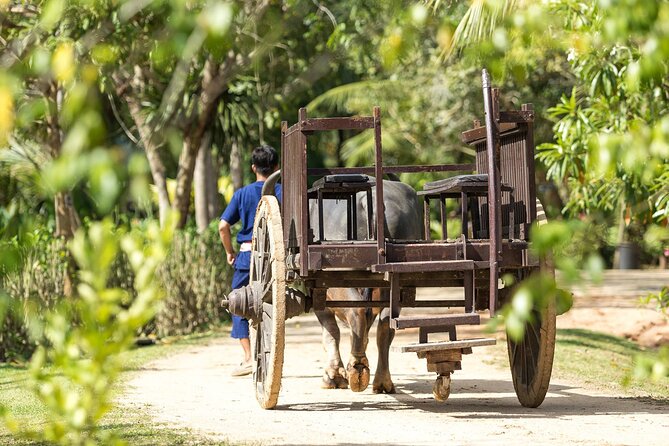
The buffalo encounter is one of the first memorable parts of the visit. Buffaloes have long been important to Thai agriculture, and the farm uses them to explain how animals supported field work before modern machinery became common.
This is more useful than seeing a buffalo as a simple photo opportunity. You get context about its role in farming and the relationship between animals and rural labor. For children, the animals make an immediate impression. For adults, the explanation helps place traditional agriculture in a wider social setting.
There is an important qualification here. The buffaloes have nose piercings, and one visitor felt sorry for them. I would not ignore that concern. If you are sensitive to animal handling, look carefully at how comfortable you are with this part of the program before booking. The cultural explanation may be worthwhile, but it does not remove the need to think about animal welfare.
The farm then turns to rubber, one of the products associated with southern Thailand. You see rubber tapping at the tree and learn how latex is collected before it becomes a sheet. This simple process is easy to understand on site, especially when you can connect the cut in the bark with the material used in everyday products.
Rubber production is a good example of what the farm does well. It takes an ordinary item and shows you where it begins. You may have seen rubber products all your life, but watching the first step gives the industry a human and agricultural context.
Rice fields, milling, and the work behind a staple food
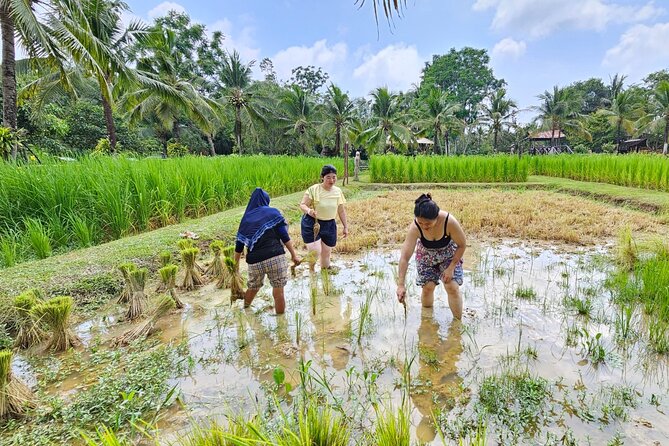
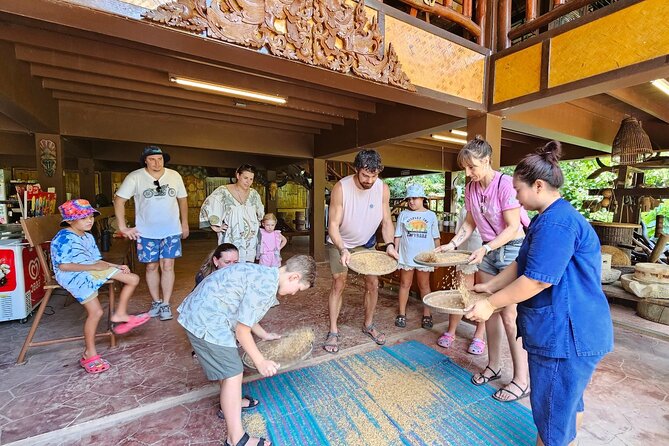
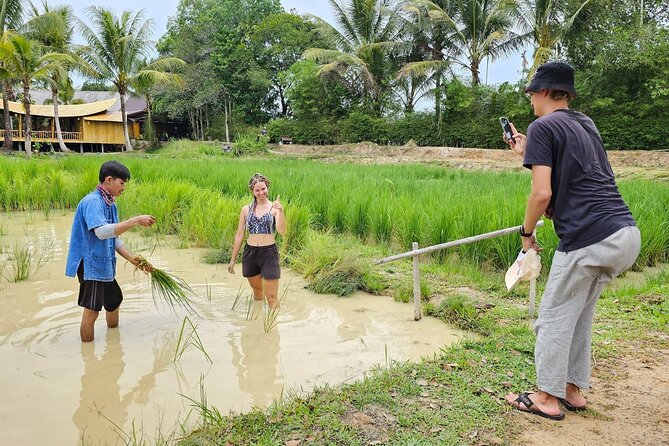
Rice is treated as a full process rather than a single display. The farm shows planting and harvesting techniques, then continues with traditional rice milling and winnowing. That sequence helps you understand how much work sits between a field and a bowl of rice.
You can expect an explanation of older farming methods, followed by demonstrations of how the harvested grain is processed. Winnowing is particularly visual, since the lighter chaff separates from the heavier rice. It is the sort of small, practical action that makes a rural tradition easier to remember.
The rice section also gives the visit a useful rhythm. You move from the field to the tools and then to the finished food. Rather than presenting farming as an abstract idea, the farm shows the steps in order.
Do not expect a large working rice operation or a long farm trek. The attraction is designed around a compact set of demonstrations. That is a strength if you have limited time, but it also means the presentation is selective. You are seeing a clear introduction, not every stage of seasonal farm life.
Trying tin panning and remembering Phuket’s mining past
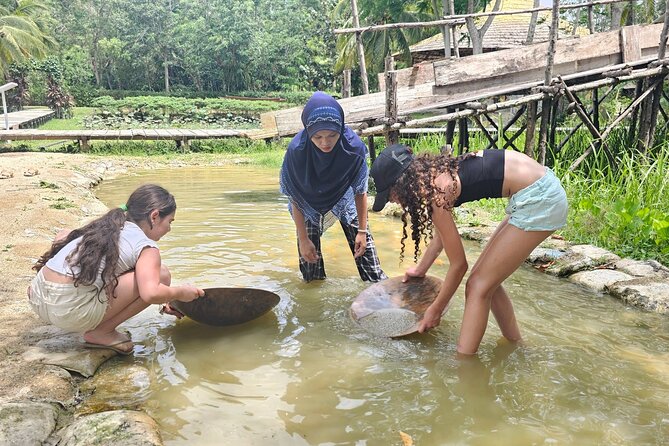
Tin panning is one of the more unusual activities here. Many visitors associate Phuket with beaches and resorts, so it can be easy to forget that tin mining played a major part in the island’s past. The panning activity gives that history a physical form.
You get to try the basic action of searching through material in a pan. Even if the activity is brief, it helps explain the patience and effort involved in separating valuable tin. It also breaks up the observation-heavy parts of the visit with something you can handle yourself.
I especially like this section because it broadens the definition of local culture. Rural Phuket was not only about crops and cooking. Mining also shaped work and wealth on the island. A short tin-panning activity cannot cover that subject in detail, but it points you toward a part of Phuket’s past that is easy to miss.
If you are booking mainly for historical depth, keep your expectations modest. The farm presents tin panning as one part of a varied visit, not as a dedicated mining museum. If you want a quick, memorable activity that links you to an older local industry, it fits well.
More farm tours around Thailand:
- Half-Day Thai Cooking Class at Organic Farm in Chiang Mai
★ 5.0 · 19,087 reviews - Chiang Mai: Authentic Cooking Class with Market & Farm Visit
★ 4.9 · 4,546 reviews - Chiang Mai: Cooking Class with Organic Farm at Mama Noi
★ 4.9 · 1,151 reviews - Full Day Thai Cooking at Farm (Chiang Mai)
★ 5.0 · 1,127 reviews
Pineapple, coconut, and curry paste in a Thai kitchen
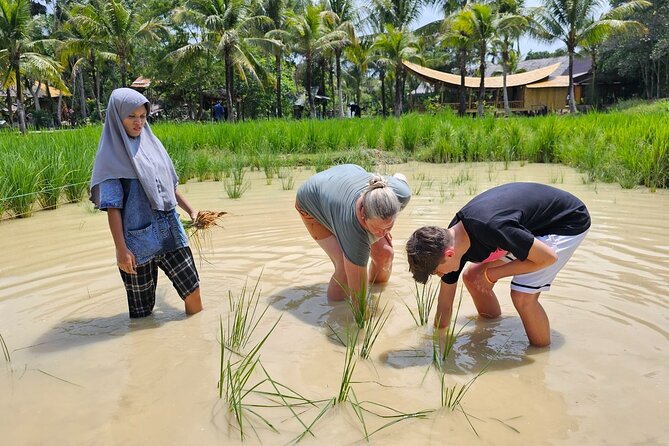
Food gives the cultural visit its most immediate appeal. You get to taste Phuket pineapples, then see how coconut is grated and how curry paste is made. These moments show how local ingredients become part of daily cooking.
The pineapple tasting is simple but effective. Phuket is known for its pineapples, and tasting the fruit connects the farm setting with something you can recognize at once. It is also a welcome pause after the more technical demonstrations.
The coconut and curry paste section shifts the focus from field work to the home. Coconut grating is a practical kitchen task, not a decorative performance. Curry paste-making shows how flavor begins with ingredients and effort rather than appearing fully formed in a restaurant bowl.
This part is especially helpful if you enjoy food culture but do not want a formal cooking class. You see traditional preparation without committing to a long session. The experience gives you a better idea of the work behind familiar Thai dishes, while keeping the pace moving.
A visit to the classic Thai house adds a setting for this domestic side of the program. The house helps you picture how farming, food preparation, and family life fit together. It is not presented as a large architectural tour, so expect a brief cultural look rather than a detailed study of Thai building styles.
What the two-hour format means for your day
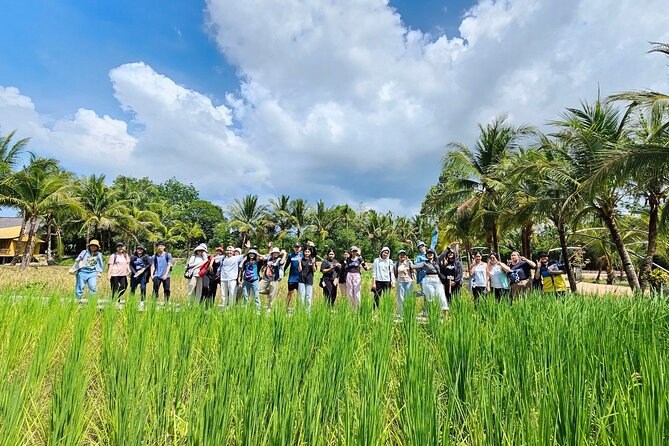
The advertised duration is about two hours. That is enough time to sample each activity without turning the visit into an all-day commitment. I would consider it a useful half-day add-on, especially if you want a break from the coast.
The compact format is one of the strongest practical reasons to book. You can fit it around other plans, and a small group of no more than 10 people should make the demonstrations easier to see and hear. A mobile ticket also keeps the booking simple.
The tradeoff is depth. Each subject receives only part of the two-hour visit, so you should not expect long conversations about Thai agriculture or Phuket’s tin industry. The value comes from variety and participation.
The farm is near public transportation, which helps if you are arranging your own way around Phuket. The supplied information does not specify a pickup service, transfer time, or exact transport instructions, so check those details before you commit to a tight schedule.
Most people can take part, and child tickets cover ages 4 to 11. The activity should suit families, couples, solo visitors, and groups, but the best match is anyone who enjoys demonstrations and simple practical tasks. If you prefer a quiet museum or a purely scenic outing, this may feel too arranged and activity-focused.
Is $38.88 a fair price?
At $38.88 per person, this is not the cheapest way to fill two hours in Phuket. The value depends on how much you want a guided cultural stop with several activities bundled together.
You are paying for more than entry to a farm. The price includes access to a sequence of demonstrations and hands-on moments: buffalo agriculture, rubber tapping, rice work, tin panning, pineapple tasting, rice processing, a Thai house, coconut preparation, and curry paste-making. A family can also benefit from having the activities organized in one place rather than arranging separate visits.
I think the price is easier to justify for families and first-time visitors who want a clear introduction to local life. Children receive a focused experience with different things to see and do, and adults get enough cultural background to make the visit worthwhile.
For a solo visitor on a tight budget, the calculation is less favorable. You might prefer to spend the same money on a longer food or history experience. The farm makes the most sense when you value convenience, variety, and a small group over a low admission price.
The 4.8 rating from 13 reviews and 92 percent recommendation figure suggest that the experience has made a strong impression overall, especially for its guide-led presentation and hands-on format. The smaller number of ratings means I would treat those figures as encouraging rather than final proof of quality.
Who will enjoy this farm visit most?

I would recommend Old Phuket Farm to parents who want a cultural activity that does not require children to sit still for long. The mix of animals, food, tools, fields, and simple tasks gives the visit enough variety to hold attention.
Couples can use it as a gentle break from beach time. It offers conversation-friendly activities and a look at Phuket beyond resort life without taking up an entire day.
Solo visitors may appreciate the efficient format and the chance to learn several subjects in one stop. A small group cap of 10 should also feel more personal than a large coach excursion.
It is less suitable if you want untouched rural life. The farm is arranged to teach and entertain, so some parts will feel tourist-friendly and prepared. One visitor described it as touristy but still fun and informative, which is a fair way to set your expectations.
That balance is not necessarily a weakness. Cultural attractions need to make local traditions understandable to people who have never seen them before. The important question is whether you want an accessible introduction or a less structured encounter with the countryside.
Booking details and cancellation notes
You receive confirmation at booking, and the ticket is mobile. The maximum group size is 10, and the experience requires good weather.
Free cancellation is available up to 24 hours before the start time for a full refund. Cancellations or changes made within 24 hours are not refunded or accepted. If poor weather causes a cancellation, you are offered another date or a full refund. If the minimum number of participants is not reached, the provider offers a different date or experience, or a full refund.
Those terms are reasonable, but pay attention to the 24-hour cut-off if your Phuket plans may change.
Should you book Old Phuket Farm?
Book it if you want a short, organized look at Phuket’s farming and food traditions, especially if you are traveling with children or need an activity away from the beach. The strongest features are the range of subjects, the chance to try tin panning, the rice and rubber demonstrations, and the farm-to-kitchen link.
Think twice if you expect an entirely uncommercial farm visit, want detailed historical teaching, or are uncomfortable with the buffaloes’ nose piercings. At $38.88, the price is fair for a small-group, hands-on introduction, but less compelling if you only want to see a rural setting.
For most first-time visitors, I would treat Old Phuket Farm as a worthwhile two-hour cultural stop, not the main event of a Phuket holiday. It gives you useful context, a few memorable activities, and a better feel for the work behind the island’s food and older industries.
FAQ
How long does the Old Phuket Farm experience last?
The visit lasts approximately two hours.
How much does the experience cost?
The listed price is $38.88 per person.
What activities are included?
You can meet buffaloes, see rubber tapping, visit rice fields, learn about planting and harvesting, try tin panning, taste pineapple, watch rice milling and winnowing, visit a traditional Thai house, and see coconut grating and curry paste-making.
Is the ticket mobile?
Yes. The experience provides a mobile ticket.
How many people can join the tour?
The activity has a maximum of 10 participants.
Are child tickets available?
Yes. Child tickets are for children aged 4 to 11.
Can I cancel for a full refund?
Yes, if you cancel at least 24 hours before the experience start time. Cancellations within 24 hours are not refunded. Poor weather or failure to meet the minimum number of participants may result in a different date, an alternative experience, or a full refund.
Newly listed farm visits around Thailand
- Pattaya sheep Farm Entrance Tickets★ 4.5 · 2 reviews
- Chiangmai Coffee Farm Tour★ 5.0 · 34 reviews
- Plough to Plate: Be A Rice Farmer in Phetchaburi from Hua Hin★ 5.0 · 4 reviews
- Authentic Thai Cooking Class and Farm Visit in Chiang Mai★ 5.0 · 66 reviews
- Aroidee’s Farm-Fresh Thai Cooking Experience★ 5.0 · 8 reviews
- Full-Day Thai Cooking Class with Grandma – Market and Farm Tour★ 5.0 · 48 reviews
- One Day Tour Doi Suthep Temple, Palad Temple, Orchid Farm, Longneck hill tribe village (Private tour)★ 5.0 · 7 reviews
- Chiang Mai Farm Life & Khao Soy Tasting on a Half-Day Boat Tour★ 4.5 · 64 reviews
Phuket Farm Tours, compared.

Big Buddha Jungle Trekking and Temple tour with Lunch
Read our review →
Old Phuket Farm Ticket – Countryside Local Life Culture
Read our review →
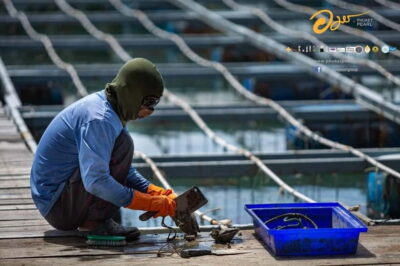
Phuket: Highlights Tour with Pearl Farm & Elephant Village
Read our review →
Temple and Jungle Trekking tour with Lunch at Farm-to-Table
Read our review →Browse the lists this tour appears in