
Review · AUSTRALIA
Coffin Bay Oyster Farm Wading Tour & Tasting Experience
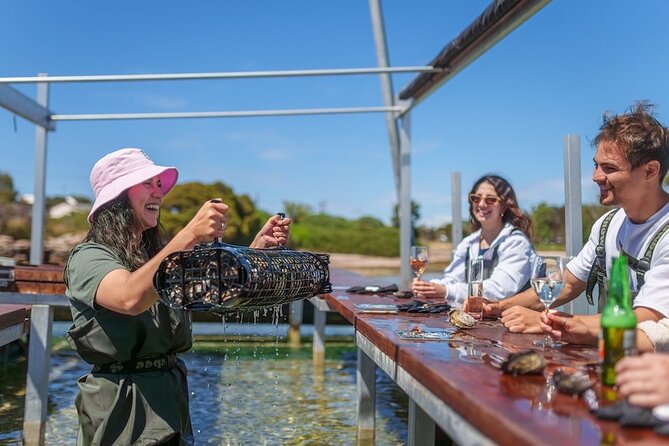
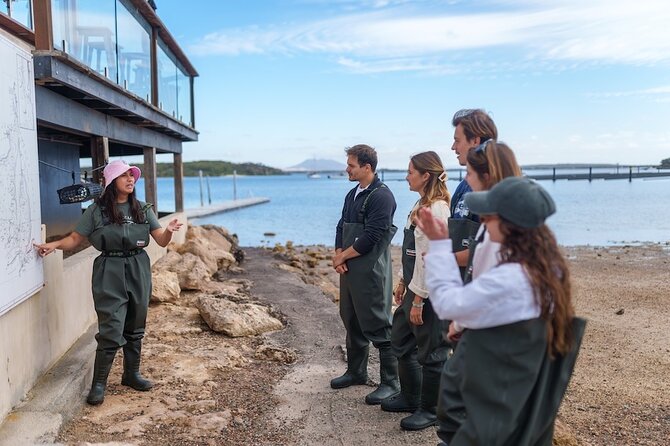
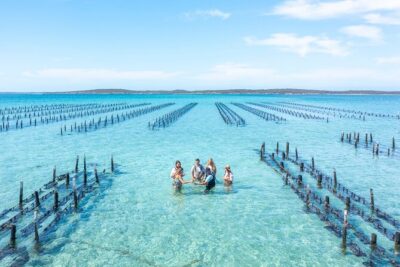
The best part of this Coffin Bay experience is that you do not just look at an oyster farm from shore. You pull on supplied waders, walk into the bay, and sit at a floating pontoon while an oyster farmer explains how the farm works. Then you eat oysters taken straight from the water and learn to shuck one yourself.
I like the hands-on setting and the friendly, practical style of the guides. Sergio, Juan, Rosa, Rob, Margo, Sabrina, Rose, Joe, Shane, Cameron, and Shiino have all been praised for making the session relaxed and easy to follow. I also like that beginners are welcome, including people who have never opened an oyster before.
The main thing to consider is the weather. You will be standing or sitting in shallow water in waders, so a cool, windy, or wet day can change the mood. At $68.14 per person, it is good value for oyster lovers, but less so if you do not eat seafood and do not choose one of the additional food or drink options.
Key points to know before you book
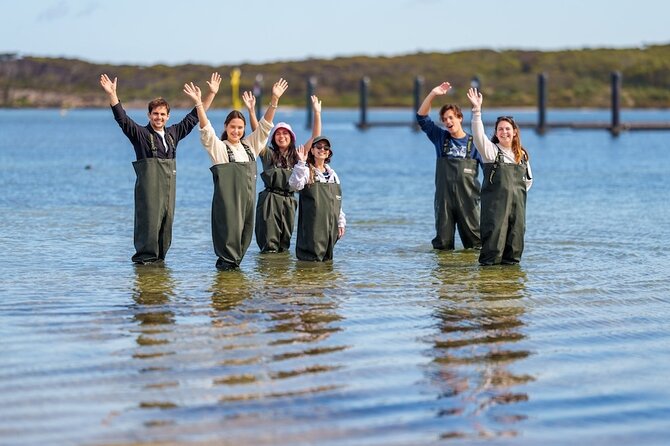
- Wade to a floating pontoon: The supplied waders let you reach the farm area rather than simply watching from land.
- Taste two oyster types: You try Pacific oysters and native Coffin Bay Angasi oysters, subject to availability.
- Learn to shuck by hand: A guided lesson gives you the tools and technique to open your own oyster.
- Hear local history: The oyster farmer begins with the story of Matthew Flinders and the region.
- Choose a finishing touch: Some options include wine, sparkling wine, or a seafood platter.
- Plan for the conditions: Bring socks for the waders, dress for the weather, and declare seafood allergies before starting.
Walking into Coffin Bay’s oyster country
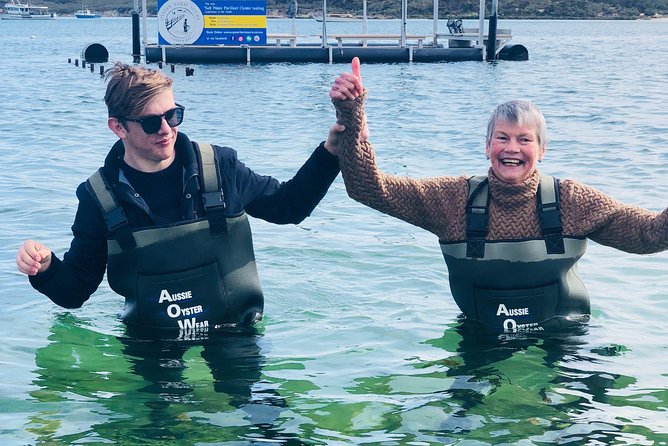
Coffin Bay is a small seaside town on South Australia’s Eyre Peninsula, and this tour makes good use of its setting. The meeting point is Oyster HQ at 100 Esplanade. From there, you are fitted with waterproof waders and taken into the water.
That simple change of clothing makes the outing feel different from a standard food tasting. You are not seated in a restaurant being told where the oysters came from. You are standing in the bay, close to the farming area, with water around your boots and the oyster operation in front of you.
The opening talk includes local history and the story of Matthew Flinders’ voyage. It is a useful introduction because the bay is not just a backdrop for lunch. Its coastal setting is part of why the area is famous for oysters, and the farmer connects the place, the industry, and the food before the tasting begins.
The tour lasts about 90 minutes. That is long enough to explain the basics, let you ask questions, practice shucking, and taste the oysters without turning the experience into a half-day commitment. If you are fitting Coffin Bay into a wider Eyre Peninsula trip, the compact timing is helpful.
More Oyster Farm Tours in Australia
- Experience Coffin Bay Oyster Farm and Bay Tour
★ 5.0 · 161 reviews - Broken Bay Pearl & Oyster Farm Tours
★ 5.0 · 150 reviews - Experience Coffin Bay Short and Sweet Oyster Farm Tour
★ 5.0 · 56 reviews
What happens on the pontoon
Once you have your waders on, you walk out through the water to a floating pontoon. The route is part of the fun, but it also deserves practical attention. You need socks to get into and out of the waders comfortably, and you should wear clothing that fits underneath them without becoming bulky.
At the pontoon, the oyster farmer explains the working side of the business. You learn how oysters are raised, how they develop from small spat into mature oysters, and how they are prepared for the market and distribution. The talk is suited to curious beginners rather than people who already know the industry in detail.
The guides are an important part of the experience. Sergio has been singled out for combining a warm manner with clear explanations. Juan has taken time to explain the area’s history, while Rob and Margo have been praised for making the farming process easy to understand. Rosa has also led a more personal shucking session, and Cameron and Shiino have worked together to keep the information, oysters, and drinks moving at a comfortable pace.
The tone is informal. You can ask questions as they come to mind, rather than waiting for a formal question period. That works well here because oyster farming raises plenty of practical questions: how long oysters take to mature, how they are handled, and what makes one variety different from another.
Pacific and Angasi oysters, straight from the water
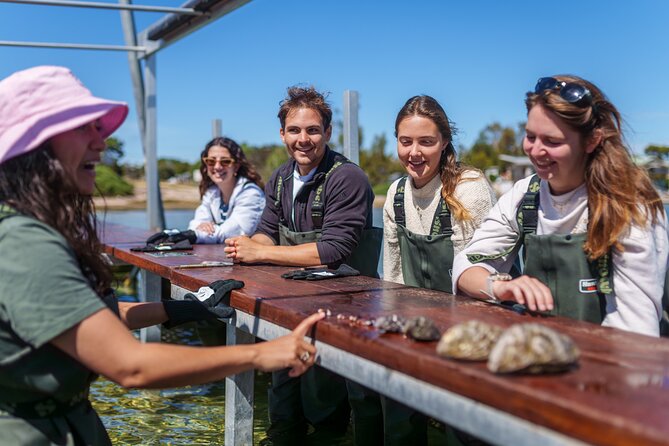
The tasting includes Pacific oysters and the native Coffin Bay Angasi oyster. Having both types gives you something useful to compare, rather than treating every oyster as the same.
Freshness is the central appeal. You taste oysters described as coming straight from the water, close to where they were grown. The experience is not built around heavy sauces or elaborate cooking. The point is to notice the oyster itself and understand why Coffin Bay has such a strong food reputation.
Availability can vary. On one occasion, Coffin Bay oysters were not available, so the tasting continued with oysters from elsewhere. The session still offered fresh oysters and a full farm experience, but this is worth keeping in mind if tasting a particular local variety is your main reason for booking.
If you are new to oysters, the guides make the tasting less intimidating. You can ask about the differences between Pacific and Angasi oysters, how to taste them, and what to look for. If you already enjoy oysters, the setting adds more than a restaurant order can. You are tasting the product at its source and seeing the work behind it.
People who do not eat oysters are not automatically excluded from the day. One participant who did not eat them had the oysters packed to take away. That arrangement is not described as a standard guarantee, so you should discuss your needs with the staff before the tour. Seafood allergies must be declared.
Learning to shuck without making a mess
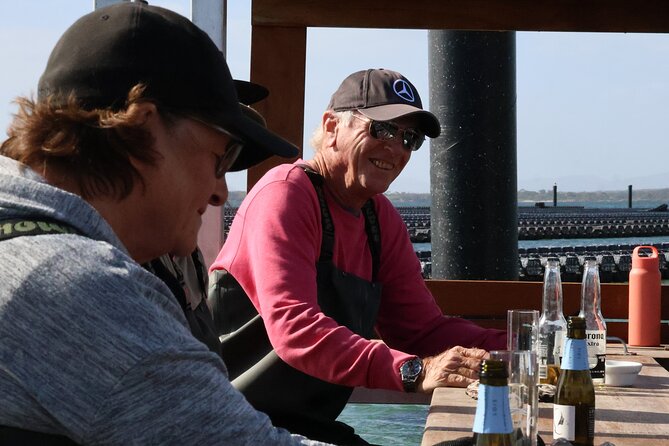
The shucking lesson is the most active part of the tasting. You are shown how to handle the oyster and shucking knife, then given the chance to open your own. It can take several attempts to find the right pressure and angle, but that is part of the appeal.
One participant reported having the technique down by the sixth oyster. You should not expect instant perfection, but you can expect guidance and encouragement. The lesson turns the tasting into a small skill you can take home, even if your first attempt is untidy.
Safety matters here. Follow the guide’s instructions closely and do not rush the knife work. The point is not to compete with the farmer. It is to learn a useful technique while sitting at the pontoon with the bay around you.
The shucking lesson also changes how you think about the food. An oyster stops being an anonymous item on a plate. You have handled the shell, opened it, and seen the care needed to prepare it. That makes the tasting more memorable, especially for first-time oyster eaters.
Same countryside, another kind of harvest:
- Amazing Yarra Valley Wine Tour + Chocolate, Farm Fresh, Gin
★ 5.0 · 1,566 reviews - Hidden Gems: Boutique Full-Day Wine, Farm & Lunch Tour
★ 5.0 · 881 reviews - Melbourne: Yarra Valley Wine, Choc, Farm Fresh, Gin Tour
★ 4.9 · 258 reviews - 3- Hour Wine and Harvest the Hunter Horse Tour in Pokolbin
★ 5.0 · 165 reviews
Wine, sparkling wine, and seafood options
The standard experience focuses on the farm visit, tasting, and shucking lesson. Depending on the option selected, you can add wine, a bottle of sparkling wine, or a seafood platter.
These upgrades may suit a special occasion, but they also change the value calculation. The base price is $68.14 per person, which I consider reasonable for a guided farm visit, equipment use, instruction, and fresh tastings. If you add a more elaborate food or drink package, compare the total cost with what you actually want to eat and drink.
The drink pairing fits the relaxed nature of the outing, especially if you are not driving afterward. Still, the tour takes place outdoors in a wet setting, so do not expect a formal wine-tasting room. This is a casual food experience with the bay as your surroundings.
One useful point from the feedback is that the basic format may be the better buy. A more expensive romance option was considered too costly by one participant, who recommended the normal tour or booking directly with Oyster HQ. If you want the farm experience rather than a special package, the standard choice may offer the clearest value.
Weather, clothing, and comfort
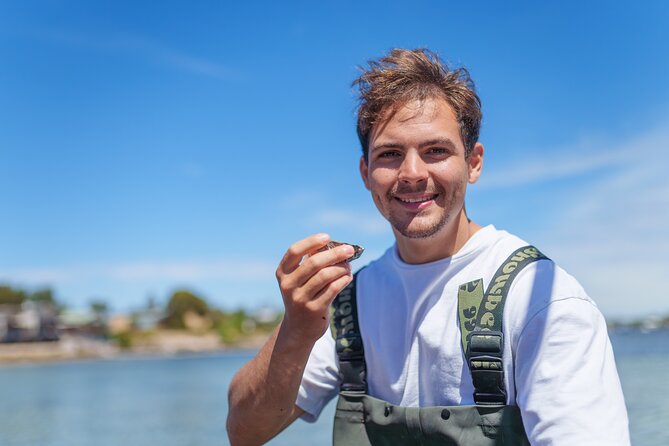
Weather is not a minor detail here. The experience requires good conditions and can be canceled if the weather is poor. If that happens, you are offered another date or a full refund.
On a warm day, bring a hat and dress lightly under the waders. On a cool day, take a jacket. In winter, a scarf and beanie may be useful. You should dress for the forecast rather than the season alone, since you will be outside and close to the water.
Bring your own socks. They are required for the waders, and you can buy a pair at the tour office if needed. Comfortable clothing matters because the waders go over what you are already wearing.
The experience is open to most people, and service animals are allowed. It is near public transportation, though you should confirm the best way to reach Oyster HQ for your own plans. The group can include up to 25 people, so this is not guaranteed to be a private tour. A larger group may feel lively, while a smaller departure can make it easier to ask questions.
Wildlife and the case for staying in Coffin Bay
Coffin Bay is worth more than a quick stop for the tour. The town is known for oysters and has abundant wildlife. Seals and dolphins are regularly seen during the outing, though wildlife sightings are never guaranteed.
Kangaroos and emus may also appear around town. That gives you another reason to stay locally instead of treating Coffin Bay as a side trip from Port Lincoln. Staying in town can make the morning or afternoon easier and gives you time to enjoy the seaside setting without a rushed return drive.
The tour begins and ends at Oyster HQ, so you do not need to arrange a separate transfer between the farm and another location. The experience does not include transport from Port Lincoln in the information provided, so plan your own route carefully if you are based there.
Who will enjoy this experience most
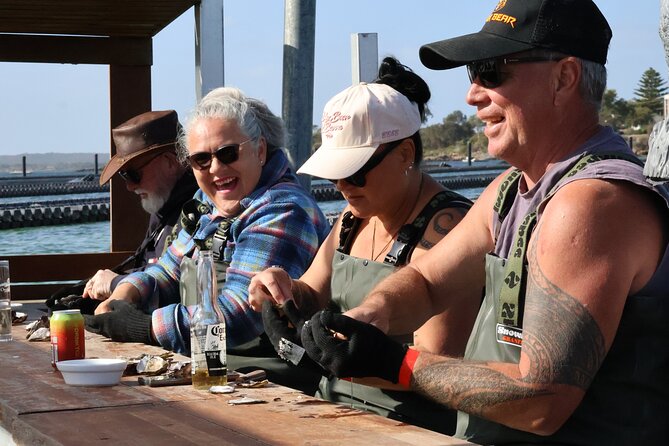
I would choose this tour if you enjoy local food, coastal settings, and activities where you learn by doing. It is particularly good for oyster lovers who want to see farming up close, rather than simply order a dozen at a restaurant.
It also works well for first-time oyster eaters. You receive an explanation of the product, a comparison of two types, and help with shucking. That takes away some of the uncertainty and gives you a reason to try the oyster in a relaxed setting.
Families and mixed groups can enjoy it too, though you should consider each person’s comfort with waders, shallow water, and seafood. One child with autism was included in a positive experience, but the supplied information does not describe specific sensory or mobility arrangements. If your group has particular support needs, contact the operator before booking.
I would be more cautious if you dislike seafood, dislike getting wet, or want a polished indoor tasting. The appeal here comes from the water, the farm setting, and the hands-on work. Those same features may feel like inconveniences if you prefer a dry, formal meal.
Is $68.14 good value?
At $68.14 per person, you are paying for more than the oysters. The price includes a guided farm visit, waders, access to the pontoon, local history, oyster farming instruction, a shucking lesson, and tastings.
That is a fair package for someone who values the activity as well as the food. The 90-minute duration also keeps the cost sensible compared with a longer excursion. You get a clear introduction to Coffin Bay’s oyster industry without giving up most of your day.
The value is weaker if you only want to eat oysters. In that case, a restaurant may let you choose exactly what you want, without the equipment and instruction. The tour earns its price through access and context, especially the chance to wade out to the farm area.
The current score is 4.9 from 142 ratings, with 97 percent recommending the experience. The most consistent praise centers on the fresh oysters, friendly guides, useful explanations, and the fun of wading to the pontoon. The main reservations are the cost of premium packages and the possibility that local Coffin Bay oysters may not be available on a particular day.
Should you book the Coffin Bay Oyster Farm Wading Tour?
Book it if you want an authentic Coffin Bay activity that combines food, place, and practical learning. The waders, floating pontoon, local history, and shucking lesson give it more character than a standard tasting.
Choose the regular option if value matters most, and add wine, sparkling wine, or a seafood platter only if those extras suit your plans. Bring socks, check the weather, and declare any seafood allergy in advance.
I would put this near the top of a Coffin Bay schedule for anyone who eats oysters or wants a gentle introduction to them. If you are not interested in seafood, the wildlife and setting may still appeal, but the price is harder to justify. For the right audience, this is a relaxed and memorable way to taste the bay where the oysters are raised.
FAQ
Where does the oyster farm tour start?
The tour starts at Oyster HQ, 100 Esplanade, Coffin Bay, South Australia 5607.
How long does the experience last?
The experience lasts approximately 1 hour and 30 minutes.
What happens during the tour?
You put on supplied waterproof waders, hear about Matthew Flinders and the local area, walk into the water to a floating pontoon, learn about oyster farming, taste Pacific and Angasi oysters, and practice shucking.
Are waders supplied?
Yes. Waterproof waders are supplied for the tour.
Do I need to bring socks?
Yes. Socks are required for using the waders. You can bring your own or purchase a pair from the tour office.
What should I wear?
Wear comfortable clothing that fits under the waders and dress for the weather. Bring a hat in hot conditions, a jacket in cooler weather, and a scarf or beanie in winter if needed.
Can I add wine or other food?
Depending on the option selected, you can upgrade to include wine, a bottle of sparkling wine, or a seafood platter.
How many people can join the tour?
The tour has a maximum group size of 25 people.
What happens if bad weather cancels the tour?
If poor weather causes cancellation, you are offered another date or a full refund. You can cancel up to 24 hours before the start time for a full refund.
Newly listed farm visits around Australia
- Alpaca Farm Tours with Toffeemont★ 5.0 · 8 reviews
- One Hour Coral Farm Tour, Discover Australia’s Marine Life★ 5.0 · 15 reviews
- Hook-A-Barra Fishing and Farm Activity★ 5.0 · 47 reviews
- Macadamias Australia Orchard Tour in Bundaberg★ 5.0 · 15 reviews
- Oyster Farm Tour with Hotel Pick-up and return from Port Lincoln★ 5.0 · 11 reviews
- Group Live Pearl Harvest Experience – Perth★ 5.0 · 2 reviews
- Newcastle: Country Towns River & Farm Tour with BBQ★ 5.0 · 3 reviews
- Honey Farm Tour. Morning Tea. Guided Tasting★ 5.0 · 3 reviews
Oyster Farm Tours, compared.
Experience Coffin Bay Oyster Farm and Bay Tour
Read our review →
Loupian: Tour guide of our oyster farm and tasting
Read our review →
Coffin Bay: Oyster Farm Boat Tour with Wading & 12 Oysters
Read our review →
Oyster Farm & Complimentary Tasting Sea Kayak Tour in Casco Bay
Read our review →
Oyster farm experience / Private day trip from Dubrovnik
Read our review →
Browse the lists this tour appears in