
Review · AROUND THE WORLD
Kolkhoz: Private visit to the cotton farmers’ village
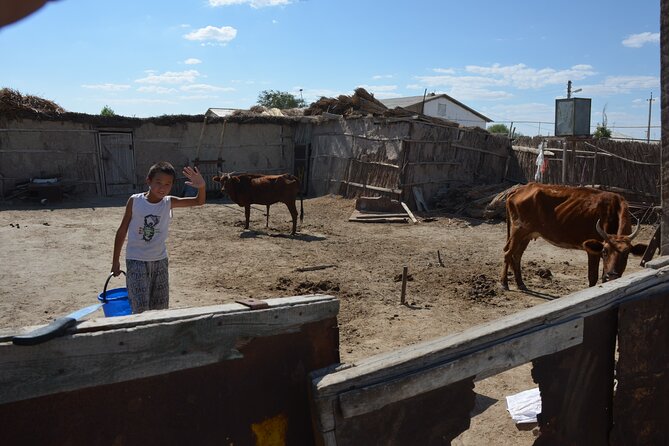
The heart of this day is not a monument. It is a family lunch, a walk beside the dry bed of the Zeravchan River, and a close look at cotton farming in a former Soviet collective farm. You meet people who live and work here, rather than simply passing through rural Uzbekistan by car.
I like the chance to share palov in a local home, where the meal becomes a real social meeting rather than a restaurant stop. I also like the way the tour connects daily life to Central Asia’s water shortage, with walks past irrigation channels, fields, a fish farm, and a beekeeper producing cotton honey.
The main thing to consider is the length and physical effort. This is a 10 to 11-hour private outing with about 7 kilometers of walking split between two sections, and much of the day takes place outdoors. The countryside is the point, but the heat, dust, and seasonal farming conditions may not suit everyone.
Key points to know before you go
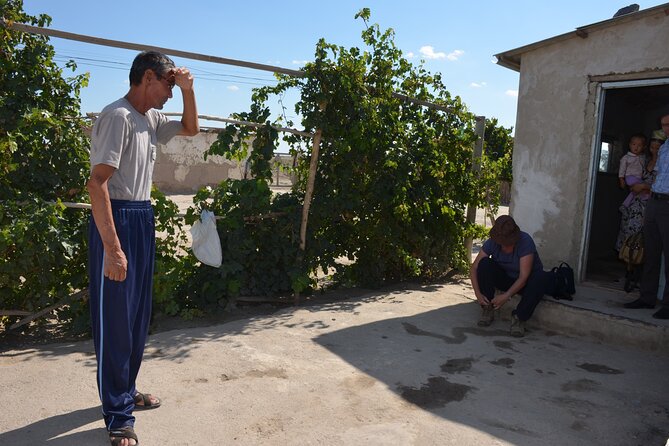
- Former kolkhoz life: Visit a village shaped by the Soviet collective-farm system and meet people who lived through that period.
- A family palov lunch: Share the traditional rice dish in a local home, with about two hours set aside for the meal and conversation.
- The dry Zeravchan basin: Walk beside a river whose water is used for irrigation, revealing the region’s serious water pressures.
- Cotton changes with the season: See young crops in spring, flowering plants from early June, and harvesting activity in September and October.
- A possible school visit: French-speaking visitors can request a meeting with students studying French, but the school must approve it in advance.
- A private, flexible day: Transport and an English- or French-speaking guide are included, and only your own group takes part.
Why this rural day near Samarkand feels different
Samarkand is famous for blue-tiled monuments and grand Timurid architecture. This excursion takes you somewhere less polished and more revealing: a former kolkhoz, or Soviet collective farm, where agriculture still shapes the day.
You see how a rural community works, meet former kolkhozians, and spend time with families in their own setting. The point is not a staged village show. It is a chance to understand ordinary life outside the city, including the work, hospitality, and environmental pressures that define it.
The tour costs $90 per person. For a private day with transport, a guide, and lunch in a family home, that is a fair price, especially if you are traveling with several people and can use a group discount. The value comes from access and time. You are not simply stopping for a photograph. You have a full meal, a long walk, and direct contact with rural residents.
Still, this is not the right pick if you want a short sightseeing trip or a carefully air-conditioned schedule. The experience depends on being outdoors and willing to walk across farm areas. The day lasts roughly 10 to 11 hours, so plan it as one of your main Samarkand outings rather than a quick add-on.
More farm tours around the world:
- Half-Day Thai Cooking Class at Organic Farm in Chiang Mai
★ 5.0 · 19,087 reviews - Florence Pizza or Pasta Class with Gelato Making at a Tuscan Farm
★ 5.0 · 6,801 reviews - From Porto: 2 Wine Regions, Farm-to-Table Lunch & Boat
★ 4.9 · 5,724 reviews
The Thursday market at Payshanba Bozor
If your schedule lines up with Thursday, the day can begin at Payshanba Bozor, a local market open from about 6 a.m. until 2 p.m. This is a working market, not a souvenir display. You may see livestock, clothing, food, and the broad mix of goods that rural households buy and sell.
The timing matters. Arriving early gives you the best chance of seeing the market at its most active, but the stop is only listed for about an hour. You should not expect a long, leisurely market visit followed by a late departure. The market is an optional-feeling first stop tied to the day’s route, and it only makes sense on Thursday.
I like this opening because it gives you a quick look at local trade before you reach the village. It also helps set the tone: this is a day about how people live, work, and buy food, not only about scenic views.
If your visit falls on another day, the main village program remains the focus. The market is not available every day, and the information provided does not promise a substitute market stop.
Tea with the family and a slower welcome
Around 10 a.m., you arrive in the village and meet a local family over welcome tea. Allow about an hour for this first meeting. That may sound simple, but it gives the day a useful pause after the drive from Samarkand.
Tea is also where the private format matters. With only your group taking part, the meeting can feel less rushed than a large bus stop. You have room to ask questions, listen to the guide, and get a sense of the family before setting off on foot.
Do not expect a formal lecture about Soviet agriculture. The value is in the personal setting and the chance to see rural hospitality at close range. The people you meet are described as former collective-farm workers, and the visit gives you a human view of a system that can otherwise seem like a dry term from a history book.
The guide speaks English or French. For French-speaking people, the tour can also arrange a meeting with students learning French, but that requires advance notice and approval from the school administration.
Walking beside the Zeravchan River
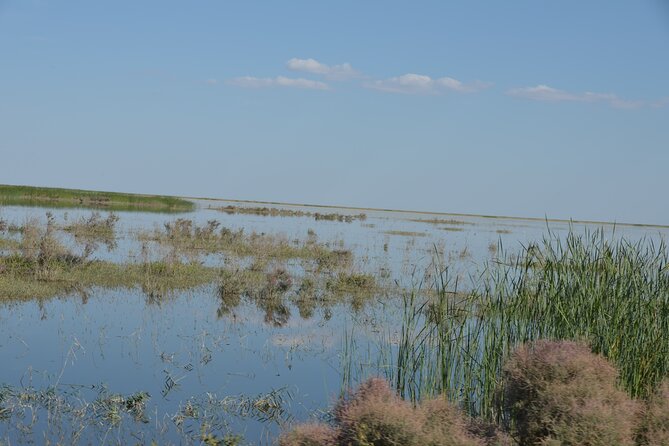
The first major walk covers about 4.5 kilometers and takes roughly two and a half hours. You head toward the Zeravchan River, though the important surprise is that the river’s water is fully used for irrigation.
You see a dry river basin and crops growing in or beside the riverbed. There is also a fish farm along this route. The walk makes Central Asia’s water problem easier to understand because you are not hearing about it in the abstract. You are looking at a river system whose water is being directed to fields, leaving a dry basin in its place.
This is one of the strongest parts of the experience for anyone interested in farming, climate, or the practical side of life in Uzbekistan. The region is among the driest areas on Earth, and agriculture depends on moving limited water to crops. The route shows both the usefulness of irrigation and its cost.
You should prepare for a real walk, not a stroll from one paved attraction to another. The tour description does not provide a detailed trail surface or shade information, so sensible shoes, water, and sun protection are wise choices. The guide can explain what you are seeing, but the physical setting remains rural and exposed.
The fish farm adds another useful detail. It shows that local production is not limited to cotton. Fish farming makes use of the available water system, while later stops introduce beekeeping and cotton honey.
Same countryside, another kind of harvest:
- Cooking Class and Lunch at a Tuscan Farmhouse with Local Market Tour from Florence
★ 5.0 · 4,831 reviews - Chiang Mai: Authentic Cooking Class with Market & Farm Visit
★ 4.9 · 4,546 reviews - Tromsø: Reindeer Camp and Sami Cultural Tour with Lunch
★ 4.7 · 3,326 reviews - Maui Pineapple Farm Tour in Haliimaile
★ 5.0 · 2,855 reviews
A two-hour palov lunch in a local home
After the river walk, lunch is served at a local home. The meal is palov, Uzbekistan’s famous rice dish, and about two hours are reserved for it.
This is more than a convenient meal break. Preparing and sharing palov gives you a way into family life, food traditions, and hospitality. A long lunch also leaves time for conversation, even when language makes things slower. One especially memorable part of the experience is the preparation of the palov itself, followed by eating with the family.
You should not expect the speed or menu of a city restaurant. The meal is part of the visit, and the setting is intentionally domestic. That is precisely why it has value. If your ideal tour includes a polished dining room and many menu choices, this may feel basic. If you want a personal meeting built around food, it is one of the day’s best features.
Lunch is included, along with family-style meals. Personal expenses are not included, so bring some money for anything extra, though the main meal itself is covered.
Cotton fields, beekeeping, and seasonal work
After lunch, you head into cotton fields that stretch across the countryside. This second walking section covers about 2.5 kilometers and takes another two and a half hours.
The fields change noticeably through the year. Cotton is planted in April, flowers begin appearing in early June, and picking takes place in September and October. A spring visit may show new growth rather than ripe cotton. A September or October visit may bring you closer to the harvest, with the possibility of seeing or assisting with cotton picking.
April and May can also bring silkworm breeding activities. These seasonal details make the month of your visit important. You will not see every farming activity on every departure, so ask ahead if one particular subject, such as cotton picking or silkworms, is a priority.
The tour may also include time with a beekeeper producing cotton honey. You can see the farm and learn how local production connects the cotton fields with beekeeping. This is a small but memorable detail, since it links two rural activities that you might not otherwise associate.
The walking route and agricultural timing are strengths, but they also create uncertainty. A field visit is not a museum exhibit with a fixed display. What you see depends on the growing cycle, the weather, and what work is taking place that day.
The optional French-language school visit
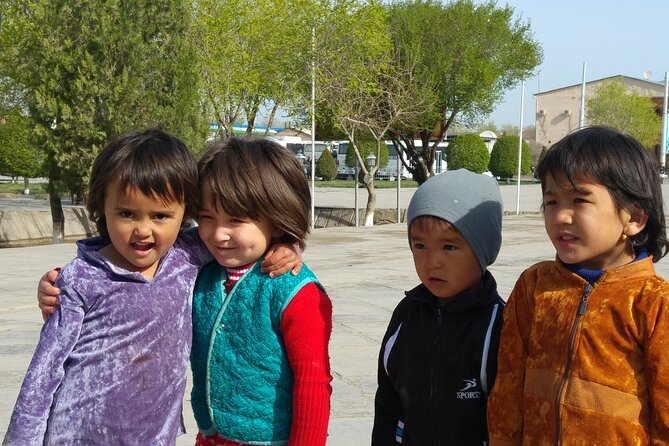
A countryside school teaches French as a foreign language, and a visit can be arranged to meet students and teachers. For French-speaking visitors, this could be one of the most personal moments of the day.
The school visit is not automatic. The school administration must be notified in advance, and permission is required so the visit does not interrupt classes. You should request it when booking rather than assuming it can be added at the last moment.
The meeting has a clear educational value. You see French being studied in a rural Uzbek setting and meet young people whose daily surroundings are far removed from France or French-speaking countries. A school visit can also help break down the language barrier that may exist during the family meeting, though you should still let the guide manage expectations.
The visit is planned for about an hour. Since it depends on approval, treat it as an arranged extra within the day rather than a guaranteed walk-in stop.
Walking, transport, and the private format
Private transportation is included, and the guide speaks either English or French. Pickup is offered, which makes the long day easier to manage from Samarkand.
The private arrangement is useful for this kind of outing. The day combines a market, a family meeting, two walking routes, lunch, farmland, and perhaps a school. A fixed public group would have less room to adjust the pace or spend extra time on a conversation.
You should still expect a full schedule. The village program itself is listed at about eight hours, with the market and possible school visit adding to the overall day. The total outing runs approximately 10 to 11 hours.
The route includes about 7 kilometers of walking in two sections. Most people can take part, but you should be comfortable walking for several hours in rural conditions. Good footwear is more useful here than dress shoes, and water and sun protection are practical choices.
The experience requires good weather. If conditions force a cancellation, you can receive a different date or a full refund. The same applies if the minimum number of participants is not reached. Free cancellation is available up to 24 hours before the start time, while later cancellations and changes are not refunded or accepted.
Who will get the most from this experience
I would choose this outing if you want to:
- See how rural communities outside Samarkand live and work
- Meet a family in a home setting
- Understand irrigation and water shortages through direct observation
- Visit cotton fields at a particular point in the growing cycle
- Share a traditional meal rather than eat at another city restaurant
- Arrange a meaningful French-language school visit
- Spend a full day outside with a private guide and vehicle
I would think twice if your priority is architecture, shopping, or a compact half-day schedule. The outing does not replace Samarkand’s major monuments, and it involves long walks with no promise of perfectly comfortable conditions.
It also suits people who enjoy asking questions and allowing time for conversation. The strongest moments are not quick photo stops. They come from sitting with a family, watching palov being prepared, and noticing how water affects every field around the village.
Is the $90 price good value?
At $90 per person, the cost is easiest to justify when you value private access and a full day outside the city. Transport, a guide, and lunch are included. You also receive several separate experiences: a possible market visit, a village welcome, a river walk, a fish farm, a family meal, cotton fields, and a beekeeper.
The price is less compelling if you only want to see cotton fields from a vehicle. The experience asks you to spend a long day walking and talking, so its value depends on your interest in rural life.
Group discounts may improve the price for larger private parties. Since the tour is booked well ahead on average, planning early is sensible, especially if you want the school visit or a particular farming season.
Should you book this rural Uzbekistan experience?
Book it if you want a grounded counterpoint to Samarkand’s grand buildings. The family palov lunch, the dry Zeravchan basin, and the chance to see cotton farming up close give the day a clear purpose.
I would especially recommend it for people interested in food, agriculture, village life, environmental issues, or French-language education. Choose a different outing if you dislike long walks, outdoor heat, or plans that change with the farming calendar.
For the best match, tell the provider your preferred language, ask about the school visit in advance, and choose your date with the cotton and silkworm seasons in mind. This is a long day, but it offers a kind of understanding that a city sightseeing loop cannot.
FAQ
Where does the tour begin?
The experience takes place near Samarkand, and pickup is offered. Private transportation is included.
How long does the experience last?
The full outing takes approximately 10 to 11 hours. The village program itself lasts about eight hours, with additional time for the route and possible stops.
What is included in the price?
Private transportation, an English- or French-speaking guide, and lunch in a family setting are included.
Is lunch served in a restaurant?
No. Lunch is served at a local home and features palov, the traditional Uzbek rice dish.
How much walking is involved?
The route includes about 4.5 kilometers of walking to the Zeravchan River and about 2.5 kilometers through the cotton fields. Each section takes roughly two and a half hours.
Can I visit Payshanba Bozor?
The market can be visited on Thursday, when it operates from approximately 6 a.m. to 2 p.m. The market sells livestock, clothing, and food.
Can I meet students studying French?
A school visit can be arranged, but the school administration must approve it in advance. The visit should be requested before the tour.
What can I see in the cotton fields?
Cotton is planted in April, begins flowering in early June, and is harvested in September and October. Seasonal activities may also include silkworm breeding in April and May.
Is this a private experience?
Yes. Only your own group participates, with a private vehicle and guide.
What happens if the weather is poor?
The experience requires good weather. If it is canceled for that reason, you can choose another date or receive a full refund.
Newly listed farm visits around the world
- Half-Day Farm Visit and Cow Milking Experience★ 5.0 · 16 reviews
- Boutique tour , Mt Maunganui, NZ farm, Rotorua lakes/geothermal★ 4.5 · 50 reviews
- Gourmet Mushroom Farm Tour in Tennessee★ 5.0 · 5 reviews
- Cozy Farm Experience with Wagon Wheels and Acoustic Meal★ 5.0 · 2 reviews
- Alpaca Farm Tours with Toffeemont★ 5.0 · 8 reviews
- Private, via beaches, Kiwi farm to Rotorua 8 lakes & Geothermal★ 5.0 · 20 reviews
- Animal farm park with free hotel pickup★ 5.0 · 2 reviews
- 1D Tour to Cingjing Farm from Taichung★ 4.5 · 3 reviews