
Review · HERAKLION
Traditional Olive Grove and Dragon Fruit Farm Tour
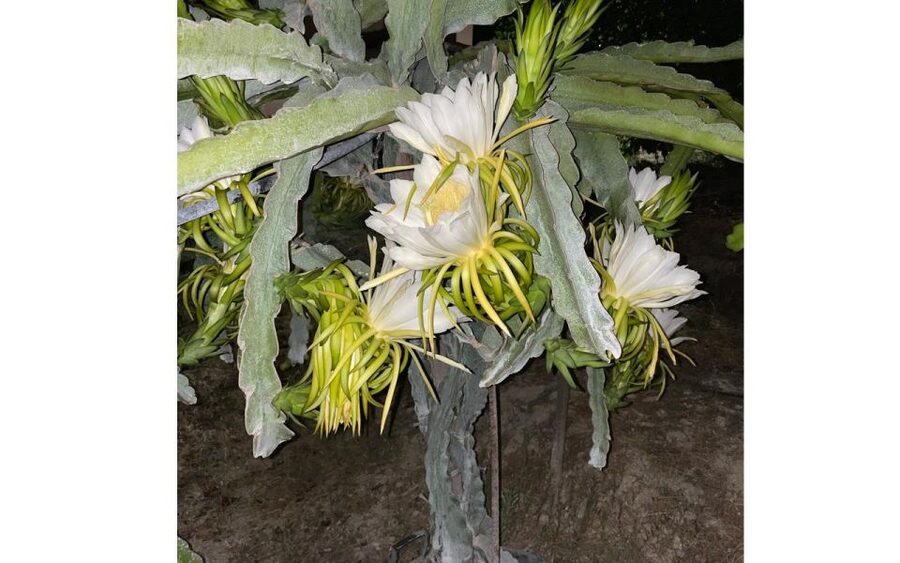
Crete’s olive oil tradition gets a fresh twist here: alongside old family olive trees, you’ll see dragon fruit, a relatively new crop on the island. I like the mix of familiar Cretan food and an unusual agricultural story, and I like that Alex leads the visit in a warm, personal way rather than giving you a polished museum talk. The main thing to consider is timing. Although the visit is sold as 90 minutes, some groups finish in about an hour.
I especially like the generous tasting table, with bread, olive oils, olives, yogurt, tomatoes, honey, marmalade, and dragon fruit products appearing in different combinations. I also like the chance to handle the farming tools and ask direct questions about planting, harvesting, and extraction. This is a small farm visit, not a large working estate with a long route, so you should book it for the human contact and food, not for a full-day agricultural program.
Key points to know before you book
- Alex gives the tour in English or Greek, with clear explanations about the family farm and its crops.
- The farm has about 2,500 olive trees, making the olive-growing story more than a token photo stop.
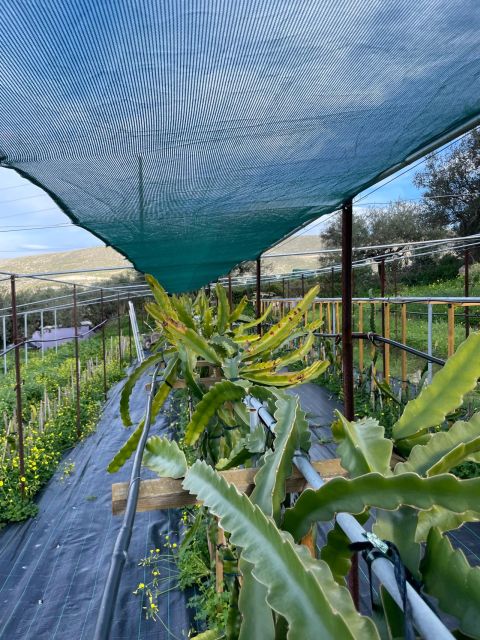
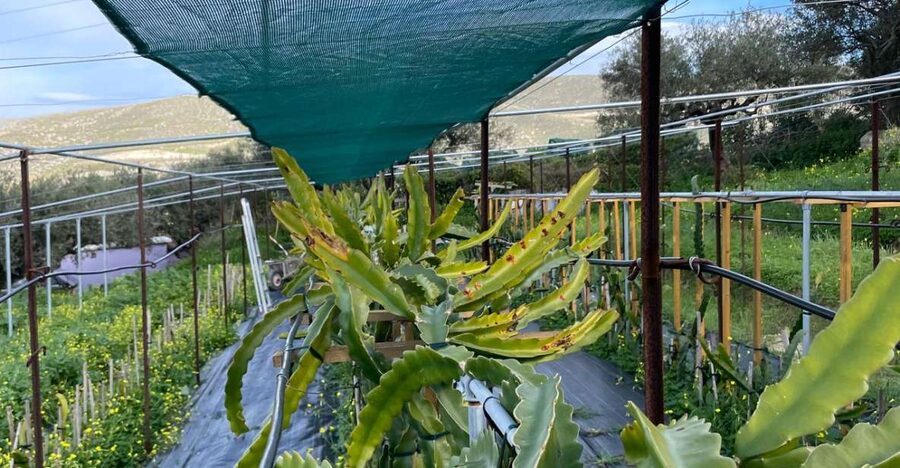
- Dragon fruit is the unusual feature, offering a look at a newer Cretan crop and its cultivation.
- The tasting is a major part of the visit, with local bread, olive oil, olives, fruit, tea, and other farm products.
- Free parking sits beside the farm sign, on the right as you drive up.
- The advertised price is $9 per person, with the tasting and coffee or tea included, but any products you buy cost extra.
Why this small Crete farm visit is worth your time
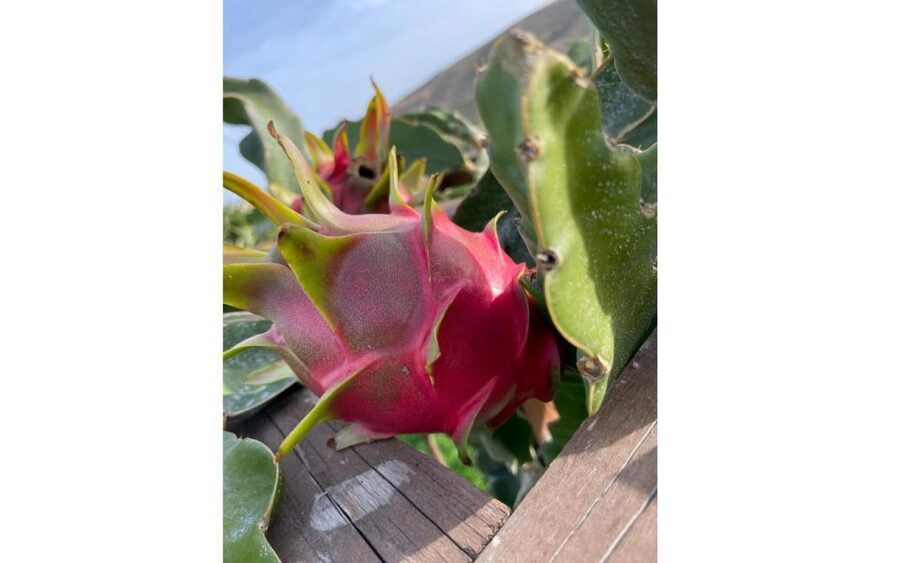
Many food experiences in Crete focus on eating. This one adds the useful question of where the food begins. You walk among olive trees, see dragon fruit growing on the farm, and hear how both crops are handled. That simple connection between field and table is the best reason to come.
The setting is relaxed and rural. You are not being hurried from one display to the next, and the private-group format allows questions. Alex can explain the work in English or Greek, and the personal nature of the visit comes through in the way he talks about the family business.
I also appreciate the modest scale. You are not signing up for a long coach excursion or a crowded commercial attraction. The farm gives you a close look at tools, trees, plants, and products, followed by time on the patio with something to eat and drink.
The visit is particularly good if you want a short activity between larger sightseeing stops. At 90 minutes on paper, it fits neatly into a day around Crete. Just leave room for variation. Some groups spend closer to an hour because the farm itself is compact, while others linger over questions and the tasting.
More Olive Grove Tours in Greece
- Heraklion: Olive Farm Tour with Tasting of Local Delicacies
★ 4.9 · 411 reviews - Kleanthi Olive Farm: Guided Tour with Local Delicacies Tasting
★ 5.0 · 51 reviews - Private Traditional Olive Grove and Dragon Fruit Farm Tour
★ 5.0 · 29 reviews
Arriving at the farm and finding the meeting point
The meeting point is the Traditional Olive Grove and Dragon Fruit Farm. Look for the farm sign on the right side of the road as you drive up. Parking is free and next to the sign, which makes arrival fairly simple if you are driving.
You receive further directions after booking, so keep an eye out for them. That matters here because a family farm is different from a major attraction with a large entrance and obvious ticket office. The sign and the additional directions should help you avoid passing the turn.
The activity is offered as a private group, and the host meets you at the farm. There is a shaded waiting area, useful in Crete’s strong summer sun. The farm experience does not appear to depend on a large visitor center, so arrive ready for an outdoor visit rather than a formal indoor presentation.
Wear sensible footwear. Bare feet are not allowed, and the visit takes place around trees, plants, and farm areas. The rules also prohibit alcohol, drugs, littering, and explosive substances. These are basic farm-safety expectations, but they are worth knowing before you arrive.
Walking through olive trees with Alex
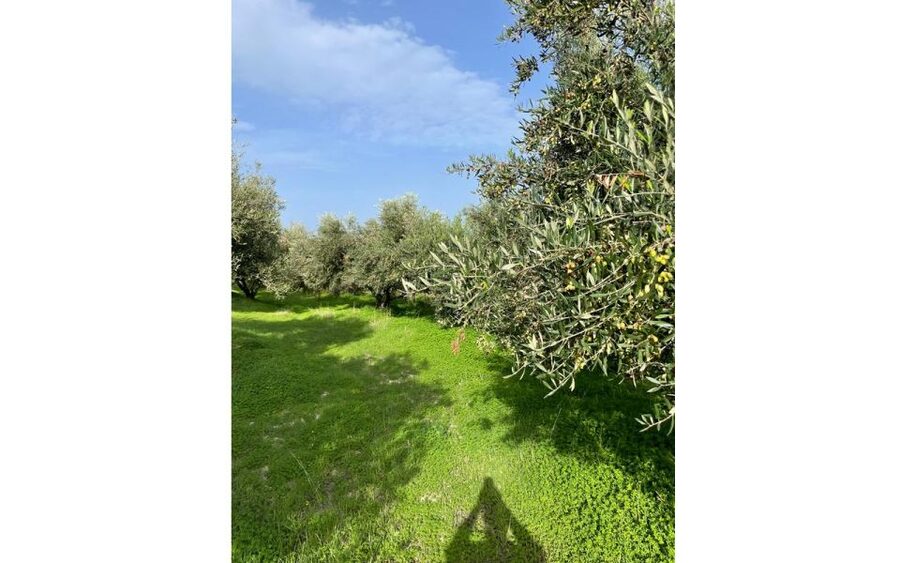
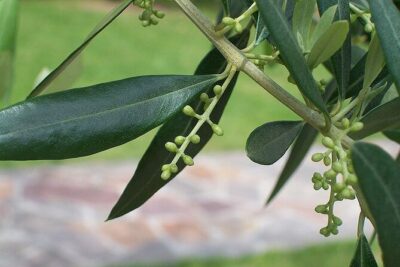
The first part lasts about an hour, though the exact pace can change. Alex introduces the olive grove and explains how olive trees are cultivated over the year. You learn about planting, care, harvesting, and the work that turns fruit into olive oil.
The farm has been in the family for generations, with olive cultivation continuing for more than five decades. That background gives the talk a useful local scale. You are hearing about an active family operation, not a general speech about Mediterranean agriculture.
One of the best parts is the chance to see and touch the tools. You may also try some of the work yourself. That small hands-on element helps you understand how much effort sits behind a bottle of oil. A lecture about harvesting can feel abstract. Holding the equipment and seeing the trees close up makes it more concrete.
The grove includes around 2,500 olive trees. You are not walking through every one, of course, but that number gives the farm’s olive production real weight. The visit explains the steps from tree to finished oil, including olive oil extraction.
The olive story also connects directly to Cretan food. Olive oil is not treated as a souvenir alone. You learn why it is such a daily part of local cooking, then taste it with bread in the way many people in Crete enjoy it.
Alex’s style is a strong part of the experience. He is described as friendly, funny, and enthusiastic, and his English is clear. That combination matters because farming terms and production methods can be hard to follow if the presentation is rushed or overly technical. Here, you can ask questions and get a direct answer.
Dragon fruit in a Cretan setting
The dragon fruit section makes this farm different from a standard olive oil visit. Dragon fruit is associated with warmer parts of the world, yet it has found a place in Crete and is becoming an important local cultivation.
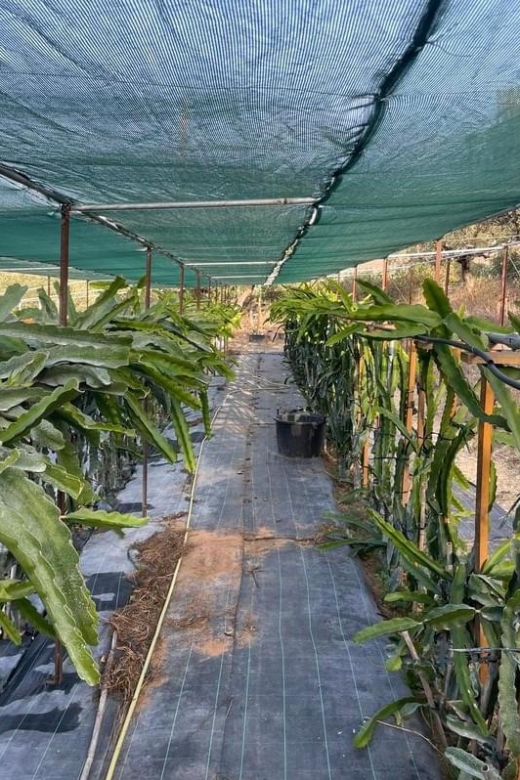
You walk among the plants and learn how this crop is grown. If fruit is available, you may harvest your own. Availability matters, so do not treat picking as guaranteed. The chance to see the fruit on the plant, rather than only in a bowl, is still valuable.
I like this part because it shows that Cretan farming is not frozen in the past. The olive trees represent a long-running tradition, while dragon fruit shows growers testing crops that suit the island’s conditions. You get both sides of the story in one short visit: established agriculture and a newer experiment.
The dragon fruit also returns at the tasting table. Depending on the season and supply, you may sample fresh fruit or other dragon fruit products, including dragon fruit tea. A dragon fruit and local herb infusion is included as an alternative to espresso or Greek coffee.
The crop may be especially interesting for families and younger visitors. Children can see an unfamiliar fruit growing, learn how it is harvested, and taste it afterward. The experience has worked well for mixed-age groups, including teenagers and older adults, because it combines a short walk, conversation, and food.
Same countryside, another kind of harvest:
- Mykonos: Farm, Ano Mera Village, and Beaches Guided Tour
★ 4.4 · 1,283 reviews - Crete: Road-trip to Lasithi, Zeus Cave & Olive Mill Farm
★ 4.4 · 451 reviews - Lassithi, Zeus Cave, Olive Mill Farm & Knossos Combo Tour
★ 4.6 · 404 reviews - Naxos Perivoli Farm Experience & Wood-fire Cooking Class
★ 5.0 · 339 reviews
The patio tasting, from olive oil to dragon fruit tea
The tasting is not a tiny spoonful followed by a sales pitch. You dip local bread into olive oil and taste it in a straightforward Cretan style. Depending on what is prepared, the spread can include olives, tomatoes, yogurt, honey, marmalade, and bread, along with dragon fruit products.
Some tastings include a large platter of dragon fruit. Others feature dragon fruit tea, olive oil, homemade products, and local ingredients. The exact selection can vary, but the central idea is consistent: you taste the farm’s products in a comfortable patio setting.
You can choose espresso, Greek coffee, or dragon fruit and local herb-infused tea. That choice gives the break a personal touch. If you want the most unusual option, choose the dragon fruit tea. If you prefer a familiar Cretan pause, coffee works just as well.
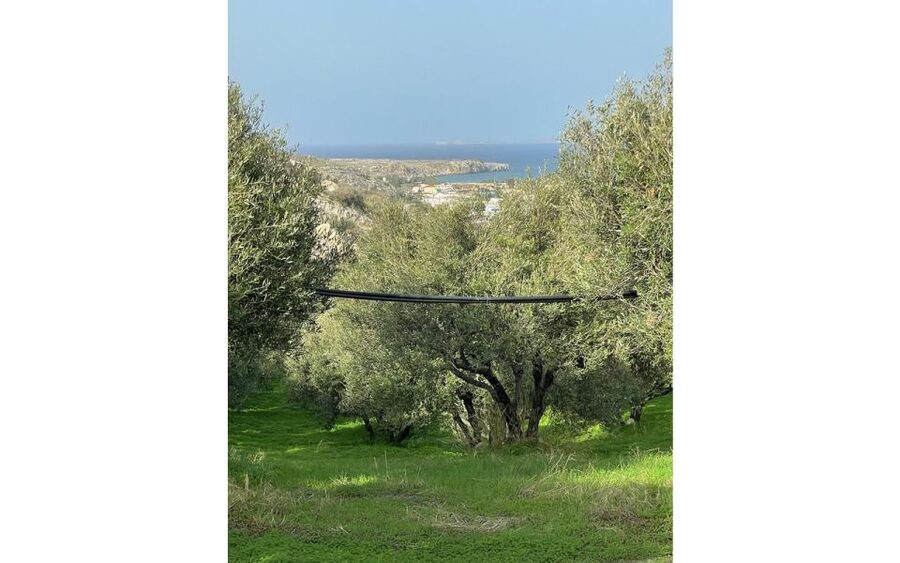
The patio overlooks the orchard, giving you time to slow down after the walking portion. This is where the visit feels less like a lesson and more like being welcomed into a family food tradition. Alex can continue answering questions, and you can ask about the products before deciding if you want to buy anything.
The tasting is included in the admission price. Products for purchase are not included, so treat the shop portion as optional. Available items can include specially packed olive oil, olives, harvested dragon fruit, and dragon fruit tea. Buying something can extend the experience at home, but the visit is still worthwhile if you only want the included food and drink.
What the $9 price really includes
At $9 per person, this is a strong value if you want a personal farm visit rather than a large attraction. You receive a guided walk, an explanation of olive cultivation and extraction, a look at dragon fruit production, and a tasting with coffee or tea.
The price is especially fair because the food portion is not an afterthought. Bread and olive oil are included, and the tasting may also include several other local products. You are paying for the setting, the time with the host, and the food, not just access to an olive grove.
The main value depends on your expectations. If you want a long agricultural tour with machinery, a full harvest demonstration, or a large museum, this will feel too brief. If you want an approachable introduction to Cretan olive oil and a chance to see an unusual crop, the cost is easy to justify.
The visit also offers a separate entrance for people who have reserved, which can make arrival smoother. Cancellation is free up to 24 hours before the activity, and you can reserve now and pay later. Starting times depend on availability, so check the schedule when you choose your date.
Who should book this experience
I would recommend the farm to couples, families, food-focused visitors, and anyone who wants a quieter change from major Cretan sights. It works well for groups with different ages because nobody needs to manage a long walk or a difficult activity.
The farm is also a good fit if you care about how food is made. You learn about cultivation, harvesting, extraction, and tasting in one place. That is more useful than simply buying a bottle in a shop without knowing how to assess its flavor or origin.
You should also book it if dragon fruit interests you. This is not just an olive grove with a decorative plant or two. The crop receives its own explanation, and you may be able to harvest fruit if supplies allow.
I would be more cautious if your schedule is extremely tight. The advertised duration is 90 minutes, but the actual visit can be shorter. The activity is small and informal, so it may not provide enough structure for someone seeking a packed, hour-by-hour excursion.
Babies under one year and people over 95 are listed as unsuitable for the activity. The private-group setup can help with comfort and questions, but the farm rules and outdoor setting still apply to everyone.
The small details that make the visit feel local
The best moments here are ordinary ones: bread dipped in fresh olive oil, a cup of Greek coffee, fruit picked from a plant, or a conversation about how the family works the land. None of these requires a grand attraction, and that is the point.
I also like that the tasting is not limited to one product. Olive oil, olives, honey, yogurt, tomatoes, marmalade, dragon fruit, and herbal tea create a broader picture of local eating. You get to compare familiar Cretan ingredients with a crop that is still new on the island.
The views from the patio add to the appeal, but the food and the host carry the experience. Alex’s warmth and clear English are repeatedly praised, and that is important in a short tour. A friendly guide can turn 60 minutes of information into a visit you remember. A stiff presentation cannot.
The farm also avoids the feeling of a rushed stop built only around purchases. You can buy products if you want, but you first spend time learning and tasting. That order makes the shopping optional rather than the main purpose.
Should you book the olive grove and dragon fruit farm?
Book it if you want a low-cost, personal introduction to Cretan olive oil, with the bonus of seeing an unusual crop. The combination of a family farm, hands-on tools, olive oil tasting, dragon fruit, and patio refreshments gives you plenty for the price.
I would choose this activity for a relaxed morning or afternoon, especially if you are driving and want free parking. It is also a smart pick for families with older children and for mixed-age groups who prefer a short, social outing.
Skip it if you need a long, highly structured agricultural tour or a guaranteed harvest session. Dragon fruit picking depends on availability, and some visits finish closer to an hour than 90 minutes.
For most visitors who enjoy food, local stories, and small-scale experiences, the $9 admission is easy to recommend. Just arrive with realistic expectations: this is a welcoming family farm visit, not a full production plant or an all-day excursion.
FAQ
Where does the olive grove and dragon fruit farm tour begin?
It begins at the Traditional Olive Grove and Dragon Fruit Farm. Look for the sign on the right side of the road as you drive up. Free parking is next to the sign.
How long does the activity last?
The stated duration is 90 minutes. The guided farm portion is planned for about one hour, followed by a 30-minute break, but some visits may finish in about an hour.
What languages are available?
The live tour is available in English and Greek.
Is the tour private?
Yes. The activity is offered for a private group.
What food and drinks are included?
You receive an olive oil tasting with local bread. You can also choose espresso, Greek coffee, or dragon fruit and local herb-infused tea. The tasting may include olives and other local products.
Can I buy olive oil or dragon fruit products?
Yes. Purchases are optional and are not included in the admission price. Products may include olive oil, olives, specially packed dragon fruit, and dragon fruit tea.
Can I cancel or pay later?
You can cancel up to 24 hours in advance for a full refund. You can also reserve now and pay later, so no payment is required today.
More Fruit Picking Farms in Greece
- Insightful Pistachio Orchard and Factory Tour
★ 4.5 · 27 reviews - Aegina: Organic Pistachio Orchard Tour with Factory Visit
★ 4.6 · 22 reviews - Heraklion:Olive & Dragon Fruit Farm Tour & Cretan Farmers Brunch
★ 4.0 · 2 reviews - Valencia: Orange Farm and Orchard Trip with Tastings
★ 4.9 · 702 reviews
Newly listed farm visits around Greece
- Insightful Pistachio Orchard and Factory Tour★ 4.5 · 27 reviews
- Private Olive Oil tasting & Liqueur experience★ 5.0 · 17 reviews
- Santorini 5 Hour Private Oia Tour & Lunch/Dinner at a Local Farm★ 5.0 · 40 reviews
- Flavors of Santorini: Farm-to-Table Meal Wine & Authentic Village★ 5.0 · 12 reviews
- Cooking Class Sunset Dinner and Tour in Paros Farm★ 5.0 · 5 reviews
- Katakolon 7hour tour : Olympia-Honey Farm-Winery-Beach★ 5.0 · 53 reviews
- Olympia Shore Ex: Olympic site, Honey Farm & Olive Oil Tasting★ 4.5 · 57 reviews
- Naxos Farm Experience and cheese making★ 5.0 · 5 reviews
Fruit Picking Farms, compared.

Private Traditional Olive Grove and Dragon Fruit Farm Tour
Read our review →

Gettysburg: Horse-Drawn Carriage Tour Countryside & Orchards
Read our review →

Aegina: Organic Pistachio Orchard Tour with Factory Visit
Read our review →
Mattituck Bike Wine Country and Fruit Orchard Tour
Read our review →Browse the lists this tour appears in