
Review · CHIANG MAI
Chiang Mai: HALF-DAY COOKING COURSE at a Thai Cooking Farm
Chiang Mai’s Rice Barn Thai Cooking Farm turns a cooking lesson into a full food day. You start at a local market, learn what those unfamiliar herbs and vegetables do, then cook five Thai dishes at your own stainless-steel station. The market visit gives the recipes useful context, while instructors such as Oily, Katie, Timi, and Gobby keep the class clear and lively.
I like the true hands-on format and the open-air setting beside gardens where some produce is grown. I also like the value: for $28, you get hotel transport, ingredients, drinks, five dishes, and a digital recipe book.
The main consideration is that the ingredients are portioned in advance, so this is more about cooking with confidence than mastering every step from scratch. You also make a great deal of food, so arrive hungry and expect a long, filling session.
What makes this Chiang Mai cooking class worth your time
- A market visit comes first: Learn about Thai vegetables, spices, fruit, and coconut milk before reaching the kitchen.
- Every person cooks: You work at an individual station rather than simply watching a chef.
- Five familiar Thai dishes: The menu commonly includes tom yum, pad Thai, cashew chicken, mango sticky rice, and a choice of green or panang curry.
- Instructors keep the pace friendly: Oily, Katie, Timi, and Gobby are among the teachers used for different sessions.
- The farm setting adds breathing room: Cooking takes place in an open-air kitchen near gardens and working fields.
- The price covers the useful extras: Hotel pickup and drop-off, an air-conditioned vehicle, ingredients, tea or coffee, and a recipe e-book are included.
From Chiang Mai hotel pickup to the local market
The day begins with pickup at your Chiang Mai hotel in an air-conditioned vehicle. That simple detail matters. Chiang Mai’s cooking schools can sit outside the old city, and arranging transport on your own would add time and uncertainty to a six-hour activity.
The first meaningful stop is a local market. This is not just a quick walk past stalls before the real class begins. Your instructor introduces the ingredients that will appear later in the recipes, including Thai vegetables, herbs, spices, fruit, and other pantry staples.
You might see ingredients that are easy to ignore on a restaurant menu but important in the pot. The market visit helps you connect the look and smell of an ingredient with the finished dish. One especially interesting detail is the chance to see how coconut milk is made, a useful bit of food culture that makes Thai curries feel less mysterious.
The market also gives you a chance to ask practical questions. Which chili is hot? What does galangal look like? How is Thai basil different from other basil? The exact lesson depends on the instructor and the day, but the aim is clear: help you recognize the building blocks before you start chopping and stirring.
The market can also be a small shopping opportunity. One class participant returned later to buy produce, which makes sense if you want to take a little of Chiang Mai’s food culture home. Still, keep the stop in perspective. This is an introduction to the ingredients, not a full market-shopping tour.
More Half-Day Trips in Chiang Mai:
- Half-Day Thai Cooking Class at Organic Farm in Chiang Mai
★ 5.0 · 19,087 reviews - Chiang Mai Farm Life & Khao Soy Tasting on a Half-Day Boat Tour
★ 4.5 · 64 reviews - Half-Day Thai Cooking Class on a Local Farm Near Chiang Mai
★ 4.9 · 32 reviews
Arriving at the Rice Barn open-air kitchen
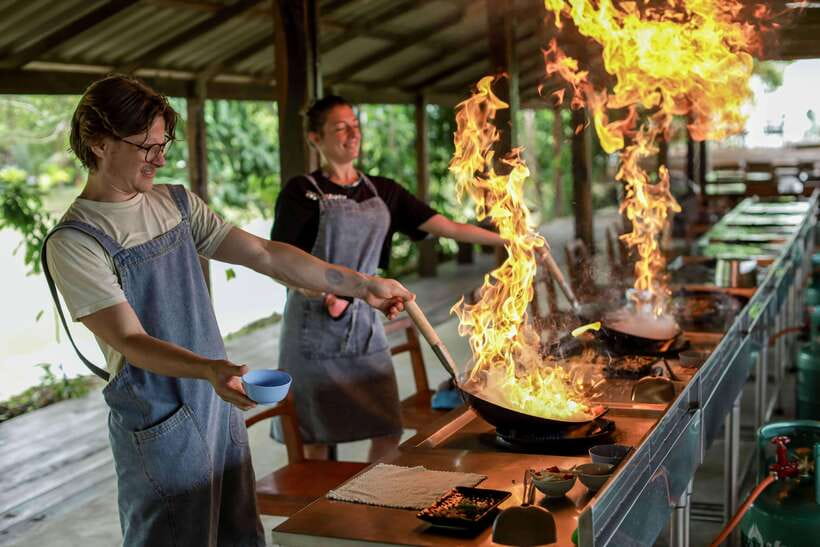
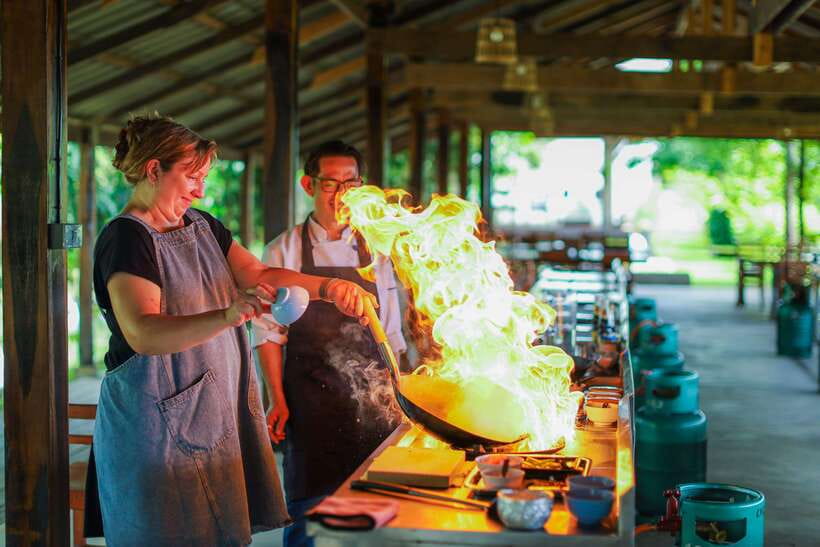
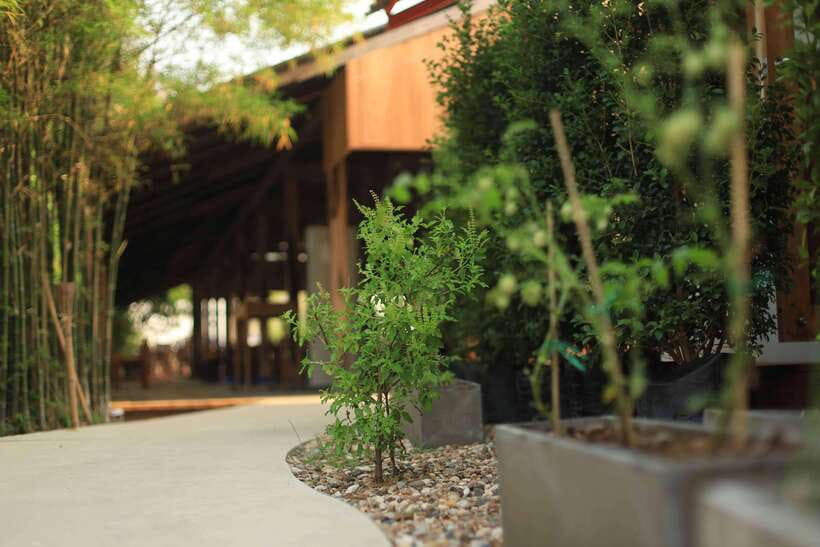
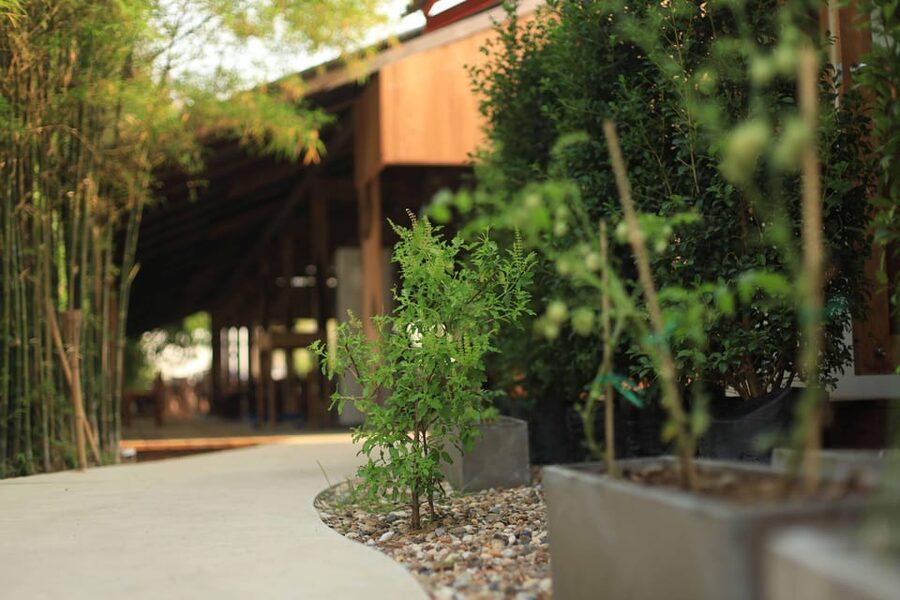
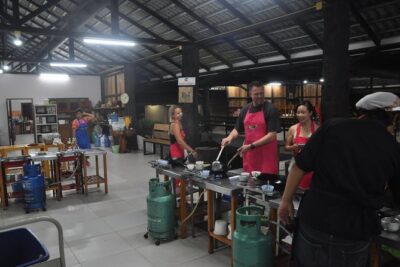
After the market, the vehicle takes you to the Rice Barn Thai Cooking Farm. The cooking area is described as clean, orderly, and professionally set up, with individual stainless-steel workstations. Gardens and farm areas surround the open-air kitchen, and some ingredients are grown on site.
That setting gives the class a calmer feel than a city kitchen. You are not cooking in a sealed room with only a demonstration counter in front of you. Instead, you have room to look around, notice the gardens, and enjoy the rural side of Chiang Mai Province while you work.
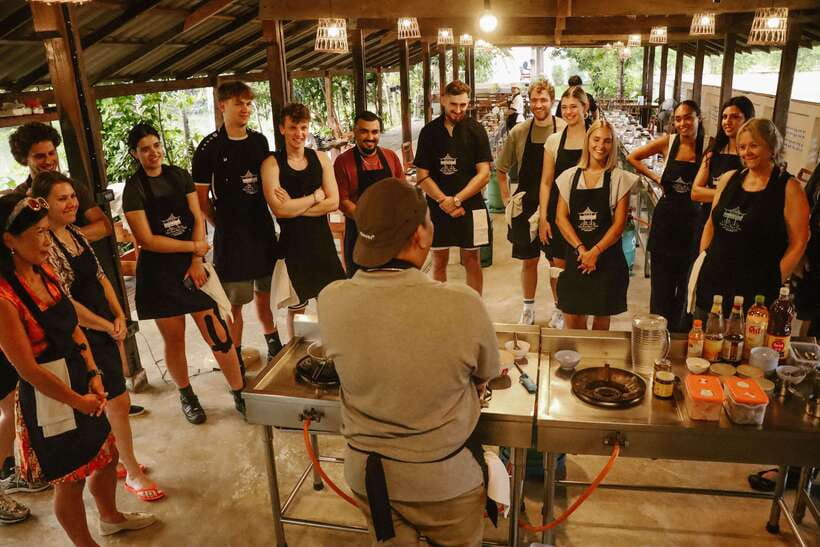
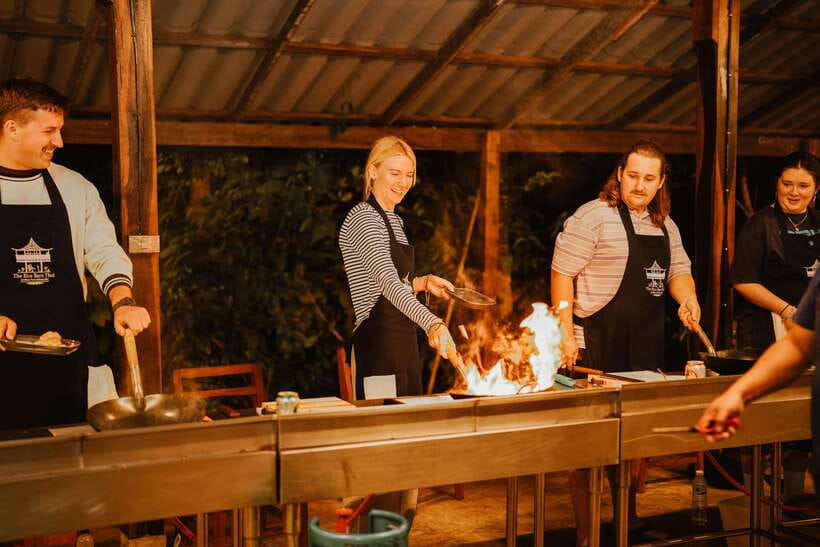
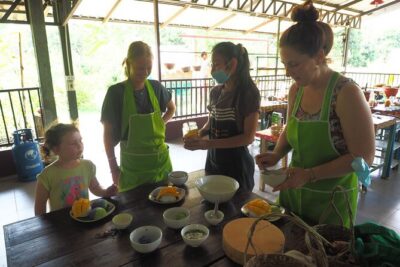
The practical setup is strong. Each person has a station, ingredients are prepared in measured amounts, and the instructors demonstrate before you begin. That arrangement suits first-time cooks because you can focus on technique instead of racing to locate every ingredient.
The tradeoff is worth noting. Exact portions make the class smooth and approachable, but they reduce the challenge for anyone who wants to plan a dish independently. You will learn what goes into the recipe and how to cook it, but you may not be asked to balance every sauce from a completely blank starting point.
The facilities also appear to be a real strength. Clean work areas matter when you are handling several dishes in a warm climate. Drinks such as coffee, tea, water, soda, or beer may be available at the school, though only coffee and tea are specifically included in the activity price.
Cooking five Thai dishes at your own station
The central lesson usually involves four or five dishes. A common menu includes:
- Tom yum soup
- Pad Thai
- Green curry or panang curry
- Cashew chicken
- Mango sticky rice
The exact menu can vary, but these choices give you a good spread of Thai cooking styles. You work with soup, noodles, curry, stir-frying, and dessert rather than repeating one method all afternoon.
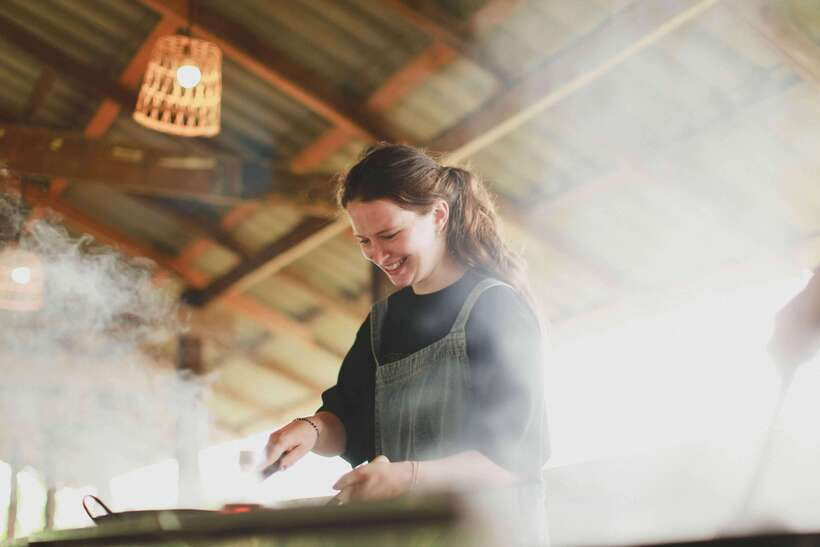
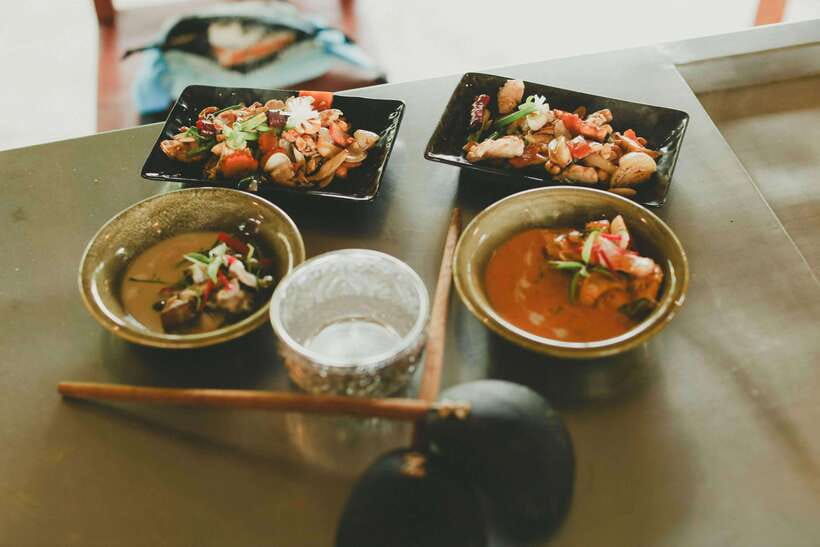
The instructor first shows the recipe and explains what each ingredient does. Then you return to your station and cook your own portion. This format is far more useful than watching a chef prepare one large communal pan. You see how much goes into your dish, how the heat affects it, and what the food looks like when it is ready.
Pad Thai gives you a familiar starting point, but the class also takes you into sharper flavors. Tom yum brings sour, spicy, and aromatic notes together. Green or panang curry shows how a paste, coconut milk, herbs, and seasoning become a complete dish. Cashew chicken adds the heat and quick timing of stir-frying.
Several sessions have included a fun flambé moment with the cashew chicken. That adds a bit of theater, but it is also a reminder that cooking over high heat demands attention. The instructors supervise the process, so you are not left to guess what to do.
Mango sticky rice closes the meal on a sweet note. It is also a useful dessert to learn because the ingredients are easy to recognize, while the preparation shows how rice, coconut, and fruit work together in Thai cooking.
The quantity is generous. You will prepare and eat a great deal of food, and many people find the meal more than enough. Do not eat a large breakfast or lunch beforehand. The one drawback is that eating every dish can become difficult if you are not used to several full portions in one sitting.
The instructors are part of the experience
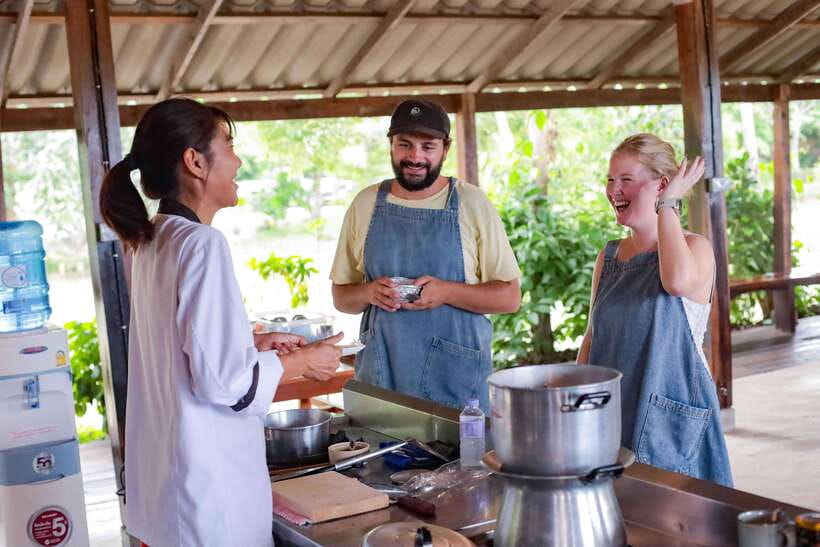
The teachers are not just there to read out recipes. Oily, Katie, Timi, and Gobby are repeatedly praised for humor, patience, clear demonstrations, and attention to individual needs. The instructor for your session will vary, so you should not book expecting one particular person unless the operator confirms it.
Oily is known for explaining market ingredients and keeping the cooking light and engaging. Katie is described as funny, attentive, and especially good at explaining the food and culture behind each recipe. Timi brings a lively teaching style, while Gobby is often described as entertaining and easy to follow.
That personality matters in a group cooking class. There is plenty to do, and beginners can feel awkward when a wok gets hot or a recipe moves quickly. A teacher who explains the reason behind each step, then gives you time to try it, makes the experience much less stressful.
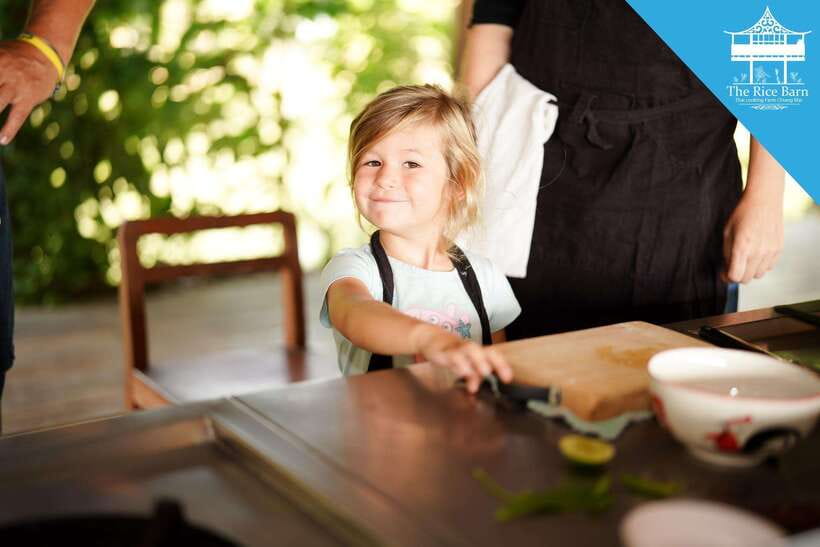
The class also works for a solo visitor. You cook independently at your own station, but the shared demonstrations and meal create an easy social setting. Couples and families can cook together while still handling their own dishes. One family specifically found the instructor good with children, though the activity is still a six-hour cooking session and requires attention.
Dietary needs should be raised in advance. One participant received careful help with gluten-free requirements. That is encouraging, but the supplied information does not promise a complete range of dietary substitutions, so you should contact the local partner before booking if your needs are strict.
More farm tours around Chiang Mai:
- Chiang Mai: Authentic Cooking Class with Market & Farm Visit
★ 4.9 · 4,546 reviews - Chiang Mai: Cooking Class with Organic Farm at Mama Noi
★ 4.9 · 1,151 reviews - Full Day Thai Cooking at Farm (Chiang Mai)
★ 5.0 · 1,127 reviews - Chiang Mai: 2-Day Jungle Trek with Elephant Farm & Raft Ride
★ 4.7 · 881 reviews
How much food culture do you actually learn?
This class is not only a recipe factory. The market and garden setting help explain where Thai food begins, while the demonstrations show how the ingredients are used at home.
You learn practical habits such as identifying produce, combining seasonings, handling curry paste, and cooking quickly at high heat. The instructors also share information about Thai cuisine and culture as they move through the market and kitchen.
Do not expect a formal culinary qualification or a highly technical chef’s workshop. This is designed to give you the confidence to recreate the dishes at home. The recipe e-book helps with that goal because it includes the recipes from the class and additional recipes beyond the dishes prepared during your session.
The class is strongest for cooks who want useful results right away. You can leave knowing how to make a Thai meal for friends or family, rather than simply remembering that a chef once prepared one in front of you.
There are limits. If you already cook Thai food often, the pre-measured ingredients and quick dishes may feel basic. One participant wanted more freedom to choose ingredients and combine sauces independently. Another hoped to see khao soi on the menu, a fair request in Chiang Mai, though it is not listed as a standard dish for this class.
Morning or evening, the six-hour schedule matters
The activity lasts six hours and may run in the morning or evening, depending on availability. That is longer than the phrase half-day might suggest, especially once pickup and drop-off are included.
A morning session works well if you want a relaxed evening in Chiang Mai afterward. An afternoon or evening option can fill a day when you have already explored the old city. Either way, plan around the full block of time rather than squeezing in another major activity.
The schedule has a natural rhythm: hotel pickup, market visit, transport to the farm, demonstrations, cooking, eating, and return transport. You are not expected to find your own way between each part, which makes the day easier to manage.
Groups may be small on some dates, while the kitchen has more stations and can accommodate more people on others. A smaller group gives you more direct contact with the teacher. If group size matters to you, ask before booking, since the supplied details do not promise a fixed maximum.
The class is taught in English. The instructions are hands-on and supported by demonstrations, which helps if English is not your first language. The pace may still feel active when several dishes are being prepared, so it helps to stay close to the demonstration and ask questions as you go.
Is $28 good value?
At $28 per person, the price is strong for a six-hour experience that includes transport, ingredients, coffee or tea, the market visit, the cooking class, and a recipe e-book.
The value is not only in the food. Hotel pickup saves you a separate taxi ride, while the individual workstation gives you practical cooking time rather than a passive demonstration. You also receive a digital reference for cooking at home, which extends the experience beyond the day itself.
The meal alone would make the price reasonable, given the number of dishes. Add the air-conditioned transport and the instructor-led market visit, and this is one of the more useful food activities for a modest budget.
There are a few possible extra costs. Professional photographs may be taken during the class and offered for purchase, but that is optional and not included in the stated price. Drinks beyond coffee and tea may also cost extra.
Free cancellation is available up to 24 hours before the activity for a full refund. You can also reserve and pay later, which helps if your Chiang Mai schedule is still changing.
Who should book this cooking farm experience?
I would choose this for a first-time Thai cook, a couple looking for a shared activity, a solo visitor who wants an easy social setting, or a family that enjoys food and practical lessons.
It is also a good choice if you want to learn several dishes in one session. The menu covers enough ground to give you a useful home repertoire: soup, noodles, curry, stir-fry, and dessert.
You may want a different format if you are an advanced cook seeking a longer lesson on knife skills, curry paste from raw ingredients, or independent menu design. The prepared portions keep the day organized, but they also make it less demanding.
I would also skip a heavy meal before arrival. The class is generous enough that hunger is part of the strategy.
Should you book it?
Book this class if you want an approachable introduction to Thai cooking with individual cooking time, a local market visit, and reliable transport from your hotel. The farm setting, clean workstations, upbeat instructors, and large meal make it a well-rounded choice for the price.
Think twice only if you want a quiet, highly technical lesson or a specific dish such as khao soi. For most visitors, the Rice Barn offers a practical souvenir: not another trinket, but the ability to cook a Thai dinner when you get home.
FAQ
How long does the Chiang Mai cooking class last?
The activity lasts six hours, including hotel pickup, the market visit, cooking, eating, and return transport.
What dishes can I expect to cook?
The menu commonly includes tom yum soup, pad Thai, green curry or panang curry, cashew chicken, and mango sticky rice. The exact selection may vary by session.
Is hotel pickup included?
Yes. Pickup and drop-off at your Chiang Mai hotel are included in an air-conditioned vehicle.
Is the cooking class hands-on?
Yes. Each person has an individual cooking station and prepares the dishes after the instructor demonstrates each recipe.
Is the class taught in English?
Yes. English is the listed language for instruction.
Does the price include ingredients?
Yes. All cooking materials and ingredients are included, along with coffee or tea and a color recipe e-book.
Can I cancel the booking?
You can cancel up to 24 hours in advance for a full refund.
Can I reserve now and pay later?
Yes. The activity allows you to reserve your place and pay later, subject to the booking conditions.
Newly listed farm visits around Chiang Mai
- Authentic Thai Cooking Class and Farm Visit in Chiang Mai★ 5.0 · 66 reviews
- Aroidee’s Farm-Fresh Thai Cooking Experience★ 5.0 · 8 reviews
- Full-Day Thai Cooking Class with Grandma – Market and Farm Tour★ 5.0 · 48 reviews
- One Day Tour Doi Suthep Temple, Palad Temple, Orchid Farm, Longneck hill tribe village (Private tour)★ 5.0 · 7 reviews
- Chiang Mai Farm Life & Khao Soy Tasting on a Half-Day Boat Tour★ 4.5 · 64 reviews
- Local Farming Experience in Chiang Mai, Thailand★ 5.0 · 3 reviews
- Chiang Mai Mae Ping River Cruise and Thai Farmer House Visit★ 4.0 · 3 reviews
- Doi Suthep Temple, Pha Lat Temple, Sticky Waterfall, Orchid farm★ 5.0 · 31 reviews
Chiang Mai Farm Tours, compared.
Half-Day Thai Cooking Class at Organic Farm in Chiang Mai
Read our review →
Authentic Cooking Class with Market & Farm Visit
Read our review →
Evening Cooking Class in Organic Farm with Local Market Tour
Read our review →
Morning Thai Cooking with Grandma – Market Visit & Farm Tour
Read our review →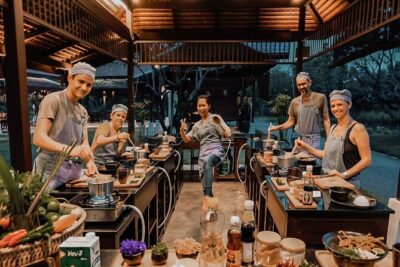
Sunset Thai Cooking with Grandma – Farm & Evening Feast
Read our review →Browse the lists this tour appears in