
Review · AROUND THE WORLD
From Sigiriya:Polonnaruwa Day Tour with Farmers lunch
Polonnaruwa’s great surprise is how much of the old city remains visible: stone Buddhas, brick walls, carved pillars, royal ruins, and a vast artificial lake. The other big attraction comes later, at a farmers lunch where a broad spread of Sri Lankan curries is served beside a paddy field.
I like the comfortable hotel-to-hotel transport, especially for a full day of scattered ruins. I also like the way lunch gives you more than another restaurant stop, with local food and a rural setting. The main consideration is cost: the $58 tour price does not include the $30 Polonnaruwa entrance fee, so your basic total is closer to $88 before optional extras.
Key points to know before you book
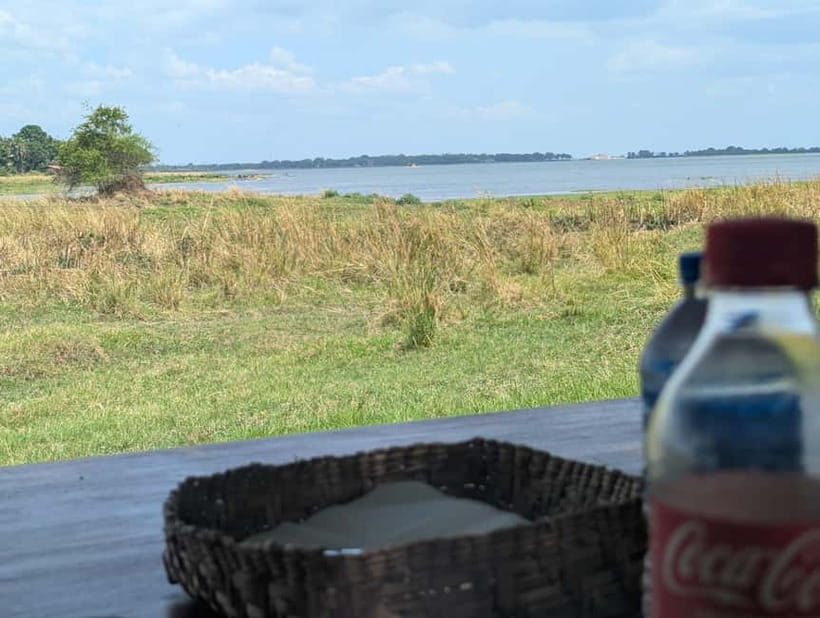
- The farmers lunch is the heart of the day: Expect a large selection of Sri Lankan curries, fruit juice, and a peaceful setting overlooking a paddy field.
- The ancient city has several separate highlights: The Royal Palace, Gal Vihara, Vatadage, Lotus Pond, Lankathilaka, and Parakrama Samudra each offer something different.
- Your driver handles the practical side: Hotel pickup and drop-off in Sigiriya, parking, bottled water, and an air-conditioned vehicle are included.
- Amal is one named driver associated with the experience: You can expect friendly service, a clean car, and extra stops when the route allows, though the assigned driver may vary.
- The $58 price is not the full entrance cost: Add $30 per person for the ancient city ticket. Cycling and a specialist ruins guide cost extra.
- Bring your passport: It is specifically requested for the tour.
Why this Sigiriya day trip works
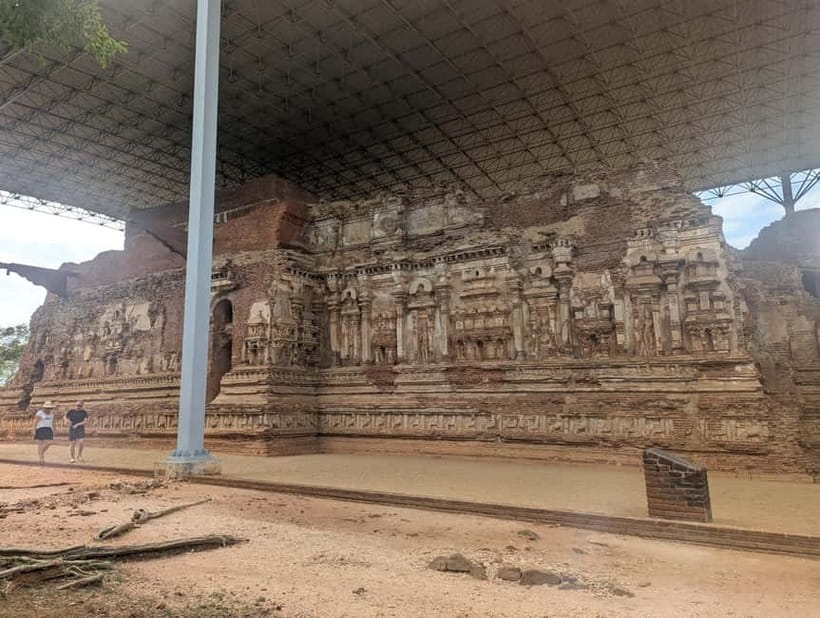
Polonnaruwa is not one compact monument. It is a spread-out ancient city with major sites separated by roads and open ground. That makes a private vehicle especially useful. You can move from one group of ruins to another without spending the day working out transport, and you can return directly to your hotel in Sigiriya.
The tour also has a good rhythm. The first part is about stone, brick, royal power, and Buddhist art. Later, the focus shifts to food and the countryside. I prefer this kind of contrast to a day made up of one ruin after another, since the lunch gives you a chance to sit down, eat slowly, and see a different side of Sri Lanka.
Your English-speaking driver is the main point of contact. The information provided names Amal as a driver used for this experience, and the service includes hotel pickup and drop-off, bottled water, parking fees, and air conditioning. If you want detailed archaeological explanations at every stop, you can add a special ruins guide for $25. Without that extra guide, treat the driver mainly as your transport host unless you confirm the guiding arrangement before departure.
More Lunch Experiences in the world:
- From Porto: 2 Wine Regions, Farm-to-Table Lunch & Boat
★ 4.9 · 5,724 reviews - Cooking Class and Lunch at a Tuscan Farmhouse with Local Market Tour from Florence
★ 5.0 · 4,831 reviews - Tromsø: Reindeer Camp and Sami Cultural Tour with Lunch
★ 4.7 · 3,326 reviews
Reaching the Royal Palace and ancient city
The Royal Palace is a strong first stop because it gives you a sense of Polonnaruwa as a capital, not just a collection of religious monuments. The remains belong to a large royal complex, and the ruined walls hint at the scale of the building even though time has taken much of it away.
I would take a few minutes here to look at the layout before rushing to the camera. The broken brickwork and broad foundations are useful reminders that this was once a working center of power. You will not see a complete palace, so come for the shape and scale of the ruins rather than a restored interior.
This is also where a private vehicle helps. The attractions are not all lined up in one easy path, and a driver can keep the day moving without making you arrange each transfer yourself. Parking fees are included, which removes one small nuisance from the visit.
Gal Vihara and the famous rock-cut Buddhas
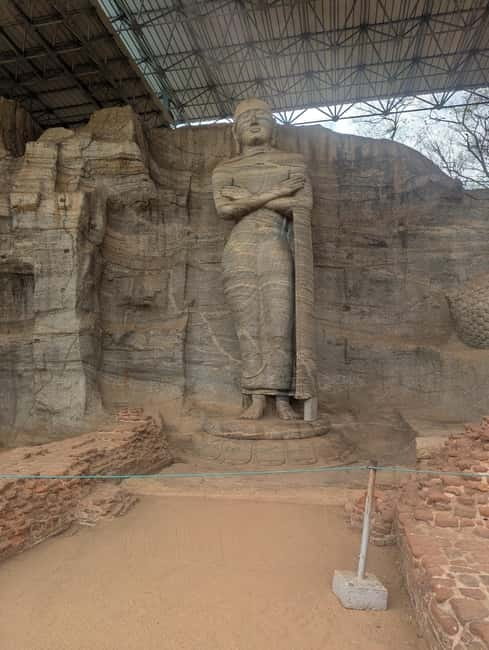
Gal Vihara is likely to be the visual high point of the ruins. Its magnificent Buddha statues are cut directly from rock, giving the site a quiet force that photographs well but is better appreciated in person.
The attraction here is not decoration piled onto a building. It is the combination of stone, proportion, and calm expressions. Take time to look at the surface of the rock and the way each figure relates to the larger outcrop. This is a place where a hurried photo stop would miss much of what makes it special.
You are encouraged to take photographs throughout the tour, and Gal Vihara gives you one of the best chances to do that. Still, remember that bright sun can flatten carved details in a photograph. Use your time to look first, then take several angles rather than one quick snapshot.
Monkeys may be present around the sites. Keep food and drinks close, especially juice or anything you are eating. The practical rule is simple: do not leave refreshments exposed while trying to take a photo.
The Polonnaruwa Vatadage and Nissanka Latha Mandapaya
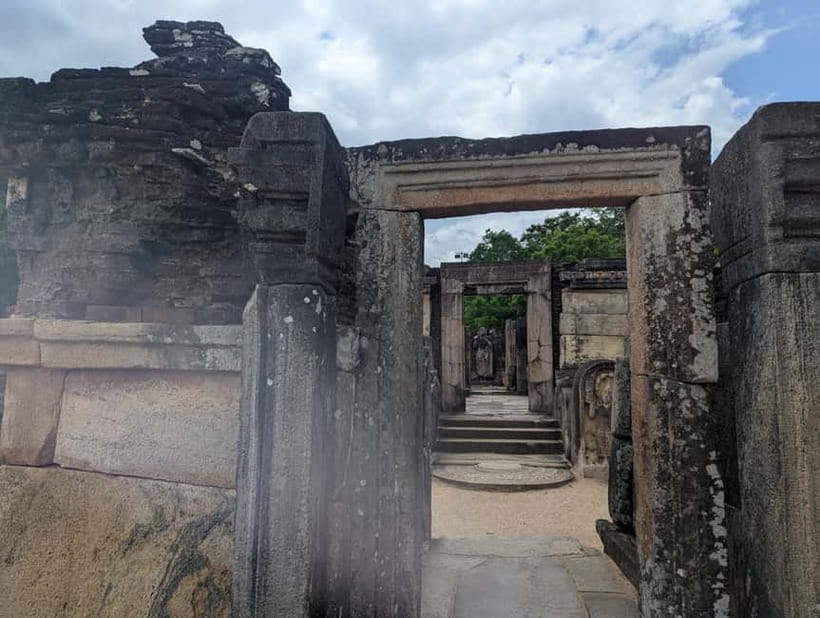
The Polonnaruwa Vatadage is a distinctive circular Buddhist structure designed to hold Buddha relics. Its form is very different from the large rock-cut statues at Gal Vihara, so the visit helps you see how varied the ancient city’s religious architecture was.
Look closely at the carved stonework and the way the structure is arranged around its center. The Vatadage is one of the places where a specialist guide could add useful context, especially if you want to understand its religious purpose and design rather than simply photograph it.
Nissanka Latha Mandapaya offers another change of pace. This intricate pillared building is more delicate in appearance, with carved pillars that give it a refined character. I like pairing it with the Vatadage because the two stops show different approaches to stone construction: one strongly circular and enclosed, the other open and defined by its pillars.
The site contains a lot to take in, but you do not need to treat every stop as a race. If your driver is flexible, you may be able to spend more time at the places that interest you most or make an extra photo stop along the route. That flexibility was important to Ada, whose driver made additional stops and helped make the day feel less rigid.
More farm tours around the world:
- Half-Day Thai Cooking Class at Organic Farm in Chiang Mai
★ 5.0 · 19,087 reviews - Florence Pizza or Pasta Class with Gelato Making at a Tuscan Farm
★ 5.0 · 6,801 reviews - Chiang Mai: Authentic Cooking Class with Market & Farm Visit
★ 4.9 · 4,546 reviews - Maui Pineapple Farm Tour in Haliimaile
★ 5.0 · 2,855 reviews
Lotus Pond and Lankathilaka Image House
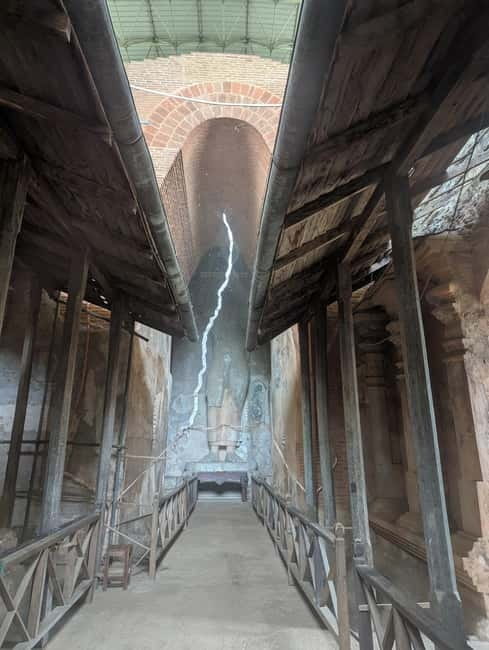
The Lotus Pond is exactly the sort of smaller monument that can get lost on a rushed itinerary. It is a pool shaped like an eight-petalled lotus flower, with a form that makes the design easy to understand at a glance.
This stop is worth keeping because it breaks up the larger ruins. You can see how an everyday feature such as a pool could also carry a carefully planned shape. It is a short, memorable photo stop and a good place to notice the details that do not have the scale of the Royal Palace or Gal Vihara.
At Lankathilaka Image House, the emphasis shifts to Sri Lanka’s medieval architectural skill. The building gives you another look at religious design, with an imposing structure intended to hold a Buddha image. It is a useful counterpoint to the open-air stone sculpture at Gal Vihara.
The best way to approach these stops is to avoid judging them only by size. The Lotus Pond is small but unusually shaped. Lankathilaka is about the building and its architectural presence. Together they help fill out the story of Polonnaruwa beyond the most famous statue.
Parakrama Samudra and the wider setting
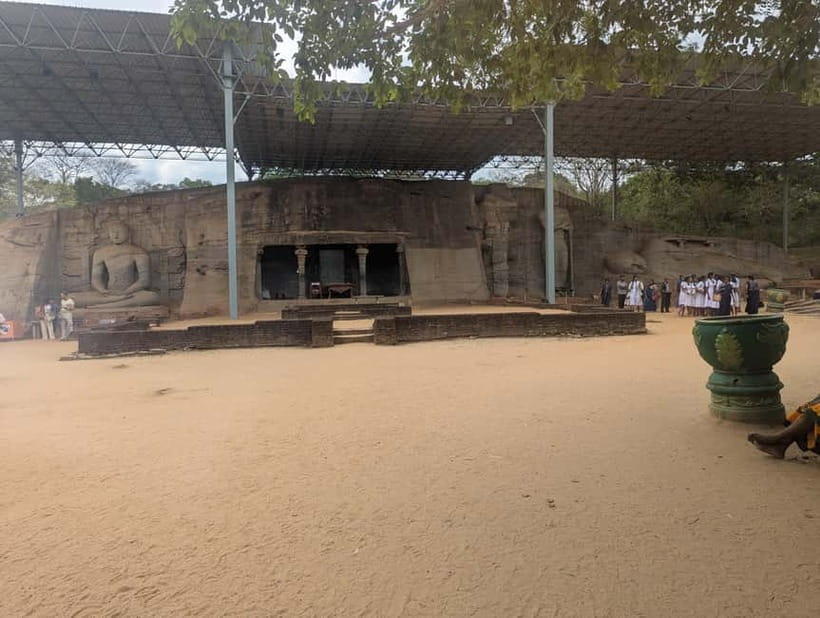
Parakrama Samudra is the largest artificial lake in Sri Lanka. It changes the scale of the day again, taking you away from individual carvings and showing the waterworks that supported life around the old capital.
I find this kind of stop valuable because ancient cities are easier to understand when you see the systems around them. The palace and temples are only part of the picture. A large artificial lake points to the planning, labor, and water management needed to support a major settlement.
You should also expect a different kind of photo opportunity here. Instead of close stone details, you get open views around the water. The tour description encourages you to become the photographer for the day, and Parakrama Samudra gives you room to try wider shots after spending time among compact monuments.
The information does not give a fixed duration for each stop, so your exact time at the lake will depend on the day’s pace and your driver. If you care most about photography, say so early. If you want to see every named site, keep your stops reasonably focused.
The farmers lunch beside the paddy field
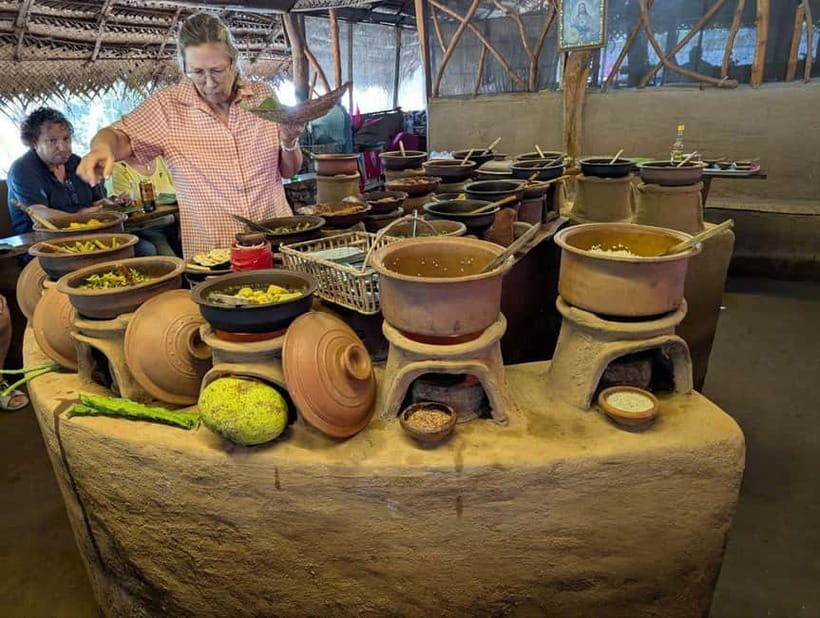
The farmers lunch is the part I would weigh most heavily when deciding if this tour suits you. It is not just a meal added to fill a gap. The setting overlooks a picturesque paddy field, and the food is presented as a traditional Sri Lankan spread.
Expect a substantial selection of curries rather than a single plated dish. Hung described a huge spread, and that is the right way to picture it: a meal where you can try several flavors and combinations instead of choosing one familiar item. Fruit juice is included, with options such as papaya, watermelon, or lime depending on availability.
The setting matters. After several hours among ancient stone buildings, sitting near the fields gives you a slower, more local-feeling pause. It also makes the lunch more memorable than an ordinary meal in a town restaurant. Ada considered it the best part of the activity, and I can see why this stop supplies the human, food-centered side of the day.
Beer is not included, so you would pay separately if it is available and you want one. The fruit juice is included, but the specific flavor can change. Keep an eye on your food and drink around monkeys during the day, particularly if you are eating outdoors or near the ruins.
Transport, driver service, and flexibility
The tour includes pickup and drop-off at your Sigiriya hotel, so you do not need to arrange a separate taxi to reach the starting point. An air-conditioned vehicle is provided, along with bottled water and parking fees.
That matters in North Central Province, where the archaeological sites are spread out and the day includes time on the road. A clean, comfortable car will make the return trip much easier, particularly after walking around exposed ruins.
Amal is specifically named in the available experience details. His service is described as helpful, friendly, safe, and flexible, with a spotless and comfortable car. You should not assume Amal will be the assigned driver every time, but it is sensible to ask who will drive you and whether the day can include short extra stops.
The tour is listed with an English-speaking driver. If you want a detailed account of dates, rulers, religious symbolism, and construction methods, budget the additional $25 for a special ruins guide. That extra cost may be worthwhile for history-focused visitors, while casual sightseers may be satisfied with the driver, the monuments, and a little advance reading.
What the $58 price really covers
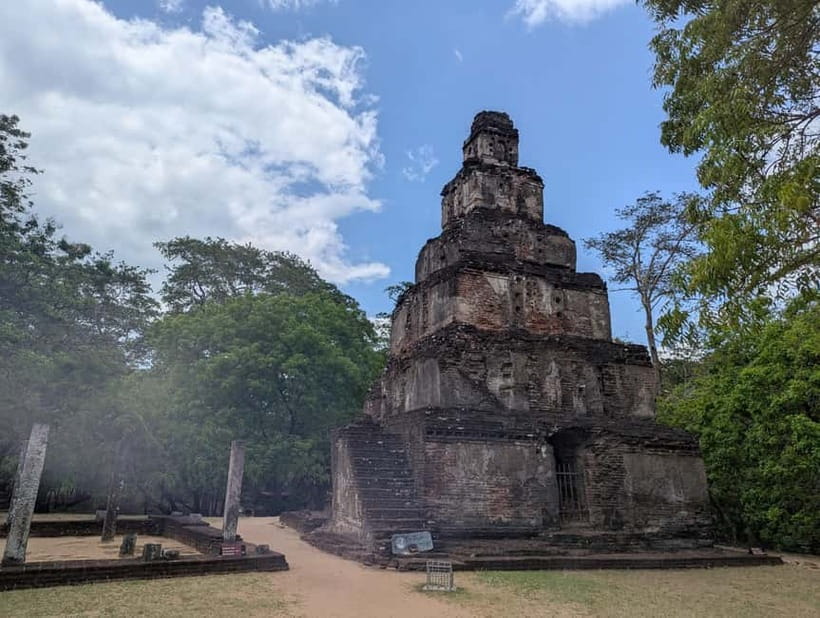
At $58 per person, the tour price covers several practical items: transport from and back to your Sigiriya hotel, an English-speaking driver, air conditioning, bottled water, parking fees, and the farmers lunch with fruit juice.
The important catch is the Polonnaruwa entrance fee, listed at $30 per person. Add that to the advertised price and your basic outing becomes $88 per person. Cycling costs another $3.50 per bicycle, and a specialist ruins guide adds $25.
That makes this less of a cheap sightseeing transfer and more of a convenience-and-food experience. I think the value is strongest if you want private transport, a relaxed return to Sigiriya, and the farmers lunch. If you only want to see the ruins at the lowest possible cost, the extra entrance fee changes the calculation.
The included lunch helps soften that price. You are paying for a full day of transport and access to a meal with a distinctive rural setting, not simply a driver waiting outside one monument. Ask about the final cost before departure so the entrance fee and any extras do not surprise you.
Who should book this Polonnaruwa tour?
I would recommend it to you if you are staying in Sigiriya, want to see the main Polonnaruwa sights in one outing, and prefer a driver rather than sorting out transport between scattered monuments. It is also a good fit if food and local settings matter as much to you as the ruins.
Photographers should enjoy the range of subjects: carved Buddhas, circular religious architecture, pillared buildings, the lotus-shaped pool, medieval structures, and the broad view around Parakrama Samudra. Tell the driver that photography matters, since the exact time at each stop is not fixed in the information provided.
History enthusiasts may want to pay for the specialist ruins guide. Without that addition, the experience is more about seeing the sites comfortably and taking them in at your own pace than receiving a formal archaeological lecture.
I would think twice if the $30 entrance fee makes the total too high, or if you want an in-depth guided interpretation included in the base price. I would also check the cycling option before booking if riding between ruins is central to your plan, since bicycle rental is not included.
Should you book it?
Book this tour if you want easy transport from Sigiriya, a solid run through Polonnaruwa’s principal monuments, and a memorable Sri Lankan meal in the countryside. The farmers lunch is the strongest reason to choose this particular outing, and the clean vehicle and flexible driver service add useful comfort.
Skip it if your main goal is the cheapest possible visit or a fully guided archaeological study. In that case, the entrance fee and optional guide can push the cost up. For most people who value convenience, variety, and a generous local meal, the combination offers good value at the right expectations.
FAQ
Where does the tour start and finish?
The tour includes pickup from and drop-off at your hotel in Sigiriya.
What is the tour price?
The listed price is $58 per person.
Is the Polonnaruwa entrance fee included?
No. The ancient city entrance fee is listed separately at $30 per person.
Is lunch included?
Yes. The farmers lunch is included, along with fruit juice. Juice flavors may include papaya, watermelon, or lime, subject to availability.
Is beer included with lunch?
No. Beer at the farmers lunch is not included.
Is transportation air-conditioned?
Yes. The tour includes an air-conditioned vehicle.
Is a driver included?
Yes. A friendly English-speaking driver is included. Amal is one driver associated with this experience.
Is a specialist guide included at the ruins?
No. A special ruins guide is an optional extra listed at $25.
Can I rent a bicycle?
Yes. Bicycle rental is available for an additional $3.50 per bicycle.
What should I bring?
Bring your passport. It is specifically requested for the tour.
Newly listed farm visits around the world
- Half-Day Farm Visit and Cow Milking Experience★ 5.0 · 16 reviews
- Boutique tour , Mt Maunganui, NZ farm, Rotorua lakes/geothermal★ 4.5 · 50 reviews
- Gourmet Mushroom Farm Tour in Tennessee★ 5.0 · 5 reviews
- Cozy Farm Experience with Wagon Wheels and Acoustic Meal★ 5.0 · 2 reviews
- Animal farm park with free hotel pickup★ 5.0 · 2 reviews
- Alpaca Farm Tours with Toffeemont★ 5.0 · 8 reviews
- Private, via beaches, Kiwi farm to Rotorua 8 lakes & Geothermal★ 5.0 · 20 reviews
- One Day Tour of Yilan, Zhang Mei Ama Farm★ 5.0 · 2 reviews