
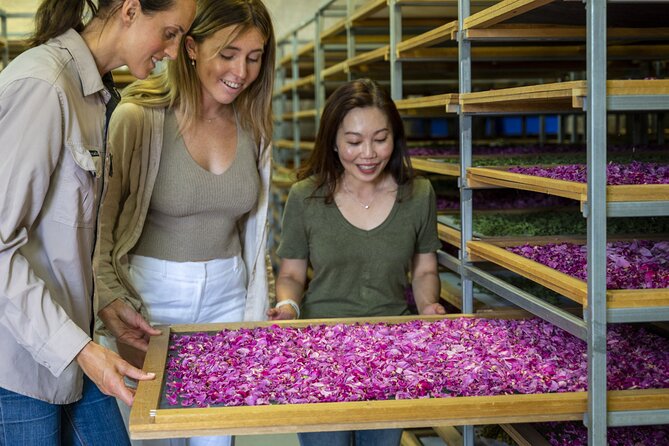
Review · ADELAIDE
Jurlique Farm Tour
Jurlique Farm gives you a rare look at the working side of a skincare company. In the Adelaide Hills, you follow the path from seedling and soil to finished botanical ingredient, with a Jurlique Ambassador explaining how the farm supports the brand’s natural products. The setting is beautiful, but the useful part is seeing the practical work behind the labels.
I like the tour’s clear focus on biodynamic farming and plant uses, rather than a sales talk dressed up as a farm visit. I also like the hands-on feel: you may handle botanicals and try some products in the garden. The main drawback is its fixed 90-minute format and rural meeting point, so you need to arrange your own transport to Biggs Flat.
Key points to know before booking
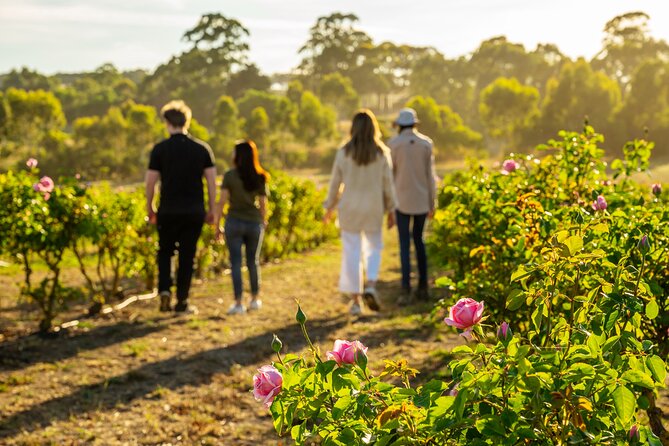
- The tour stays at Jurlique Farm: You spend the full 90 minutes at 31 Liebelt Road in Biggs Flat, with the activity ending where it begins.
- You learn the full growing cycle: The guide covers propagation, plant varieties, soil fertility, compost, harvesting, and how plants are used.
- Biodynamic farming is central: This is more than a stroll through ornamental gardens. Farming methods and soil care get real attention.
- The gardens add a sensory element: You may handle botanicals and try selected products in the garden.
- A guide leads the whole experience: A Jurlique Ambassador conducts the tour, with Lexi specifically praised for her friendly, inclusive approach.
- The price is modest for a specialist visit: At $28.69 per person, the tour offers a focused farm experience, though transport is not included.
Why Jurlique Farm is worth your time
Jurlique Farm sits in the Adelaide Hills, outside central Adelaide, and the tour is built around the company’s long-running connection to the land. Jurlique has grown ingredients for its natural skincare products on this biodynamic farm for more than 35 years.
That background gives the visit a clear purpose. You are not simply walking through a pretty garden. You are learning how a skincare ingredient begins, how it is raised, and how it is harvested. I find that useful because it gives you a better way to judge natural product claims. You can see the growing process instead of hearing only about the final bottle.
The tour also makes sense for anyone interested in gardening, sustainable agriculture, cosmetics, or South Australian produce. You do not need technical knowledge to follow it. The subjects are practical: what gets planted, how seedlings are propagated, why soil matters, and how plants serve different purposes.
The experience lasts about 90 minutes. That is long enough to cover the main ideas without turning a farm visit into a full-day commitment. If you are fitting the Adelaide Hills into a busy day, this is a manageable stop. If you want a broad regional farm tour with several different activities, it may feel narrow. Its strength is its focused look at Jurlique’s own growing system.
More farm tours around Australia:
- Amazing Yarra Valley Wine Tour + Chocolate, Farm Fresh, Gin
★ 5.0 · 1,566 reviews - Hidden Gems: Boutique Full-Day Wine, Farm & Lunch Tour
★ 5.0 · 881 reviews - Melbourne: Yarra Valley Wine, Choc, Farm Fresh, Gin Tour
★ 4.9 · 258 reviews
Starting with Jurlique’s story and purpose
The tour begins at Jurlique Farm, at 31 Liebelt Road in Biggs Flat. From there, your Jurlique Ambassador introduces the company’s background and explains why the farm matters to its skincare range.
The history is not treated as a separate museum lecture. It links directly to the plants and farming methods you see around you. That connection helps the visit feel coherent: first you learn what Jurlique is trying to make, then you see the living ingredients and the work that supports them.
A guide named Lexi has been singled out for making the information friendly and easy to follow. The tour is also designed to include solo participants within a larger group, so you do not need to arrive with companions to get value from it. The maximum group size is 50 people, which is fairly large for a farm walk. That number could make some stops feel less personal, but the guided format gives the experience a clear structure.
I would arrive ready to listen and ask questions. The tour’s value comes from the explanations, not from simply photographing the gardens. If plant names, farming terms, and product uses interest you, you will have plenty to take in.
Following seedlings from propagation to planting
One of the most useful parts of the visit is the explanation of how Jurlique raises seedlings and propagates plants. Propagation is easy to overlook when you see a mature garden, yet it is where a reliable supply of ingredients begins.
You learn how young plants are developed before they become part of the farm’s growing system. The subject gives you a better sense of the time and care behind botanical skincare. A product label may list a plant in a few words, but the farm process starts much earlier, with a living plant that must be established and maintained.
The tour also covers different plant varieties and their uses. This is where the experience moves beyond general claims about natural ingredients. You can connect particular plants with the roles they play in Jurlique products and see that not every plant is grown for the same reason.
Expect a guided explanation rather than a detailed horticulture class. The available information does not promise a technical workshop or a chance to plant something yourself. Still, the subject should suit anyone who likes to understand how a product begins at its source.
Seeing biodynamic farming in practice
Biodynamic farming is the main idea that sets this tour apart from a standard garden visit. The guide explains the principles behind Jurlique’s approach and how those principles shape the farm.
The term can sound abstract, but the tour brings it back to basic questions: How do you care for the soil? How do you keep it fertile? How do you support plant growth without treating the ground as an endless supply of nutrients?
You also learn about compost production and soil fertility. I especially like this part because it puts the focus below the plants, where much of successful farming begins. Healthy-looking flowers and herbs are only the visible result. Soil care is the less glamorous work that supports everything above it.
Do not book this expecting a full scientific course in biodynamics. The tour is only 90 minutes, and it also has to cover Jurlique’s background, propagation, plant uses, and harvesting. Think of the farming section as a practical introduction that helps you understand the farm’s values and daily processes.
For families and school-age children, compost and soil may be less immediately exciting than the gardens. A good guide can help make the ideas concrete, but younger children who need constant action may find parts of the talk slow.
Same countryside, another kind of harvest:
- 3- Hour Wine and Harvest the Hunter Horse Tour in Pokolbin
★ 5.0 · 165 reviews - Experience Coffin Bay Oyster Farm and Bay Tour
★ 5.0 · 161 reviews - Broken Bay Pearl & Oyster Farm Tours
★ 5.0 · 150 reviews - Coffin Bay Oyster Farm Wading Tour & Tasting Experience
★ 5.0 · 142 reviews
Exploring plant varieties and their uses
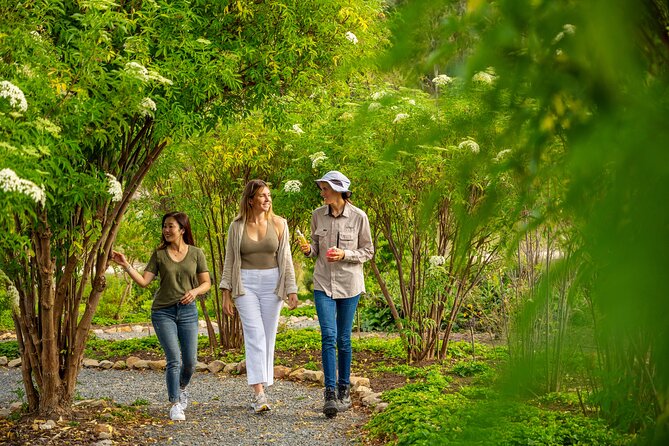
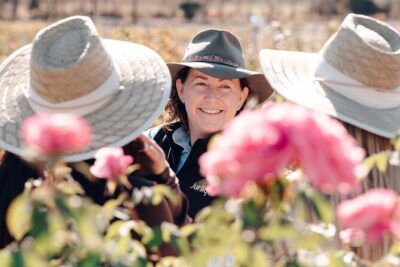
The display gardens give the tour a visual and hands-on center. Here, the plants are not just decoration. They help show the range of botanicals connected with Jurlique’s products.
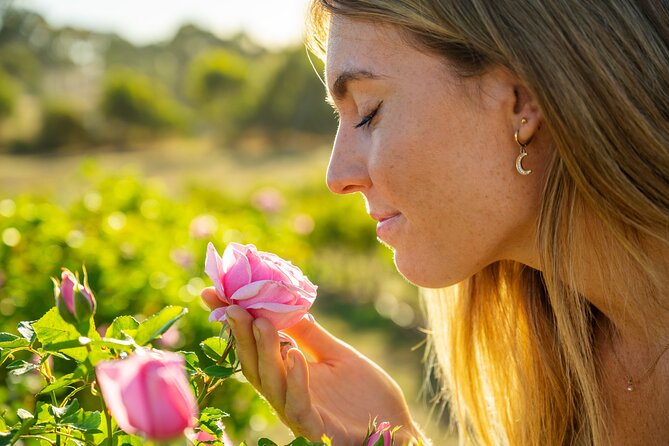
You may handle some of the botanicals and try selected products in the garden. That sensory element matters. Smelling or touching a plant can make the explanation more memorable than hearing a list of ingredients indoors.
I like that the tour links plants with their uses instead of presenting them as anonymous greenery. You can ask why a certain variety is grown, what part of the plant is useful, and how the ingredient fits into skincare. The experience stays connected to real products without being only a shop visit.
The farm’s setting in the Adelaide Hills adds to the pleasure of this section. You get attractive surroundings while learning about the work behind the products. Still, the tour is not described as a broad botanical collection, and the plant selection may be most interesting to people who already care about natural skincare or horticulture.
If you are primarily seeking regional scenery, you may find the farm’s setting rewarding but the tour content more specialized than expected. If you want to understand Jurlique’s ingredients, this is one of the strongest parts of the visit.
Understanding the harvest process
Harvesting completes the story. After learning how plants are raised, you hear how they are collected and prepared as part of Jurlique’s process.
That final stage helps connect farming with skincare. It also shows why timing and care matter when a company uses plant-based ingredients. The guide can explain what the farm is trying to preserve and how the harvest fits into the products sold around the world.
The supplied details do not specify which plants you will see being harvested on a particular date, so you should not assume that an active harvest will take place during every tour. The tour covers the harvest process as a subject, but this is not advertised as a seasonal pick-your-own activity.
That distinction is important. You are booking a guided behind-the-scenes farm visit, not a chance to collect ingredients yourself. I would still value the explanation because it closes the gap between the growing fields and the skincare counter.
What the $28.69 price really buys you
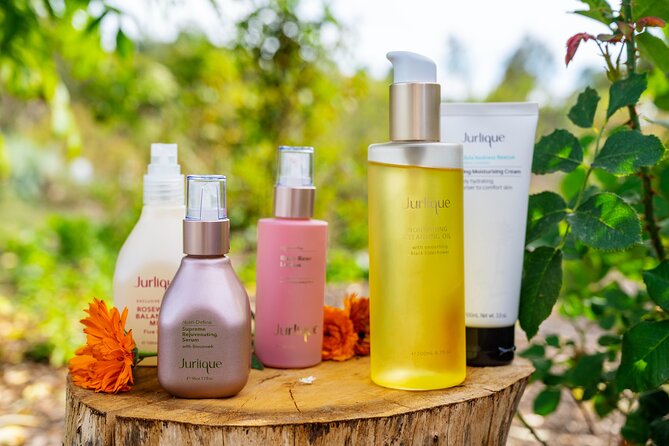
At $28.69 per person, the tour is reasonably priced for a 90-minute guided experience in the Adelaide Hills. You are paying for access to a specialist farm setting, a Jurlique Ambassador’s explanations, and a structured look at growing, soil care, plant uses, and harvesting.
The value is strongest if you want context. If you already plan to buy Jurlique products, the tour gives you a better understanding of where the ingredients come from and how the company presents its farming practices. If you have little interest in skincare or agriculture, a simple garden visit might offer enough scenery for less money, though this tour provides more explanation than a casual walk.
Transfers are not included. That is the main cost issue to keep in mind. You must get yourself to 31 Liebelt Road in Biggs Flat, so add the cost and time of reaching the farm when comparing this with other Adelaide activities.
The tour averages bookings about 28 days in advance. That does not guarantee that every date sells out, but it is a useful sign that you should not leave planning until the last minute if your schedule is fixed. The ticket is mobile, which keeps the booking simple once you have arranged your transport.
Who will enjoy this farm tour most
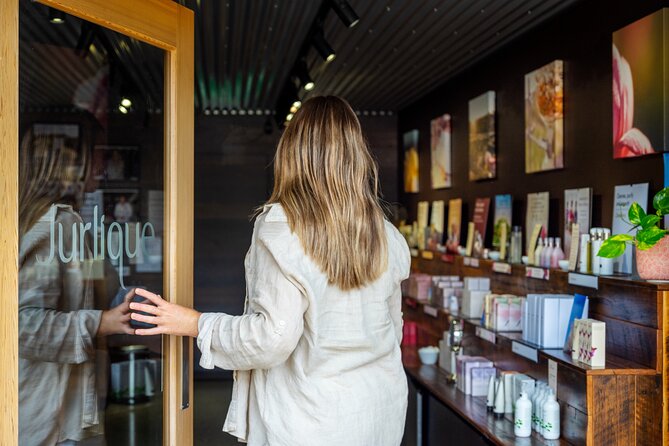
I would recommend the experience to:
- People interested in natural skincare and botanical ingredients
- Gardeners and home growers curious about propagation and soil care
- Visitors exploring the Adelaide Hills who want a purposeful farm stop
- Couples or solo participants who prefer a short guided activity
- Families with older children who can follow a 90-minute explanation
- Shoppers who want more background before buying Jurlique products
The tour may be less suitable if you want a strenuous walk, a broad agricultural tour, or a long list of Adelaide Hills attractions in one ticket. It is a single-farm experience with a clear subject.
Most participants can take part, and service animals are allowed. The maximum group size is 50, so anyone hoping for a quiet private tour should set expectations accordingly.
Timing, transport, and the small details
Plan around the meeting point rather than assuming a city pickup. The tour begins and ends at Jurlique Farm, 31 Liebelt Road, Biggs Flat, South Australia. Transfers to and from the meeting point are not part of the ticket.
The total activity time is about 90 minutes. Since the tour returns to its starting point, it is easy to continue with your own Adelaide Hills plans afterward, provided you have independent transport.
Confirmation arrives when you book, and the mobile ticket is practical for a day of sightseeing. You can cancel for a full refund up to 24 hours before the local start time. Cancellations made within 24 hours are not refunded, and changes inside that period are not accepted.
Those rules are fairly clear, but the key practical point is transport. I would confirm how you will reach Biggs Flat before paying, then protect the booking by leaving some room in your schedule.
Should you book the Jurlique Farm Tour?
Book it if you want a short, well-focused look at biodynamic farming, botanical ingredients, and natural skincare in the Adelaide Hills. The price is fair, the subject is distinct, and the 90-minute length fits neatly into a wider day.
I would be more cautious if you are looking only for dramatic scenery or a hands-on farm activity. The tour’s strongest moments come from the guide’s explanations, the display gardens, the chance to handle botanicals, and the connection between soil, plants, harvesting, and products.
For most people with an interest in Jurlique or sustainable growing, it is an easy activity to recommend. The 4.8 rating from 37 ratings and a 100 percent recommendation record match the tour’s clear strengths: friendly guiding, useful information, attractive surroundings, and a subject you cannot easily find elsewhere in Adelaide.
FAQ
Where does the Jurlique Farm Tour begin?
It begins at Jurlique Farm, 31 Liebelt Road, Biggs Flat, South Australia 5153.
Where does the tour finish?
The activity ends back at the Jurlique Farm meeting point.
How long does the Jurlique Farm Tour last?
The guided tour lasts approximately 90 minutes.
What is included in the ticket?
The ticket includes a 90-minute guided farm tour with a Jurlique Ambassador.
Are transfers to the farm included?
No. Transfers to and from the meeting point are not included.
Can I use a mobile ticket?
Yes. The experience offers a mobile ticket, and booking confirmation is provided at the time of booking.
What is the cancellation policy?
You can cancel at least 24 hours before the local start time for a full refund. Cancellations or changes made less than 24 hours before the start time are not accepted, and the amount paid is not refunded.
Newly listed farm visits around Australia
- Alpaca Farm Tours with Toffeemont★ 5.0 · 8 reviews
- One Hour Coral Farm Tour, Discover Australia’s Marine Life★ 5.0 · 15 reviews
- Hook-A-Barra Fishing and Farm Activity★ 5.0 · 47 reviews
- Macadamias Australia Orchard Tour in Bundaberg★ 5.0 · 15 reviews
- Oyster Farm Tour with Hotel Pick-up and return from Port Lincoln★ 5.0 · 11 reviews
- Group Live Pearl Harvest Experience – Perth★ 5.0 · 2 reviews
- Newcastle: Country Towns River & Farm Tour with BBQ★ 5.0 · 3 reviews
- Honey Farm Tour. Morning Tea. Guided Tasting★ 5.0 · 3 reviews
Adelaide Farm Tours, compared.
Barossa & Maggie Beers Farm (4 wine Tastings & Lunch included)
Read our review →
Maggie Beer Farm – Barossa Valley Regional Tour
Read our review →
Maggie Beer’s Farm Cooking School and Seasonal Lunch
Read our review →Browse the lists this tour appears in