
Review · ITALY
Montespertoli: Poggio Capponi Farm Chianti Wine Tour
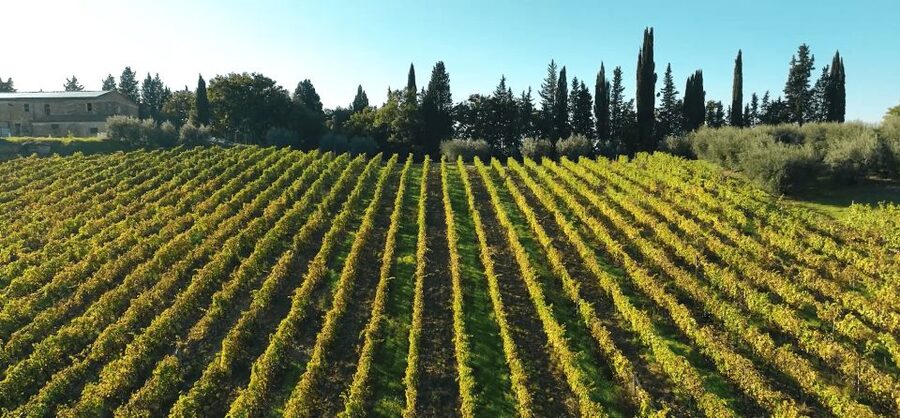
The most interesting part of this Montespertoli wine visit is that it goes beyond a tasting room. You move from the terrace into an old cellar, then see the special room where Vin Santo ages, a museum of vintages reaching back to 1950, and an oil room with Impruneta terracotta jars from the 1800s and earlier. The farm itself is the main attraction.
I like the chance to taste five different Tuscan wines with local foods rather than a token snack. I also like the mix of wine, olive oil, old vessels, and family-farm setting, which gives you more context than a quick pour at a bar. The main consideration is the two-hour length: it works well as a compact stop, but it leaves little time for a slow wander or a lengthy lesson about each bottle.
Key Points Before You Book
- Five wines are included: Chardonnay, Chianti Riserva, Chianti Montespertoli Riserva, a Tuscan red, and Vin Santo del Chianti.
- The cellar visit includes tonneaux and barriques, where the wines age before bottling.
- Vin Santo gets its own stop in the Vinsantaia, a traditional aging room tied to the Chianti area.
- The Wine Museum holds vintages from 1950 onward, giving the tasting a useful sense of time.
- Tuscan food is part of the experience: salami, ham, pecorino, honey, and assorted bruschettas accompany the wine.
- English and Spanish tours are available, and the experience is wheelchair accessible.
A Farm Visit Rather Than a Quick Wine Bar Stop
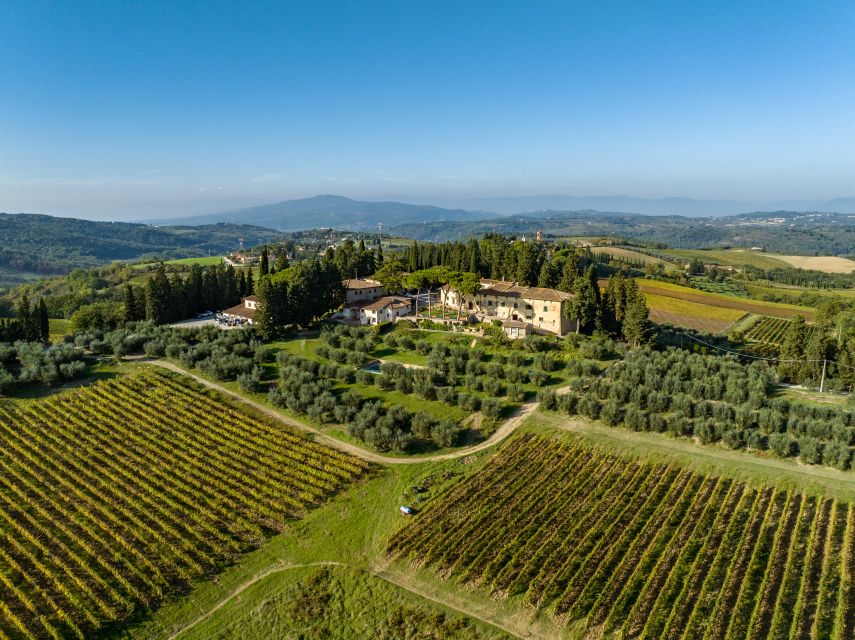
Poggio Capponi Farm gives you a look at the place behind the bottle. That matters in Tuscany, where wine is best understood alongside the cellar, the soil, the food, and the long habits of rural production.
You begin on the farm terrace, where the guide welcomes you before taking you inside. The terrace offers a calm start, but the real substance comes once you leave the outdoor sitting area and enter the working wine spaces. This is not only a glass-in-hand tasting. You see where the wine is aged and learn how the farm uses its rooms and old equipment.
The experience is priced at $56.94 per person and lasts two hours. I consider that a fair price if you value the guided visit as much as the wine. You are paying for several connected parts: access to the historic cellar, the Vin Santo room, the museum, the oil room, five pours, and a platter of Tuscan products.
If your only goal is to sample a few wines, the cost may feel higher than a basic tasting. If you want a short cultural visit with food and a proper look at production, the package makes more sense. The two-hour format also fits neatly into a day spent exploring the Montespertoli area.
More farm tours around Italy:
- Florence Pizza or Pasta Class with Gelato Making at a Tuscan Farm
★ 5.0 · 6,801 reviews - Cooking Class and Lunch at a Tuscan Farmhouse with Local Market Tour from Florence
★ 5.0 · 4,831 reviews - Sorrento Farm and Food Experience including Olive Oil, Limoncello, Wine tasting
★ 5.0 · 2,524 reviews
From the Terrace Into the Historic Cellar
The tour starts when you exchange your voucher at the Fattoria Poggio Capponi ticket counter. Your guide waits on the terrace, and the activity returns to this same meeting point at the end.
That simple arrangement is helpful because there is no separate drop-off point to find afterward. Hotel pickup and drop-off are not included, so you need to arrange your own way to the farm. The provided information does not specify transportation from Montespertoli or nearby towns, so check your route before booking.
From the terrace, you move into the historic cellar. Here, tonneaux and barriques hold the wines as they age. These barrel terms are useful to know: both refer to oak vessels, but the different sizes affect how wine develops. The visit is not presented as a technical wine course, so you should expect an accessible introduction rather than a detailed lesson in oak chemistry.
Still, seeing the barrels gives the tasting a physical point of reference. You can connect the wine in your glass with the room where it spends time before it is ready. I find that much more satisfying than tasting bottles with no sense of their origin.
The cellar also helps you understand the scale of the visit. This is a farm-based production setting, not a polished city tasting counter. The appeal comes from seeing a real place where wine is made and aged.
The Vinsantaia and Vin Santo del Chianti
One of the most distinctive stops is the Vinsantaia. This is where Vin Santo del Chianti slowly ages, and it gives the visit a stronger local identity than a tasting built only around familiar reds.
Vin Santo is a historic symbol of the Chianti denomination. The tour gives it a dedicated room, which tells you that it is not being treated as an afterthought. You see the setting where the wine develops, then taste Poggio Capponi Vin Santo del Chianti later in the visit.
For many people, this may be the most memorable pour because it differs from the dry table wines served earlier. The exact character of the wine is not specified, so the guide’s explanation and your own palate will do the work. Pay attention to how it compares with the savory foods on the table, especially the pecorino and honey.
The Vinsantaia also adds a sense of patience to the tour. The wine is described as aging slowly, and that phrase captures the contrast between a two-hour visit and the much longer process behind the bottle. You arrive for a short experience, but the room points to work that cannot be rushed.
Four Still Wines Before the Dessert Wine
The tasting includes one glass of each listed wine. You receive:
- Chardonnay Sovente
- DOCG Chianti Riserva Poggio Capponi
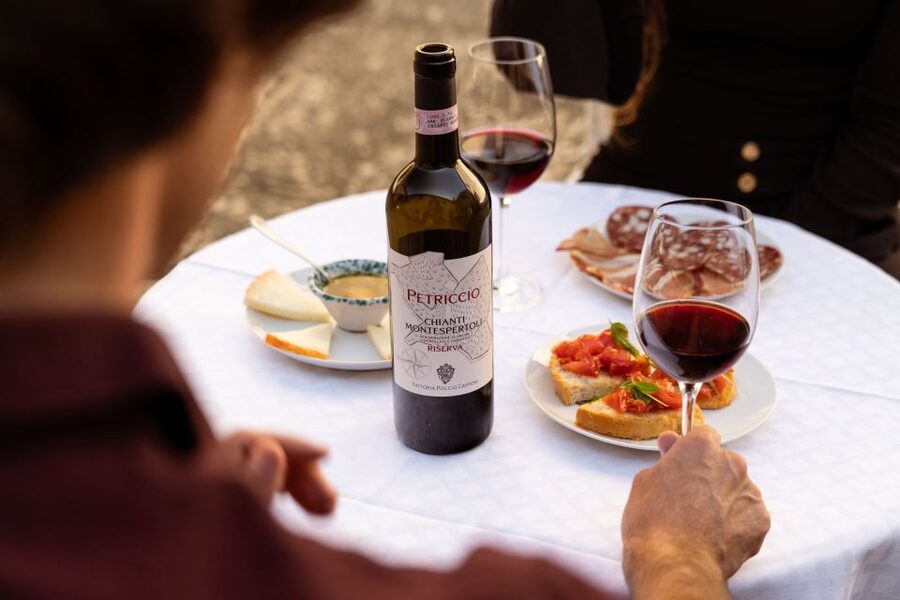
- DOCG Chianti Montespertoli Riserva Petriccio
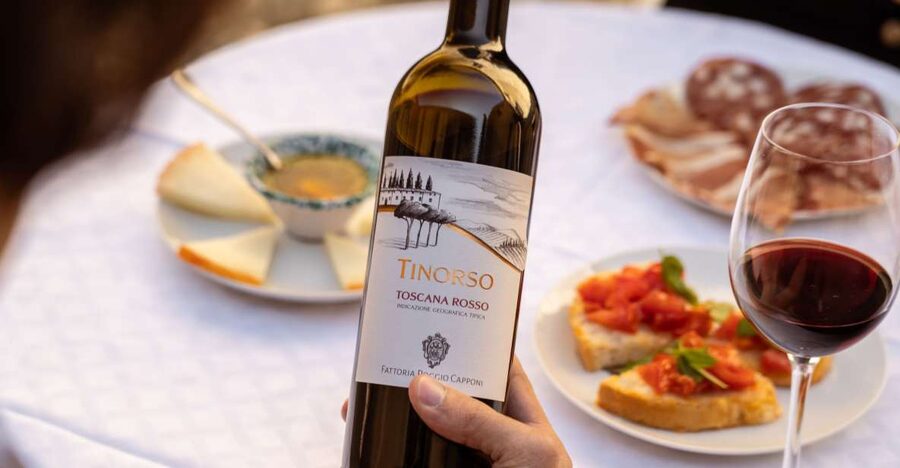
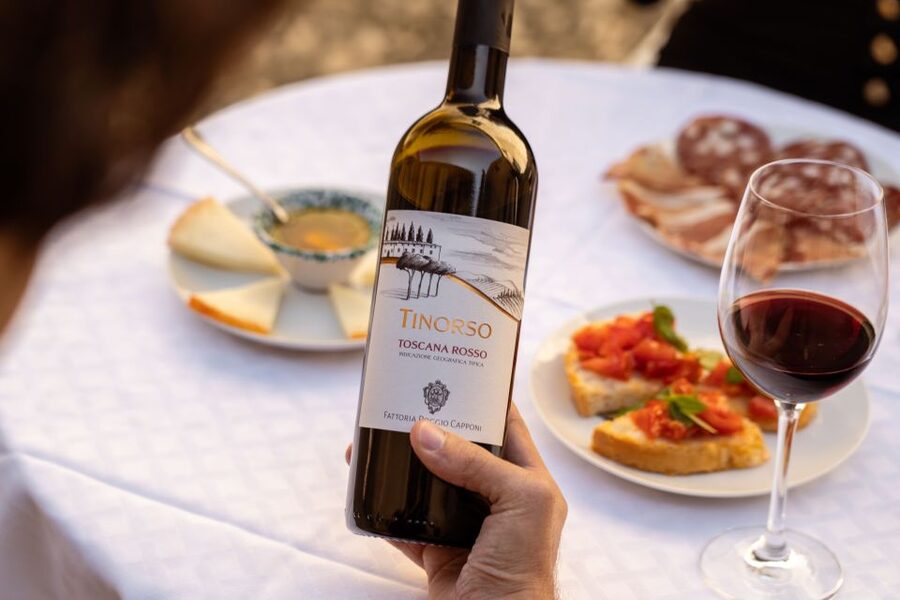
- IGT Tuscan red Tinorso
- Poggio Capponi Vin Santo del Chianti
This lineup gives you a useful range. The Chardonnay provides a white wine at the start, while the two Chianti Riservas let you compare wines from the same broad Tuscan tradition. The IGT Tuscan red adds another style, and the Vin Santo closes the sequence with something different again.
The labels also offer a small lesson in Italian wine categories. DOCG wines follow strict regional rules, while IGT gives a producer more freedom in how a Tuscan wine is made and labeled. You do not need to memorize the classifications, but it is worth asking the guide how they affect these particular bottles.
The presence of two Chianti Riservas is especially useful. A casual tasting can blur together when every wine is red. Here, the white, the pair of Chiantis, the IGT red, and the Vin Santo create clear points of comparison.
The information does not specify the pour size or whether bottles are available for purchase, so ask at the farm if buying wine matters to you. It also does not provide individual tasting notes, alcohol levels, or grape varieties. Come ready to taste and listen, not expecting a printed technical study of each wine.
Same countryside, another kind of harvest:
- Sorrento: Pizza Lesson, Wine, and Limoncello at a Local Farm
★ 5.0 · 1,513 reviews - Florence: Pizza or Pasta Class with Gelato at a Tuscan Farm
★ 4.9 · 1,181 reviews - Hands-On Cooking Class & Farmhouse Tour on the Amalfi Coast
★ 5.0 · 956 reviews - Pizza School with Wine and Limoncello Tasting in a Local Farm
★ 5.0 · 845 reviews
Tuscan Food Makes the Tasting More Practical
The food pairing is a major part of the value. You receive platters of Tuscan products, including salami and ham, pecorino and honey, plus various bruschettas.
That is a better match for a farm visit than a bowl of crackers. Cured meats show how the wines work with salty, rich flavors. Pecorino brings a firmer cheese option, while honey gives you a sweet contrast. Bruschetta adds bread and toppings to the table, though the exact toppings are not specified.
The pairing also turns the tasting into a light meal for some people. It is not described as lunch or dinner, so do not book it expecting a full restaurant service. Still, the generous mix of savory and sweet foods should make the two-hour visit more comfortable than a tasting with wine alone.
I would pay attention to the order in which you eat. Try each wine on its own first, then with the salami, cheese, honey, or bruschetta. You will get more from the visit if you treat the food as part of the tasting rather than something to finish quickly.
The inclusion of local products also makes the experience more useful for anyone planning meals in Tuscany. You get a simple picture of how regional wine is served at the table, not just how it is judged in a glass.
The Wine Museum and Vintages From 1950
The Wine Museum adds a rare time element to a short farm tour. In its collection, you can see historical vintages, with the oldest dating to 1950.
That date is worth pausing over. A bottle from 1950 is not simply an old object. It links the current production to earlier generations of winemaking and shows that the farm keeps a record of its own past.
The available information does not say how large the museum is or how long you spend there. I would expect a focused stop rather than a major museum visit. That is perfectly suitable for a two-hour tour, but anyone hoping for a large exhibition should keep expectations in check.
The museum works best when paired with the cellar. First, you see wine aging in barrels. Then, you see examples of wine that have already become part of the farm’s record. That sequence gives the visit a beginning, a working middle, and a sense of long-term continuity.
It is also a welcome change from a tour made entirely of tasting pours. You can take a break from comparing flavors and look at tangible objects instead.
Ancient Impruneta Terracotta in the Oil Room
The final unusual stop is the oil room. There, you can see ancient terracotta vessels from Impruneta dating to the 1800s and even earlier.
Impruneta, near Florence, is known for its terracotta tradition. In this room, the jars connect the farm’s wine production with the wider agricultural life of Tuscany. Olive oil and wine were both stored in large earthenware vessels long before modern tanks and stainless steel equipment became common.
This stop is valuable even if olive oil is not your main interest. The jars show how practical objects can also carry local design and craft traditions. Their age gives you another physical link to earlier farm life, much like the 1950 vintage in the museum.
The tour description does not promise an olive oil tasting, so do not assume that oil sampling is included. The attraction here is the room and its old terracotta vessels. It broadens the visit from wine alone and makes the farm feel like a working agricultural place with several connected traditions.
Timing, Access, and Language
The activity lasts two hours, with starting times based on availability. That makes it easy to fit into a larger day, but you should check the available time before planning other fixed activities around it.
English and Spanish live guides are available. No guide names are provided, so you cannot request a particular host in advance based on the information available.
The experience is wheelchair accessible. Since the tour moves between the terrace, cellar, Vinsantaia, museum, and oil room, it is sensible to confirm the exact route and any access details when booking if you have specific mobility needs. Accessibility is stated, but the details of surfaces, door widths, or restroom access are not provided.
The tour begins and ends at Fattoria Poggio Capponi. Hotel transportation is not included, so the activity suits people who already have independent transport or a clear plan for reaching the farm. Since no group size is listed, you should not assume a private visit or a small group.
Cancellation is flexible: you can cancel up to 24 hours before the start for a full refund. You can also reserve now and pay later, which helps if you are still arranging a Tuscany itinerary.
Who Will Get the Most From This Visit
I would choose this experience if you want a compact introduction to Chianti wine with more substance than a standard tasting. The cellar, Vinsantaia, museum, and oil room give you several subjects to explore, while the food keeps the visit grounded in everyday Tuscan eating.
It suits couples, food-focused visitors, and anyone who enjoys old farm buildings and objects with a clear connection to local production. It also works for people who do not know much about wine, since the visit gives you a place-based introduction without requiring advanced knowledge.
You may want something else if you are seeking a long technical tasting, a full meal, or an all-day vineyard tour. The format is concise, and the available information does not include vineyard walking, a cooking lesson, transportation, or a private guide.
The tour also makes sense for visitors who want to compare styles. The Chardonnay, two Chianti Riservas, Tuscan red, and Vin Santo create a broader tasting than a single-variety session.
Should You Book Poggio Capponi Farm?
Book it if you want a two-hour mix of wine, food, and farm culture rather than wine alone. The Vinsantaia, 1950 vintage collection, and old Impruneta jars give the visit character, while the five-wine tasting and Tuscan platter make the $56.94 price easier to justify.
Skip it if your priority is a long vineyard walk, a full meal, or included transportation. For everyone else, this is a sensible Montespertoli stop, especially when you value the place behind the bottle as much as the wine in your glass.
FAQ
Where does the Poggio Capponi Farm wine tour begin?
You exchange your voucher at the Fattoria Poggio Capponi ticket counter before the tour. Your guide waits for you on the terrace.
Where does the activity end?
The tour ends back at the meeting point at Fattoria Poggio Capponi.
How long does the experience last?
The experience lasts two hours. Starting times depend on availability.
What languages are available?
Live tours are available in English and Spanish.
Is hotel pickup and drop-off included?
No. Hotel pickup and drop-off are not included.
Which wines are included in the tasting?
The tasting includes Chardonnay Sovente, DOCG Chianti Riserva Poggio Capponi, DOCG Chianti Montespertoli Riserva Petriccio, IGT Tuscan red Tinorso, and Poggio Capponi Vin Santo del Chianti.
What food is served with the wine?
The pairing includes platters of Tuscan products such as salami and ham, pecorino and honey, and various bruschettas.
Is the tour wheelchair accessible?
Yes, the activity is listed as wheelchair accessible.
Newly listed farm visits around Italy
- Sorrento Half-Day Farm Experience: Pizza, Cheese Making and Wine★ 5.0 · 17 reviews
- Farm-to-Table Experience: Olive Oil, Garden Tour & Nonna’s Lunch★ 5.0 · 35 reviews
- Amalfi Coast & Sorrento Cooking Class School at Farmhouse★ 5.0 · 25 reviews
- Sorrento: Authentic Lemon Experience at a Farm with Tastings★ 5.0 · 6 reviews
- Marì Cooking Class in a Family Farm with Amalfi Coast view★ 5.0 · 11 reviews
- Cooking Class & Guided Farm Tour On The Hills Of Sorrento★ 5.0 · 10 reviews
- Tasting Limoncello, Oil and Typical Products in Farmhouse★ 5.0 · 13 reviews
- Sorrento Villa Cooking Class with Fresh Harvest Lunch★ 5.0 · 25 reviews
Italy Farm Tours, compared.

Florence Pizza or Pasta Class with Gelato Making at a Tuscan Farm
Read our review →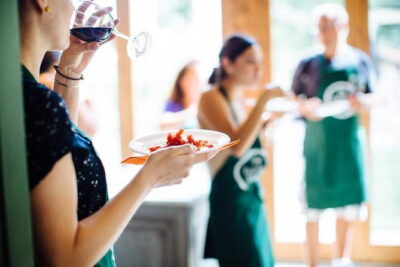
Cooking Class and Lunch at a Tuscan Farmhouse with Local Market Tour from Florence
Read our review →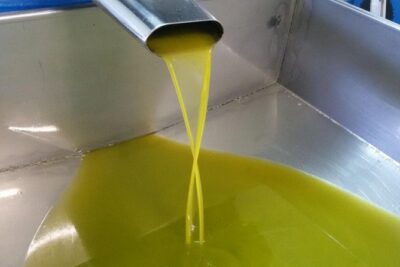
Sorrento Farm and Food Experience including Olive Oil, Limoncello, Wine tasting
Read our review →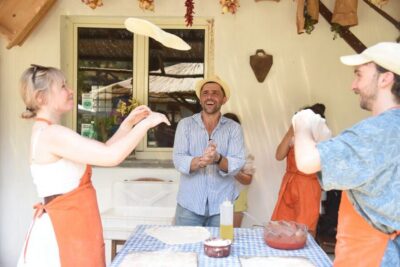
Pizza Lesson, Wine, and Limoncello at a Local Farm
Read our review →
Hands-On Cooking Class & Farmhouse Tour on the Amalfi Coast
Read our review →
Pizza School with Wine and Limoncello Tasting in a Local Farm
Read our review →
Authentic Farm Tour with Pizza, Cheese, Wine & Limoncello Tasting
Read our review →
Sorrento Farm by Tuk Tuk: Cheese, Limoncello & Hands-On Pizza
Read our review →Browse the lists this tour appears in