

Review · AROUND THE WORLD
Private Ollantaytambo, Pisac Ruins Tour with Farm Visit, Gourmet Picnic Lunch
Ollantaytambo and Pisac are two of the Sacred Valley’s essential Inca sites, but this private outing adds something many ruins tours miss: a close look at daily life. You’ll visit a farm, help cut alfalfa for guinea pigs, taste local fruit at a market, and eat a gourmet picnic lunch made with organic produce.
I especially like the personal pace and the chance to spend the day with guide Valentin, who grew up in the Sacred Valley and can connect the ruins to farming, weather, food, and village life. The main drawback is the long day, with plenty of walking and stairs, plus entrance fees that are not included in the $197 price.
Key points at a glance
- Ollantaytambo before the crowds: Explore terraces, fountains, aqueducts, storehouses, and one of Peru’s oldest living Inca towns.
- Farm lunch with local produce: Visit a Sacred Valley farm, see how chicha is made, and enjoy a chef-prepared picnic outdoors.
- A real Urubamba market: Taste fruits such as lucuma, passion fruit, and chirimoya while seeing local families sell produce and medicinal plants.
- Pisac from above: Climb through high terraces and learn about the site’s religious, military, and astronomical roles.
- Private transportation and guiding: Your group travels alone, with hotel pickup and drop-off in Cusco or the Sacred Valley.
- Budget for the Boleto Turistico: Entrance to the ruins requires a separate ticket, priced at 130 soles for the full circuit or 70 soles for a limited ticket.
Why this private Sacred Valley day works
Many Sacred Valley outings race from one souvenir market to the next. This one gives you a better mix. You get major archaeological sites, but also a farm, a produce market, a regional meal, and time to ask questions without a busload of strangers waiting beside you.
That private format matters most at the ruins. You can stop when you need a better explanation, spend more time on a view, or move along when your legs need a break. The tour is still full, at about eight hours, but it does not have to feel like a forced march.
Valentin is the named guide associated with this experience. His background in the Sacred Valley is useful because the tour is not limited to dates and royal names. You can ask about Andean diets, agriculture, weather, village economies, and the ingredients used in chicha, the corn beer linked to Inca culture.
The tour costs $197 per person. That is not a bargain-basement day trip, especially since entrance tickets are separate. Still, the price includes private transport, a local professional guide, lunch, food tasting, and hotel pickup and drop-off. If you would otherwise pay for a private vehicle, guide, and meal separately, the package makes more sense.
More Lunch Experiences in the world:
- From Porto: 2 Wine Regions, Farm-to-Table Lunch & Boat
★ 4.9 · 5,724 reviews - Cooking Class and Lunch at a Tuscan Farmhouse with Local Market Tour from Florence
★ 5.0 · 4,831 reviews - Tromsø: Reindeer Camp and Sami Cultural Tour with Lunch
★ 4.7 · 3,326 reviews
Starting at Ollantaytambo’s Inca terraces
The schedule depends on where you stay. Pickup from Cusco is listed for 7:00 a.m., while pickup from a hotel in Ollantaytambo is listed for 8:30 a.m. Confirm the exact time when you book, since your starting point changes the morning considerably.
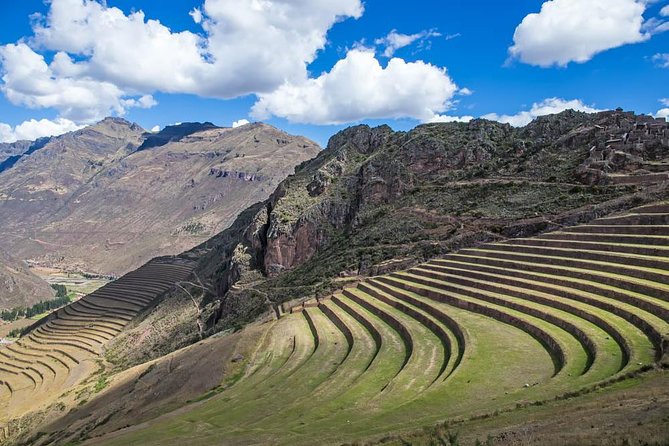
Ollantaytambo was the lodging of Inca emperor Pachacutec and later became a military checkpoint guarding routes toward Machu Picchu. Its steep terraces make that military role easy to understand. From the upper site, you can see why control of the valley mattered.
Your guide leads you through the large stone terraces, fountains, and aqueducts. The waterworks are not just decoration. They show how carefully the Incas planned settlement life, farming, and water supply.
You’ll also see storage houses designed to use the wind to keep crops cool and preserved. This is one of the more useful details of the visit because it connects impressive stonework with ordinary needs: storing food, protecting harvests, and feeding communities.
Allow for stairs and a moderate amount of walking here. The tour is suitable for most people, but it is not a sit-back-and-watch kind of outing. Good shoes and a steady pace will help.
After the guided visit, you have time to wander the town. Ollantaytambo is unusual because many 15th-century Inca buildings remain part of the town itself. You are not only looking at an isolated archaeological site. You are walking through a living settlement shaped by its Inca street plan and old stone walls.
The information lists the admission ticket as not included. To enter Ollantaytambo and Pisac, you need the Boleto Turistico. The full ticket costs 130 soles, or about $37, and also covers Chinchero, Moray, several museums in Cusco, and Sacsayhuaman. A 70-sol, roughly $23, ticket covers a smaller selection of sites. Check which ticket applies to your route before the day begins.
A working farm and lunch above the Sacred Valley
After Ollantaytambo, the drive to Yanahuara takes about 20 minutes. Here the tone changes from monumental ruins to farm work and food.
You will tour the farm fields and cut alfalfa to feed guinea pigs. That small task gives you a direct look at local food production. Guinea pigs, called cuy in Peru, are part of Andean food culture, and the farm visit shows them in an everyday setting rather than only on a restaurant menu.
You will also see how chicha is made. The drink is a corn beer with a long place in Peruvian culture, and the visit explains the ingredients used to produce it. This is a practical way to connect the drink with farming and local customs.
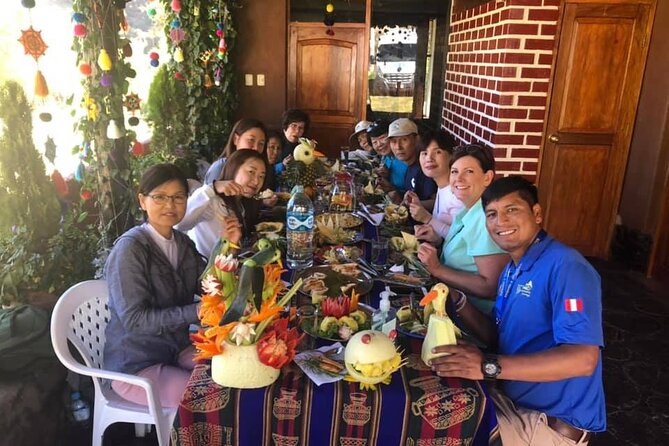
The lunch is one of the strongest parts of the day. A private chef prepares a picnic using local organic produce, including crops from the farm. You eat outdoors while looking across the Sacred Valley, which gives the meal a sense of place that a restaurant lunch cannot match.
The food is also a reason to choose this tour over a basic ruins transfer. One detailed account called the farm meal one of the best meals of the person’s Peru trip, and another praised the food as a major reason to use the company again. I would treat that as a strong sign for anyone who cares about regional cooking, though menus can vary.
The pace here is deliberately slower. You are not just stopping for a quick photograph before getting back in the vehicle. You have time to sit, eat, and take in the setting. That pause is welcome after the stairs at Ollantaytambo.
Tasting fruit at the Urubamba market
After lunch, you visit the local market in Urubamba. The tour describes it as an authentic market used by local families rather than a market built mainly for sightseeing.
You can see fruits, vegetables, flowers, and natural medicinal plants for sale. With the guide’s help, you can taste Peruvian produce such as passion fruit, lucuma, and chirimoya. These flavors are part of what makes a market visit worthwhile, since you get a better sense of the country through food than through a display of souvenirs alone.
The market also ties back to the farm visit. You have already seen crops in the field, then learned about the ingredients for chicha, and now see how produce moves through a local market. That sequence gives the day a clear thread instead of feeling like a random collection of stops.
This will not be the place for a long, independent shopping session. The point is to walk with your guide, understand what you are seeing, and sample foods. If you want to buy something, ask about prices and packing before making a purchase.
More farm tours around the world:
- Half-Day Thai Cooking Class at Organic Farm in Chiang Mai
★ 5.0 · 19,087 reviews - Florence Pizza or Pasta Class with Gelato Making at a Tuscan Farm
★ 5.0 · 6,801 reviews - Chiang Mai: Authentic Cooking Class with Market & Farm Visit
★ 4.9 · 4,546 reviews - Maui Pineapple Farm Tour in Haliimaile
★ 5.0 · 2,855 reviews
Pisac’s high terraces and old Inca trail
From Urubamba, the drive to Pisac takes about an hour. The ruins sit high on a mountain, so the approach gives you a sense of scale before you begin walking.
Pisac is known for its sweeping views over the Sacred Valley and its broad agricultural terraces. Your guide explains the site’s religious, astronomical, and military functions, helping you see it as more than a scenic pile of stone.
The terraces also show how the Incas grew food at elevations above 11,000 feet. They were carefully engineered farming spaces, not simply steps carved into a hillside. At Pisac, the agricultural system is as important as the ceremonial structures.
The walking can be demanding. You climb toward the top of the ruins, and the altitude adds to the effort. Take your time, drink water, and tell your guide if you need a slower pace. The private format is helpful here because you are not trying to keep up with a large group.
A special part of the visit is a little-used original Inca trail. The route passes through an Inca-built tunnel and leads through a quieter section of the site. This gives the visit a more adventurous edge, but you should expect uneven ground and stairs rather than a smooth walkway.
Pisac also contains one of the largest Inca cemeteries. You can tour this area and learn how it fits into the wider site. The cemetery is a reminder that Pisac was not only a farming and defensive center. It was also a place tied to ritual and burial.
The Pisac handicraft market and the ride home
The final stop is the handicraft market in the town of Pisac. You can browse ceramics, jewelry, and woven goods before returning by private transport.
This market is more visitor-focused than the Urubamba produce market, so the two stops serve different purposes. Urubamba gives you a look at local food buying and selling. Pisac gives you time to look at crafts and perhaps shop for a keepsake.
The tour returns to your hotel in Cusco or the Sacred Valley. Because the day includes drives between several places, the private vehicle is more than a comfort. It keeps the route practical and saves you from arranging separate transport between ruins, farm, market, and hotel.
What the $197 price really covers
At $197 per person, this is best judged as a full private day rather than as a simple ruins ticket. You are paying for a dedicated vehicle, guide, hotel transfers, farm access, food tasting, and a prepared lunch.
The separate entrance fee changes the total cost. For two main ruins, the 130-sol Boleto Turistico is the key extra expense. If you plan to visit Chinchero, Moray, Sacsayhuaman, or the listed museums in Cusco, the full ticket may offer better value. If your plans do not include those sites, ask about the 70-sol option.
The strongest value comes when you care about context and flexibility. You are not only transported to famous ruins. You get explanations about agriculture, village life, market foods, and chicha, along with time for questions.
The price is harder to justify if you want only a quick look at Pisac and Ollantaytambo, or if you are happy with a large shared bus. It is also worth remembering that an eight-hour day with stairs and a high-altitude ruin may feel tiring, especially if you are still adjusting to Cusco.
Who should book this day?
I would choose this experience if you want the major Sacred Valley ruins but also want contact with ordinary food and farm life. It suits couples, families, friends, and small groups who value a flexible schedule and private guiding.
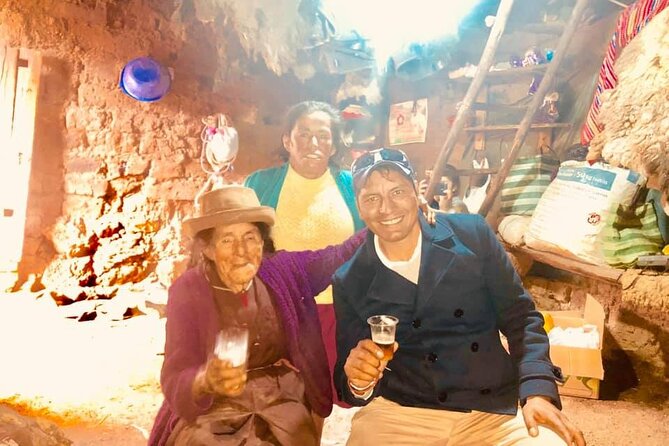
It is a particularly good choice for first-time visitors who want help understanding what they are seeing. Valentin’s local background, strong English, and familiarity with Andean village life add useful context to the stonework.
You should think twice if you dislike long drives, outdoor meals, markets, or moderate uphill walking. The itinerary covers a lot of ground, and the best parts require you to participate rather than simply step out for photographs.
The experience has a five-star rating from 52 published ratings, with 100 percent recommending it. The praise centers on the guide’s excellent English, the detailed explanations, the farm visit, and especially the lunch. Those are the areas I would give the most weight when deciding.
Should you book the Ollantaytambo and Pisac private tour?
Book it if you want a full Sacred Valley day that combines major Inca sites with food, farming, and local markets. The farm picnic and Urubamba market keep the tour from becoming a nonstop sequence of ruins, while the private format gives you room to ask questions and control the pace.
Skip it if you want a low-cost group outing or a short archaeological visit. Once you add the Boleto Turistico, the total cost rises, and the day demands stamina.
For the right visitor, this is a well-balanced way to see the Sacred Valley: two powerful ruins, a local guide, a proper meal, and a few hours spent looking at Peru through daily life as well as stone.
FAQ
How long does the tour last?
The tour lasts approximately eight hours.
What time is pickup from Cusco?
Pickup from Cusco is listed for 7:00 a.m.
What time is pickup from a hotel in Ollantaytambo?
Pickup from a hotel in Ollantaytambo is listed for 8:30 a.m.
Is the tour private?
Yes. Only your group participates in the private tour or activity.
Is hotel pickup and drop-off included?
Yes. Pickup and drop-off at hotels in Cusco or the Sacred Valley are included.
Are entrance fees included?
No. Entrance fees are separate. You need a Boleto Turistico for the Ollantaytambo and Pisac ruins.
How much does the Boleto Turistico cost?
The full ticket costs 130 soles, about $37. A limited ticket costs 70 soles, about $23.
What does the full Boleto Turistico cover?
The full ticket covers Pisac, Ollantaytambo, Chinchero, Moray, several museums in Cusco, and Sacsayhuaman.
Is lunch included?
Yes. Lunch is included, along with food tasting.
Is much walking involved?
Yes. A moderate amount of walking is involved, with stairs at Ollantaytambo and uphill walking at Pisac.
Can I cancel for a full refund?
Yes, if you cancel at least 24 hours before the experience starts. Cancellations made less than 24 hours in advance are not refunded.
Newly listed farm visits around the world
- Half-Day Farm Visit and Cow Milking Experience★ 5.0 · 16 reviews
- Boutique tour , Mt Maunganui, NZ farm, Rotorua lakes/geothermal★ 4.5 · 50 reviews
- Gourmet Mushroom Farm Tour in Tennessee★ 5.0 · 5 reviews
- Cozy Farm Experience with Wagon Wheels and Acoustic Meal★ 5.0 · 2 reviews
- Animal farm park with free hotel pickup★ 5.0 · 2 reviews
- Alpaca Farm Tours with Toffeemont★ 5.0 · 8 reviews
- Private, via beaches, Kiwi farm to Rotorua 8 lakes & Geothermal★ 5.0 · 20 reviews
- 1D Tour to Cingjing Farm from Taichung★ 4.5 · 3 reviews