
Review · AROUND THE WORLD
Singapore: Guided Boat Tour and Kelong Fish Farm Visit
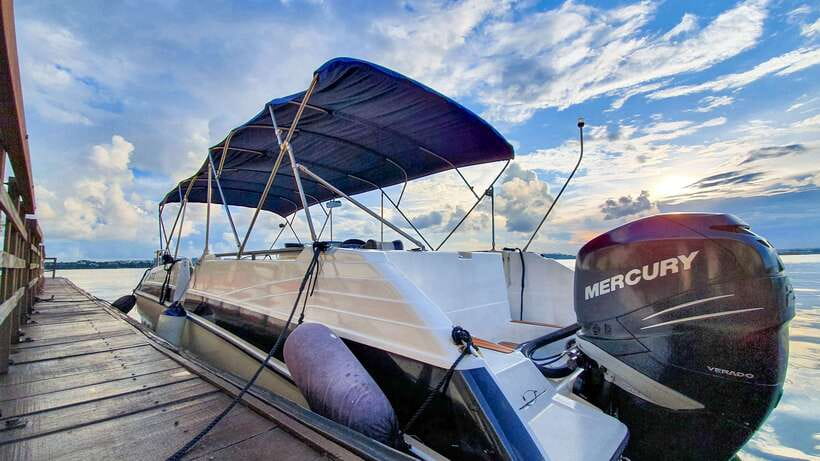
Singapore’s northeastern waters offer a side of the country that most city visitors never see. Instead of towers, malls, and packed streets, you get fishing boats, mangrove swamps, sea channels, kelongs, and the rustic shores of Pulau Ubin, Singapore’s only inhabited island among its 63 islands.
I like two things especially: the tour explains the working life behind the scenery, including seaman’s language and the hard realities of fish farming, and it gives you a close look at nature, with chances to spot seabirds and wild boars. The sunset on the return trip can be a fine bonus when the weather cooperates.
The main consideration is the $225 price per person, which reflects a private-feeling small group and the five-person minimum needed for departure. This is not a cheap sightseeing boat ride, and food and drinks at the kelong restaurant are extra.
Key points to know before you book
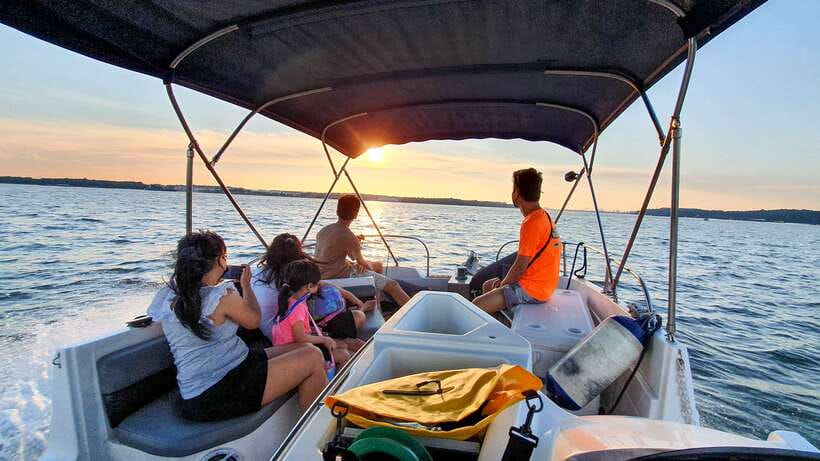
- Three hours on a fine catamaran: You spend the outing at sea, not sitting through a long land transfer.
- Pulau Ubin from the water: See the island’s quieter shores, mangroves, and wildlife without taking the usual inland route.
- A working kelong fish farm: Learn how floating fish farms operate and why sustainable fish farming is difficult.
- Small group of up to 10: The limited size should make it easier to hear the English-speaking guide.
- Light rain does not stop the tour: Ponchos are provided, but thunderstorms lead to a rescheduled date.
- Minimum five people required: The pricing is increased for groups of one to five because the boat needs five people to depart.
Leaving Singapore’s concrete shore behind
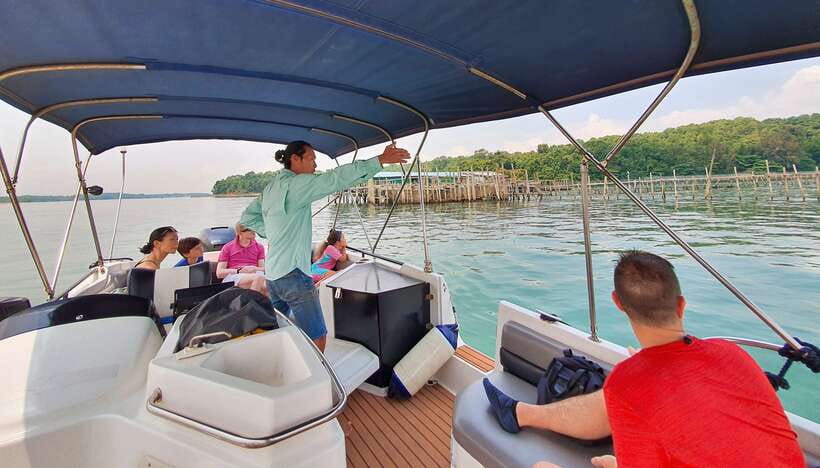
The appeal of this tour is simple: it changes your view of Singapore. From the boat, the city is no longer only a polished urban center. The northeastern edge reveals a network of channels, islands, fishing grounds, mangrove areas, and floating homes and businesses known as kelongs.
I like that the outing is not built around a single famous landmark. The point is the setting and the stories attached to it. Your guide explains the water routes, local seafaring terms, and the role these channels play in life around the islands. That gives the scenery some meaning instead of reducing the boat ride to a postcard view.
The catamaran offers an open-air way to see the coast. You can feel the wind, hear the water, and take in the salty air. This is a good break after several days of Singapore’s dense streets and indoor attractions. Still, keep your expectations in check. You are not heading into a remote wilderness. Singapore remains nearby, and the tour is a short introduction to its northeastern waters rather than a full-day expedition.
More Guided Tours in the world:
- Mykonos: Farm, Ano Mera Village, and Beaches Guided Tour
★ 4.4 · 1,283 reviews - Lahaina: Maui Ku’ia Estate Guided Cacao Farm Tour and Tasting
★ 5.0 · 1,103 reviews - Kaneohe: Kualoa Ranch Guided UTV Tour
★ 4.8 · 335 reviews
What the three-hour route reveals
The route focuses on the northeastern banks of Singapore, where fishing activity, mangrove swamps, island settlements, and natural habitats meet. The exact order of stops can depend on conditions, but the experience combines a moving boat tour with time at a kelong restaurant and fish farm.
Sembawang beach and older island life
The guide shares stories about Sembawang beach and the indigenous island people connected with Singapore’s coastal past. This part adds useful context to the ride. You begin to see the shore not only as a place for recreation, but as part of a longer story involving communities, waterways, and people who lived close to the sea.
The history here is a reason to choose this tour over a standard harbor cruise. You are not just looking at the water. You are learning how coastal life shaped parts of Singapore before the modern city covered so much of the island.
The supplied information does not promise a museum visit or a long walking stop at Sembawang, so think of this as a guided view and conversation from the boat. The value comes from the explanation, not from a large formal attraction.
Pulau Ubin from the sea
The boat takes you close to Pulau Ubin, described as the only inhabited island among Singapore’s 63 islands. Many people know Pulau Ubin as a rustic contrast to central Singapore, but approaching it from the water gives you a different angle.
From offshore, you can appreciate the island’s less developed character and the habitats around it. Mangroves and shoreline vegetation support birdlife and other animals, while the water provides a natural boundary between Pulau Ubin and the main island.
I like this part because it places Singapore’s natural areas in a wider setting. You see that the country is not one solid block of buildings. It also includes small islands, tidal channels, fish farms, and coastal habitats that are easy to miss from the city.
Wildlife sightings are possible, but they are not guaranteed. Seabirds and wild boars are specifically mentioned as animals you may spot. Bring patience, and do not expect a scheduled animal encounter. The best approach is to watch the shore and water while listening to the guide.
More farm tours around the world:
- Half-Day Thai Cooking Class at Organic Farm in Chiang Mai
★ 5.0 · 19,087 reviews - Florence Pizza or Pasta Class with Gelato Making at a Tuscan Farm
★ 5.0 · 6,801 reviews - From Porto: 2 Wine Regions, Farm-to-Table Lunch & Boat
★ 4.9 · 5,724 reviews - Cooking Class and Lunch at a Tuscan Farmhouse with Local Market Tour from Florence
★ 5.0 · 4,831 reviews
Mangroves, channels, and seaman’s language
The boat trip also focuses on the waterways themselves. Your guide explains the sea channels and introduces seaman’s lingo, giving you a better sense of how people who work on the water describe their surroundings.
That detail matters because the northeastern waters are not just open sea. They are a working network of channels and banks. Fishing boats, mangroves, island shores, and kelongs all depend on knowing how to move through this environment.
The tour is conducted in English, and the small group is limited to 10 people. That size should help you follow the commentary, ask questions, and keep sight of the guide while the boat is moving. No guide’s name is provided, so you should not book expecting a particular named host. The experience depends on the guide assigned to your departure.
The kelong fish farm visit
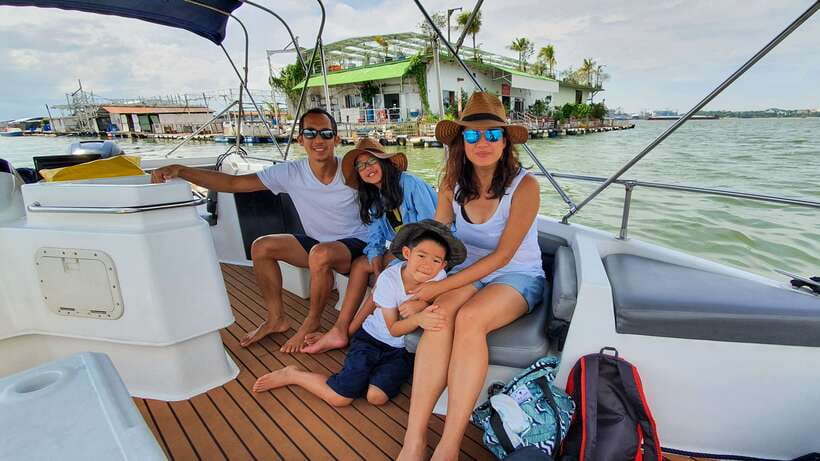
The final part of the tour brings you to a kelong restaurant and floating fish farm. This is the feature that makes the excursion more than a scenic cruise. You get a look at a form of fish farming that takes place directly on the water, in a setting that feels far removed from Singapore’s shopping districts.
A kelong is connected with life on the sea, and the visit shows how food production can take place around Singapore’s islands. The guide explains the idea of sustainable fish farming and the problems involved. That balance is important. Sustainable farming is presented as a goal, not as a simple label that solves every environmental concern.
You can expect to learn about the struggles faced by fish farms, though the provided information does not specify which species are raised or how much time you spend inside the restaurant. Food and additional drinks are not included in the $225 cost, so plan to pay separately if you want refreshments.
Do not treat the restaurant as a guaranteed gourmet meal. Its main value is the setting and the chance to understand a working floating farm. If you want a polished dining experience, this may not be the right reason to book. If you are curious about coastal food production and local sea life, it is a worthwhile stop.
Why the small group and price matter
At $225 per person, this tour costs far more than an ordinary public sightseeing cruise. The price makes more sense if you value a limited group, a licensed guide, a captain, and access to a less familiar part of Singapore.
The group is capped at 10 people, but the tour requires at least five participants to depart. For one to five people, the price is increased to meet that minimum departure policy. This is important for couples and solo visitors. You may pay a premium even if you are not traveling with a large party.
The small size has practical benefits. You should have a better chance of hearing the guide, asking questions about the fish farm, and finding room to look out from the boat without being surrounded by a large crowd. It also gives the trip a quieter feel than a big harbor vessel.
Still, the value depends on your interests. If you want famous landmarks, a short city cruise may give you more recognizable sights for less money. If you have already seen Singapore’s main attractions, or if you care about local coastal life, this tour offers something more unusual.
Weather, comfort, and meeting-point details
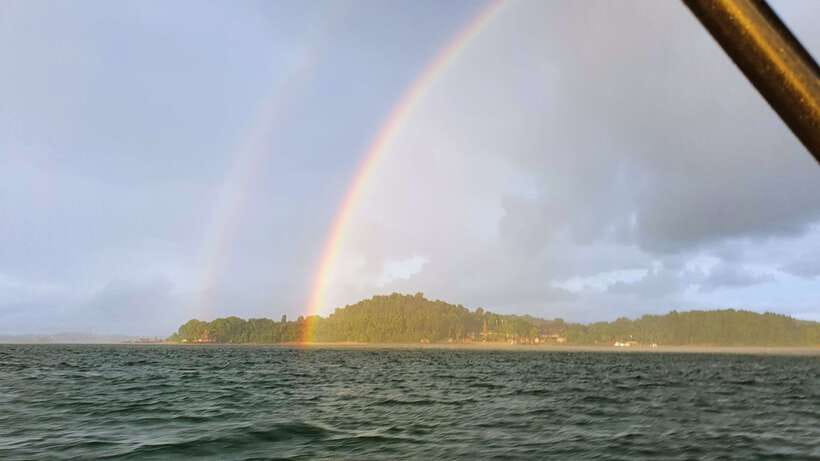
The tour continues in light rain, and ponchos are provided. That makes the experience fairly workable in Singapore’s changeable weather, but a poncho does not make a thunderstorm pleasant or safe. If a thunderstorm develops, the tour is rescheduled to another date.
Dress for wind and spray rather than city air conditioning. The supplied information does not list a required clothing policy, so practical outdoor clothing is the sensible choice. You will be exposed to the conditions on the water for three hours.
You must arrange your own transportation to and from the meeting point. On arrival, tell the security guard that you are there for the kelong tour and meeting at The Quarterdeck. The guard will direct you there. Allow enough time to find the entrance and complete this small check-in step without rushing.
The tour is led in English. If that works for you, the small group format should make the commentary easier to follow than on a large boat. If you need another language, this experience does not list one.
Who will enjoy this boat tour most
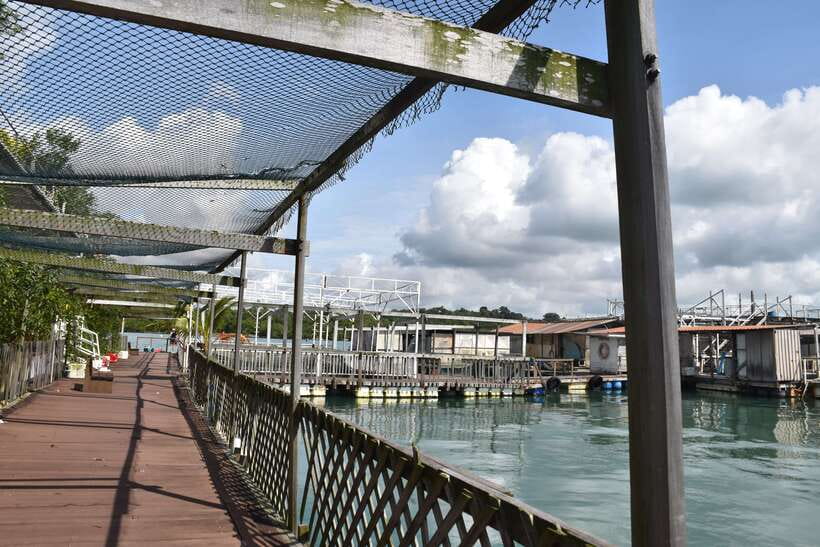
I would recommend this outing to you if you have already visited Singapore’s best-known sights and want a different angle on the country. It also suits anyone interested in island life, fishing, mangroves, wildlife, and the practical problems behind sustainable food production.
It is a good match for curious adults, small groups, and people who prefer a guided conversation to a simple ride with no explanation. The three-hour length is useful: long enough to reach the northeastern islands and fish farm, but short enough to fit into a larger Singapore itinerary.
You may want to skip it if you dislike open-water trips, want guaranteed animal sightings, or are watching your budget closely. The price is high, food is extra, and the experience depends on weather and a minimum of five people.
The tour also makes more sense if you have several days in Singapore or have visited the city before. One Finnish booking described it as especially worthwhile for people staying longer or returning to Singapore, and that is sound advice. On a first visit of only two or three days, you may reasonably choose the city’s major sights first.
Should you book the Singapore kelong tour?
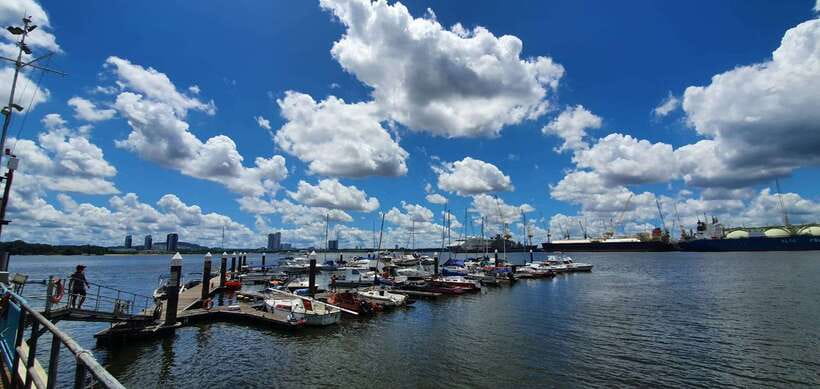
Book it if you want to trade Singapore’s familiar city views for mangroves, island shores, fishing activity, seabirds, and a floating fish farm. The guide’s stories about Sembawang, indigenous island communities, sea channels, and sustainable fish farming give the trip real substance.
Think carefully about the price and minimum group rule. At $225 per person, this is a specialty experience, not a bargain excursion. But for a small group of up to 10, three hours on a catamaran, and access to a side of Singapore that many people never see, it can be a strong choice for repeat visitors and anyone drawn to coastal life.
FAQ
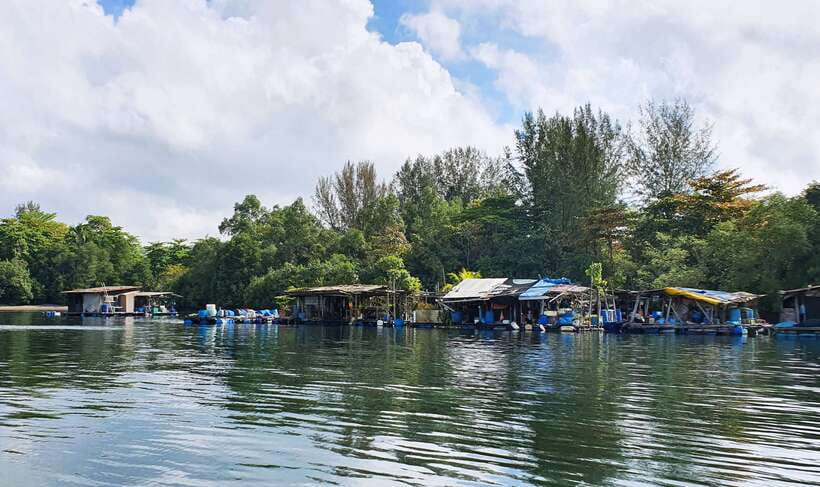
How long is the Singapore kelong tour?
The tour lasts three hours.
What language is the tour conducted in?
The tour is conducted in English with a live guide.
How many people can join the group?
The group is limited to 10 participants.
How many people are needed for the tour to depart?
At least five people are required for the tour to depart.
What is included in the tour price?
The price includes a licensed guide, the boat, the captain, and ponchos for rain.
Is food included?
No. Additional drinks and food at the kelong restaurant are not included.
Does the tour visit Pulau Ubin?
Yes. The route takes you close to Pulau Ubin and explores the island from the sea.
Can you see wildlife?
You may spot seabirds and wild boars, although sightings are not guaranteed.
What happens if it rains?
The tour continues during light rain, and ponchos are provided. A thunderstorm results in a rescheduled date.
Where do you meet the tour?
You meet at The Quarterdeck. Tell the security guard that you are there for the kelong tour, and the guard will direct you to the meeting point.
Newly listed farm visits around the world
- Half-Day Farm Visit and Cow Milking Experience★ 5.0 · 16 reviews
- Boutique tour , Mt Maunganui, NZ farm, Rotorua lakes/geothermal★ 4.5 · 50 reviews
- Gourmet Mushroom Farm Tour in Tennessee★ 5.0 · 5 reviews
- Cozy Farm Experience with Wagon Wheels and Acoustic Meal★ 5.0 · 2 reviews
- Animal farm park with free hotel pickup★ 5.0 · 2 reviews
- Alpaca Farm Tours with Toffeemont★ 5.0 · 8 reviews
- Private, via beaches, Kiwi farm to Rotorua 8 lakes & Geothermal★ 5.0 · 20 reviews
- 1D Tour to Cingjing Farm from Taichung★ 4.5 · 3 reviews