
Review · EGYPT
Farm-To-Table Tour With An Adventure To Bent & Red Pyramids
The best part of this Giza-area outing is the change of pace: first, you walk around two bold Old Kingdom pyramids, then trade desert dust for farm-fresh food beneath mango and palm trees. It gives you ancient Egypt and working rural Egypt in one half-day.
I like the private guide and vehicle, since your group can set its own rhythm. I also like the meal’s local focus, with chicken, rice, salads, aged cheeses, honey, dates, sweet potatoes, seasonal fruit, coffee, and mint tea. The main consideration is time: five to six hours is enough for a taste of Dahshur and the farm, but not a full rural day.
Key points to know before booking
- Bent and Red Pyramids: See Sneferu’s early smooth-sided experiment and the first fully completed smooth-sided pyramid.
- A quiet change of scene: Dahshur Lake and the farm offer open views and a calmer setting after the pyramid visit.
- Lunch with local ingredients: Expect several Egyptian-style dishes, fresh produce, sweets, coffee, and tea.
- Working countryside: Walk among crops such as wheat, clover, onions, garlic, and corn, and learn about irrigation.
- Private format: Only your group participates, with an air-conditioned vehicle and a private guide.
- Good value at $70: The price includes transport, guide, admissions, lunch, and bottled water, though extras and tipping cost more.
From Sneferu’s pyramids to a farm table
This experience works because it connects two sides of Egypt that are often kept apart. Dahshur gives you monumental stonework and royal ambition. The farm gives you food, crops, village scenes, and a closer look at how people use the Nile Valley today.
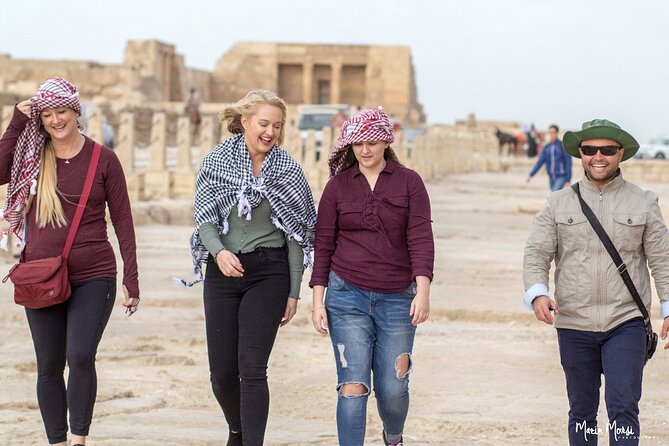
You meet your Egyptologist guide at the pickup point, then ride in an air-conditioned vehicle toward the Dahshur cemetery. The tour is private, so you are not tied to a large group’s pace. That matters at an archaeological site, where a few extra minutes for photos or questions can make the visit feel less rushed.
The full outing lasts about five to six hours. Roughly two hours are set aside for Dahshur, followed by the lake and farm portion. Since pickup is offered, the tour is practical if you are staying in or around Giza and want a planned half-day without arranging separate transport.
A guide named Lily has been associated with this experience, and the tour is designed around relaxed explanations rather than a quick stop for photographs. If Lily is assigned to your booking, you can expect the historical portion to include detailed discussion and conversation along the way. Guide assignments can vary, so confirm the name when you book.
More Cooking Classes in the world:
- Half-Day Thai Cooking Class at Organic Farm in Chiang Mai
★ 5.0 · 19,087 reviews - From Porto: 2 Wine Regions, Farm-to-Table Lunch & Boat
★ 4.9 · 5,724 reviews - Cooking Class and Lunch at a Tuscan Farmhouse with Local Market Tour from Florence
★ 5.0 · 4,831 reviews
Why the Bent Pyramid matters
The Bent Pyramid is the first major stop at Dahshur. Built under Pharaoh Sneferu between 2613 and 2589 BC, it represents an early attempt to create a smooth-sided pyramid rather than the earlier stepped form.
Its unusual change in angle gives the monument its modern name. The lower section rises steeply, then the upper section turns to a gentler angle. The shape is not a design flourish. It reflects the practical problems ancient builders faced while trying to raise a smooth-sided royal pyramid.
I find this site especially useful for understanding that pyramid building was a process of testing and correction. You are not simply looking at an isolated wonder. You are seeing one stage in a long effort to solve engineering problems with stone, weight, height, and slope.
Dahshur is also a better fit for visitors who want a quieter archaeological setting than the main Giza plateau can provide. The tour description does not promise a completely empty site, but the focus here is more on the monuments and their setting than on a long list of attractions.
Take your time listening to the explanation before rushing to the next view. The Bent Pyramid’s value is in its odd shape and its place in the development of Egyptian royal architecture.
The Red Pyramid and the finished idea
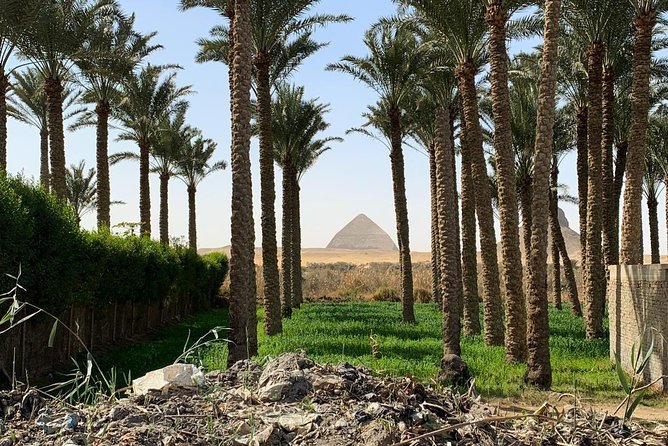
Sneferu later ordered construction of the Red Pyramid, also at Dahshur. It is described as the first complete pyramid with smooth sides, free-standing construction, and a height of about 104 meters. Its slope is about 43 degrees.
That detail gives you a useful comparison. At the Bent Pyramid, the angle changes partway up. At the Red Pyramid, the design reaches a more settled form. Seeing both in one visit lets your guide explain the connection instead of treating each pyramid as a separate photo stop.
The Red Pyramid is the stronger stop if you want to see the finished version of Sneferu’s plan. The earlier monument shows experimentation. The later one shows a more confident solution.
The visit also includes a pass by the Black Pyramid, which was made from mud and dates to the reign of Pharaoh Amenemhat III. The supplied information does not describe a full visit inside or around it, so treat this as a contextual sight rather than the main activity. Still, it adds another layer to Dahshur’s long royal story and gives you a chance to compare building materials and periods.
The pyramid portion lasts about two hours and includes admission. Wear practical shoes and bring water, even though bottled water is included. You will be outside for part of the visit, and the shift from open desert ground to a shaded farm later makes the day feel more comfortable.
Dahshur Lake gives the day breathing room
After the pyramids, the tour continues to Dahshur Lake. This is a short stop of about 30 minutes, mainly for photographs and a change of view.
The lake matters because it breaks up the archaeology with open water, palms, and the nearby pyramid setting. You can take photographs that show the contrast between the ancient monuments and the Nile Valley environment around them.
Do not expect a long boat outing or a full nature program. The stated plan is to enjoy the lake and take photos before continuing to the farm. That makes this a simple but useful pause, especially after walking around the pyramids.
The sequence is well judged. A pyramid visit can become repetitive if every stop involves more stone, sand, and historical explanation. The lake gives you time to reset before lunch.
More farm tours around the world:
- Florence Pizza or Pasta Class with Gelato Making at a Tuscan Farm
★ 5.0 · 6,801 reviews - Chiang Mai: Authentic Cooking Class with Market & Farm Visit
★ 4.9 · 4,546 reviews - Tromsø: Reindeer Camp and Sami Cultural Tour with Lunch
★ 4.7 · 3,326 reviews - Maui Pineapple Farm Tour in Haliimaile
★ 5.0 · 2,855 reviews
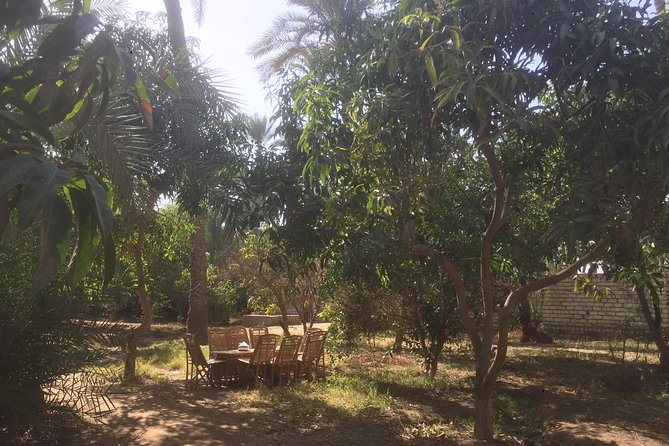
Lunch among mango and palm trees
The rural farm is the heart of the second half. Here you can relax among mango trees and palms, then eat lunch in a setting connected to local food production.
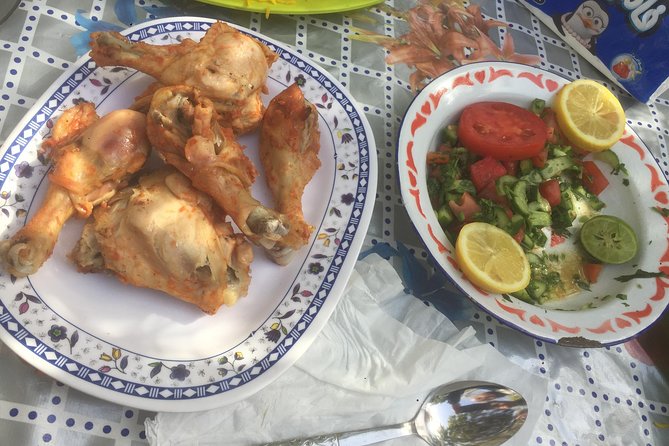
The meal is included and is described as a spread rather than one fixed plate. You may find chicken, rice, salads, pancakes, aged cheeses, honey or molasses, sweet potatoes, dates, and fresh seasonal fruit. Hot and cold drinks include mint tea and coffee.
That range is important for anyone who wants more than a standard restaurant stop. You are not only being fed between sightseeing locations. The meal is meant to show how produce, dairy, sweets, and everyday dishes fit together in a rural Egyptian setting.
I especially like the inclusion of fruit, dates, honey, and seasonal items. These foods give the meal a stronger connection to the farm than a menu built only around a familiar main dish. The exact selection can change, since seasonal produce and farm supplies vary.
The setting may also be useful if you need a quiet break. The tour description emphasizes sitting and relaxing after the pyramid visit, so the meal is not presented as a rushed box lunch. You can take in the trees, have tea or coffee, and enjoy a slower part of the day.
Do keep expectations realistic. The experience is described as farm-to-table, but it does not provide a detailed list of which ingredients are grown on this specific farm or explain every preparation method. Its strength is the setting and broad local meal, not a formal cooking class or a detailed food lecture.
Walking through crops and irrigation
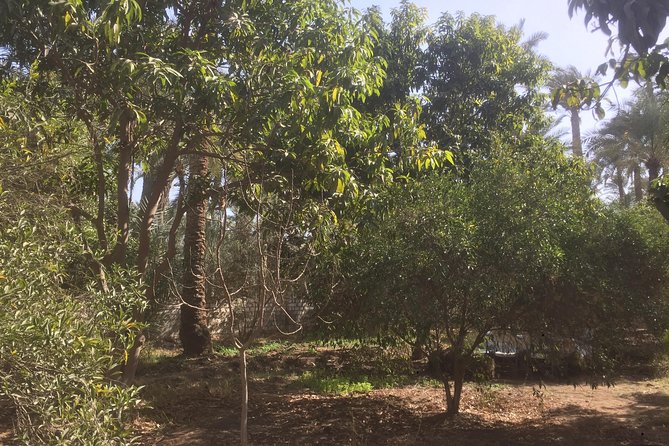
After lunch, you walk around the farm and through the nearby Nile Valley setting. The tour includes local people, simple villages, farming, irrigation, and several crops.
The listed crops include wheat, clover, onions, garlic, and corn. Seeing those fields gives you a more useful picture of rural life than simply driving past green land on the way to the monuments. Your guide can help connect the crops and irrigation process to the daily work of the area.
This part is also where the tour feels most different from a standard Cairo or Giza sightseeing day. The pyramids are famous because they are monumental. The farm is valuable because it is ordinary, active, and tied to food on your table.
You should be comfortable walking on a rural property and around simple village areas. The information says most people can participate, but it does not give a specific distance, surface type, or level of physical difficulty. If you need a very precise accessibility plan, ask the provider before booking.
There is a human element here as well. The farm’s owner hires local people, so the meal and visit support an operation connected to the surrounding area. That does not turn the stop into a formal social project, but it does give the visit a local economic link that many sightseeing stops lack.
What the private format changes
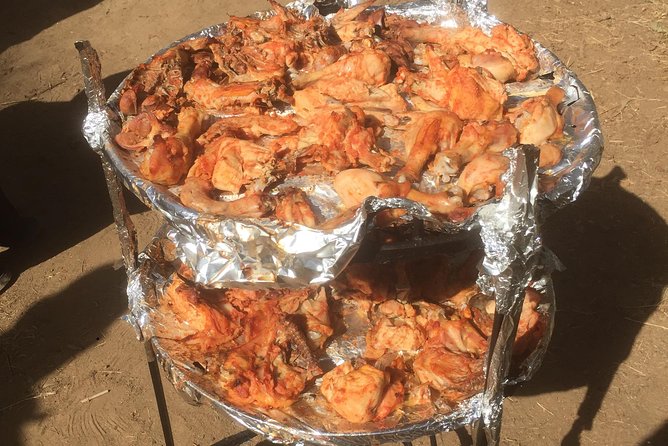
This is a private tour, meaning only your group participates. That is a useful feature if you want to ask questions about pyramid construction, farming, food, or village life without competing with a busload of people.
A private format can also help with energy levels. You may want more time at the Red Pyramid and less time at the lake, or the reverse. The supplied information does not promise a completely flexible schedule, so do not assume every part can be changed, but a private guide usually makes conversation and pacing easier.
The air-conditioned vehicle is another practical benefit. Dahshur is outside central Cairo’s main sightseeing route, and the ride between the cemetery, lake, and farm would be less pleasant without a cool vehicle. Bottled water is included, but personal drinks and other extras are not.
Pickup is offered, and the tour is near public transportation. The exact pickup area is not specified, so confirm the meeting point at booking. Confirmation is sent when you book.
Is $70 a fair price?
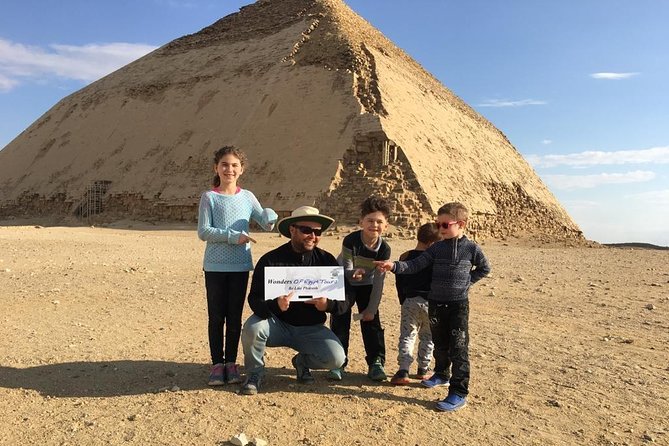
At $70 per person, the value is strongest if you want several services handled together. The price includes pickup, an air-conditioned vehicle, a private Egyptologist guide, bottled water, sightseeing admissions, and lunch.
Paying separately for a guide, transport to Dahshur, pyramid admissions, and a farm meal could take more planning and may not give you the same connection between the two parts of the day. Here, the archaeology and food experience are packaged into one private outing.
The value is less obvious if you only want the Bent and Red Pyramids. A visitor focused strictly on ancient monuments may prefer a shorter archaeology tour. You are paying for the farm setting, the meal, the lake stop, and the local countryside walk as much as for the pyramids.
Extras, personal spending, and tipping are not included. Keep room in your budget for those costs. The tour offers group discounts, which may make it more attractive for families or friends traveling together, though the discount amount is not provided.
Who will enjoy this half-day most?
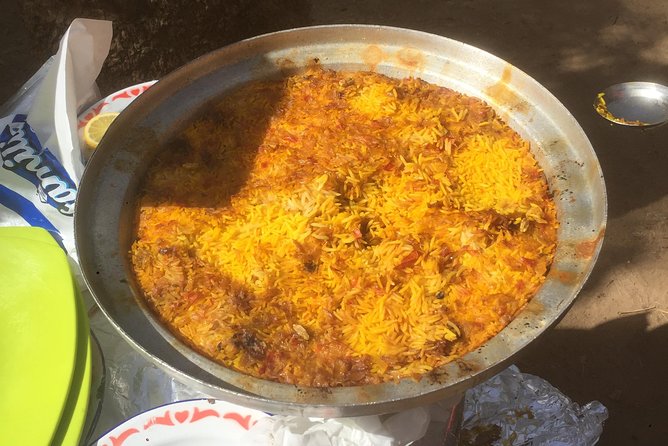
I would choose this tour for someone who wants a softer, more varied day than a string of major monuments. It suits you if you like history but also want food, trees, farming, and contact with everyday local settings.
It is a good match for:
- Couples who want a private outing with time to talk and eat at an easy pace
- Families who may appreciate a meal and farm walk after the pyramids
- First-time visitors who want Dahshur explained by an Egyptologist
- Food-focused visitors who prefer a broad local meal over a standard restaurant stop
- Photographers looking for pyramids, lake views, palms, crops, and village scenes
- Small groups that can benefit from the private format and group discounts
It may be less suitable if you want a tightly packed day covering many famous Cairo sites. It also may not fit you if you dislike rural walking, simple village settings, or meals where the exact dishes can vary.
The tour does not list a formal cooking lesson, a boat ride, or a long visit inside every pyramid. Book it for the combination of archaeology, farm food, and countryside life, not for a list of extra activities that are not promised.
Booking details worth remembering
Confirmation is received at the time of booking. Free cancellation is available if you cancel at least 24 hours before the start time. Cancelling within 24 hours, or making changes during that period, does not qualify for a refund.
The cutoff is based on local time. That small detail matters if your booking is made from another time zone.
Most people can participate, but the information does not specify wheelchair access, walking distances, restrooms, or the exact surfaces at the farm and archaeological sites. Ask the provider directly if those details affect your decision.
Should you book the Dahshur farm tour?
Book it if you want two very different views of Egypt in one private half-day. The Bent and Red Pyramids give you a clear story about ancient building experiments, while the farm adds food, crops, irrigation, and village life. At $70, the included guide, transport, admissions, lunch, and water make the package sensible for a small group.
Skip it if your main goal is to see as many Cairo monuments as possible or if you want a formal food workshop. The rural stop is relaxed rather than highly structured, and the meal’s exact contents may change.
For most visitors who want history with a local, food-centered break, this is a thoughtful choice. Bring a camera for Dahshur Lake, wear shoes suitable for the pyramid and farm portions, and leave enough room in your schedule to enjoy the meal instead of treating it as fuel for the next stop.
FAQ
How long does the tour last?
The tour lasts approximately five to six hours.
Where does the tour take place?
The experience is based in Giza, Egypt, and visits the Dahshur cemetery, Dahshur Lake, and a rural farm in the Nile Valley area.
Are pickup services available?
Yes. Pickup is offered, though the exact pickup location is not specified in the provided information.
Is the tour private?
Yes. Only your group participates in this private tour or activity.
Is lunch included?
Yes. Lunch is included and may feature chicken, rice, salads, pancakes, aged cheeses, honey or molasses, sweet potatoes, dates, and seasonal fruit.
Are drinks included?
Yes. Hot and cold drinks are included, including mint tea and coffee. Bottled water is also included.
Which pyramids will I visit?
You will visit the Bent Pyramid and the Red Pyramid at Dahshur. You will also pass by the Black Pyramid.
Are admission tickets included?
Yes. Sightseeing admissions are included in the price.
What is not included?
Personal spending, extras, and tipping are not included.
Can I cancel for a full refund?
Yes, if you cancel at least 24 hours before the experience’s start time. Cancellations within 24 hours do not receive a refund.
Newly listed farm visits around the world
- Half-Day Farm Visit and Cow Milking Experience★ 5.0 · 16 reviews
- Boutique tour , Mt Maunganui, NZ farm, Rotorua lakes/geothermal★ 4.5 · 50 reviews
- Gourmet Mushroom Farm Tour in Tennessee★ 5.0 · 5 reviews
- Cozy Farm Experience with Wagon Wheels and Acoustic Meal★ 5.0 · 2 reviews
- Private, via beaches, Kiwi farm to Rotorua 8 lakes & Geothermal★ 5.0 · 20 reviews
- Animal farm park with free hotel pickup★ 5.0 · 2 reviews
- Alpaca Farm Tours with Toffeemont★ 5.0 · 8 reviews
- 1D Tour to Cingjing Farm from Taichung★ 4.5 · 3 reviews
Cooking Classes, compared.
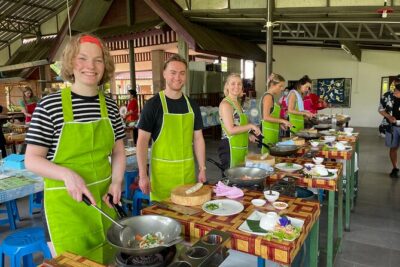
Half-Day Thai Cooking Class at Organic Farm in Chiang Mai
Read our review →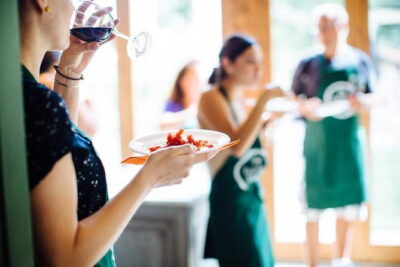
Cooking Class and Lunch at a Tuscan Farmhouse with Local Market Tour from Florence
Read our review →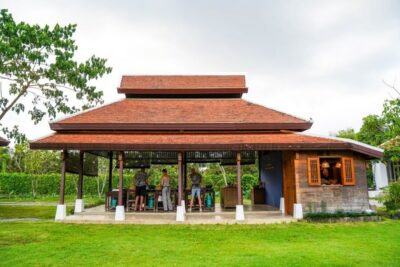
Authentic Cooking Class with Market & Farm Visit
Read our review →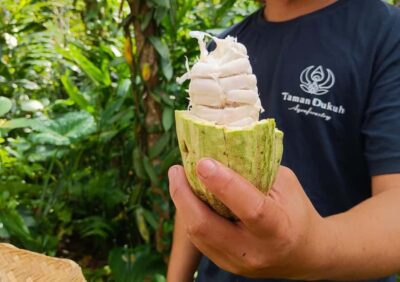

Hands-On Cooking Class & Farmhouse Tour on the Amalfi Coast
Read our review →

Thai Cooking Class | Since 2012 | Farm to Table
Read our review →Browse the lists this tour appears in