
Review · JAPAN
Miyajima Guided Tour and Fresh Oyster Farm Tour
Miyajima is famous for its floating Great Torii, but this tour adds something most short island visits miss: a close look at Hiroshima’s oyster industry, followed by lunch at the source. You visit Itsukushima Shrine, walk the shopping street, cruise near the torii, and finish by grilling oysters yourself at Shimada Suisan.
I like the way the tour joins religious tradition with local food, rather than treating Miyajima as a quick photo stop. I also like the small maximum of eight people and the guides’ clear explanations, especially from Takeshi-san, whose storytelling covers the island’s shrines, temples, and customs. The main drawback is the tight schedule: four and a half hours gives you a useful introduction, but not time for every corner of Miyajima.
Key points to know before booking
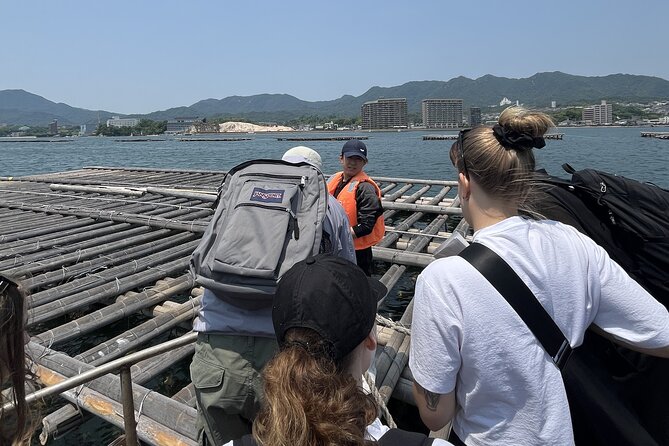
- The oyster farm is the unusual part: You cruise to Shimada Suisan, see Hiroshima’s oyster rafts, hear from local producers, and grill oysters for lunch.
- Itsukushima Shrine comes first: The guided visit lasts about one hour and includes admission.
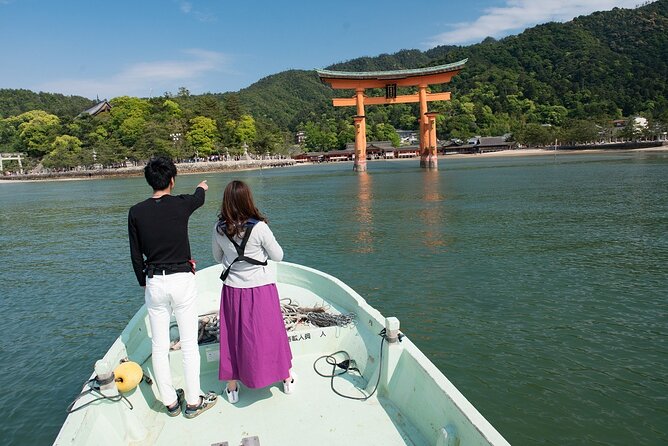
- The Great Torii looks different from the water: The charter boat offers a close sea-level view that you do not get from the shrine approach.
- The group is capped at eight: That suits solo visitors and anyone who prefers direct access to an English-speaking guide.
- The price covers the costly pieces: At $97.55, ferry fare, charter boat transport, shrine admission, lunch, tourism tax, and one bottle of water are included.
- Plan around the weather: The boat portion depends on good conditions, and poor weather can lead to a new date or a full refund.
Why the oyster farm changes the Miyajima visit
Many Miyajima visits follow a familiar pattern: arrive by ferry, photograph the Great Torii, walk through the shrine, and browse the shops. This tour follows that basic route, then takes you somewhere most independent visitors will not see so easily: an operating oyster area connected to one of Japan’s leading oyster-producing regions.
That change of focus matters. The Great Torii is not simply an isolated monument in the bay. From the boat, you see it as part of the waterway and the island’s religious setting. You also get a look at oyster rafts, which gives the local food a physical connection to the sea instead of leaving it as something you order in a restaurant.
At Shimada Suisan, the meal is not just served to you. The format includes a hands-on grilling experience, so you take part in preparing the oysters. That makes this a good choice if you want a meal with some local context and activity built into it.
The oyster emphasis also makes the tour a useful match for repeat visitors. Several people who had already been to Miyajima found that the farm and boat trip gave the island a different shape. If you have already seen the shrine, this is the part most likely to add something new.
More Oyster Farm Tours in Japan:
- Experience Coffin Bay Oyster Farm and Bay Tour
★ 5.0 · 161 reviews - Broken Bay Pearl & Oyster Farm Tours
★ 5.0 · 150 reviews - Coffin Bay Oyster Farm Wading Tour & Tasting Experience
★ 5.0 · 142 reviews
Itsukushima Shrine and the customs behind the torii
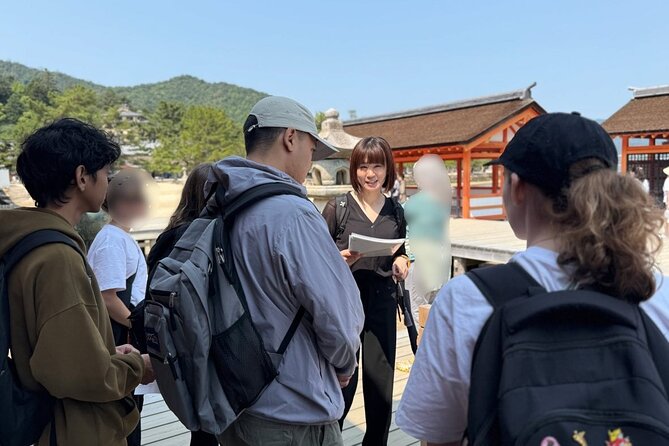
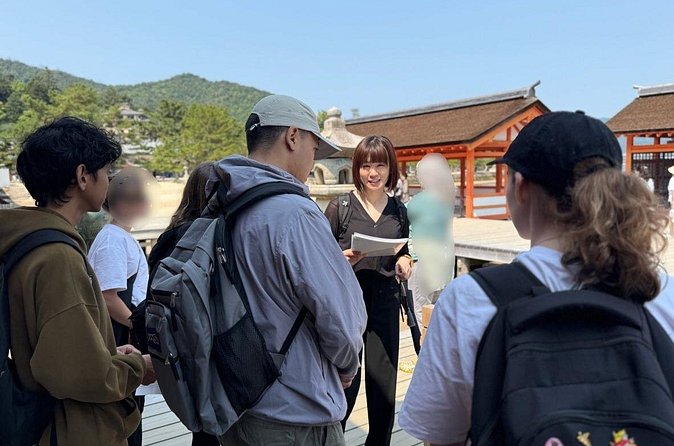
The tour begins at Miyajimaguchi at 9:00 a.m. From there, transportation includes the ferry to Miyajima. Your guide leads you to Itsukushima Shrine for about an hour, with admission included.
The shrine is a UNESCO World Heritage Site and one of Japan’s best-known sacred places. The value of having a guide here is not only learning dates or names. You get explanations of Japanese worship customs and the meaning of the shrine setting, including details you might otherwise walk past without noticing.
Takeshi-san is named in the tour feedback as a guide who explains the island’s shrines and temples in clear English. That is useful at a place where the visual details can be easy to admire but harder to understand. The tour is designed to give you cultural context without requiring you to prepare a long reading list first.
The one-hour visit is enough for a focused introduction, but it is not a full Miyajima pilgrimage. You should not expect extended time at every religious site on the island. If your main aim is to climb Mount Misen, visit more temples, or photograph the shrine from many angles, you will need additional time before or after the tour.
For a first visit, though, the guided shrine portion is well judged. You get the major cultural sight early, before the oyster meal becomes the main event. That order also helps the day feel like more than a food outing.
One hour on Omotesando Shopping Street
After the shrine, you have about one hour of free time on Miyajima Omotesando Shopping Street. This is your chance to browse souvenirs, sample food, and explore at your own pace.
The unscheduled nature of this hour is helpful. You are not required to follow the guide through every shop, and you can use the time for a snack or a quick look at local products. It also gives you a short break between the formal shrine visit and the boat trip.
Still, one hour passes quickly. If you stop often for food sampling or want to shop carefully, you may need to choose what matters most. The tour does not appear to include a dedicated stop at every major Miyajima sight, so treat this as a compact taste of the shopping district, not a complete island visit.
This is also a good moment to keep your schedule realistic. The experience returns to the meeting point after roughly four and a half hours, so you will not have the open-ended freedom of a full independent day on Miyajima. In exchange, you get a clear route and a second destination that would take more planning to reach alone.
Seeing the Great Torii from a charter boat
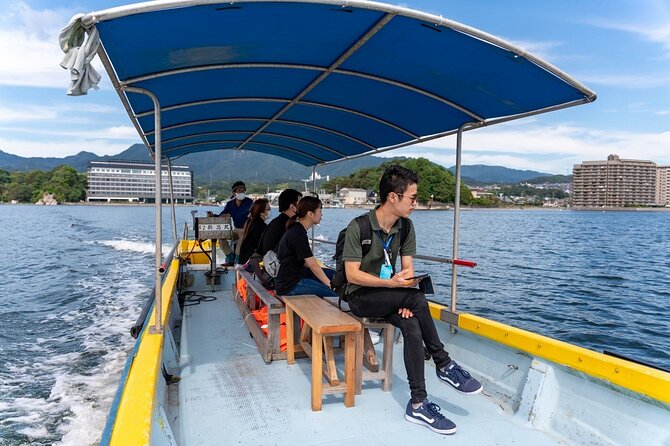
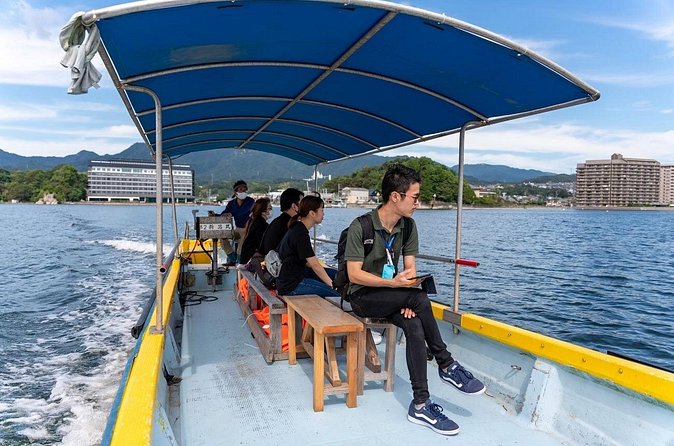
The cruise is one of the tour’s strongest visual moments. Instead of viewing the Great Torii only from the shore or shrine approach, you travel by charter boat and see it from the sea.
That lower, wider viewpoint helps explain why the torii is so closely associated with the island’s waters. The tour description promises a close view, though exact conditions can affect how near the boat gets. Weather matters here, and the entire activity may be rescheduled or refunded if conditions are poor.
The boat ride also takes you toward Shimada Suisan, so it is not transportation without purpose. Along the way, you can observe Hiroshima’s oyster rafts and hear commentary from local oyster producers. This is the part that connects scenery, work, and food in a single trip.
The group limit of eight is especially useful on a boat. You are less likely to feel lost in a large organized crowd, and you have a better chance to hear explanations directly. The small size also suits solo visitors, who are specifically welcome to book.
Keep your expectations practical. This is a short sightseeing cruise tied to the oyster visit, not a long coastal voyage. Its strength is the combination of a famous landmark and working aquaculture, not the length of time spent on open water.
More Guided Tours in Japan:
- Uji and Wazuka Matcha Farm Half Day Private Guided Tour
★ 5.0 · 21 reviews - Guided Bike Tour to a Green Tea Farm in Shizuoka (not e-bikes)
★ 5.0 · 5 reviews - Mykonos: Farm, Ano Mera Village, and Beaches Guided Tour
★ 4.4 · 1,283 reviews - Lahaina: Maui Ku’ia Estate Guided Cacao Farm Tour and Tasting
★ 5.0 · 1,103 reviews
Grilling oysters at Shimada Suisan
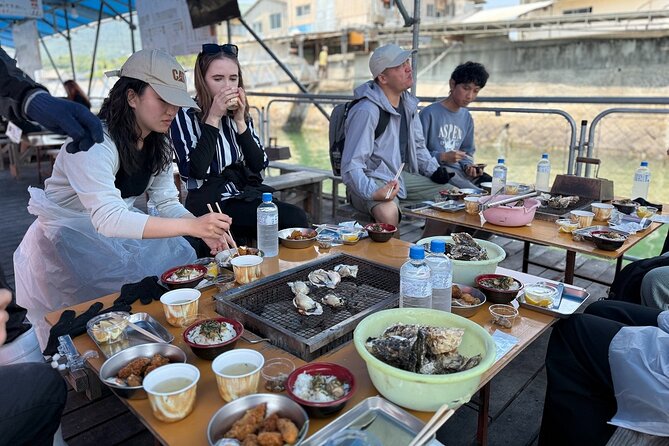
The final two hours are devoted to Shimada Suisan, the oyster farm and lunch stop. This is where the tour becomes most distinctive.
Lunch is included, and the format features a large oyster meal with your own grilling experience. You can expect the food to be central to the visit, rather than a quick plate added at the end of a sightseeing route. The chance to prepare the oysters yourself gives the meal a practical link to the farm operation.
You also receive one bottle of mineral water. Other drinks are not included, and alcoholic drinks cost extra. One optional choice is an 8,000-yen bottle of white wine from Hiroshima Miyoshi Winery, identified as wine served to world leaders at the G7 Hiroshima Summit. That is a costly addition, so I would treat it as a special splurge rather than part of the tour’s basic value.
The meal should suit you if you enjoy seafood and want to understand where it comes from. It may be less appealing if you dislike oysters, have dietary restrictions, or prefer a broad choice of lunch dishes. The supplied details do not specify replacement meals, so you should ask the operator before booking if oysters are not suitable for you.
The farm setting also gives the lunch more meaning than a standard restaurant meal. You have already seen the rafts and heard about oyster production, so the food is tied to the place. That sequence is the tour’s central idea, and it works best if you approach lunch as both a meal and a local activity.
What the $97.55 price really includes
At $97.55 per person, the tour is not the cheapest way to visit Miyajima. A do-it-yourself visit can cost less if you only want to take the ferry, see the shrine, and walk the shopping street.
The value becomes clearer when you count the included parts:
- Ferry fare between Miyajimaguchi and Miyajima
- Charter boat fare from Miyajima to Shimada Suisan
- Itsukushima Shrine admission
- Miyajima tourism tax
- Lunch
- One bottle of mineral water
- An English-speaking guide
- The oyster farm and boat visit
You are paying for access, transport, interpretation, and the lunch experience in one package. The charter boat and farm visit are the pieces that are hardest to reproduce without arranging contacts and transport yourself.
I consider the price fair for someone who wants a guided half-day and will eat the included oyster meal. It is less attractive for a budget visitor who mainly wants free time, or for someone who has no interest in seafood. The tour earns its value through the oyster operation and small group, not through a long list of ordinary sightseeing stops.
Timing, meeting point, and group size
The tour starts at 9:00 a.m. at Miyagimaguchi, listed as 1 Chome-11 Miyajimaguchi, Hatsukaichi, Hiroshima 739-0411. It ends back at the meeting point.
Pay close attention to the meeting instructions when you book. The supplied information also refers to the Miyajima Information Center in connection with where the guide waits, so confirm the precise meeting spot and look for the operator’s instructions before the morning begins. This is particularly important because the ferry area and information center can be busy with people heading to the island.
The activity lasts about four hours and 30 minutes. That makes it easy to fit into a morning or early afternoon, but it leaves little spare time if you arrive late. Plan to be at the meeting point early enough to handle the ferry departure and group check-in without rushing.
The maximum group size is eight. That is small enough for a more personal guide experience, but the tour is not private unless separately stated. Solo bookings are accepted, so you do not need to bring a companion to make the tour worthwhile.
Most people can participate, and service animals are allowed. The activity is near public transportation. The information provided does not describe detailed accessibility conditions at the shrine, ferry, boat, or farm, so ask the operator about specific mobility needs before paying.
Who should book this Miyajima tour
I would point this tour toward a first-time Miyajima visitor who wants the major shrine, the Great Torii, and a strong local food experience in one morning. It is also a good fit if you prefer having customs explained instead of simply following a map.
Solo visitors should consider it, since solo bookings are accepted and the small group can make it easier to meet other people. Families and friends who enjoy seafood may also like the grilling portion, although the suitability of the meal depends on everyone being comfortable with oysters.
Repeat visitors have a clear reason to choose it too. The oyster rafts, producer commentary, charter boat, and farm lunch offer a side of Miyajima that a standard shrine visit does not provide.
I would skip it if you want a full day on the island, plan to hike Mount Misen, or need complete control over your meal and schedule. Four and a half hours is enough for the tour’s selected highlights, not enough for an unhurried survey of Miyajima.
Free cancellation is available up to 24 hours before the start time for a full refund. Changes or cancellations inside that window are not accepted, and poor weather can lead to a different date or a full refund. Those terms make early planning sensible, especially because the cruise depends on conditions at sea.
Should you book it?
Book this tour if you want Miyajima explained by an English-speaking guide and like the idea of connecting the Great Torii to the island’s working oyster waters. The shrine, shopping hour, cruise, and grilled lunch create a varied half-day, while the $97.55 price includes the main transport and admission costs.
Think twice if oysters are not for you or if free time matters more than structure. For everyone else, this is a well-focused way to see the famous side of Miyajima and a less familiar side at the same time. Confirm the meeting point, arrive early, and leave room in your plans for the weather.
FAQ
Where does the Miyajima tour start?
The tour starts at 9:00 a.m. at Miyagimaguchi, listed as 1 Chome-11 Miyagimaguchi, Hatsukaichi, Hiroshima 739-0411, Japan.
Where does the tour end?
The activity ends back at the meeting point.
How long does the tour last?
The tour lasts approximately four hours and 30 minutes.
Is Itsukushima Shrine admission included?
Yes. The Itsukushima Shrine admission fee is included in the tour price.
Is lunch included?
Yes. Lunch at Shimada Suisan is included, along with one bottle of mineral water.
Are drinks included with lunch?
One bottle of mineral water is included. Other beverages are not included. White wine from Hiroshima Miyoshi Winery may be added for 8,000 yen.
How many people can join the tour?
The tour has a maximum of eight participants. Solo bookings are accepted.
Newly listed farm visits around Japan
- Hida Private E-Bike Tour with Premium Lunch and Farm Experience★ 5.0 · 7 reviews
- Guided Bike Tour to a Green Tea Farm in Shizuoka (not e-bikes)★ 5.0 · 5 reviews
- Hokkaido Farm Tomita Shikisai Hill Waterfall& Blue Pond Day Tour★ 3.5 · 6 reviews
- Autumn Leaves in AutumnSkiing in winterLet’s go to Hoheikyo Onsen by private car (from Sapporo)★ 4.5 · 8 reviews
- Wasabi Farm Walking Tour & Lunch★ 4.5 · 20 reviews
- 7hr Private Wazuka True Hidden Kyoto Matcha Farm Experience★ 5.0 · 3 reviews
- Aso Caldera and Farm Experience Tour★ 5.0 · 5 reviews
- Okinawa: Traditional farming experience & cooking and a meal★ 5.0 · 3 reviews
Oyster Farm Tours, compared.
Experience Coffin Bay Oyster Farm and Bay Tour
Read our review →

Loupian: Tour guide of our oyster farm and tasting
Read our review →
Coffin Bay: Oyster Farm Boat Tour with Wading & 12 Oysters
Read our review →
Oyster Farm & Complimentary Tasting Sea Kayak Tour in Casco Bay
Read our review →
Oyster farm experience / Private day trip from Dubrovnik
Read our review →
Browse the lists this tour appears in