
Review · AUSTRALIA
One Hour Coral Farm Tour, Discover Australia’s Marine Life
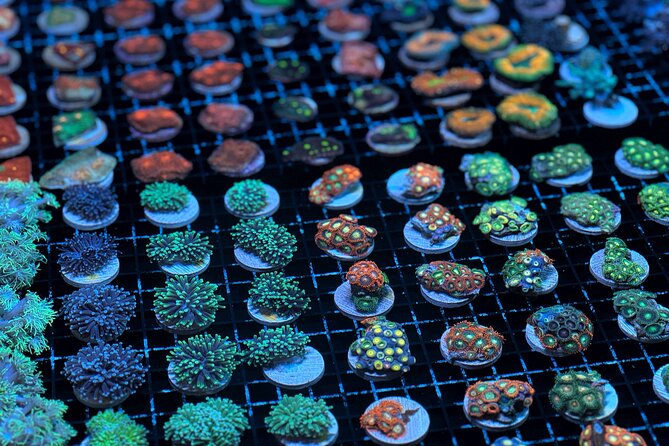
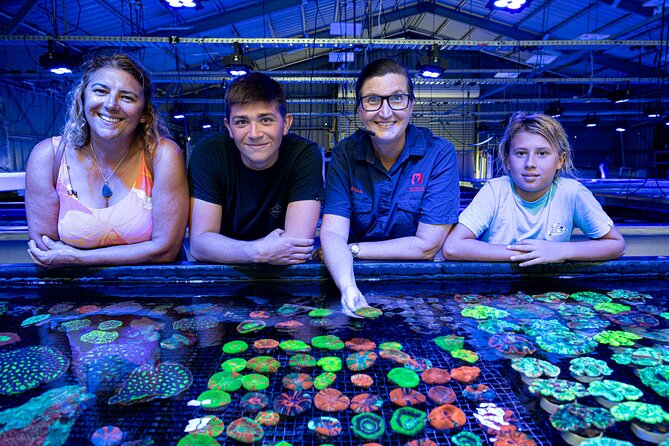
Australia’s reef life is not only something you see from a boat. At Monsoon Aquatics in Burnett Heads, you can walk through a working coral farm and see how corals are grown, fed, propagated, and studied for reef restoration. Tanks hold more than 200 coral species from around Australia, with fish and changing light adding plenty to watch.
I like the close-up access and the practical conservation work. You are not simply looking at a display tank. You are seeing a real aquaculture operation, including feeding and propagation demonstrations. I also like the loaned phone camera filter, which helps capture coral colors that ordinary phone cameras often miss.
The main consideration is the short, fixed schedule. The tour starts at 10:00 a.m., runs for about an hour, and bookings are essential. This is a working farm, not a polished aquarium, so wet floors and a moderate amount of standing are part of the deal.
Key things to know before you go
- More than 200 coral species: See corals collected from coastal areas around Australia in indoor and outdoor tanks.
- A working conservation site: The tour explains coral growth, propagation, feeding, reef restoration, and marine ecosystem care.
- A useful phone filter included: You can borrow a special lens for your phone during the tour to record stronger coral colors.
- Small maximum group: The tour allows up to 16 people, which gives the guide room to explain the tanks and answer questions.
- Closed, non-slip shoes matter: Floors may be wet because this is an operating aquaculture farm.
Why this coral farm is worth your time
The appeal here is simple: you get to see coral on land, close up, without needing to snorkel or take a boat trip. That makes the tour a useful choice if you want reef insight but prefer a short, guided visit on solid ground.
It also gives you a clearer picture of coral as a living part of an ecosystem. The tanks are not just filled with pretty shapes. You can learn how coral grows, how it is propagated, and why healthy coral matters to marine life. The tour connects the color and movement in the tanks with the larger work of protecting reef systems.
I find that especially useful for families. Children can focus on the fish and unusual coral forms, while adults can follow the conservation side. The tour is short enough to hold the attention of younger children, and a coloring table is available on the deck while you wait.
The farm’s purpose also makes this different from a standard aquarium visit. Monsoon Aquatics works with coral cultivation and research linked to reef restoration and marine ecosystem preservation. You are seeing part of a process, not just a finished exhibit.
More One-Hour Experiences in Australia:
- Guided reindeer farm visit and one hour sledge safari
★ 5.0 · 21 reviews - 1 Hour Private Quad Biking with 30 minutes Camel Farm Visit
★ 5.0 · 8 reviews - 1 Hour Guided Farm Tour in the Adirondacks
★ 5.0 · 2 reviews
What happens at 145 Buss Street
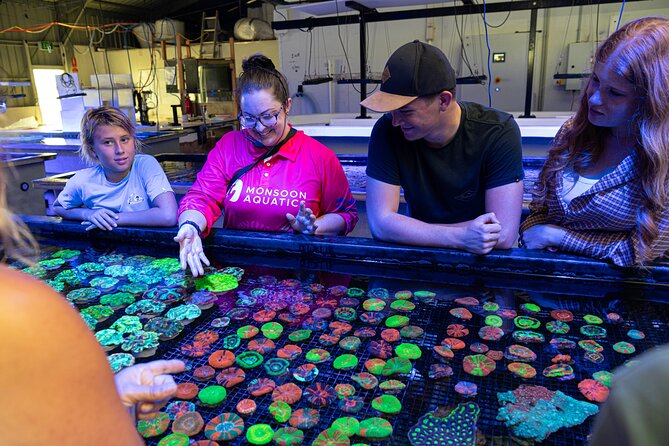
You meet at Monsoon Aquatics, 145 Buss Street, Burnett Heads, Queensland. The activity ends at the same location, so there is no separate drop-off point to arrange.
The tour begins at 10:00 a.m. and lasts about one hour and 15 minutes in total, with the guided portion described as roughly one hour. You should arrive ready to start at the stated time because there is only one scheduled tour each day according to the available visitor information.
The site runs tours in all weather. That is helpful if rain interrupts outdoor plans, but it also means you should dress for a working farm rather than a formal attraction. Most important, wear closed shoes with good grip. Wet floors are part of the setting, and sandals or smooth-soled shoes are a poor choice.
The tour has a maximum of 16 people. That is a sensible group size for a facility where you need to look into tanks, listen to explanations, and move through working areas. It should also make it easier to ask questions than on a large coach outing.
Seeing 200 coral species in indoor and outdoor tanks
The central part of the visit takes you around tanks containing more than 200 coral species sourced from around Australia. That range is one of the strongest reasons to book. You get to compare different shapes, textures, sizes, and colors in one place.
The coral may look different under different lighting, and the tour includes both indoor and outdoor tanks. That change is useful because it shows how appearance can shift with the conditions around the coral. One moment you may be looking at fine details in an indoor tank, and later you may see how the same sort of living material appears in a different setting.
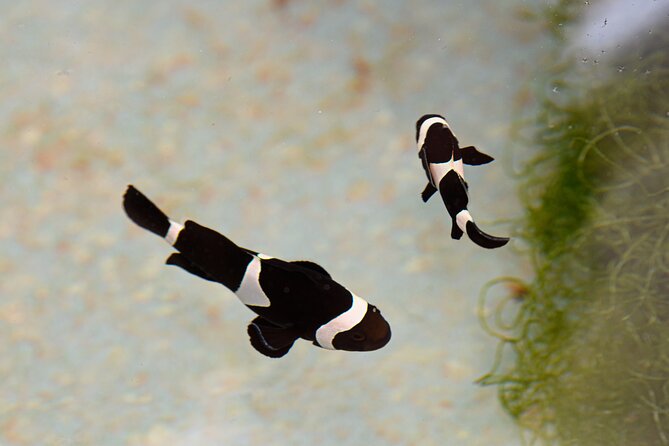
You will also see fish among the coral. Clownfish are being bred at the farm, with different varieties noted as part of the displays. For children, the fish add movement and an easy point of interest. For adults, they help show that coral is habitat, not merely decoration.
A special phone lens filter is loaned to you for the tour. It is designed to help your phone record the strong colors of the coral more accurately. This is a thoughtful touch because underwater-style lighting can make coral look less colorful in ordinary photographs. You do not need to bring special camera equipment to get more useful pictures.
Still, keep your expectations practical. This is a guided visit through an operating farm, not an open-ended photography session. You will have time to look around the tanks, but the tour follows a set route and schedule.
Feeding and propagation demonstrations
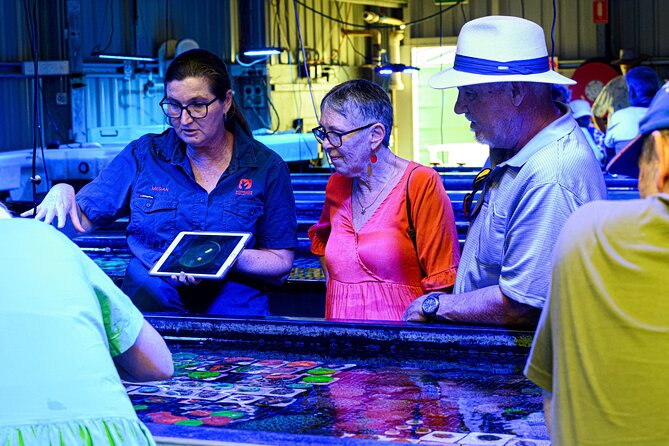
The live coral feeding demonstration gives you a better sense of coral as a living organism. It is easy to think of coral as rock, especially when you see a still fragment in a display. Watching it being fed helps correct that impression and makes the biology easier to understand.
Propagation is another important part of the tour. You can see how the farm helps grow coral and learn why this work matters to reef restoration. The demonstration gives the conservation message a practical shape. Instead of only hearing that reefs need protection, you see one method used to support healthy coral.
The exact level of detail can depend on the guide and the questions asked. Guides who have led this tour include Megan, Indie, Indi, and Nyki. The available visitor information highlights clear explanations and plenty of time to look at the tanks, so I would use the tour as a chance to ask about the coral types, feeding, and propagation process.
The farm also runs research connected with marine ecosystem preservation. That makes the visit worthwhile for anyone who wants to understand more than the visual side of the reef. You are looking at a small part of a larger effort to maintain and restore marine life.
More farm tours around Australia:
- Amazing Yarra Valley Wine Tour + Chocolate, Farm Fresh, Gin
★ 5.0 · 1,566 reviews - Hidden Gems: Boutique Full-Day Wine, Farm & Lunch Tour
★ 5.0 · 881 reviews - Melbourne: Yarra Valley Wine, Choc, Farm Fresh, Gin Tour
★ 4.9 · 258 reviews - 3- Hour Wine and Harvest the Hunter Horse Tour in Pokolbin
★ 5.0 · 165 reviews
A conservation lesson that stays grounded
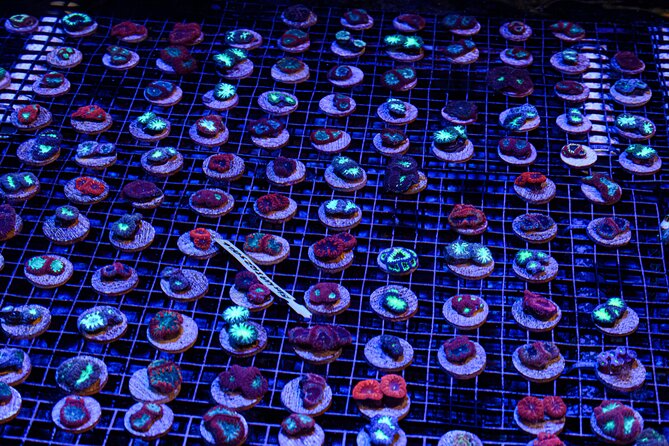
Many conservation talks remain vague. This one has the advantage of being tied to working tanks and visible procedures. You can see coral being cultivated, see how different species are kept, and connect those tasks with the health of reef ecosystems.
That does not mean one short tour explains every reef problem. It cannot cover the full science of coral bleaching, coastal pressures, restoration methods, and marine policy in an hour. What it can do is give you a clear introduction to coral growth and the care needed to support it.
I especially recommend it if you have already seen the Great Barrier Reef and want more context. Snorkeling or boat trips show the result: coral, fish, and open water. This tour shows some of the work behind coral care. It also suits people who cannot snorkel or who want a reef-related activity without getting in the water.
The visit is also a good fit for repeat stops in the Bundaberg area. The coral collection changes in how it looks under different lights, and returning with friends or family can give the visit a different focus. One time you might pay more attention to the coral species, another time to the fish or the conservation work.
Is $22.95 good value?
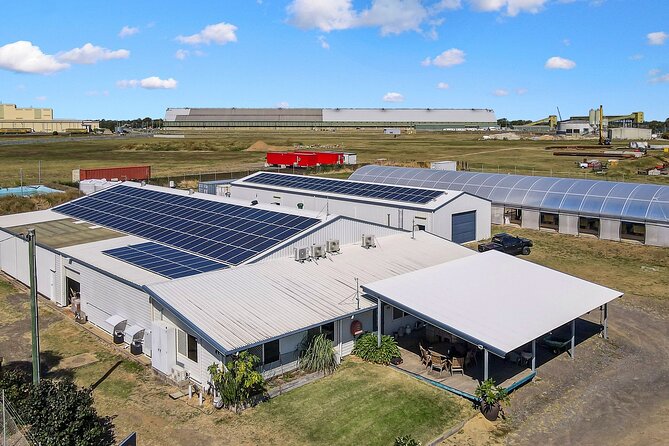
At $22.95 per person, this is a modestly priced guided activity. The value comes from the access to a specialist working site, the guide’s explanations, the live demonstrations, and the opportunity to see a large coral collection at close range.
It is not the right comparison to make against a half-day reef cruise. You are paying for about an hour of guided learning on land, not transport, snorkeling, equipment hire, or time on the open sea. If you want a boat trip, this tour will not replace it.
Compared with a casual aquarium visit, however, the price is reasonable. You get a behind-the-scenes look at coral cultivation and reef restoration rather than a general marine-life display. The included phone filter adds a small but useful extra, especially if taking photos is part of your plan.
The tour is likely best value for people who are genuinely curious about coral. If you only want a quick photo stop, the fixed 10:00 a.m. start and booking requirement may feel like more planning than the activity deserves. If you enjoy nature, science, photography, or family learning, the price is easier to justify.
Who will enjoy this most?
I would recommend the farm to marine-life enthusiasts, families, reef fans, and anyone curious about how coral is grown. The tour also suits people who prefer a short attraction with a clear focus rather than a full-day outing.
It worked well for children around the tween years because the fish, lighting, and unusual coral forms give them plenty to see. Younger children may also enjoy the coloring table on the deck while waiting, though the core tour is still built around listening and looking into tanks.
You should have a moderate level of physical fitness. The information provided does not describe a long walk, but you should expect to stand and move around a working aquaculture area. Service animals are allowed.
The farm is also a good choice for anyone whose schedule or comfort makes snorkeling difficult. You can view reef life from land and learn about coral without needing swimming ability or specialist water equipment.
Practical limits to keep in mind
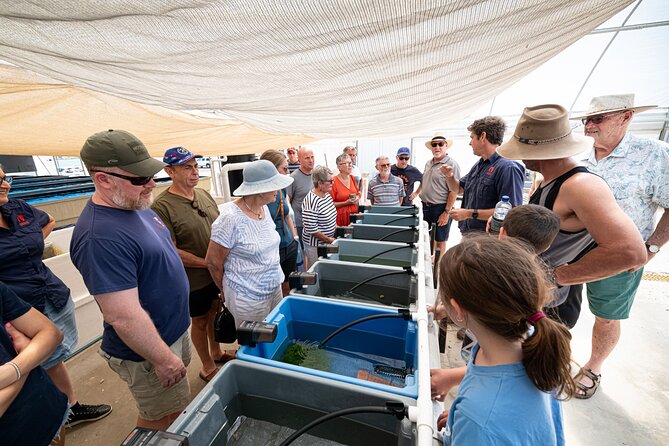
The one-hour format is both a strength and a limit. It is easy to fit into a day in the Bundaberg area, but it leaves little room for a slow, independent visit. If you want every coral species explained in detail, you may find the time passes quickly.
The 10:00 a.m. start is another key point. There is no indication of a range of departure times, so plan around the morning tour rather than expecting to arrive whenever convenient. Booking ahead is essential, and the activity is commonly booked about nine days in advance.
The farm operates in all weather, but the outdoor tanks may feel different on a wet or hot day. Wear suitable clothing, use the required non-slip footwear, and remember that this is an active work site. The setting may be less polished than a purpose-built visitor center, but that is also what gives the visit its working-farm character.
The mobile ticket is convenient. You can show your booking on your phone, and you do not need to print a paper ticket. Just keep your phone charged if you want to use the loaned filter for photographs.
Booking and cancellation advice
You receive confirmation at the time of booking. Free cancellation is available if you cancel at least 24 hours before the 10:00 a.m. start time. If you cancel less than 24 hours before the activity, you will not receive a refund, and changes within that same period are not accepted.
This matters because the tour has a small maximum group and a single daily start. If your Bundaberg plans are uncertain, book only once you are confident you can reach Burnett Heads on time.
Should you book the Monsoon Aquatics tour?
Book it if you want a close look at coral cultivation, enjoy learning how conservation works in practice, or need a reef activity that does not involve snorkeling. The more than 200 coral species, live feeding and propagation demonstrations, fish breeding, and phone filter make this more than a quick walk past tanks.
I would skip it if you are seeking a long reef excursion, open-water views, or a flexible drop-in attraction. The one daily 10:00 a.m. tour requires planning, and the working farm setting calls for sensible shoes.
For most visitors with an interest in marine life, $22.95 is a fair price for a focused hour of color, science, and conservation. Book ahead, wear non-slip shoes, and arrive ready to look closely. That is where this small Bundaberg experience earns its value.
FAQ
Where does the coral farm tour start?
The tour starts at Monsoon Aquatics, 145 Buss Street, Burnett Heads, Queensland 4670, Australia.
What time does the tour begin?
The scheduled start time is 10:00 a.m.
How long does the tour last?
The experience lasts approximately one hour and 15 minutes, with the guided tour described as about one hour.
How many people can join the tour?
The maximum group size is 16 people.
What should I wear?
Wear closed, non-slip shoes because the floors may be wet in this working aquaculture farm.
Is a phone camera filter provided?
Yes. A special lens filter is loaned to you for the tour so you can capture the coral colors more effectively with your phone.
Can I cancel for a refund?
Yes. You can cancel at least 24 hours before the experience start time for a full refund. Cancellations or changes made less than 24 hours before the start are not accepted for a refund.
Newly listed farm visits around Australia
- Alpaca Farm Tours with Toffeemont★ 5.0 · 8 reviews
- Hook-A-Barra Fishing and Farm Activity★ 5.0 · 47 reviews
- Macadamias Australia Orchard Tour in Bundaberg★ 5.0 · 15 reviews
- Oyster Farm Tour with Hotel Pick-up and return from Port Lincoln★ 5.0 · 11 reviews
- Group Live Pearl Harvest Experience – Perth★ 5.0 · 2 reviews
- Newcastle: Country Towns River & Farm Tour with BBQ★ 5.0 · 3 reviews
- Honey Farm Tour. Morning Tea. Guided Tasting★ 5.0 · 3 reviews
- Picnic and Farm Experience at Red Hill★ 5.0 · 2 reviews
Australia Farm Tours, compared.
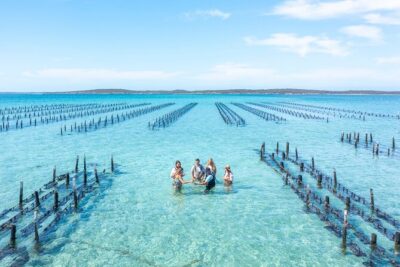
Experience Coffin Bay Oyster Farm and Bay Tour
Read our review →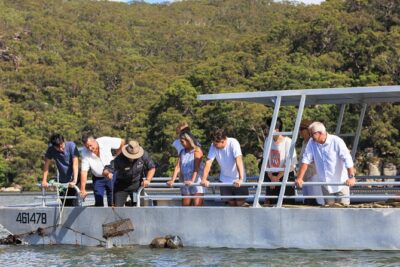

Rockhampton: Koorana Crocodile Farm Guided Tour
Read our review →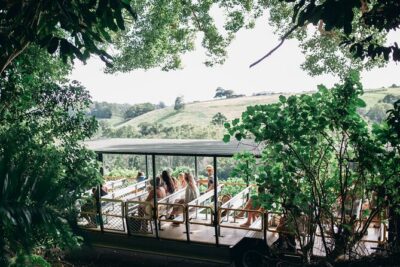
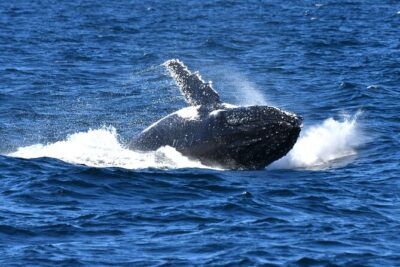
Sea Cliff Bridge, Kiama Blowhole, Beaches & Wildlife Small Group
Read our review →
Hidden Gems Margaret River: Authentic Wine & Farm Experience
Read our review →
Sydney: Sea Cliff Bridge, Kiama Blowhole and Farmlands Tour
Read our review →Browse the lists this tour appears in