
Review · CHIANG MAI
Chiang Mai: 2-Day Jungle Trek with Elephant Farm & Raft Ride
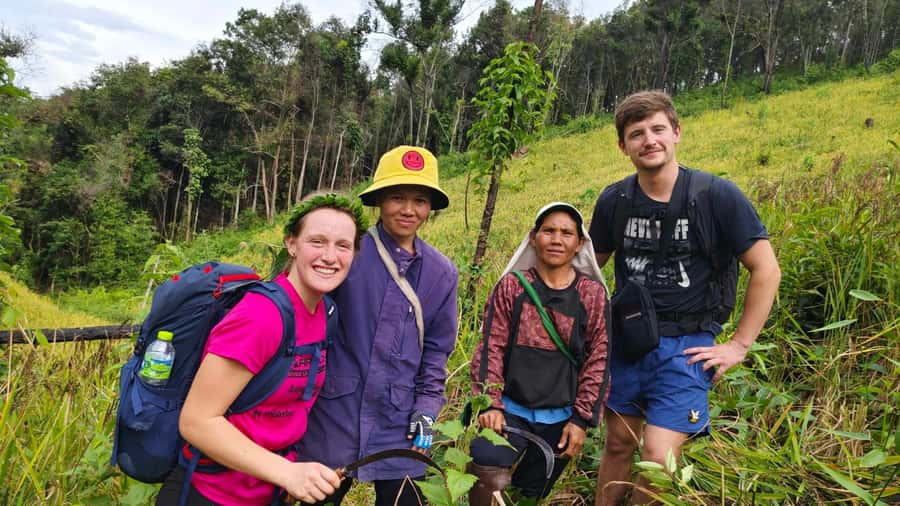
The best part of this Chiang Mai trek is the overnight stay in a Karen Hill Tribe village. You are not just checking off a waterfall and an elephant stop. You walk into the mountains, eat food prepared by local families, sleep under mosquito nets, and wake to broad morning views.
I like the mix of activities: a real mountain hike paired with a quiet bamboo raft trip. I also like the guide-led nature lessons. Guides such as Witoon, Moon, Sammy, and Louie are praised for explaining plants, animals, and local life while keeping the group moving at a steady pace.
The catch is simple: this is a physical trip with basic facilities. Expect steep uphill sections, heat, mud in wet weather, and a cool night in the hills. The schedule can also change, and some groups have done the elephant visit before the hike or moved the rafting to the second day.
At a glance
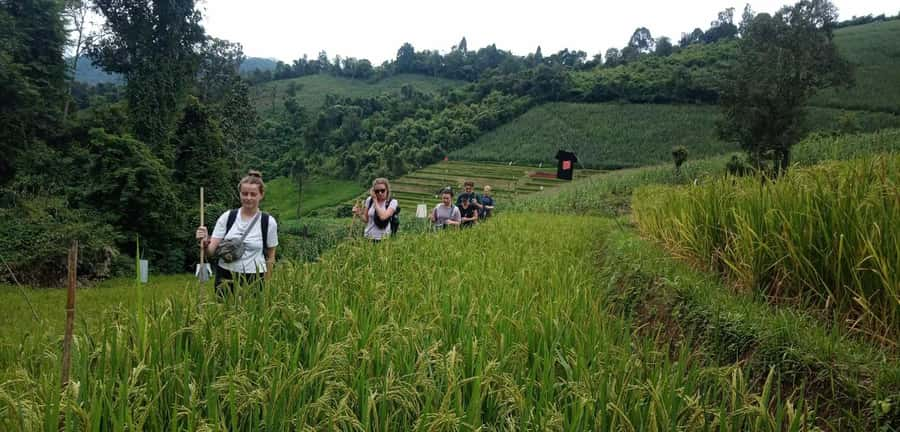
- 8 to 8.5 kilometers on the first day: Expect a long uphill walk through rice fields, forest, and bamboo.
- A real village overnight: Eat dinner, play games, and sleep in simple accommodation with mosquito nets.
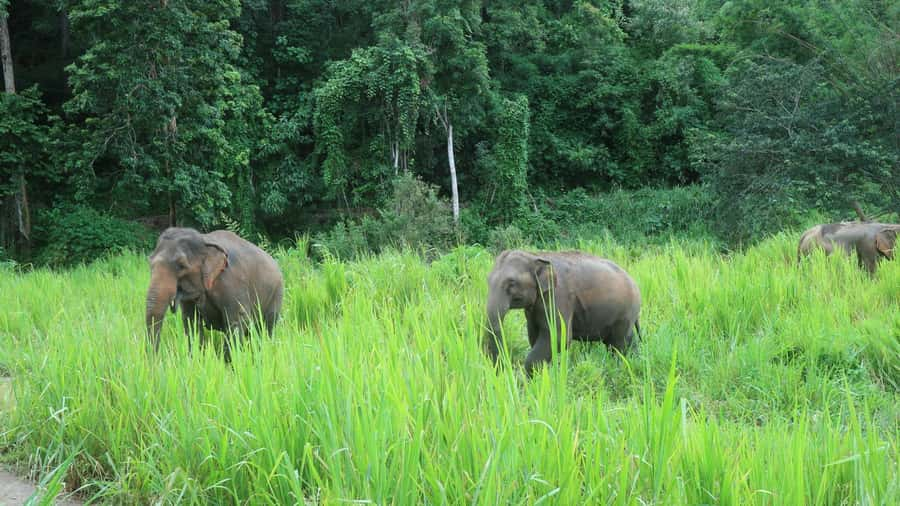
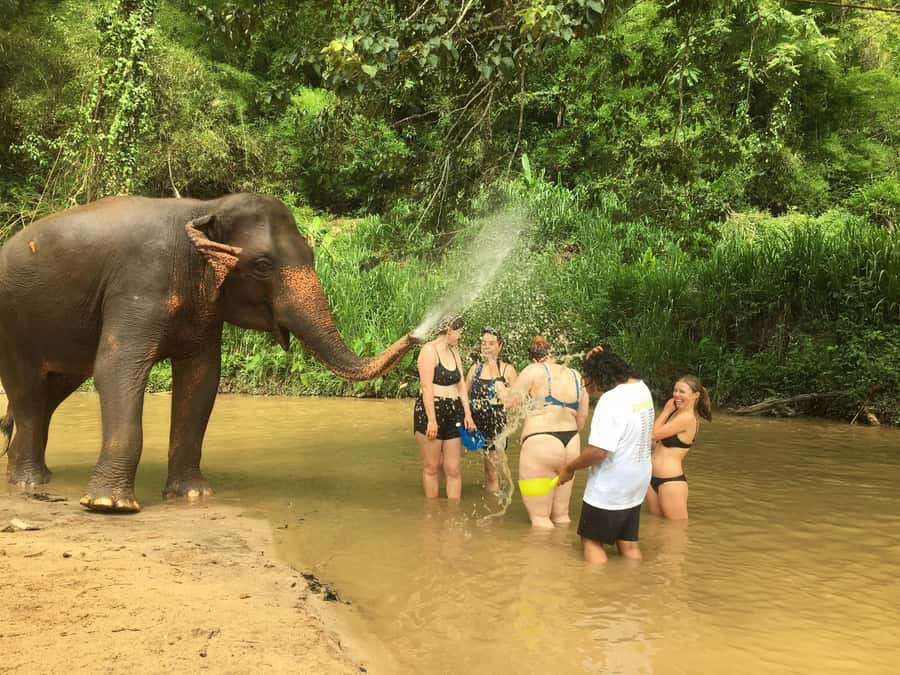
- Three elephants at a small sanctuary: Feed and bathe rescued elephants, with no riding allowed.
- A 40-minute Mae Wang River raft ride: The bamboo raft is calm and scenic rather than wild or thrilling.
- A waterfall picnic and swim: Bring swimwear, a towel, and clothes that can get dirty.
- $97 includes the essentials: Transport, guide, meals, lodging, rafting, trekking, and the elephant visit are covered.
The big picture: two days from market stalls to mountain forest
Chiang Mai Footsteps Travel runs this as a small-group trip for up to 12 people. Pickup is optional, usually between 9:00 and 9:30 in the morning, with the stated meeting point at Baan Meesuk in Chiang Mai’s old town.
Transport is by van or traditional songthaew. The ride gets you out of the city and toward the Mae Wang area, where the pace changes from traffic and cafés to farms, forest, and mountain roads.
This is not a polished resort excursion. Its appeal is the variety and the contact with local people. In two days, you visit a market, travel by bamboo raft, walk through fields and forest, swim near a waterfall, stay in a Karen village, and spend time with elephants.
The order is not fixed in every group. The planned route begins with the market and rafting, followed by the waterfall and uphill trek. Some departures have visited the elephant sanctuary earlier, then walked to the waterfall and village. Rain and river conditions can also change the plan.
That flexibility matters in northern Thailand. It is sensible to think of the stops as the fixed ingredients, not the exact order on the page.
More Hiking Trips in Chiang Mai:
- Off the Map Chiang Mai Jungle Coffee Trek Roast and Brew
★ 5.0 · 107 reviews - From Ho Chi Minh: Can Gio Trek – Monkey Island & Crocodile Farm
★ 5.0 · 353 reviews - Big Buddha Jungle Trekking and Temple tour with Lunch
★ 5.0 · 171 reviews
The local market is a useful first stop
The market visit gives you an easy introduction to the food and daily life of the area. You walk among stalls selling vegetables, fruit, and regional dishes, with your guide helping you understand what you are seeing.
Do not expect a formal food tour with a long tasting list. It is a short look at a working local market before heading into the hills. That makes it worthwhile, especially if you have just arrived in Chiang Mai and want some context before the rural part of the trip.
One practical point: the market is not always handled in the same way. On some departures, your guide may walk around with the group. On another, you may have a little free time to look on your own. Keep your expectations modest, and treat it as a brief cultural stop rather than the main event.
Bamboo rafting on the Mae Wang River
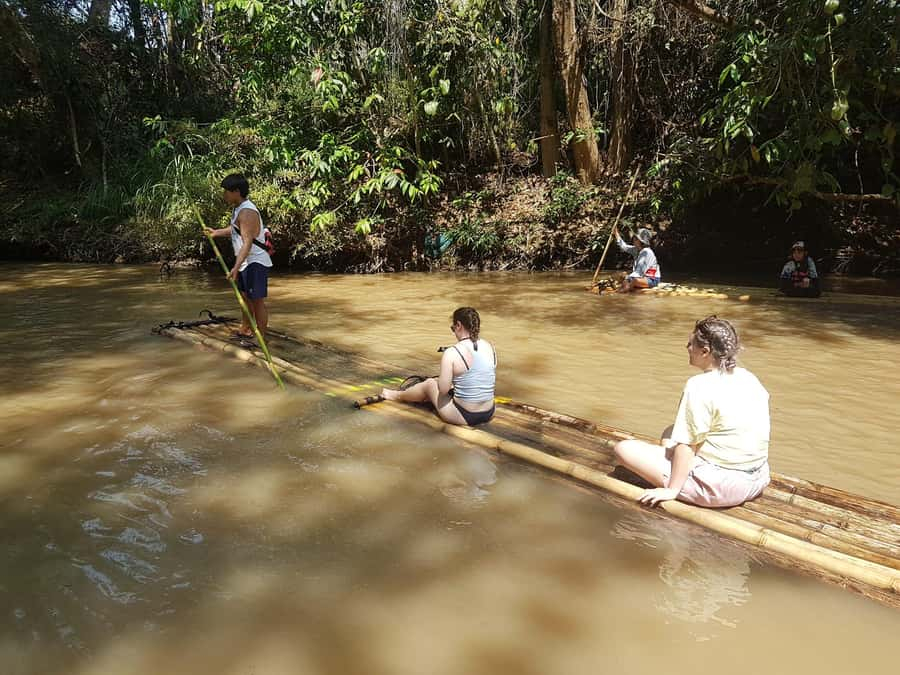
The raft trip lasts about 40 minutes and is one of the gentlest parts of the outing. You sit on a bamboo raft and float along the Mae Wang River, taking in the wooded banks and rural scenery.
This is not white-water rafting. The charm is the quiet. After the drive and market visit, the slow river gives you a chance to sit still before the walking begins.
Wear long trousers and a long-sleeved shirt if you can. The advice is practical: you get sun exposure on the river, and insects can be a nuisance. Flip-flops are useful around the water, but you need proper hiking shoes for the forest.
Heavy rain may cancel or move this part of the day. One group missed the raft because of wet weather, while other groups completed it on the second day. If rafting is your main reason for booking, remember that river conditions control the schedule.
The waterfall picnic is more than a photo stop
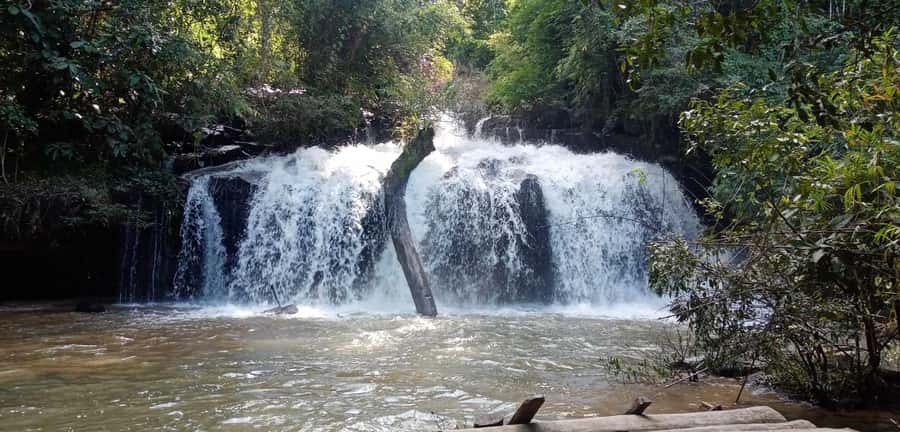
The trek heads through paddy fields and mixed forest toward a jungle waterfall. The stated walk to the waterfall takes about two hours, though the actual timing and route can vary.
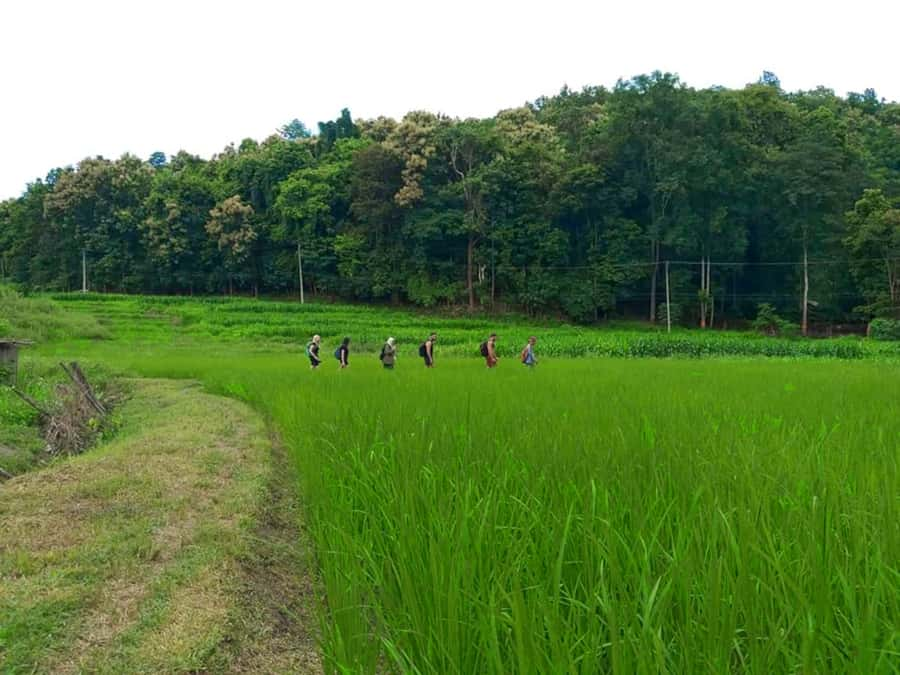
This section lets you see the countryside change. Rice fields open up the view, then bamboo and evergreen forest close around the path. Guides may point out plants, insects, and animals along the way. One guide even showed a tarantula in its nest, and another group saw several waterfalls during the route.
Lunch is served near the water. The food is included, and the stop gives you time to cool off before the hardest part of the first day.
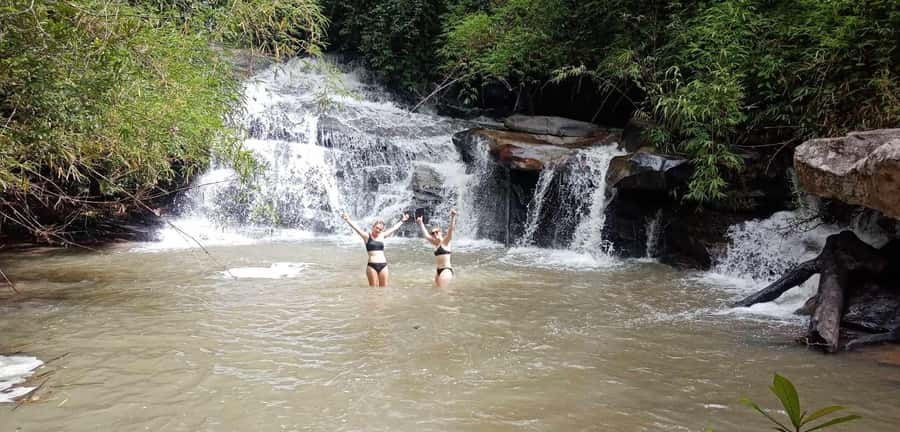
Bring swimwear if you want to get in. The water is refreshing, but do not assume every waterfall stop will be clearly announced as the swimming spot. One departure reached the waterfall, ate lunch, and continued without clear instructions that swimming was available.
Good shoes matter here. The trail can be slippery after rain, and sandals are not enough for the uphill sections. Pack dry clothes in your daypack, along with insect repellent and a waterproof layer.
More Two-Day Trips in Chiang Mai:
- 2d1n Kinabalu Park & Poring Canopy Walk & Desa Cow Farm Tour
★ 5.0 · 35 reviews - 2-Day E-Bike Tuscany Tour with Meals, Wineries, and Farmstay
★ 5.0 · 14 reviews - Astana: 2-Day 1-Night Ranch Stay & Tour Historic Mausoleum
★ 3.9 · 3 reviews
The climb to the Karen village
After lunch, the route continues uphill for roughly two hours through bamboo and evergreen forest. This is where the tour earns its trekking label.
The walking is manageable for someone with a fair level of fitness, but it is not a gentle stroll. Groups have covered about 8 to 8.5 kilometers on the first day, with one account noting around 550 meters of elevation gain. Heat makes the climb harder, and wet-season mud adds another challenge.
The guides generally set a measured pace. Guides named Witoon, Moon, Sammy, Toon, Lee, and Louie receive special praise for being patient, funny, and attentive. That matters on a group hike. A good guide can slow things down, help after a stumble, and make a long climb feel less like a test.
You may arrive at the village in the late afternoon, with some groups reaching it around 5:00. The setting is simple and peaceful. You are there to spend time with local families, not to see a staged cultural show.
What the village overnight is really like
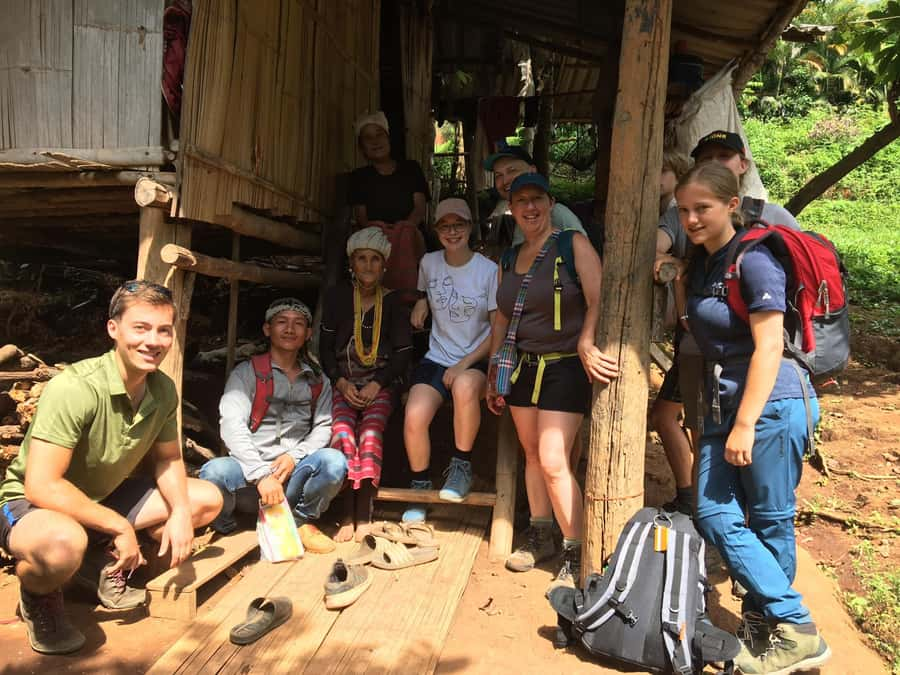
The overnight stay is the emotional center of the trip. You eat dinner prepared by the villagers, share the evening around a campfire, and may play games or talk with local families. Food often includes generous portions of home cooking, sticky rice, tea, and several choices at dinner.
The accommodation is basic but more comfortable than a bare campsite. Beds and mosquito nets are provided, though standards can vary. One group found the beds comfortable, while another felt the sleeping arrangements could be improved.
At night, the temperature can drop sharply. The village sits high in the mountains, and several departures noted that it became cold after dark. Pack the jacket listed in the equipment advice, even if Chiang Mai feels hot when you leave.
You should also understand the cultural side of the visit. The village stay works best when you approach it with respect and curiosity. You are being welcomed into a community, not visiting a theme park. Ask before taking close-up photos, listen when your guide explains local customs, and remember that the village is home to people who are sharing part of their daily life.
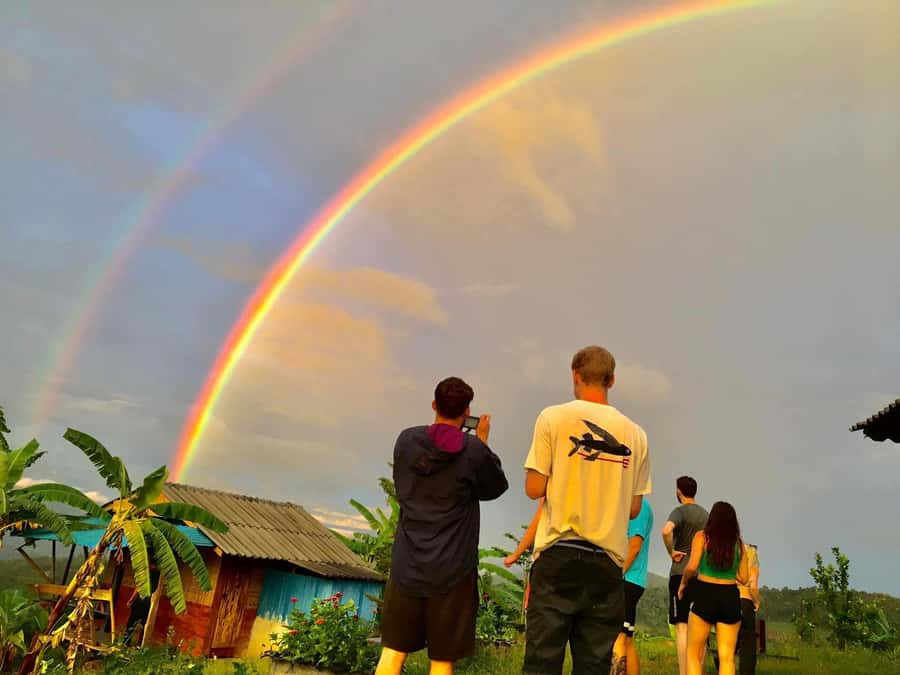
The morning views can be excellent, especially around sunrise. This is one of the details that makes the basic overnight worthwhile.
Day two: breakfast, forest paths, and rescued elephants
After breakfast, you continue through the forest toward the elephant sanctuary. The stated walk takes about two hours, though some groups have walked two to three hours downhill on the second day.
The trail direction changes the feel of the hike. Day one is mainly an uphill push. Day two is often easier on the lungs but can be tough on knees and ankles, especially on steep descents.
At the sanctuary, you can feed and bathe the elephants. The experience is presented as an ethical alternative to riding, and animal riding is not allowed on this trip. The groups described a small setting with around three elephants, rather than a large commercial park.
You should still make your own judgment about elephant bathing. Close contact with elephants is not viewed the same way by everyone, even at a place that does not offer rides. If you are comfortable with the activity, the visit gives you a chance to see the animals up close while learning how the sanctuary cares for them.
The elephant stop is a highlight for many people, but do not treat it as the whole purpose of the trip. The mountain walk and village stay are what give the visit context. You are reaching the elephants after spending time in the same rural region, rather than arriving by coach for a short photo session.
Food, water, and what to pack
Two lunches, one dinner, and one breakfast are included. The food is generally simple local cooking, and portions are often generous. If you are a selective eater, pack a few snacks. The tour includes meals, but it does not include drinking water.
Carry enough water for the walking portions. Your daypack should also hold sunscreen, insect repellent, a hat, sunglasses, a towel, swimwear, spare clothing, and toiletries.
Your best footwear is sturdy hiking shoes with grip. Bring flip-flops for the river and village, but do not try to complete the trek in them.
A useful packing list:
- Refillable water supply
- Hiking shoes and flip-flops
- Long trousers and a long-sleeved shirt
- Swimwear and towel
- Sunscreen and insect repellent
- Light jacket for the mountain night
- Rain gear
- Dry clothes in a waterproof bag
- Small toiletries and a daypack
Pack light. You will carry your belongings on foot, and anything unnecessary becomes a burden on the uphill trail.
Is $97 good value?
At $97 per person, the price is strong for what is included. You get transport from Chiang Mai, a guide, two days of activities, four meals, one night of accommodation, the elephant sanctuary, the hike, and bamboo rafting.
The value is especially good if you want several different activities without arranging separate transport. Booking the elephant visit, mountain transfer, village stay, meals, and river trip on your own would take more time and would not necessarily cost less.
The tradeoff is comfort. This is not a luxury jungle lodge, and the schedule is full. You pay for access to rural places and local contacts, not polished facilities.
The small-group limit of 12 helps. It gives the guide a better chance to notice who is struggling, and it makes the village meal and campfire feel less crowded. The quality of the trip also depends heavily on the guide assigned to your departure. Names vary, but Witoon, Moon, Sammy, Louie, Toon, and Lee are among the guides praised for humor, care, and local insight.
Who should book this trek?
You should consider it if you enjoy active days, basic accommodation, and a mix of nature and local contact. It suits people who want more than zip lines, short walks, or an elephant photo stop.
You need a reasonable level of fitness. The tour specifically excludes people with mobility limits, heart or respiratory problems, epilepsy, vertigo, and low fitness levels. It is also not suitable for pregnant people, wheelchair users, babies under one, or children under two.
I would not choose this if you need air-conditioning, a private room, an exact timetable, or easy walking. The route can be hot, steep, muddy, and tiring. Bad weather may also change the rafting, waterfall, or walking plan.
Cancellation is flexible up to 24 hours before departure, and you can reserve without paying immediately. Those are useful booking terms, but the bigger decision is your comfort with the physical side of the trip.
Should you book the Chiang Mai jungle trek?
I would book this if your priority is a full outdoor experience at a fair price. The strongest parts are the Karen village overnight, the forest walking, the guides, and the chance to see elephants without riding them.
Pack water, proper shoes, a jacket, and patience for schedule changes. If you can handle a long uphill walk and a simple mountain night, this gives you a memorable look at northern Thailand beyond Chiang Mai’s old town.
Skip it if you want a soft adventure or if elephant bathing makes you uncomfortable. For everyone else, the combination of village life, waterfalls, bamboo forest, rafting, and mountain views makes these two days unusually full.
FAQ
Where does the tour start?
The stated meeting point is Baan Meesuk, a hotel and hostel in Chiang Mai’s old town. Optional hotel pickup is usually scheduled between 9:00 and 9:30 in the morning.
How difficult is the hiking?
The trek is physically demanding in places, with long uphill sections on the first day and several hours of walking on the second day. Good fitness and proper hiking shoes are important.
What is included in the price?
The $97 price includes hotel pickup and drop-off, transport by songthaew or van, a guide, the market visit, trekking, two lunches, one dinner, one breakfast, basic one-night accommodation, the elephant sanctuary visit, and bamboo rafting.
Is drinking water included?
No. You need to bring or purchase your own drinking water for the trip.
Can I ride the elephants?
No. Animal riding is not allowed. The elephant visit includes feeding and bathing the rescued elephants.
What happens if it rains?
The itinerary may change because of bad weather or other conditions. Bamboo rafting can be moved or canceled, and the walking route or order of stops may also change.
Newly listed farm visits around Chiang Mai
- Authentic Thai Cooking Class and Farm Visit in Chiang Mai★ 5.0 · 66 reviews
- Aroidee’s Farm-Fresh Thai Cooking Experience★ 5.0 · 8 reviews
- Full-Day Thai Cooking Class with Grandma – Market and Farm Tour★ 5.0 · 48 reviews
- One Day Tour Doi Suthep Temple, Palad Temple, Orchid Farm, Longneck hill tribe village (Private tour)★ 5.0 · 7 reviews
- Chiang Mai Farm Life & Khao Soy Tasting on a Half-Day Boat Tour★ 4.5 · 64 reviews
- Local Farming Experience in Chiang Mai, Thailand★ 5.0 · 3 reviews
- Doi Suthep Temple, Pha Lat Temple, Sticky Waterfall, Orchid farm★ 5.0 · 31 reviews
- Cooking Class with Organic Farm in Chiang Mai★ 5.0 · 4 reviews
Chiang Mai Farm Tours, compared.
Half-Day Thai Cooking Class at Organic Farm in Chiang Mai
Read our review →
Authentic Cooking Class with Market & Farm Visit
Read our review →
Evening Cooking Class in Organic Farm with Local Market Tour
Read our review →
Morning Thai Cooking with Grandma – Market Visit & Farm Tour
Read our review →Browse the lists this tour appears in