
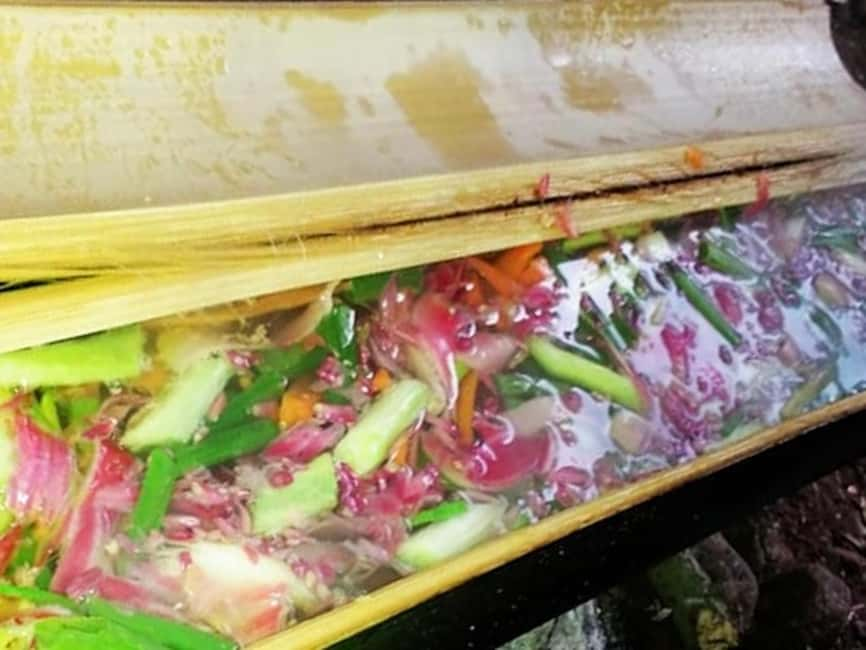
Review · LUANG PRABANG
Luang Prabang: Bamboo Forest Cooking-class & Farm Visit
The most unusual part of this Luang Prabang outing is simple: you make the cooking tools before you make the meal. After visiting a working vegetable farm, you head into the forest, cut and shape bamboo, and use it to cook rice, meat, or fish in the Khmu way.
I like the hands-on work and the chance to learn about edible and medicinal plants from a local guide. I also like that your bamboo cup and chopsticks come home with you, giving the day a useful souvenir rather than another market purchase.
The main drawback is that this is not a polished restaurant class. You will walk in the forest, work with natural materials, and spend six hours outdoors. Bring long trousers, sturdy walking shoes, mosquito spray, and patience for a slower, practical style of cooking.
Key points at a glance
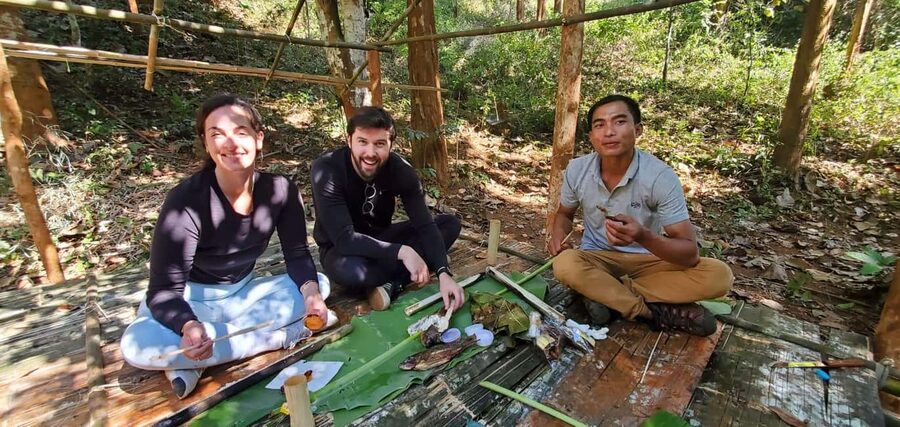
- You build the kitchen first: Shape bamboo into a cup, chopsticks, and other simple cooking tools before preparing lunch.
- The farm visit has a purpose: Pick vegetables and plants that will become part of your meal.
- Khmu traditions guide the day: Learn forest cooking methods still connected to village life.
- Lunch is cooked outdoors: Prepare fragrant rice and grill meat or fish using bamboo and fire.
- Small groups keep it personal: No more than 10 people join, with guides speaking English, French, Thai, or Lao.
- The $100 price covers the practical essentials: Hotel transfers, food, water, guide, entrance fees, and handmade items are included.
Why this cooking class feels different
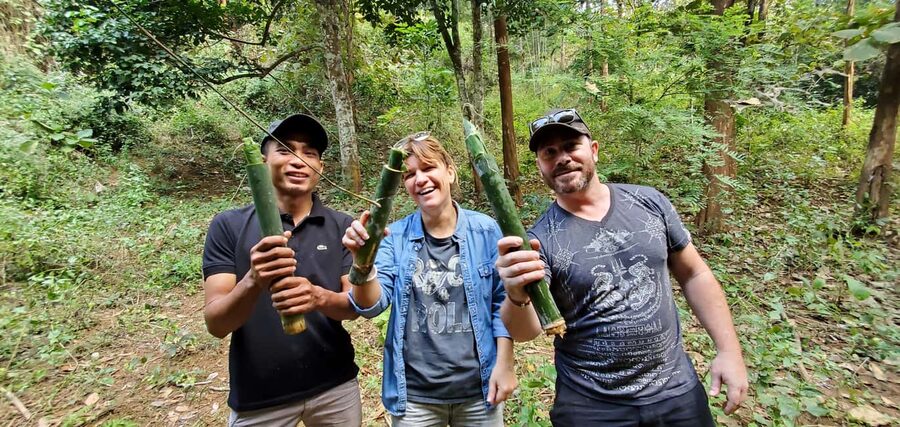
Many cooking classes begin at a market, move into a kitchen, and finish with a neat row of dishes. This one begins with the question of how to make a kitchen when there is no kitchen at all.
That change in order is what gives the outing its character. You do not simply follow a recipe prepared in advance. You help find the plants, make the utensils, prepare the cooking materials, and then sit down to eat what your group has made.
The setting also matters. This is a forest-based activity tied to Khmu ways of preparing food, not a demonstration designed only for photographs. You get a look at how useful plants are identified and how bamboo can serve as a cup, chopsticks, cooking vessel, and serving aid.
I would choose this activity for cultural insight rather than for a long list of dishes. The meal is important, but the real subject is how food, forest materials, and daily life fit together.
More farm tours around the world:
- Half-Day Thai Cooking Class at Organic Farm in Chiang Mai
★ 5.0 · 19,087 reviews - Florence Pizza or Pasta Class with Gelato Making at a Tuscan Farm
★ 5.0 · 6,801 reviews - From Porto: 2 Wine Regions, Farm-to-Table Lunch & Boat
★ 4.9 · 5,724 reviews
9 AM starts at the farm
The six-hour outing runs from 9 AM to 3 PM. Hotel transfer is included, and the meeting point is the provider’s showroom, so confirm the pickup details when you reserve.
The first main stop is an authentic vegetable farm. Here, you pick vegetables and plants for the meal while your Khmu guide explains which plants are edible, medicinal, or used in everyday village life.
This is more useful than simply being handed a basket of ingredients. You learn that a plant can have more than one role, and you begin to see food gathering as part of local knowledge rather than a separate tourist activity.
The exact plants will depend on what is available, and no fixed menu is provided. That is part of the appeal, but it also means you should not book this expecting a set restaurant-style menu or a particular signature dish.
If you have food restrictions, give them in advance. Rice, meat, fish, fruit, and drinking water are included, and the organizers say the meal can be adjusted to dietary needs.
From farm paths to primary forest
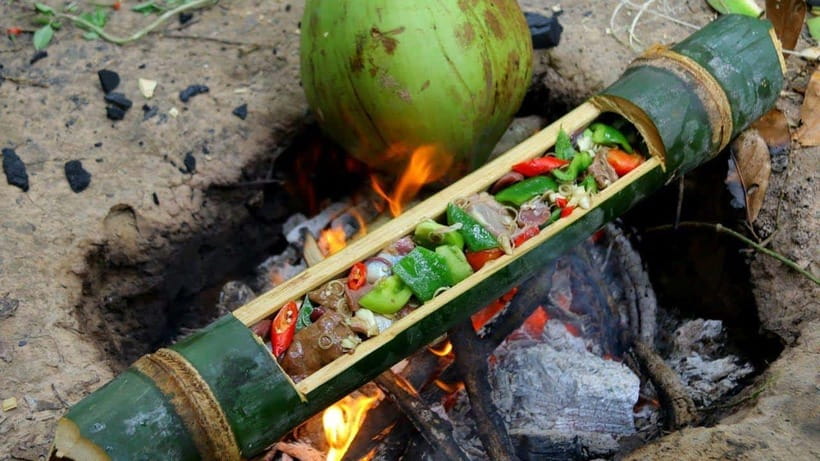
After the farm visit, the group moves into primary forest for the cooking portion. The forest setting gives the class its strongest sense of place, but it also changes what you need to pack.
Long trousers are a smart choice. Suitable footwear matters because the activity involves walking in the forest, and mosquito spray, a hat, and any needed medication belong in your day bag.
This is not described as a strenuous trek, but you should be ready to walk outdoors and work with your hands. The activity has a small-group limit of 10, which should make it easier to hear instructions and take part without standing behind a crowd.
The guides speak English, French, Thai, and Lao. Peng is one of the named guides associated with the outing, and the guiding style can be as active as you want it to be. You can take on more of the cutting, shaping, and cooking, or take a quieter role while still following the process.
Making a kitchen from bamboo
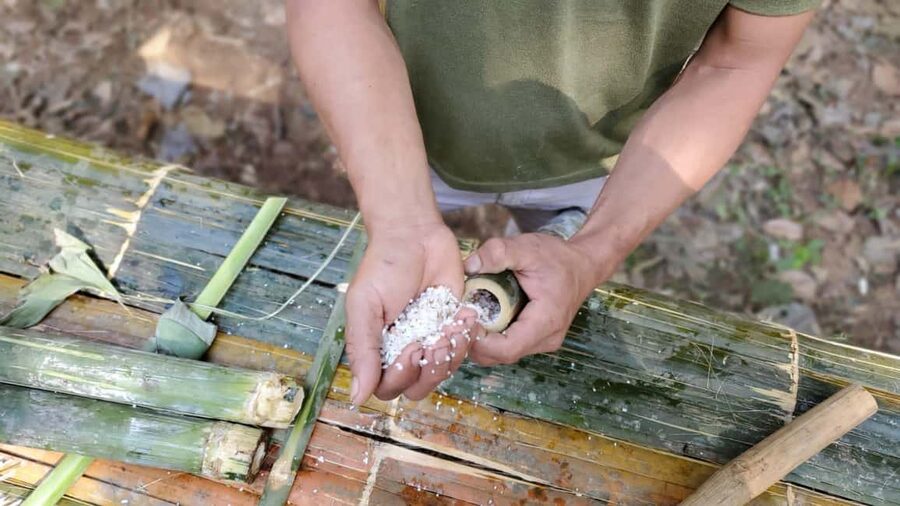
The bamboo work is the part that most clearly separates this from a standard cooking lesson. You learn how to select and prepare bamboo, then turn it into practical utensils for drinking, eating, and cooking.
You take home a bamboo cup and chopsticks that you make during the class. They will not be factory-perfect, and that is the point. Their value comes from remembering where the material came from and how you used it.
The work also gives you a better sense of resourcefulness. A natural material is not presented as decoration. It becomes a tool, and the tool becomes part of the meal.
You should expect this to be a practical task, not a craft workshop with elaborate finishing. If you enjoy making things, you will likely want to be involved from the start. If you prefer to watch, the format allows you to participate at your own level.
Same countryside, another kind of harvest:
- Cooking Class and Lunch at a Tuscan Farmhouse with Local Market Tour from Florence
★ 5.0 · 4,831 reviews - Chiang Mai: Authentic Cooking Class with Market & Farm Visit
★ 4.9 · 4,546 reviews - Tromsø: Reindeer Camp and Sami Cultural Tour with Lunch
★ 4.7 · 3,326 reviews - Maui Pineapple Farm Tour in Haliimaile
★ 5.0 · 2,855 reviews
Cooking rice, meat, and fish over the fire
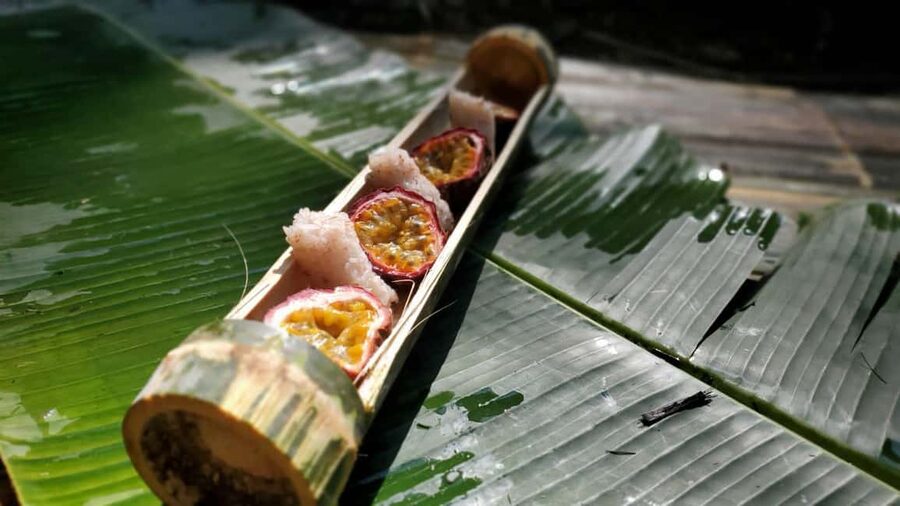
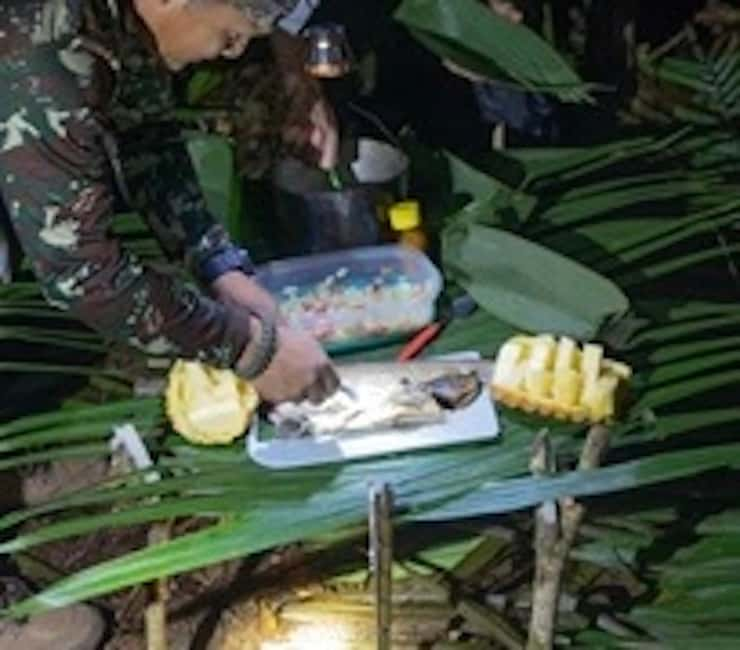
Once the tools and materials are ready, you prepare the meal in the forest. The cooking includes fragrant rice and grilled meat or fish, with fruit and other basic ingredients provided.
Bamboo plays a central role in the process. You learn how to use it for cooking and presentation, while the fire provides the heat. The method links the food to the place in a way that a modern kitchen cannot.
The guide explains how Khmu families still prepare food, so you are learning a method as well as a recipe. That distinction matters. Recipes can be copied at home, but the wider lesson is how a meal comes together with limited equipment and materials from the surrounding area.
The meal is eaten in the forest after the cooking is finished. It is a shared lunch rather than a formal seated service, so expect a relaxed outdoor meal and a good deal of conversation.
What the Khmu focus adds
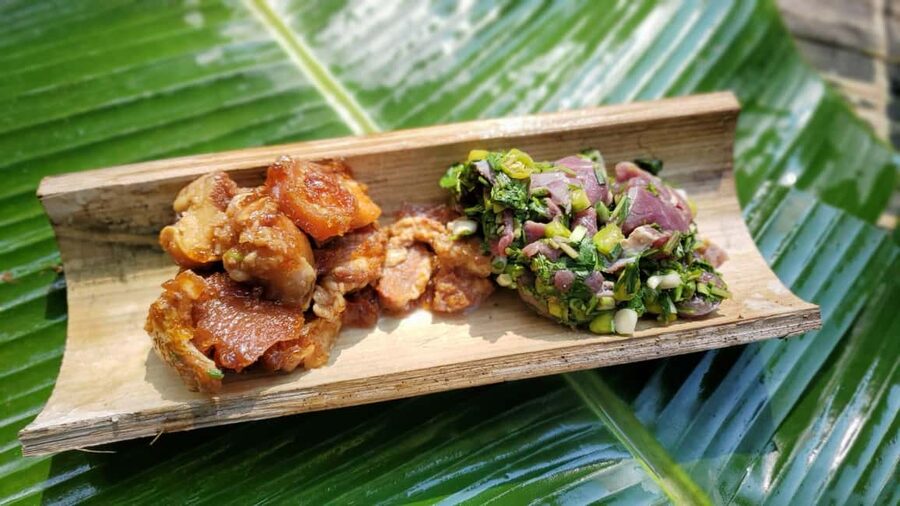
The Khmu are one of Laos’s ethnic groups, and this outing places their food traditions at the center of the day. The focus is not just on eating something local. It is on learning how plants, tools, and cooking methods connect to village life.
One guide has been described as Khmu, raised with a close connection to the land, and trained in agriculture. That background helps explain why the plant walk is a key part of the program rather than a quick stop before lunch.
The guide’s role is also practical. You learn how to recognize plants and how they are used, rather than receiving a broad cultural talk detached from the activity in front of you.
Still, keep your expectations measured. Six hours is enough for an introduction, not a complete study of Khmu foodways or village life. You will leave with a useful glimpse, a meal, and a few handmade tools, not a full course in ethnobotany.
The value of $100 per person
At $100 per person, this is not the cheapest way to eat lunch in Luang Prabang. The price makes more sense when you count what is bundled into the day: hotel transfers, a guide, all meal ingredients, drinking water, tax, entrance fees, and the bamboo cup and chopsticks.
You are also paying for a small group capped at 10. That matters here because the class involves cutting, shaping, gathering, and cooking. A large group would make the hands-on parts less useful.
The strongest value comes if you take part fully. If you simply want a prepared meal, the price will feel high. If you want a cultural activity that combines food, plants, craft, and outdoor time, the cost is easier to justify.
An optional craft-village stop can be added on the way home. It is not included as a required part of the cooking day, so ask about the details if you want to include it.
Who will enjoy this most
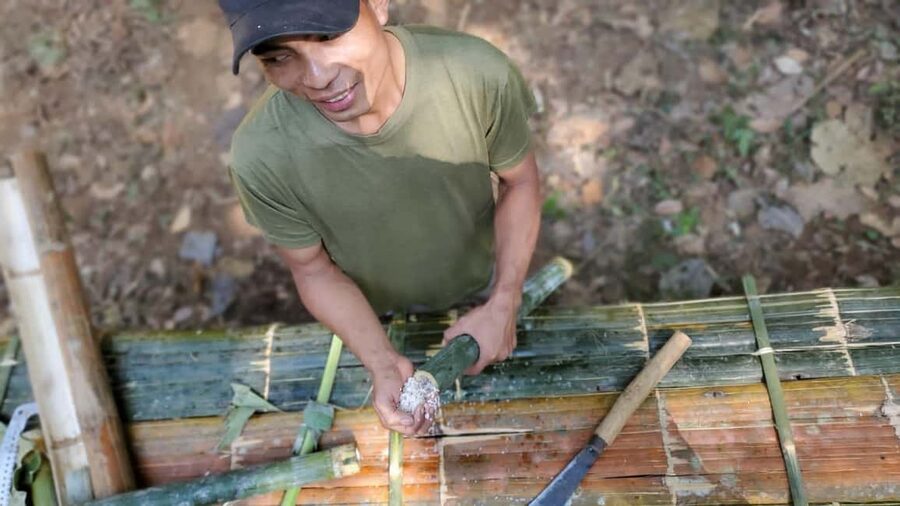
I would recommend this outing to you if you like local food with context. It suits people who want to understand how ingredients are found and prepared, not just sample a finished dish.
It is also a good choice for hands-on learners. You will have chances to cut bamboo, make utensils, gather ingredients, and help cook. Families, couples, and small groups of friends could all enjoy the shared work, provided everyone is comfortable outdoors.
The activity is less suited to anyone seeking a short, polished class in an air-conditioned room. It may also disappoint you if you need a fixed menu, dislike forest walking, or want a passive sightseeing morning.
The outdoor setting brings real tradeoffs. Heat, insects, uneven ground, and basic working conditions are part of the day. The organizers specifically suggest long pants, proper footwear, a hat, mosquito spray, and personal medication.
Practical details for a smoother day
The experience lasts six hours, from 9 AM to 3 PM. Since the day includes transfers and several stages, do not plan a tight appointment immediately afterward.
The group size is limited to 10, and live guiding is available in English, French, Thai, and Lao. Confirm your preferred language when booking, especially if that affects how much plant and cultural explanation you want.
Food and water are provided, but additional food and drink are not included. Bring only personal essentials, and tell the organizer about dietary restrictions before the activity.
Cancellation is free up to 24 hours before the start time, and you can reserve now and pay later. Those terms are useful if your Luang Prabang plans are still shifting.
The meeting point is the provider’s showroom, but hotel transfer is included. Confirm whether pickup is arranged directly from your hotel and what time you should be ready.
My take on the forest lunch
The most valuable part of this day is not the final plate. It is the chain of steps that leads to it: identify plants, gather ingredients, make tools, cook with bamboo, and eat in the forest.
That chain gives the meal meaning. You see the work behind a simple cup of rice or a piece of grilled meat, and you gain a clearer sense of how Khmu cooking uses what is close at hand.
The class also avoids the feeling of a staged food show. You are not just watching someone perform a tradition. You are given real tasks, with room to participate as much or as little as you like.
The limits are clear. The outing costs more than a basic cooking class, the menu is not fixed, and the forest setting demands practical clothing and a willingness to get involved. Those are fair tradeoffs for the right person, but they should be part of your decision.
Should you book it?
Book this experience if you want a small-group cultural activity that joins food, plants, bamboo craft, and forest life in one morning and afternoon. It is especially worthwhile if you value direct participation and want a handmade souvenir with a story behind it.
Skip it if you only want a quick cooking lesson, a guaranteed menu, or an indoor setting. At $100, the value depends on taking part in the whole process. For the right kind of visitor, this is one of the more personal ways to connect food with life around Luang Prabang.
FAQ
How long does the Khmu forest cooking experience last?
The activity lasts six hours, from 9 AM to 3 PM.
What is included in the $100 price?
The price includes hotel transfers, all meal ingredients, drinking water, a live guide, tax, entrance fees, and the bamboo cup and chopsticks you make. Additional food and drink and gratuity are not included.
What food will be prepared?
The provided ingredients include rice, meat, fish, and fruit. You learn to prepare fragrant rice and grill meat or fish using traditional bamboo-based cooking methods. The exact menu is not specified.
Can dietary restrictions be accommodated?
You should tell the organizer about dietary preferences or restrictions in advance so the meal can be adjusted to your needs.
What should I bring?
Bring long trousers, suitable footwear for walking in the forest, mosquito spray, a cap or hat, and any essential personal medication.
How many people can join the group?
The group is limited to 10 participants.
Which languages are available?
The live guide service is available in English, French, Thai, and Lao.
Newly listed farm visits around the world
- Half-Day Farm Visit and Cow Milking Experience★ 5.0 · 16 reviews
- Boutique tour , Mt Maunganui, NZ farm, Rotorua lakes/geothermal★ 4.5 · 50 reviews
- Gourmet Mushroom Farm Tour in Tennessee★ 5.0 · 5 reviews
- Cozy Farm Experience with Wagon Wheels and Acoustic Meal★ 5.0 · 2 reviews
- Animal farm park with free hotel pickup★ 5.0 · 2 reviews
- Alpaca Farm Tours with Toffeemont★ 5.0 · 8 reviews
- Private, via beaches, Kiwi farm to Rotorua 8 lakes & Geothermal★ 5.0 · 20 reviews
- 1D Tour to Cingjing Farm from Taichung★ 4.5 · 3 reviews
Luang Prabang Farm Tours, compared.
Luang Prabang: Farm Tour and Buffalo Buffet Adventure
Read our review →
Laos Buffalo Dairy Tours Interact, Learn and Taste Fresh Flavors
Read our review →
Luang Prabang: Organic Farm Experience & Hike to Kuang si
Read our review →
Browse the lists this tour appears in