
Review · SPAIN
Malaga: Farm-to-Table Tasting Experience with Abuela/Nonna
The most memorable part of this Malaga food experience is the chance to eat with 82-year-old Spanish grandmothers who learned their recipes through generations. Aleksandra leads the session in English, Polish, or Spanish, while the abuelas share cooking secrets, local stories, and the practical habits behind Andalusian food.
I like the olive oil workshop, which helps you taste the difference between several extra virgin oils instead of simply drizzling them over bread. I also like the warm, social setup, with local wine, a large spread of regional food, and time to cook with the abuelas. The main drawback is clear: this is not suitable for vegans, vegetarians, or people with food allergies.
Key points to know
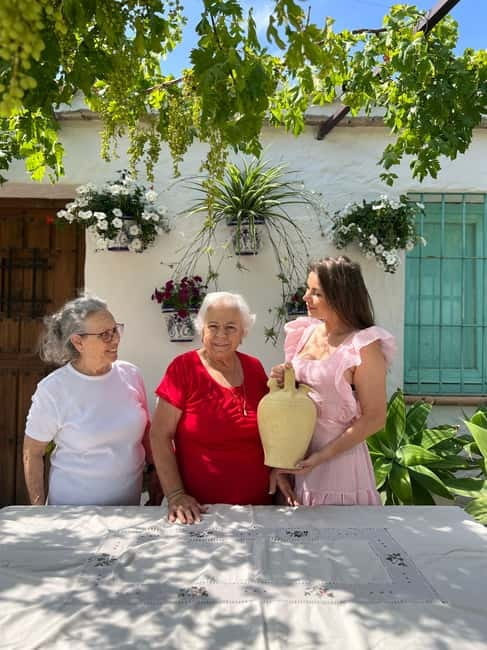
- Two 82-year-old abuelas: Hear family recipes and local food traditions directly from Spanish grandmothers.
- At least three olive oils: Learn how flavor, production, and quality differ, and how to avoid tourist traps.
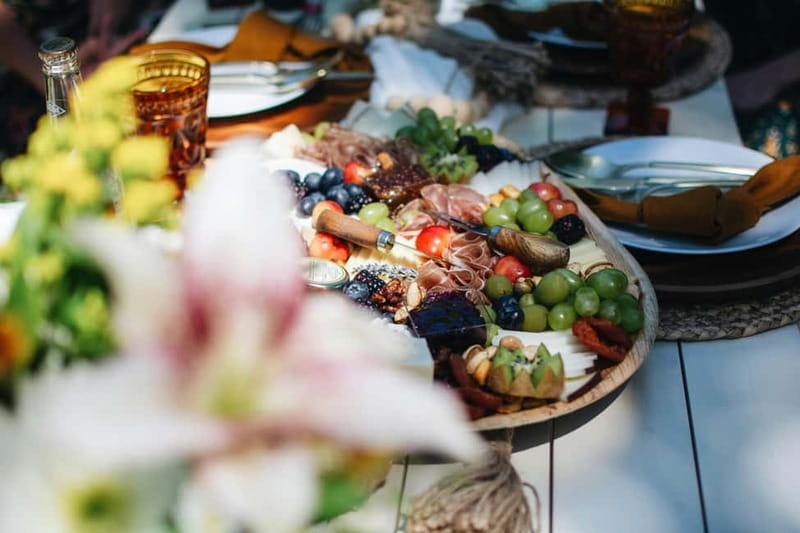
- A full Andalusian spread: Expect bread, olives, almonds, dried fruit, cheeses, Iberian cold cuts, tapas, unusual fruit, sweets, and wine.
- A scenic but changeable setting: The experience may take place in an olive grove, on a rooftop terrace, at a culinary school, or in a local food venue.
- A recipe to take home: Leave with a traditional Spanish family recipe and the chance to recreate it later.
- A two-hour food stop: This works well as a relaxed Malaga activity, but it is not a full cooking course or a market tour.
Meeting the abuelas in Malaga
This is less about watching a chef perform and more about sitting down with people who have cooked these foods for most of their lives. The two local abuelas are the heart of the activity. Their role is not decorative. They explain how regional dishes are made, where family habits come from, and how Andalusians use everyday ingredients at home and during celebrations.
Aleksandra guides the session and helps connect the food to the wider culture of Malaga. The team speaks English, Polish, and Spanish, so you can choose the language that suits you best when booking.
I especially like this format for visitors who want more than a list of dishes. A grandmother explaining why a certain olive is cured in a particular way gives the food a human connection. You also get a better sense of how locals shop, judge quality, and use preserved ingredients in daily cooking.
The tone is friendly and social. You should expect conversation, stories, and a shared table rather than a formal lecture. One recent group also cooked with the abuelas after tasting the food, so the practical side of the session matters as much as the sampling.
More Cooking Classes in Spain:
- Half-Day Thai Cooking Class at Organic Farm in Chiang Mai
★ 5.0 · 19,087 reviews - From Porto: 2 Wine Regions, Farm-to-Table Lunch & Boat
★ 4.9 · 5,724 reviews - Cooking Class and Lunch at a Tuscan Farmhouse with Local Market Tour from Florence
★ 5.0 · 4,831 reviews
An olive grove setting with a location detail to check
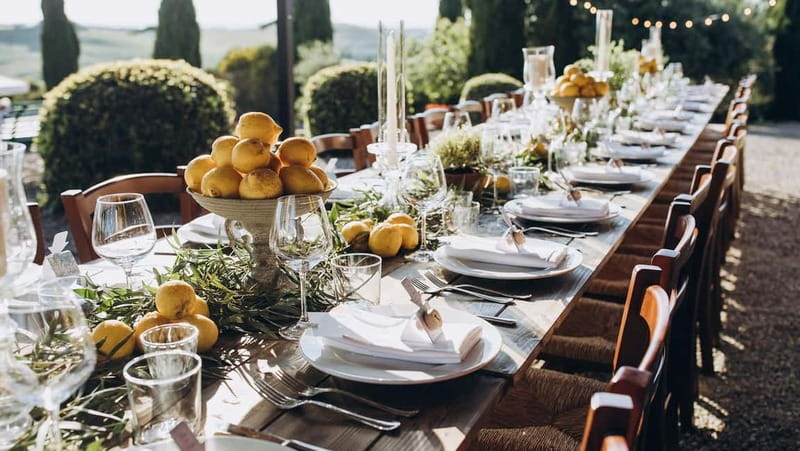
The meeting point is described as an olive oil grove yard with an outdoor countryside table. That setting fits the subject perfectly. Olive oil makes more sense when you are sitting among the trees rather than tasting it in a generic indoor room.
At the same time, the experience can use different pop-up locations. These may include a culinary school, a rooftop terrace, a local restaurant, or a food spot known mainly to residents. The current location for May and June is described as being in central Malaga, while the meeting information also refers to an olive grove yard.
Because of that variation, check the full address after booking and plan your route only once you have it. Transportation to and from the activity is not included. The starting and ending information uses the postal code 29130, but the precise meeting address is provided to customers after booking.
Bring comfortable shoes, sunscreen, water, a sun hat, and a camera. If the session is outdoors, Malaga’s strong sun will matter more than your appetite. Smoking and pets are not allowed.
The tasting begins with bread and olive oil
The first part of the food spread uses rustic breads and picos, the crunchy breadsticks commonly served with Spanish meals. These provide a plain base for comparing the other ingredients.
Then comes the main olive oil workshop. You taste at least three types of extra virgin olive oil and learn how production methods affect aroma and flavor. The point is not simply to identify your favorite. You are shown how to recognize good oil and avoid poor-quality bottles sold as souvenirs.
This is one of the most useful parts of the experience for a first-time visitor to Spain. Olive oil appears at breakfast, in salads, with bread, and in countless cooked dishes. A short lesson can change how you shop for it later.
The session also explains the production story behind the oils. You learn why oils differ, what to notice when tasting, and how local products connect to the countryside around Malaga. Take a moment here instead of rushing toward the meats and cheese. The comparison is where much of the value lies.
Olives, almonds, figs, and dates
Next, you sample artisan table olives and hear about olive varieties, harvesting, and traditional curing. This is a useful introduction to an ingredient many visitors eat often but rarely study.
The tasting also includes Marcona almonds, Malaga figs, and dates. The almonds are known for their rounded shape and pleasant crunch, while the figs and dates add soft sweetness to the table. You hear how dried fruit is used in everyday food and at celebrations.
This part gives the tasting a broader Andalusian feel. The food is not limited to famous tapas. Preserved fruit, nuts, bread, and olives show how people have long built satisfying meals from products that store well.
The exact selection can change with availability. The experience promises high-quality regional products, but a particular fruit or bakery item may vary by season and supplier.
More farm tours around Spain:
- Montserrat Lunch & Wine at Farmhouse Small Group from Barcelona
★ 5.0 · 2,368 reviews - Barcelona: Montserrat Visit & Lunch at Farmhouse Small Group
★ 4.7 · 1,313 reviews - Montserrat Full Day Tour with Farmhouse Lunch and Winery Visit
★ 5.0 · 1,068 reviews - Montserrat & Winery Visit Tour with Traditional Farmhouse Lunch
★ 4.5 · 1,035 reviews
Andalusian cheese and Iberian cold cuts
The cheese course features Andalusian cheeses from award-winning regional producers. You can expect the focus to be on local production rather than supermarket brands. The guide explains where the cheeses come from and how they fit into the region’s food culture.
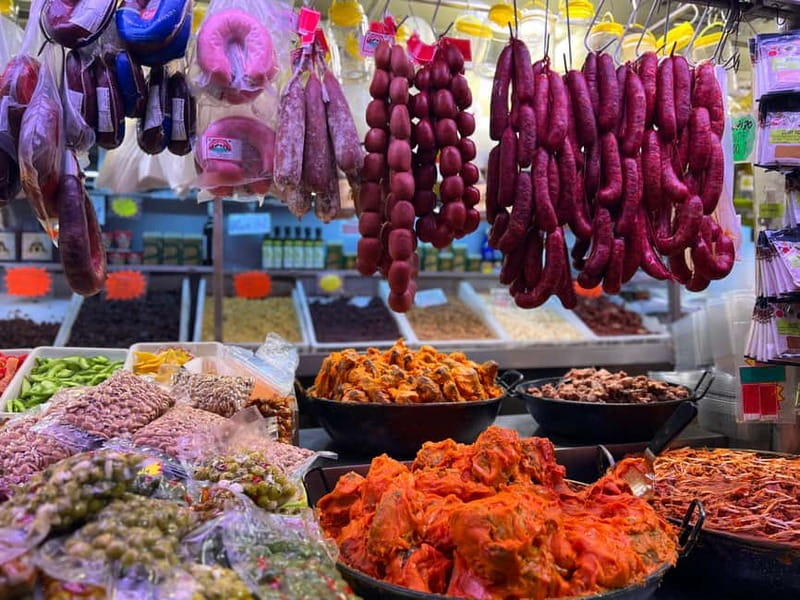
The Iberian cold cuts bring the stronger flavors. The spread may include sliced Jamon Iberico, chorizo, salchichon, or lomo, sourced from producers in the countryside. These are served for tasting, so you get to compare several styles rather than ordering one plate and moving on.
I like the way these items are placed among the oils, bread, olives, and fruit. You can test different combinations and notice how salt, sweetness, fat, and acidity balance one another. If you are new to Spanish cured meat, ask questions about the names and preparation methods. The activity is designed for that kind of explanation.
This is also where dietary limits become important. The experience is specifically not suitable for vegans, vegetarians, or people with food allergies. The menu includes pork products, dairy, bread, and other ingredients, and no alternative menu is promised.
Tapas with a homemade feel
The Spanish tapas portion includes cold-sliced tortilla de patata, boquerones en vinagre, and pipirrana or another seasonal salad. Tortilla de patata gives you the familiar combination of potato and egg. Boquerones are fresh anchovies prepared in vinegar, with a sharper, lighter taste. Pipirrana is a traditional Spanish salad made with fresh ingredients.
These dishes are useful because they show a different side of Spanish food than restaurant tapas alone. You are not simply ordering small plates from a menu. You are tasting foods linked to home kitchens and local habits.
The selection may change with the season. That is a good thing for freshness, but it means you should not expect every item to appear exactly as listed. The overall style remains clear: simple ingredients, careful preparation, and food meant to be shared.
Local fruit and old-fashioned sweets
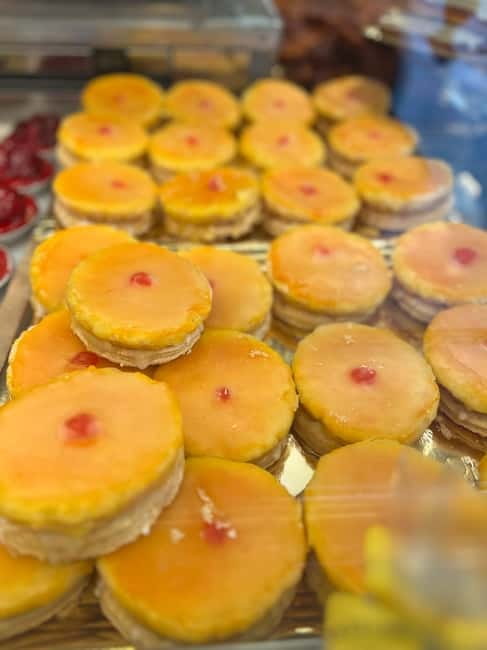
The unusual local fruits are included to show flavors you may not have tried before. The description does not name each fruit, so do not book expecting one specific variety. You can expect the guide to use the fruit as a way to talk about local produce and organic growing.
The sweets come from older family bakeries and artisan shops. This adds a nice final note to the tasting. Instead of ending only with cured meat and cheese, you get a look at Malaga’s baking traditions and the kinds of treats people buy for family occasions.
The word vintage refers to the style and source of the sweets, not to a fixed historical menu. The selection can depend on what is available from the bakeries and shops at the time.
Cooking with the abuelas and taking home a recipe
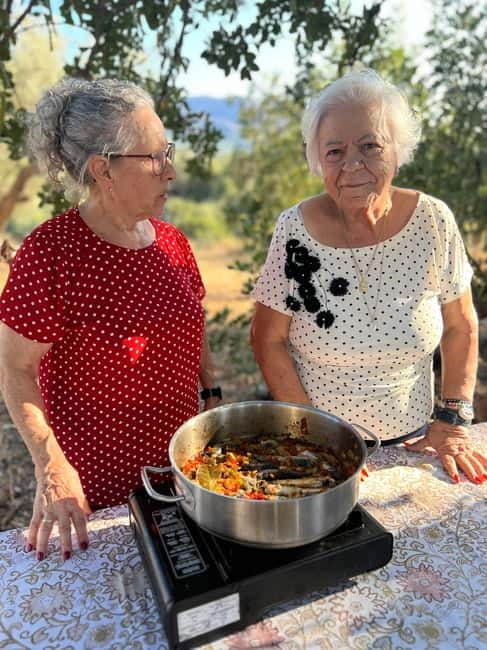
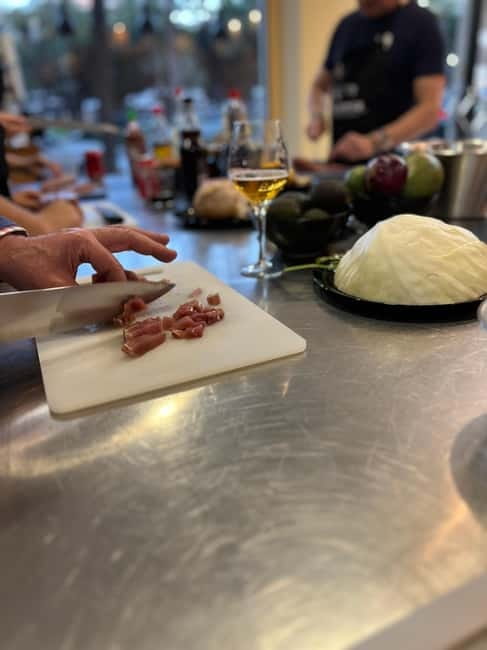
The tasting is not only a sit-down sampling session. You may also cook with the abuelas and learn a traditional local dish. The class promises a Spanish family recipe to take home, including food secrets passed down through generations.
This is valuable because a recipe gives the experience a life beyond the two-hour visit. You can try it later and remember the people and ingredients connected to it. It also helps you understand that Spanish cooking is often built on repeatable methods rather than complicated restaurant techniques.
Do not expect a long professional cooking course. The experience lasts two hours and includes a large tasting menu, conversation, and demonstrations or participation with the grandmothers. Think of the cooking part as a hands-on addition to the food and storytelling, not a full culinary qualification.
The exact recipe is described as a surprise. That keeps the session flexible and gives the abuelas room to share a dish connected to their local traditions.
Wine, views, and the social side
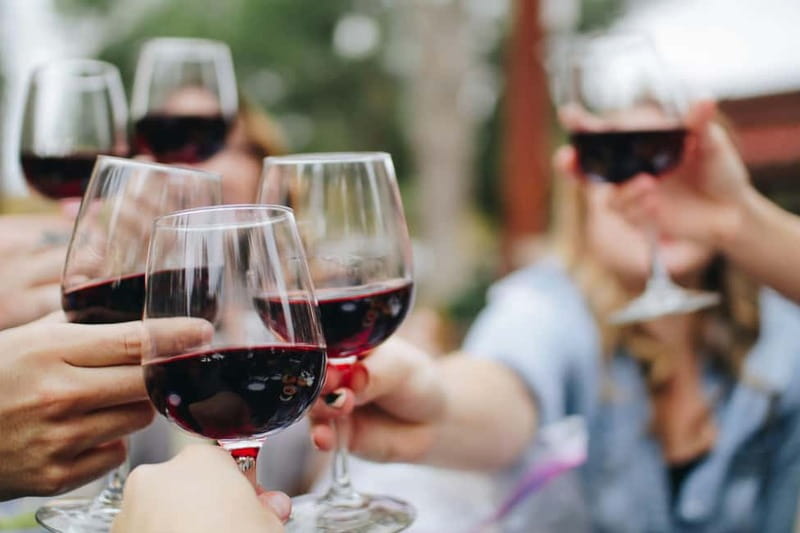
Local wine is included, and the activity may include wine tasting alongside the food. The wine helps turn the tasting into a relaxed meal rather than a series of separate samples.
The setting is part of the appeal. Depending on the date and location, you might eat at an outdoor table among olive trees or enjoy views from a rooftop terrace. A culinary school or local restaurant can offer a more practical setup for cooking. Since the location changes, the views and atmosphere are not guaranteed to be identical for every date.
The social mood seems important here. The experience is designed for people who enjoy meeting others around food, and it includes time to talk with the hosts and fellow participants. One booking described the quantity of food, hospitality, location, and company as major strengths. That matches the design of the activity: come hungry, allow time for conversation, and do not treat it like a quick tasting counter.
Is $112 a fair price?
At $112 per person, this is not a cheap snack stop. It is a two-hour food-and-culture experience that includes a wide selection of premium products, local wine, an olive oil workshop, cooking with abuelas, and a family recipe.
The value depends on what you want from Malaga. If you only want a plate of tapas, you can spend less at a bar. If you want a clear introduction to olive oil, Iberian meats, local cheeses, preserved foods, sweets, and regional customs in one sitting, the price becomes easier to justify.
You are also paying for the setting and the personal element. An 82-year-old grandmother sharing recipes is a different offering from a standard food tour led entirely from a script. The value is strongest for curious eaters who want context and conversation, not just volume.
There are limits. Transportation is extra, the exact location can change, and the session does not suit people with dietary restrictions. If you do not drink wine or eat meat and dairy, much of the included menu will have little value for you.
Who should book this Malaga food experience?
I would recommend it to couples, families with older children, solo visitors who enjoy social activities, and anyone who wants a gentle introduction to Andalusian food. It also suits people who plan to buy olive oil, cured meats, or local food gifts and want help judging quality.
It is a good choice after a morning of sightseeing, since the two-hour format gives you a substantial break without taking a full day. The food includes breakfast, brunch, lunch, snacks, and tasting elements, so the timing can fit several parts of a Malaga itinerary.
I would be cautious if you need strict control over ingredients, dislike pork or dairy, or want a formal chef-led class with a fixed menu. The experience is personal and flexible, but that also means the precise dishes and setting may vary.
The activity has a 5.0 rating from two verified bookings. One described it as wonderful from start to finish. Another praised Aleksandra, the two abuelas, the countryside olive grove setting, the amount of food, the cooking session, and the hospitality from Aleksandra’s husband. Those details point to the experience’s strongest features: generous hosting, a memorable location, and genuine contact with the family cooks.
Should you book it?
Book this if you want to slow down over Andalusian food and meet the people behind the recipes. The olive oil comparison, generous regional spread, local wine, and time with two abuelas make it more personal than a standard Malaga tasting.
Skip it if you are vegan, vegetarian, allergic to ingredients in a mixed Spanish menu, or looking for a fixed-location culinary class. Before paying, confirm the meeting address and transport plan. For everyone else, this is a strong choice for connecting Malaga’s countryside, food traditions, and family cooking in a single afternoon.
FAQ
How long does the Malaga farm-to-table tasting last?
The experience lasts two hours.
How much does the experience cost?
The listed price is $112 per person.
What languages are spoken?
The live guides speak English, Polish, and Spanish.
Who leads the experience?
Aleksandra leads the experience with local Spanish grandmothers who are 82 years old. Aleksandra’s husband may also help with hospitality.
What food is included?
The tasting includes rustic breads and picos, extra virgin olive oils, artisan olives, Marcona almonds, Malaga figs, dates, Andalusian cheeses, Iberian cold cuts, Spanish tapas, unusual local fruits, vintage sweets, and local wine.
Is cooking included?
Yes. You may cook with the abuelas and receive a traditional Spanish family recipe to take home.
Where does the experience take place?
The activity may take place at an olive grove yard, rooftop terrace, culinary school, local restaurant, or another local food venue. The full address is provided after booking, so confirm the current location before traveling.
Is transportation included?
No. Transportation to and from the activity is not included.
Is the experience suitable for vegetarians, vegans, or people with food allergies?
No. The activity is not suitable for vegans, vegetarians, or people with food allergies.
Newly listed farm visits around Spain
- Animal farm park with free hotel pickup★ 5.0 · 2 reviews
- Bull Breeding Farm: Guided Half-Day Tour from Seville★ 4.5 · 24 reviews
- Olive Oil Farm Tour with Tasting from Seville★ 4.5 · 61 reviews
- From Seville: Pig Farm private day tour and old villages visit★ 4.5 · 4 reviews
- ” Basque Farm House & Cider house” tour + meal from San Sebastian★ 5.0 · 9 reviews
- Fuerteventura Villages Caves and Farm Tour with Lunch from North★ 3.0 · 9 reviews
- Menorca: Cheesemaking and Farm-Fresh Product Tasting★ 5.0 · 29 reviews
- Tropical Tour: Avocado & Mango Farm – Small group and tasting★ 5.0 · 38 reviews
Cooking Classes, compared.
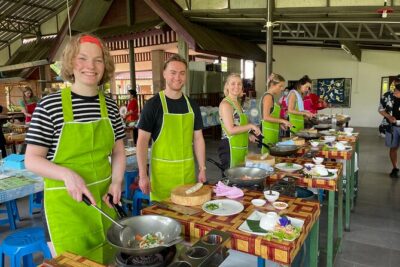
Half-Day Thai Cooking Class at Organic Farm in Chiang Mai
Read our review →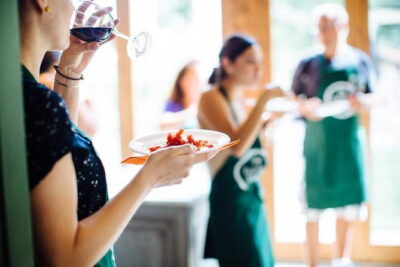
Cooking Class and Lunch at a Tuscan Farmhouse with Local Market Tour from Florence
Read our review →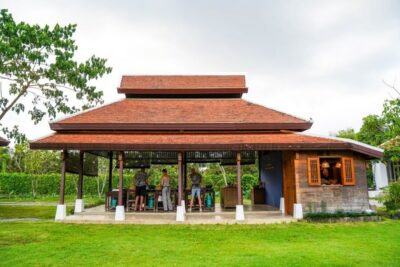
Authentic Cooking Class with Market & Farm Visit
Read our review →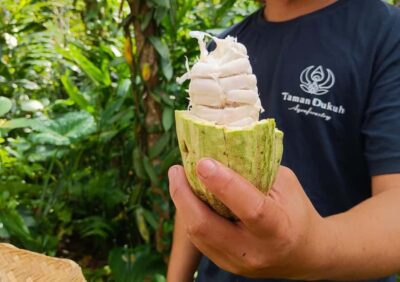
Hands-On Cooking Class & Farmhouse Tour on the Amalfi Coast
Read our review →
Thai Cooking Class | Since 2012 | Farm to Table
Read our review →Browse the lists this tour appears in