
Review · ITALY
Arezzo: pasta e tiramisù cooking class organic Tuscan farm
The best part of this four-hour class is that you do not simply watch someone cook. You work at a real organic farm with Giada, the owner, preparing three kinds of fresh pasta and tiramisù before sitting down to eat what you made. The setting adds a lot: a Tuscan farmhouse, a lake view, and a family-style welcome.
I like the hands-on format and the chance to learn techniques you can repeat at home. I also like that the meal includes organic wine from the farm, water, coffee, and the food prepared during class. The main drawback is the price, $283.21 per person, which is a serious spend for a four-hour activity, especially if you are mainly looking for a quick meal rather than a full cooking lesson.
Key points at a glance
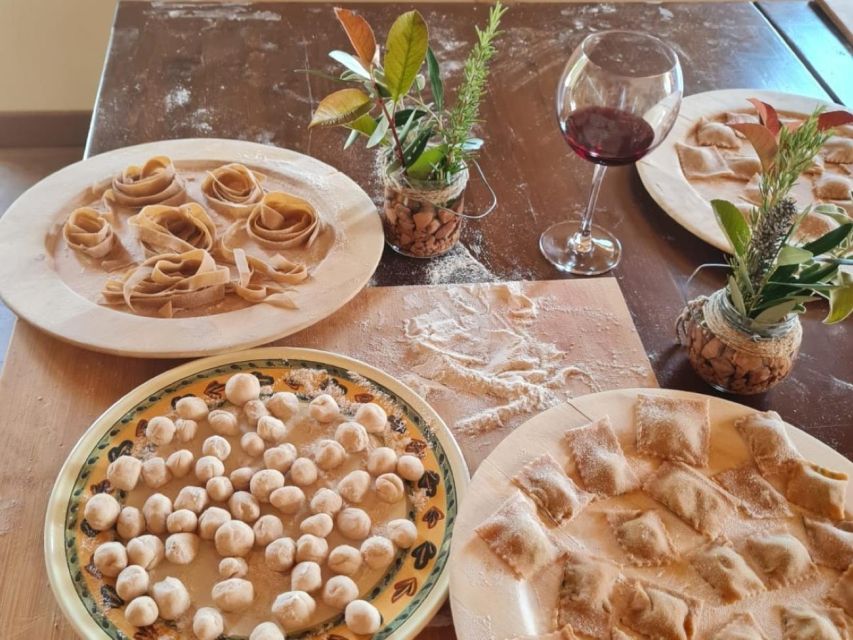
- Three fresh pastas in one class: Make tagliatelle, ravioli, and gnocchi rather than focusing on just one recipe.
- Giada teaches the class: The farm owner shares traditional methods and offers advice for preparing an Italian lunch at home.
- A real farm setting: Farmhouse Le Ceregne Bio provides the setting, ingredients, welcome cappuccino, and organic wine.
- Lunch follows the lesson: You eat the pasta and tiramisù you prepared, with the class lasting about three hours and lunch taking another hour.
- Small group format: A maximum of 10 participants keeps the class more personal and practical.
- Useful for families and home cooks: You receive recipes and learn methods that can be repeated in your own kitchen.
Arriving at Farmhouse Le Ceregne Bio
The experience starts and ends at the reception of Farmhouse Le Ceregne Bio. There is no hotel pickup or drop-off, so you need to arrange your own way to the farm and allow enough time to arrive at the meeting point.
That detail matters. This is not a cooking class in a central Arezzo restaurant where you can simply walk over from a nearby square. The appeal comes partly from reaching an organic farm and spending several hours in a rural Tuscan setting. The tradeoff is that transportation is your responsibility.
On arrival, you receive a cappuccino and a welcome at the farm. It is a small touch, but it sets the tone better than being rushed straight to a work station. You then find the cooking equipment and ingredients already prepared for you.
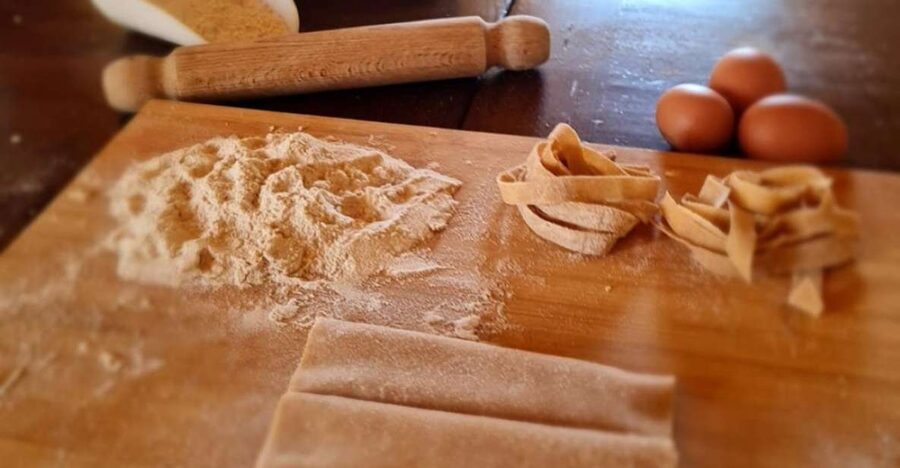
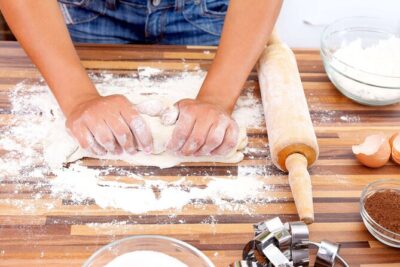
Each participant receives an apron, utensils, ingredients, and a traditional rolling pin. That rolling pin is more than a souvenir-style prop. It connects the lesson to the old-fashioned way of making pasta by hand, before electric machines became common in home kitchens.
The class is offered in English and Italian. If you want to ask questions about technique, ingredients, or how to repeat a recipe at home, Giada is available to offer advice. The small group limit of 10 should make it easier to get help than in a large demonstration class.
More Organic Farm Visits in Italy
- Farm To table Experience on an organic hilltop estate in Tuscany
★ 5.0 · 99 reviews - Organic cooking class with a sommelier in an Olive and wine farm
★ 5.0 · 69 reviews - Paciano: Organic Cooking Class at a Farm with Lunch & Wine
★ 4.9 · 19 reviews
Making tagliatelle, ravioli, and gnocchi
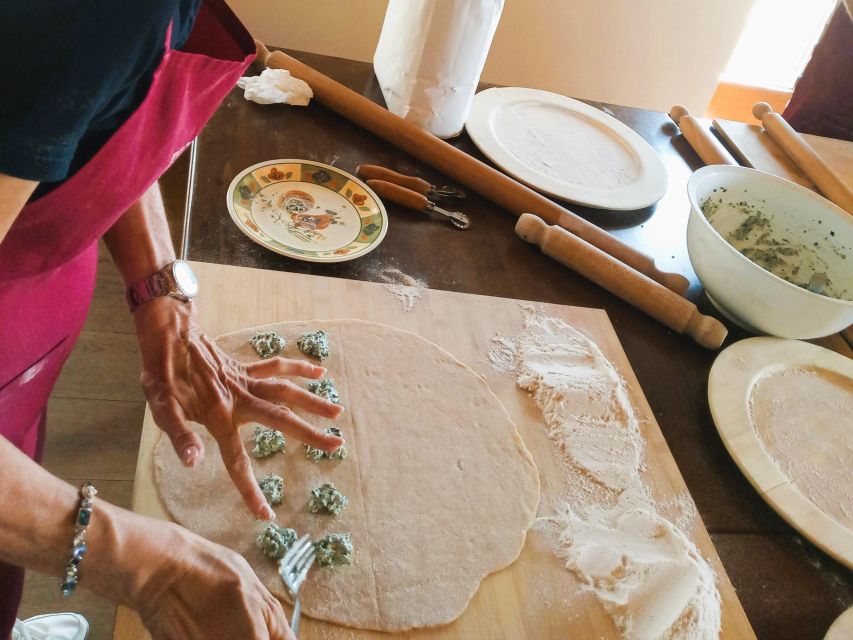
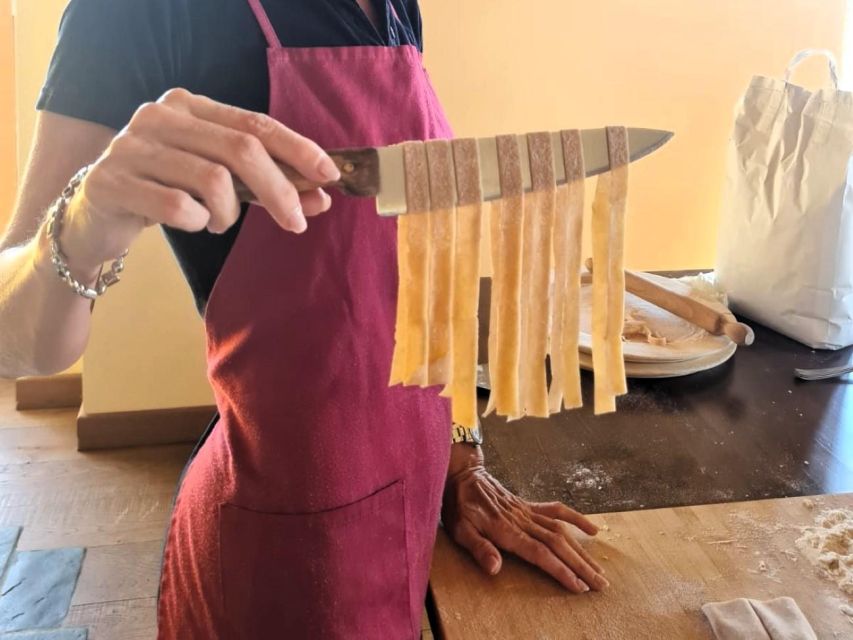
The cooking section lasts about three hours. You prepare tagliatelle, ravioli, and gnocchi, giving you a broad introduction to fresh pasta rather than a single recipe repeated in different forms.
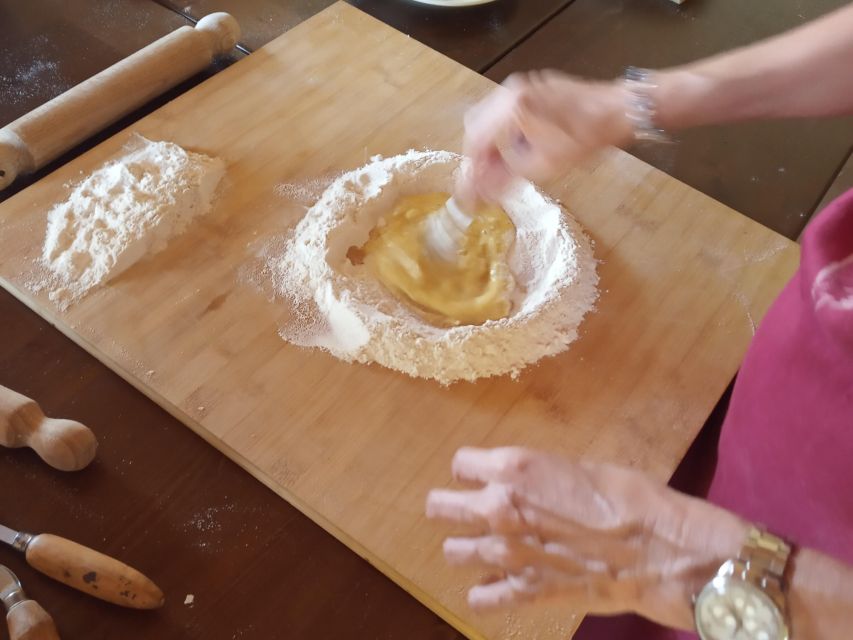
Tagliatelle teaches the basics of dough, rolling, and cutting. It is one of the most useful fresh pastas to learn because you can make it again for a simple family meal. The rolling pin lets you work by hand and feel how the dough changes as it becomes thinner.
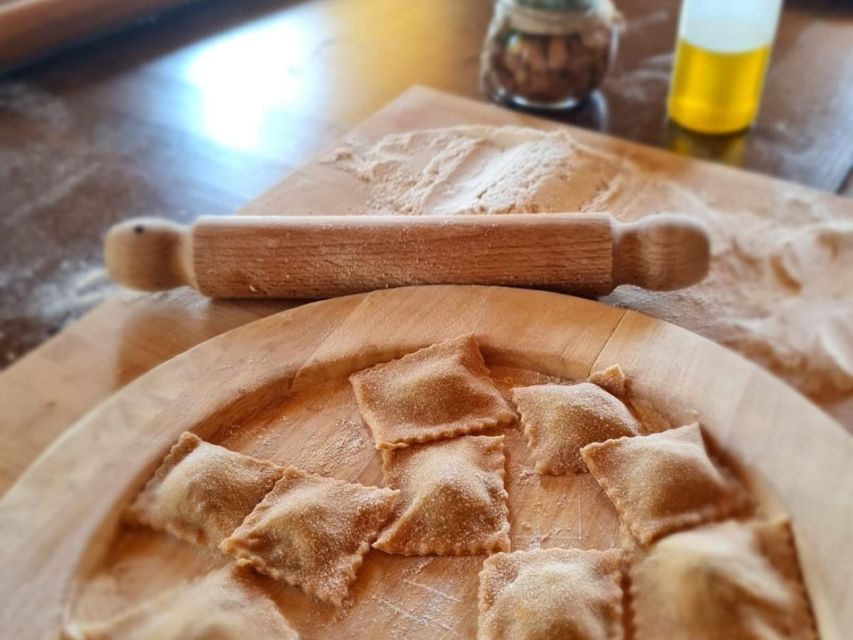
Ravioli adds a different skill. You need to handle filled pasta carefully, seal the edges, and avoid trapping too much air. The information provided does not specify the filling or sauce, so you should think of this as a lesson in the method rather than a fixed menu you can count on reproducing exactly.
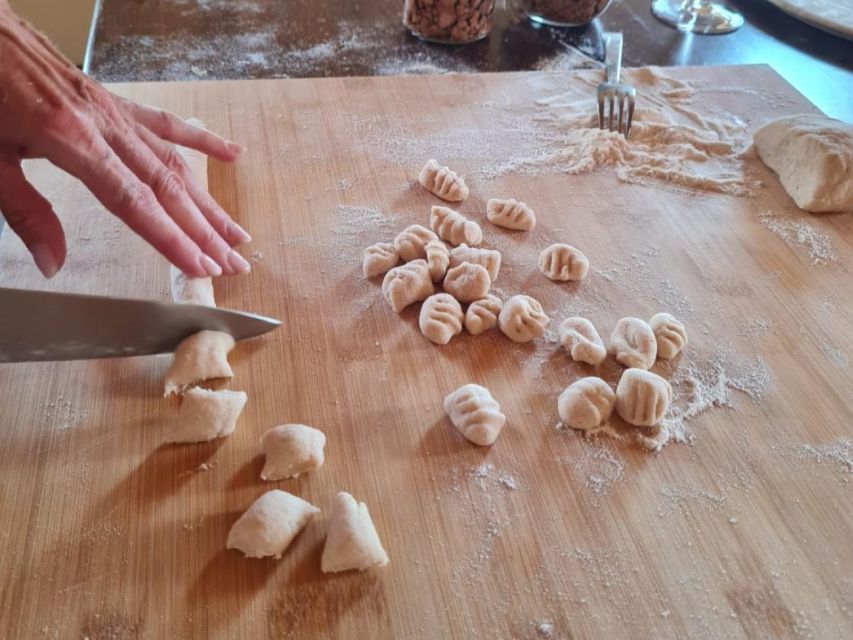
Gnocchi rounds out the pasta work with a softer dough and a different texture. Making all three in one session gives you a useful comparison. You see that fresh pasta is not one single technique, but a group of methods that respond differently to flour, moisture, shaping, and cooking.
This variety is one of the strongest reasons to book the class. A shorter lesson might leave you with one recipe and a pleasant meal. Here, you leave with several basic formats to practice. The class is particularly useful if you enjoy cooking at home and want practical skills rather than a passive food demonstration.
The lesson is presented as traditional Tuscan cooking learned in the style of an Italian grandmother. That does not mean every detail is formal or difficult. The purpose is to help you understand the familiar methods behind a Tuscan lunch, then adapt them in your own kitchen.
The class includes ingredients from the farm. The supplied information does not list every ingredient or identify which dishes use produce grown on the property, so you should not expect a detailed farm tour or a full explanation of every crop. The farm setting and farm-sourced cooking ingredients are part of the experience, but the central activity is pasta making.
Learning with Giada, the farm owner
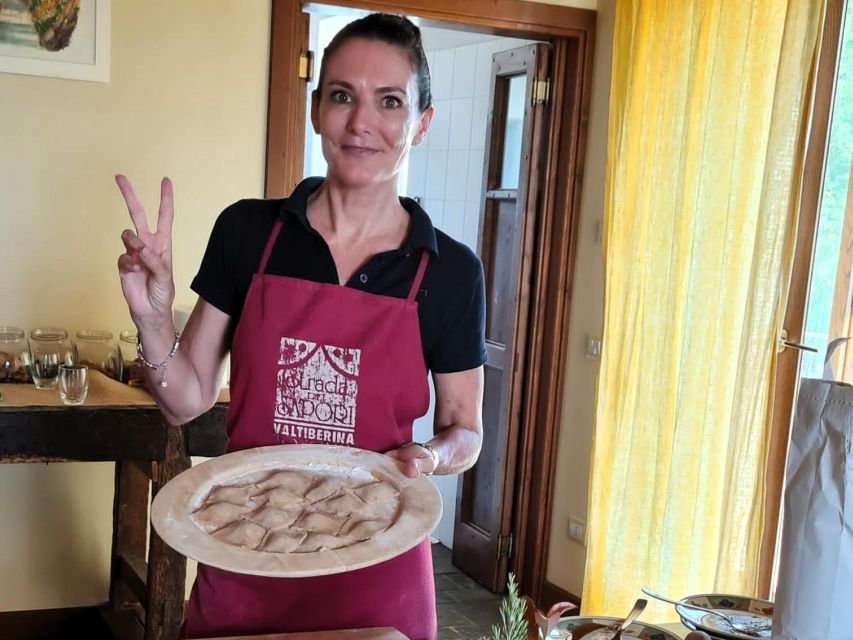
Giada is the owner of the farm and leads the cooking class. That personal connection gives the lesson a different feel from a class taught by a hired instructor in a commercial cooking school.
You can ask her for suggestions on preparing a traditional Italian lunch at home. That is valuable because the most useful cooking lessons often happen in the small corrections: how thin to roll the dough, how to shape filled pasta, or how to handle a recipe when your home kitchen does not match the equipment at the farm.
The class is taught in English and Italian, making it accessible to English-speaking visitors. The available feedback highlights clear instructions and help throughout the experience. That is important for a class involving three kinds of pasta, since the session could otherwise become confusing or hurried.
Still, you should arrive ready to participate. This is not simply a long lunch with a short cooking show attached. Three pastas plus tiramisù require attention and some work. If you prefer a relaxed meal with very little activity, the class may feel too involved.
For families, couples, and small groups of friends, the format offers a good shared project. You work with the same food, then sit down together to eat it. The recipes also give the experience a life beyond the day itself, especially if you later organize a pasta lunch at home.
Tiramisù before the meal
After the pasta preparation, you learn the secrets of tiramisù. The dessert adds a sweet finish to the lesson and gives you another recipe to take home.
The available details do not specify the exact preparation method, ingredients, or whether the tiramisù is assembled individually or as one larger dessert. What is clear is that it forms part of the cooking lesson and the meal that follows.
Including tiramisù is a smart choice. Pasta making can be technical, while dessert gives the class another style of kitchen work. It also means your lunch is not just a plate of pasta, but a complete meal that includes a traditional Italian dessert.
The strongest praise for the class centers on the food itself. The pasta and tiramisù are described as excellent, and the instructions as clear. You should still keep your expectations realistic: the final result depends partly on your group, the pace of the lesson, and how much hands-on work you do.
Same countryside, another kind of harvest:
- Florence Pizza or Pasta Class with Gelato Making at a Tuscan Farm
★ 5.0 · 6,801 reviews - Cooking Class and Lunch at a Tuscan Farmhouse with Local Market Tour from Florence
★ 5.0 · 4,831 reviews - Sorrento Farm and Food Experience including Olive Oil, Limoncello, Wine tasting
★ 5.0 · 2,524 reviews - Sorrento: Pizza Lesson, Wine, and Limoncello at a Local Farm
★ 5.0 · 1,513 reviews
Lunch with organic wine and a lake view
The final hour is reserved for lunch. You eat the pasta and tiramisù prepared during the class, with water, coffee, and organic wine from the farm included.
This meal is the payoff, but it is also part of the lesson. You can taste how fresh pasta differs from dried pasta and see what the techniques produce when cooked and served. Eating the food right away also makes the cooking process feel complete.
The lake view gives lunch a setting that a standard city cooking school cannot match. The supplied information does not name the lake or promise a particular table location, so you should not book this solely for a guaranteed panoramic seat. Still, the view is an important part of the farm atmosphere.
Organic wine is included, which adds value for adults who enjoy a glass with lunch. Water and coffee are also provided. The details do not state the amount or variety of wine, so you should not treat the inclusion as a wine tasting.
The meal takes about one hour, while the cooking class takes about three. Plan on spending the full four hours at the farm. This is not an activity to squeeze between two tightly scheduled sightseeing stops.
Is $283.21 a fair price?
At $283.21 per person, this is an expensive cooking class. The price makes more sense if you value the complete package: four hours at an organic farm, instruction from the owner, three fresh pasta preparations, tiramisù, a cappuccino welcome, equipment, ingredients, lunch, coffee, water, and organic wine.
The small group limit also matters. With no more than 10 participants, you have a better chance of receiving personal help than you would in a large class. The provided information does not guarantee a private class, so you should expect to share the experience with other participants.
I would compare the price with the cost of a high-end meal in Tuscany, but I would not treat this as a simple restaurant substitute. You are paying for instruction, participation, food, and the farm setting. If you want only a memorable lunch, there are likely less expensive ways to eat well. If you want to learn recipes and spend a half day cooking, the value is easier to defend.
The included equipment and ingredients also save you from needing to bring anything special. You receive the apron and rolling pin for the class, but the information does not say that these items are yours to keep. Consider them provided equipment unless the farm tells you otherwise.
Who will enjoy this class most?
This experience suits you if you like food, hands-on activities, and slower rural outings. It is especially well matched to home cooks who want recipes and methods they can use after returning home.
It also works well for a family pasta day. The class promises recipes and practical guidance for organizing a pasta lunch at home, so the experience can become a shared activity rather than a one-time memory.
Couples and small groups can enjoy the social side of making food together, then sharing lunch at the same table. The family-farm setting should appeal to anyone who wants a break from museums, churches, and busy town centers.
The class may be less suitable if you have limited time in the Arezzo area. Since it lasts four hours and includes no transportation, you need to account for the journey to and from Farmhouse Le Ceregne Bio. It may also be a poor fit if you do not want to cook or if you are seeking a focused wine tasting.
The activity is listed as wheelchair accessible. If accessibility is important for your booking, it is still sensible to confirm any specific needs directly with the provider, since the available information does not describe the exact layout of the farm or work stations.
Practical details before you book
The activity runs for four hours, with about three hours devoted to cooking and one hour to lunch. Starting times vary, so check the available time before booking and leave enough space around it in your day.
The meeting point is the reception at Farmhouse Le Ceregne Bio, and the activity finishes there. Hotel transfers are not included.
Instruction is available in English and Italian. The group is limited to 10 people. The package includes a welcome cappuccino, apron, rolling pin, utensils, ingredients, water, coffee, and organic wine.
You can cancel up to 24 hours before the activity for a full refund. The reserve-now, pay-later option lets you hold a place without paying immediately, which is useful if your Tuscan schedule is still changing.
The experience has received a perfect rating from two submitted reviews, with particular praise for the excellent pasta and tiramisù, clear instructions, and help throughout the class. That is a small sample, so I would treat it as encouraging rather than a guarantee of a perfect day. The consistent point is that the teaching and food are the heart of the experience.
Should you book this Arezzo cooking class?
Book it if you want to learn several Italian pasta techniques in a personal farm setting, and if you value the chance to eat what you prepare. Giada’s role as owner, the small group size, and the included lunch make this more substantial than a quick pasta demonstration.
Think twice if $283.21 feels high for four hours, if you need hotel transportation, or if your main goal is sightseeing rather than cooking. The class demands a half day and requires you to reach the farm on your own.
For a food-focused visit to Tuscany, I would choose this experience when I wanted practical recipes, a family-run atmosphere, and a meal with a lake view. It is best booked by people who want to participate fully, not simply sit down and be served.
FAQ
How long does the cooking class and meal take?
The full activity lasts four hours. About three hours are spent cooking, followed by a one-hour lunch.
Where does the experience begin and end?
It begins at the reception of Farmhouse Le Ceregne Bio and ends back at the same meeting point.
What food will I prepare?
You will prepare tagliatelle, ravioli, gnocchi, and tiramisù.
Is lunch included?
Yes. You eat the food prepared during the class, with water, coffee, and organic wine from the farm included.
Is transportation from my hotel included?
No. Hotel pickup and drop-off are not included, so you must make your own way to Farmhouse Le Ceregne Bio.
Is the class available in English?
Yes. The instructor teaches in English and Italian. The activity is also listed as wheelchair accessible and limited to 10 participants.
More Pasta Experiences in Italy
- Florence: Pizza or Pasta Class with Gelato at a Tuscan Farm
★ 4.9 · 1,181 reviews - Alghero Home Cooking Pasta Class at a Farmhouse with Wine
★ 5.0 · 130 reviews - Bardolino: Garda Lake Pasta Cooking Class at Agritourism
★ 5.0 · 114 reviews - Farmers’ Market Shopping with Cooking Class and Pasta Making
★ 5.0 · 91 reviews
More Cooking Classes in Italy
- Hands-On Cooking Class & Farmhouse Tour on the Amalfi Coast
★ 5.0 · 956 reviews - Sorrento: Farm Tour with Cheese Tasting & Pizza Making Class
★ 5.0 · 503 reviews - Florence: Cooking Class at a Tuscan Farm & Local Market Tour
★ 4.9 · 354 reviews - Amalfi: Cooking Class and Farmhouse Visit With Meal
★ 5.0 · 262 reviews
Newly listed farm visits around Italy
- Sorrento Half-Day Farm Experience: Pizza, Cheese Making and Wine★ 5.0 · 17 reviews
- Farm-to-Table Experience: Olive Oil, Garden Tour & Nonna’s Lunch★ 5.0 · 35 reviews
- Amalfi Coast & Sorrento Cooking Class School at Farmhouse★ 5.0 · 25 reviews
- Sorrento: Authentic Lemon Experience at a Farm with Tastings★ 5.0 · 6 reviews
- Cooking Class & Guided Farm Tour On The Hills Of Sorrento★ 5.0 · 10 reviews
- Tasting Limoncello, Oil and Typical Products in Farmhouse★ 5.0 · 13 reviews
- Marì Cooking Class in a Family Farm with Amalfi Coast view★ 5.0 · 11 reviews
- Sorrento Villa Cooking Class with Fresh Harvest Lunch★ 5.0 · 25 reviews
Cooking Classes, compared.
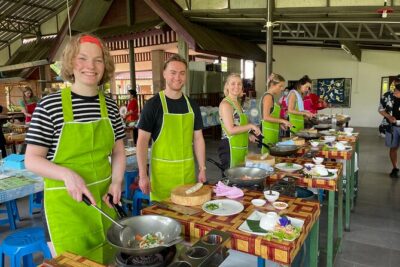
Half-Day Thai Cooking Class at Organic Farm in Chiang Mai
Read our review →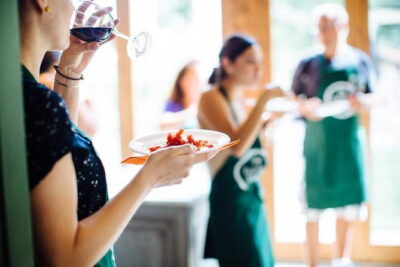
Cooking Class and Lunch at a Tuscan Farmhouse with Local Market Tour from Florence
Read our review →
Authentic Cooking Class with Market & Farm Visit
Read our review →
Hands-On Cooking Class & Farmhouse Tour on the Amalfi Coast
Read our review →

Thai Cooking Class | Since 2012 | Farm to Table
Read our review →Browse the lists this tour appears in