
Review · UBUD
Balinese Cooking Class at Organic Farm
The best part of this Ubud cooking class happens before anyone reaches the stove. You walk through Mai Organic Farm near Pejeng, learn how local produce is grown, and pick ingredients for lunch. The farm-to-table setup feels useful rather than staged, and the class keeps its group small enough for real participation.
I like the mix of food and local farming, especially the chance to see Bali’s subak irrigation system explained in its community setting. I also like the generous drink selection, from fresh juice and infused water to herbal drinks, Balinese coffee, and lemongrass tea. The main consideration is the outdoor setting: hot weather or rain can affect the experience, and the farm is outside central Ubud.
Key points at a glance
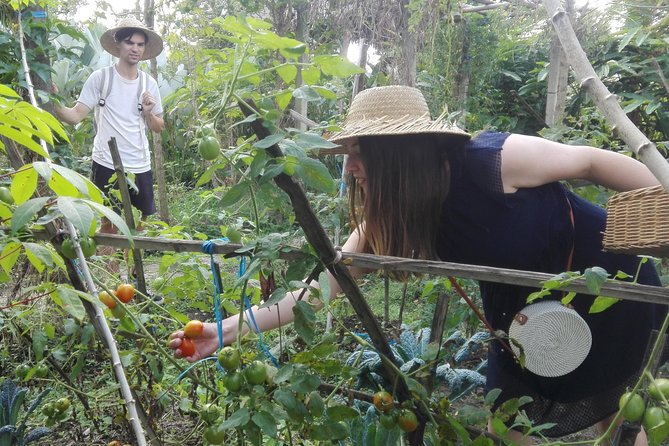
- Harvest your own lunch ingredients: Pick herbs, fruit, and vegetables around the farm before cooking.
- Cook six Balinese dishes: Dishes include tuna sate, sate lilit kebab, and corn fritters.
- Use a traditional wood-fired stove: This adds real local character, along with a little smoke and heat.
- Learn about Bali’s subak system: The farming lesson connects food with one of Bali’s UNESCO-protected cultural traditions.
- Share lunch in a garden hut: The final meal takes place in a peaceful gubuk with the cooking group.
- Keep transport simple: Round-trip pickup is offered from central Ubud hotels and rentals.
Starting at Mai Organic Farm near Pejeng
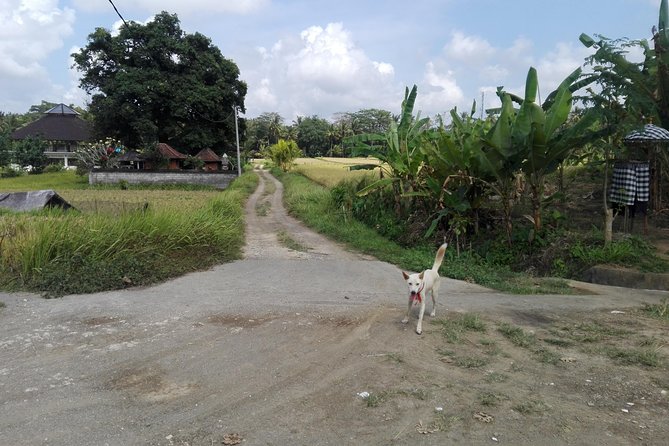
Mai Organic Farm sits in Pejeng, outside Ubud, at Subak Kana, Banjar Panglan. You can meet the group at the farm, or use the offered round-trip transfer if you are staying at a central Ubud hotel or rental.
That transfer matters. Ubud traffic can make a short trip feel slow, and the farm’s address is not the kind of place you want to find by guesswork after a busy morning. Confirm your pickup details ahead of time, since booking confirmation is sent within 48 hours and depends on availability.
The activity lasts about five hours. That gives the day a relaxed pace, with time for a farm walk, cooking, drinks, and lunch. You are not simply shown a prepared meal and sent home with a recipe. The produce, preparation, cooking, and eating all form one connected visit.
The group size is presented as capped at eight for a hands-on class, while the additional information allows a maximum of 10 people. Either way, this is a small-format activity, not a large demonstration with a chef working several steps ahead of you.
More Organic Farm Visits in the world:
- Half-Day Thai Cooking Class at Organic Farm in Chiang Mai
★ 5.0 · 19,087 reviews - Ubud: Balinese Cooking Class at an Organic Farm
★ 5.0 · 1,786 reviews - Buggy Tour to Macao Beach and Water Cave with Organic Farm
★ 5.0 · 1,201 reviews
A fresh drink and an introduction to the farm
Your visit begins with a welcome drink in a shaded part of the farm. Depending on the day, that may include fresh coconut water, as one family group described, or another drink prepared for the group.
This opening is more than a polite greeting. It gives you time to cool down, meet the instructors, and hear about Mai Organic Farm’s work with local farmers and villagers in Pejeng. The farm’s aim is to support local income while giving farmers resources to improve their way of life.
That community focus helps explain the shape of the class. You are not just buying a meal. You are paying for a direct connection with the people who grow and prepare the food, while supporting a local farming project.
The setting is shaded in places, but this remains an outdoor activity. Wear light clothing, bring sun protection, and expect to spend time walking on a working farm rather than on a paved attraction. Good weather is required, so rain can lead to a date change or a full refund.
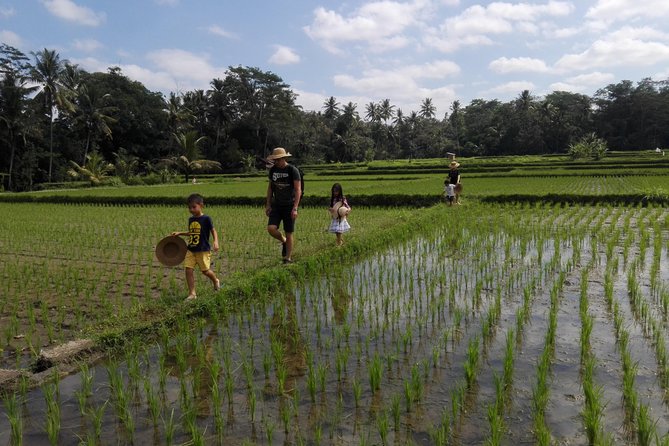
Walking the fields and learning about subak
After the welcome, you walk through the community farm with the team. This is where the class earns much of its value. You see the plants in the ground, smell spices at close range, and pick many of the ingredients that will later appear in your lunch.
You might encounter produce and herbs that are familiar from Balinese food but less familiar in their growing form. The direct connection helps you understand why local cooking often begins with fresh aromatics, vegetables, spices, and sauces rather than a long list of packaged ingredients.
The farming lesson also introduces Bali’s subak system. Subak is the traditional water-management system used by farming communities, and it is recognized by UNESCO. Here, it is presented as part of daily agriculture, not as an abstract cultural lecture.
That is a strong feature for anyone who wants more context than a recipe alone. Food in Bali is tied to land, water, family work, and community cooperation. Seeing the farm first gives the cooking a clearer meaning.
The walk may be the most physically active portion of the morning. You should be comfortable walking around an open farm in warm weather. The class is designed for mixed participation, so you can take an active role or take a quieter approach, but the farm visit is central to the experience.
From harvested produce to six Balinese dishes
At Mai Organic Farm’s cooking center, the group turns the harvested produce into six Balinese dishes. The exact menu can vary, but the food described includes tuna sate, sate lilit kebab, and corn fritters.
Sate lilit is especially interesting because it differs from the familiar skewered meat found across Indonesia. The seasoned mixture is wrapped around a stick rather than threaded onto it, creating a dish that depends on hands-on shaping. This is the kind of task that is easier to remember after you have made it yourself.
Corn fritters provide a different lesson in texture and seasoning. You work with a simple local ingredient and see how herbs and spices give it a distinctly Balinese character. The class also covers base components and sauces, so the focus is not only on assembling finished dishes.
You can participate as much or as little as you want. That makes the class workable for a family with children, a couple with different cooking confidence, or someone who prefers to watch certain steps before trying them.
The cooking takes place with a traditional wood-fired stove and an outdoor grill. This is a genuine part of the appeal, but it is also worth understanding the tradeoff. A wood fire creates a more memorable setting than a modern indoor kitchen, yet it can be hot, smoky, and less controlled. If you want a polished chef demonstration with air conditioning, choose a different type of class.
Here, the point is shared work. You chop, mix, shape, grill, and cook alongside the other people in the group. The staff guide the process and keep it approachable, but the food does not feel as if it has been made for you behind a closed door.
More Cooking Classes in the world:
- From Porto: 2 Wine Regions, Farm-to-Table Lunch & Boat
★ 4.9 · 5,724 reviews - Cooking Class and Lunch at a Tuscan Farmhouse with Local Market Tour from Florence
★ 5.0 · 4,831 reviews - Chiang Mai: Authentic Cooking Class with Market & Farm Visit
★ 4.9 · 4,546 reviews - Chiang Mai: Cooking Class with Organic Farm at Mama Noi
★ 4.9 · 1,151 reviews
Drinks that make the class feel like a full meal
The food gets the headline, but the drinks add welcome variety. The experience includes juice made with fruit and vegetables from local farms, along with infused water, herbal drinks, Balinese coffee, and lemongrass tea.
The farm juice is served after the walk, when a cool drink is particularly welcome. Lemongrass tea and Balinese coffee suit the slower pace at the end of the meal. These details make the class feel like a full cultural visit rather than a short cooking lesson squeezed between sightseeing stops.
The exact serving order may change, and not every drink necessarily appears in the same way for every group. Still, you can expect more than plain water and one welcome beverage.
The emphasis on fresh and locally grown ingredients also fits the farm’s wider purpose. You taste produce close to its source, then see how it becomes part of a shared meal.
Eating together in a quiet gubuk
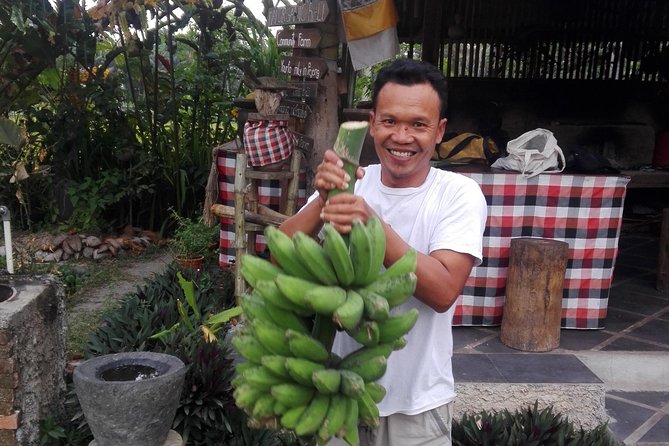
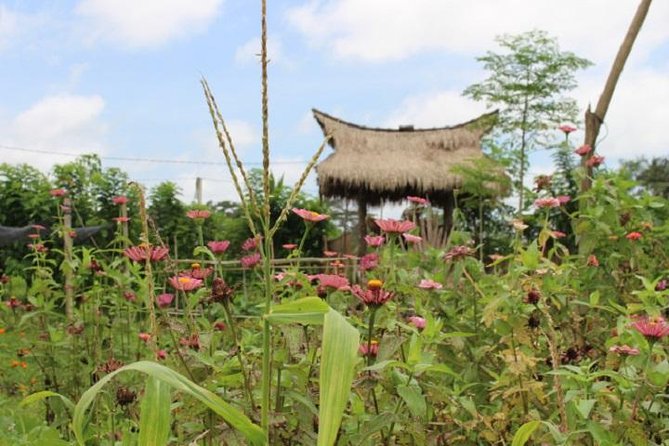
Once the cooking is finished, you sit down in a gubuk, a simple hut used for dining and relaxing. This is the reward for the work, but it also completes the social side of the experience.
A shared lunch lets you try all six dishes instead of carrying home only one recipe. You can compare flavors, ask final questions, and enjoy the meal at a slower pace. The setting is tranquil, with the farm still close around you.
For many people, this is the moment when the class feels most personal. You have picked the ingredients, prepared the food, cooked over fire, and now eat the results together. It is a communal style of dining rather than a quick restaurant stop.
Families appear to fit this format well. Children aged six, nine, 12, and 13 have taken part according to the supplied experience details, with the younger children enjoying the farm and harvesting. Still, parents should be ready for an outdoor morning and hands-on kitchen work.
Couples and friends also get plenty from the format. You have enough structure to avoid awkward downtime, but the cooking leaves room for conversation and teamwork.
What makes the value strong at $40
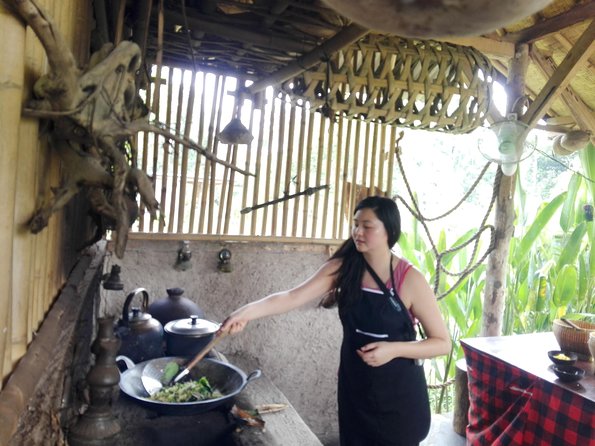
At $40 per person, this is not the cheapest way to eat lunch in Bali. You can find inexpensive food in Ubud for much less. The value comes from the number of parts included in the visit: transport from central Ubud, farm instruction, ingredient harvesting, drinks, six dishes, cooking guidance, and the meal itself.
The small group is important here. A cooking class is worth less if you spend the morning watching someone else work. With a group capped at eight in the main description, you have a better chance to handle ingredients and take part in the cooking. The listed maximum of 10 means you should confirm the final group size if close instruction is your top priority.
The community purpose adds another layer of value. Mai Organic Farm works with local farmers from Pejeng, so your fee helps support a farming project rather than only covering a restaurant-style activity.
I would consider the price fair for a half-day experience, especially if you value local food, guided context, and transport. It is less compelling if you mainly want to learn advanced cooking technique or eat a large number of dishes without spending time outdoors.
The parts that may not suit everyone
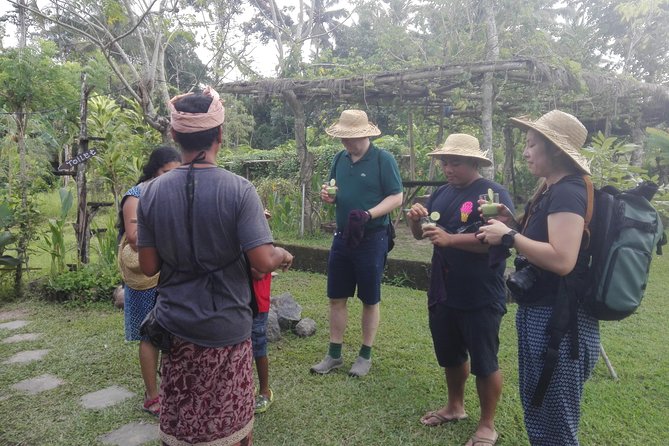
The outdoor setting is the clearest limitation. Bali can be hot, and the class requires good weather. Bring sun protection and clothing you do not mind wearing around a farm and wood fire.
The remote setting also means the activity is best planned as a half-day commitment. You will not simply pop in for a quick lesson between two tightly scheduled Ubud sights. Add this to a morning when you can let the class run at its natural pace.
The food is Balinese, not a simplified Western menu. That is a major strength for many people, but anyone with strict dietary needs should ask for confirmation before booking. The supplied details do not state how allergies, vegetarian diets, or other restrictions are handled.
There is also no promise that every participant must cook every dish. You can take part as much or as little as you like. If you want constant individual instruction, tell the team early that you want an active role.
One small practical touch is the recipe book provided at the end, according to the experience details. That gives you a way to repeat some of the dishes at home, although the wood-fired setting and farm-fresh ingredients will be harder to copy exactly.
Who should book this farm cooking class
I would recommend this for anyone who wants food to be the doorway into Balinese culture. You get farming, water management, local ingredients, cooking, and a shared meal in one outing.
It suits:
- Families who want a practical activity beyond temple visits
- Couples looking for a shared half-day experience
- First-time visitors who want context for Balinese food
- Repeat Bali visitors who have already taken standard cooking classes
- People who value small groups and community-based tourism
I would think twice if you dislike outdoor heat, wood smoke, farm walking, or group cooking. It is also not the best choice for someone seeking a formal culinary course with measured technique and professional kitchen equipment.
The class is generally booked well ahead, with an average advance booking time of about 17 days. If your Ubud schedule is fixed, reserve early and allow room for weather changes.
Free cancellation is available up to 24 hours before the start time for a full refund. Changes or cancellations inside that window are not accepted, and poor weather may result in another date or a full refund.
Should you book Mai Organic Farm?
Yes, if you want a personal, food-focused morning that connects lunch with the land where it begins. The strongest features are the ingredient harvest, the community farming lesson, and the chance to cook over a wood-fired stove before eating together in a gubuk.
The class gives you more than recipes, but it does not pretend to be a polished cooking school. Expect warmth, teamwork, farm paths, fresh drinks, and a little smoke. Book it if that sounds like your kind of Bali. Skip it only if you need an indoor setting, strict control over the menu, or a short and highly formal lesson.
FAQ
Where does the cooking class take place?
The class takes place at Mai Organic Farm Bali in Pejeng, near Ubud. The listed address is Subak Kana, Banjar Panglan, F7RW+M98, Pejeng, Tampaksiring, Gianyar, Bali 80552, Indonesia.
How long does the experience last?
The activity lasts approximately five hours.
Is pickup available from Ubud?
Yes. Round-trip pickup is offered from central Ubud hotels and rentals.
Where does the activity end?
The activity ends back at the meeting point at Mai Organic Farm.
How many people can join?
The main description says numbers are capped at eight for a hands-on experience. The additional information gives a maximum of 10 participants.
How many dishes will I cook?
You will prepare six Balinese dishes.
What dishes are included?
The dishes described include tuna sate, sate lilit kebab, and corn fritters. The complete six-dish menu is not specified.
What drinks are included?
The experience includes juice, infused water, herbal drinks, Balinese coffee, and lemongrass tea.
Does the class use a traditional stove?
Yes. Cooking takes place using a traditional wood-fired stove, along with an outdoor grill.
Can I cancel for a full refund?
Yes, if you cancel at least 24 hours before the experience start time. Cancellations made less than 24 hours before the start are not refunded. If poor weather causes the class to be canceled, you will be offered another date or a full refund.
Newly listed farm visits around the world
- Half-Day Farm Visit and Cow Milking Experience★ 5.0 · 16 reviews
- Boutique tour , Mt Maunganui, NZ farm, Rotorua lakes/geothermal★ 4.5 · 50 reviews
- Gourmet Mushroom Farm Tour in Tennessee★ 5.0 · 5 reviews
- Cozy Farm Experience with Wagon Wheels and Acoustic Meal★ 5.0 · 2 reviews
- Alpaca Farm Tours with Toffeemont★ 5.0 · 8 reviews
- Private, via beaches, Kiwi farm to Rotorua 8 lakes & Geothermal★ 5.0 · 20 reviews
- Animal farm park with free hotel pickup★ 5.0 · 2 reviews
- 1D Tour to Cingjing Farm from Taichung★ 4.5 · 3 reviews
Cooking Classes, compared.
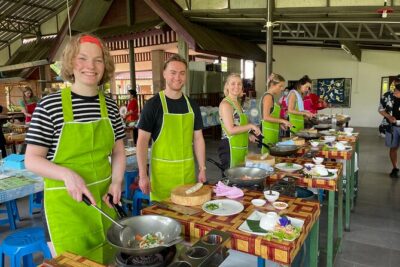
Half-Day Thai Cooking Class at Organic Farm in Chiang Mai
Read our review →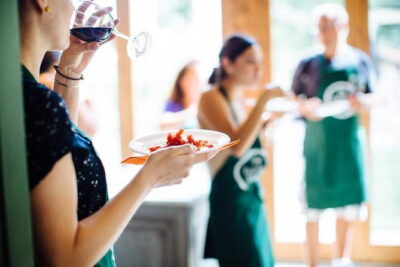
Cooking Class and Lunch at a Tuscan Farmhouse with Local Market Tour from Florence
Read our review →
Authentic Cooking Class with Market & Farm Visit
Read our review →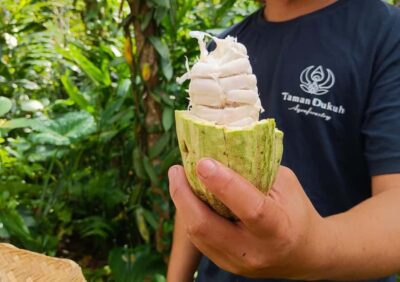

Hands-On Cooking Class & Farmhouse Tour on the Amalfi Coast
Read our review →

Thai Cooking Class | Since 2012 | Farm to Table
Read our review →Browse the lists this tour appears in