
Review · CHIANG MAI
Chiang Mai : Cook in Farm, Market tour & Go by a Local Train
The most memorable part of this five-hour outing is the shift from Chiang Mai city to rural Lamphun. You ride a local train for about 20 to 30 minutes, visit an old market, see the Chama Dhevi monument, then cook at a family home surrounded by garden herbs and vegetables. I like the market-to-farm path, and I like that you help choose your dishes instead of following one fixed menu.
The main thing to consider is the train. It adds a pleasant local touch, but one booking included only a ride to the cooking school, not back, and the extra cost may feel high if the train is your chief reason for booking. Bring your passport, even for this short rail trip.
Key points at a glance
- Local train to Lamphun: Ride for roughly 20 to 30 minutes and watch the city give way to countryside.
- Old Lamphun market: Shop for cooking ingredients and see a market used by local residents.
- Chama Dhevi monument: Add a short cultural stop in one of Northern Thailand’s oldest cities.
- Farm-to-table cooking: Pick fresh herbs and greens from an organic home garden before preparing your meal.
- Choose your own menu: Adapt dishes to your preferences with guidance from an English-speaking instructor.
- Bring your passport: This is an important practical detail for the train portion.
From Chiang Mai to a Lamphun village
This is not simply a cooking lesson in a kitchen. The food makes more sense because you first see where the ingredients are bought and then where some of them are grown.
Your day begins with hotel pickup. You are asked to wait in the lobby 20 minutes before the start time, so leave enough room in your morning plans. The included transport covers the hotel transfer, market visit, cooking activity, and train ticket.
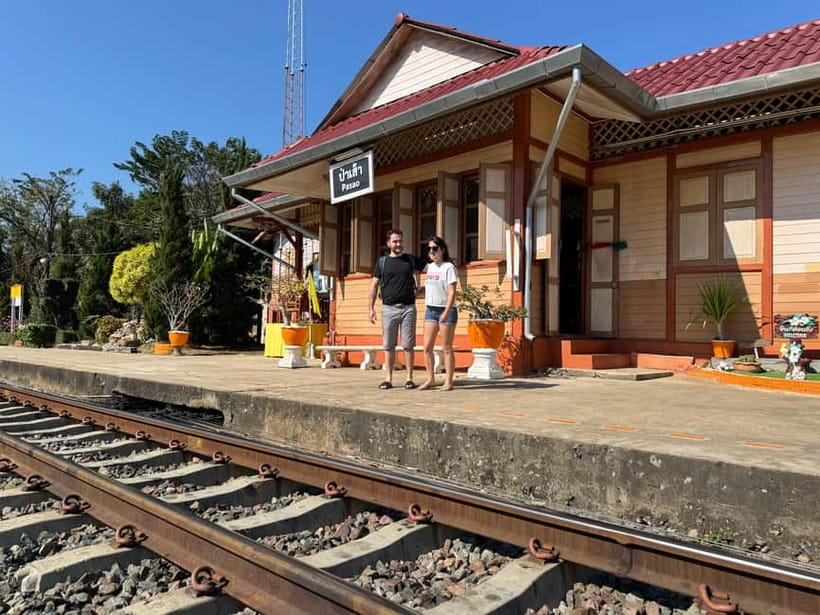
The route takes you south toward Lamphun, a smaller city with a more local pace than central Chiang Mai. The train ride lasts about 20 to 30 minutes. That is long enough to make the journey feel like part of the outing, but short enough that you will not spend half the day in transit.
I like this change of pace. A private vehicle would be quicker, but the train gives the trip a clearer sense of place. You are not just being delivered to a cooking school. You are using ordinary local transport to reach the home where the class takes place.
Still, keep your expectations in check. This is a short train ride, not a grand railway journey through Northern Thailand. One account of the experience found that the train ran only to the cooking school, rather than back again, so confirm the exact rail arrangement when you book if the return ride matters to you.
More Train Trips in Chiang Mai:
- Floating & Railway Market and Coconut Farm Tour [Optional Luxury]
★ 5.0 · 835 reviews - From Bangkok: Floating & Railway Markets Tour & Coconut Farm
★ 4.7 · 145 reviews - Palma: Orange Valley Vintage Train and Orange Farm Tour
★ 4.7 · 49 reviews
Lamphun market and the Chama Dhevi monument
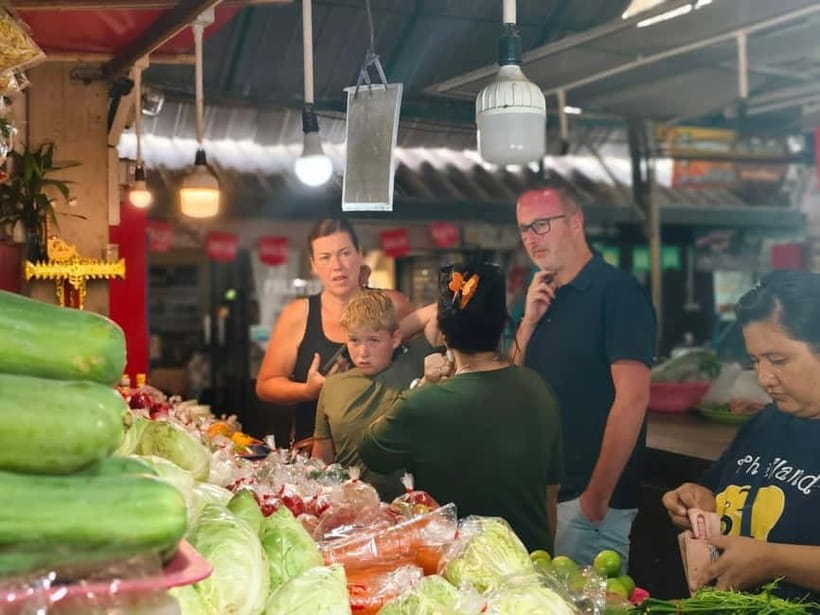
After arriving at Lamphun station, the outing continues with a stop at a local market in the old city. The market is useful, not decorative. You look at herbs, vegetables, spices, and other ingredients before heading to the cooking home.
This is where the class gains its practical edge. You can connect the ingredients on your plate with the raw items sold in the market. Thai cooking depends on balance, freshness, and careful use of salt, sweetness, sourness, and spice. Seeing the ingredients before they are chopped or cooked helps you understand that balance in a way a standard kitchen lesson may not.
You also have time to shop for ingredients and see the Chama Dhevi monument, one of Lamphun’s best-known historic landmarks. The stop is brief, so do not expect a full city tour. Instead, treat it as a useful introduction to Lamphun before you move on to the countryside.
The market visit may be especially valuable if you have already spent several days in Chiang Mai’s tourist areas. You get a look at an older local center and a chance to see how food shopping fits into everyday life. The tradeoff is that the pace depends on the group and the cooking schedule. This is not a long, unhurried market study.
Arriving at the organic family garden
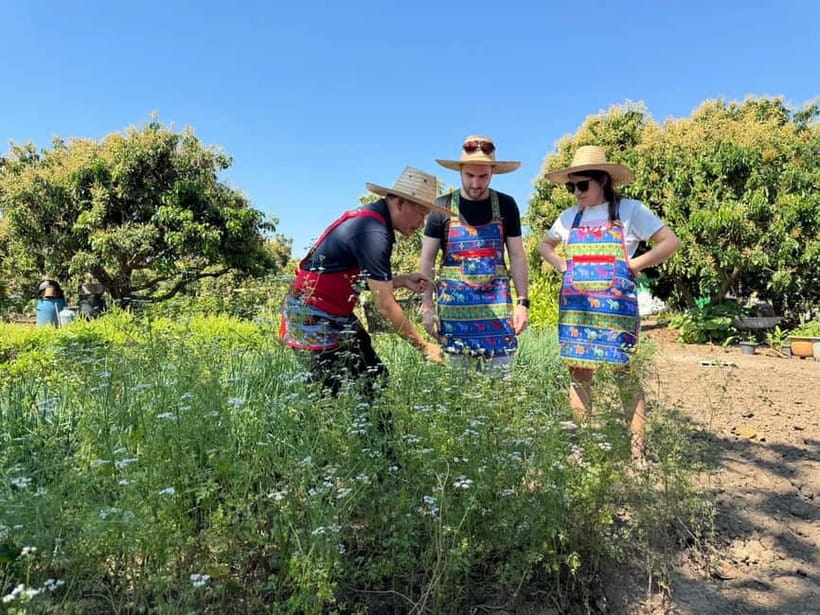
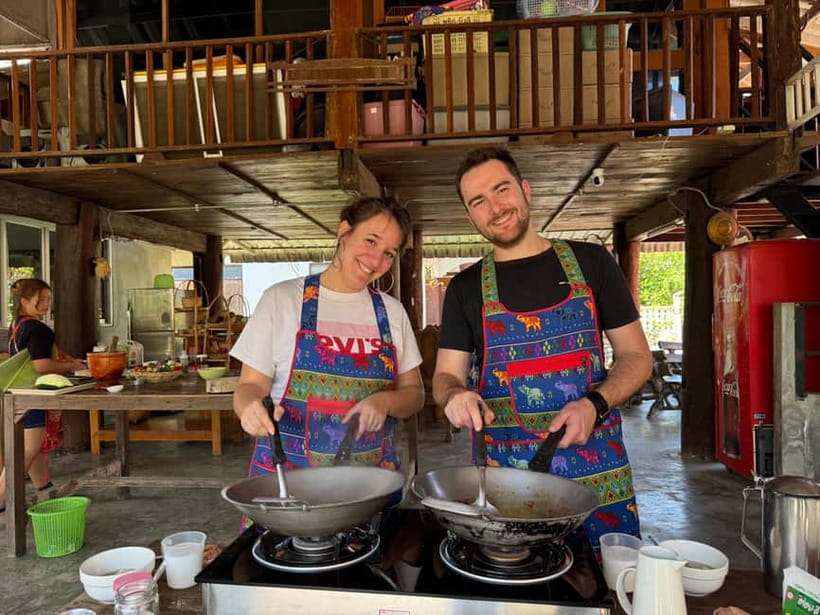
From the market, you head to a small village and the family home used for the cooking activity. You receive a welcome drink and snacks, then help shape the menu before collecting fresh ingredients from the garden.
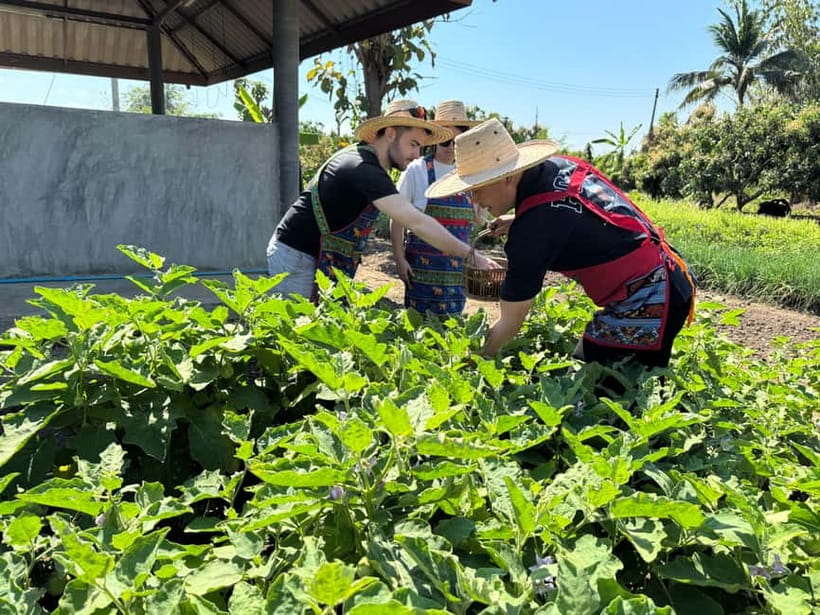
The hosts grow their own organic kitchen herbs, spices, and cooking ingredients. You may gather herbs, greens, and vegetables for the dishes you are about to prepare. That simple step gives the class its strongest identity. The garden is not an afterthought added for photographs. It supplies part of the meal.
I would pay attention here even if you are not an avid gardener. Ask about the plants, smell the herbs, and notice how different fresh ingredients feel from the packaged versions you may know at home. The instructors can explain what is growing and how it fits into Thai food.
The setting is outdoors and relaxed, according to the information provided for the experience. That can be a real pleasure, especially if you prefer a home setting to a formal cooking studio. It also means you should wear comfortable clothing and be ready for a less polished, more personal environment.
The instructors named in the experience include Cat, Mac, Shisha, and Poppy. Cat is described as patiently explaining each step and helping with menu changes. Shisha and Poppy are praised for explaining the fruits and vegetables in the garden and for creating a friendly setting. The exact instructor depends on the date of your booking.
Choosing dishes that fit your taste
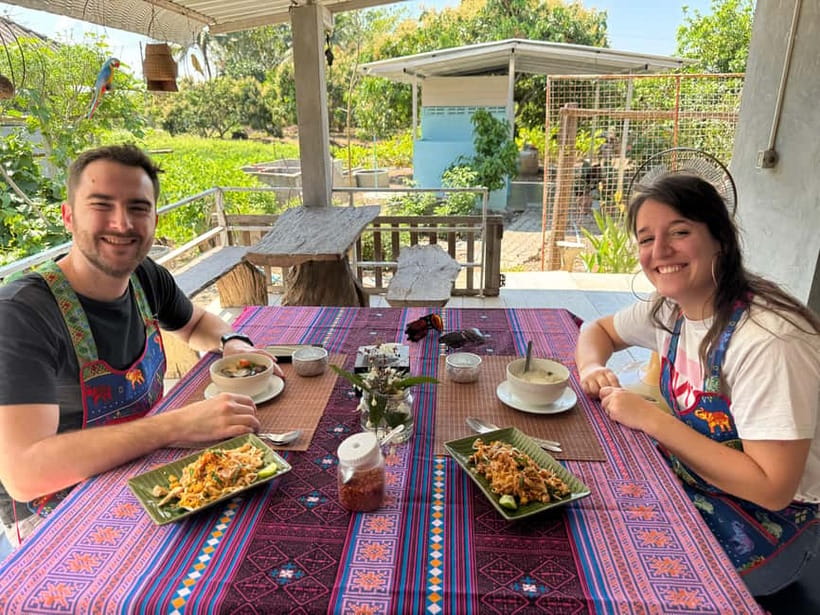
Before cooking, you design your own favorite menu. This is a major advantage over classes that give every participant the same three dishes, especially if you have strong preferences about spice, meat, or vegetables.
The menu can be adapted to your needs, but the supplied information does not promise a specific list of dishes or dietary program. If you have allergies, a strict diet, or foods you cannot eat, raise the issue before booking and confirm what can be changed.
The choice also makes the class more useful after you return home. You are not only memorizing a recipe. You are learning how to select ingredients and adjust a dish to your own taste.
A cooking class in Thailand should explain more than chopping and frying. The best lesson here is the idea of balance. You learn how salt, sweet, sour, and spicy elements work together, and why a small amount of one ingredient can change the whole dish.
The pace is meant to be educational and enjoyable, not competitive. You do not need to be an experienced cook. One couple who had taken cooking classes in other places found the lesson useful even though they did not consider themselves exceptional cooks. That is the right audience for this activity: curious beginners, home cooks, and people who want a personal introduction to Thai food.
More Market Tours in Chiang Mai:
- Chiang Mai: Authentic Cooking Class with Market & Farm Visit
★ 4.9 · 4,546 reviews - Evening Cooking Class in Organic Farm with Local Market Tour
★ 5.0 · 394 reviews - Morning Cooking Class in Organic Farm with Local Market Tour
★ 5.0 · 157 reviews - Morning Thai Cooking with Grandma – Market Visit & Farm Tour
★ 5.0 · 148 reviews
Cooking and eating at the village home
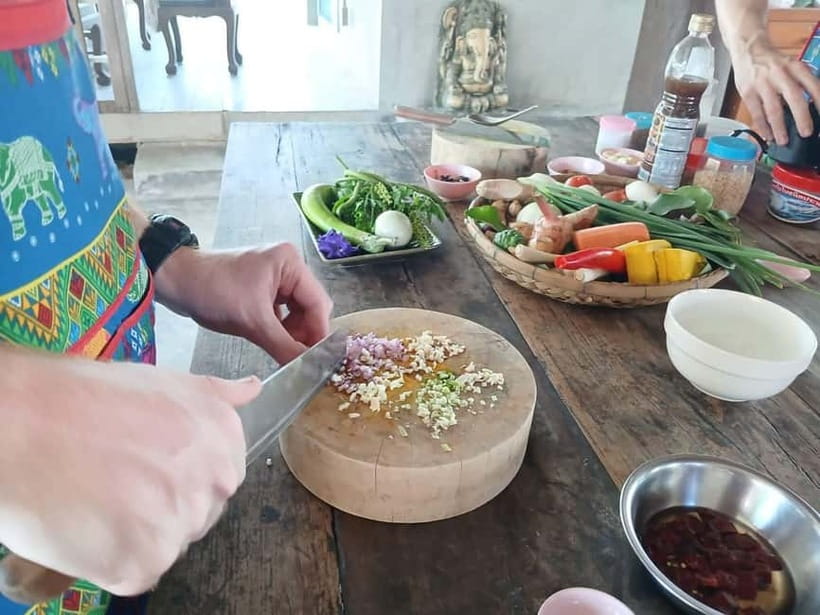
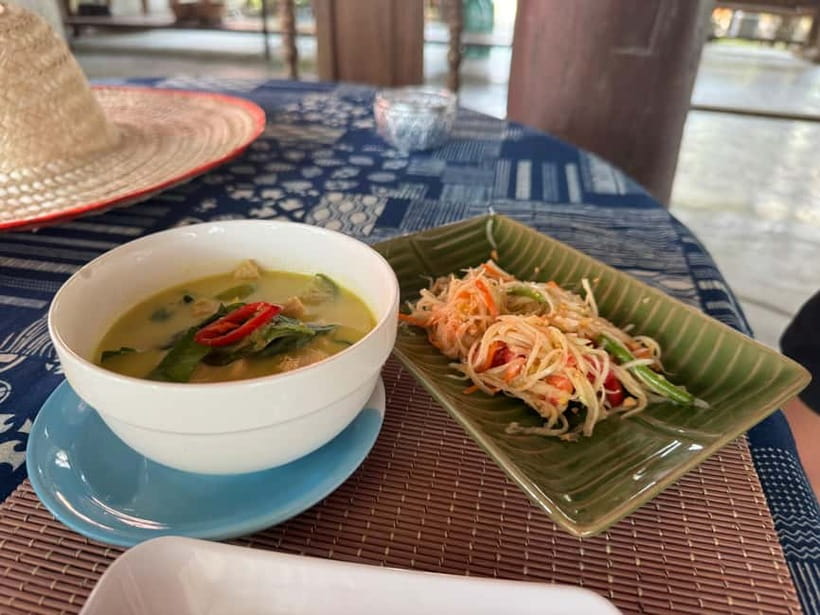
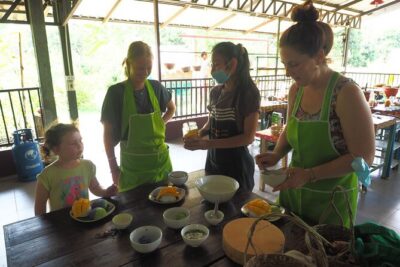
Once the ingredients are collected, you prepare and cook the dishes with the instructor. The class includes all cooking ingredients and drinking water, so you do not need to bring supplies.
The hands-on format matters. You are not sitting at a demonstration while someone else does the work. You take part in preparing the food, then eat what you have made. That connection between garden, preparation, and meal gives the experience a clear rhythm.
Expect the setting to feel more personal than a large commercial school. You may spend time talking with the instructors about modern Thai culture and everyday food. The activity has a social side, but it is not described as a party or a drinking session. Beer and other alcohol are not included, and alcohol and drugs are not allowed.
The finished food has been a strong part of the experience for many people, but the value is not only in the meal. You leave with practical ideas for improving your own Thai cooking, plus an online PDF recipe book. The recipe book is especially useful because a lesson can move quickly once several dishes are cooking at once.
Do not expect professional restaurant service. The point is to cook at a home and farm setting, with the host guiding you through the food. If you want a polished kitchen, a large menu, or a chef-led demonstration with no garden stop, another class may suit you better.
Is the $57 price good value?
At $57 per person, the cost includes hotel pickup and drop-off, the local train ticket, the market visit, ingredients, drinking water, the cooking lesson, and the online recipe book. Those inclusions make the price easier to justify than a cooking class that charges separately for transport.
The strongest value comes from the full chain of experiences. You get a train ride, a Lamphun market, a historic monument, a village visit, a garden tour, and a meal. If you want only to learn a few Thai recipes, you can find simpler cooking classes that may cost less.
The train is the part that affects the value calculation most. One booking felt the tour cost about $30 more than other cooking options because of the rail element, but that person also felt the train experience was incomplete. I would book this activity for the combination of train, market, garden, and cooking, not for the train alone.
The price also works better if you value small-group contact and a family setting. You are paying for the route and the setting as much as for the food. If you are happy to arrange your own transport and only want a kitchen lesson, compare other options before deciding.
Who should book this five-hour experience?
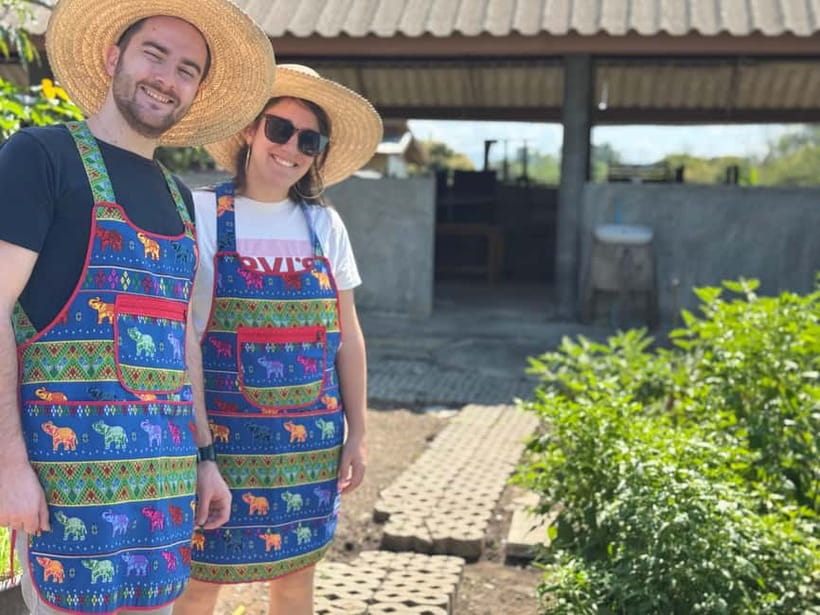
I would recommend it to you if you want food to lead you into a different part of Northern Thailand. It suits couples, solo visitors, and small groups who like practical activities and local transport.
It is a good fit for:
- First-time visitors who want an introduction to Thai ingredients
- Home cooks who want recipes they can use later
- People who prefer a village home to a formal cooking school
- Anyone interested in Lamphun as well as Chiang Mai
- Visitors who enjoy a short train ride and a change of scenery
- Beginners who want patient, hands-on instruction
It may not suit you if you want a long railway journey, a detailed historical tour of Lamphun, or a fixed return train ride. It is also not suitable for children under five or people over 95. The activity is listed in English, so you should be comfortable following an English-speaking instructor.
Wear comfortable clothes. You will be moving between the market, garden, and cooking area, and practical clothing will make the day easier.
Booking advice and final call
You can cancel up to 24 hours before the activity for a full refund, and you can reserve now and pay later. Those terms are useful if your Chiang Mai schedule is still changing.
Before you confirm, check the start time and ask how the return transport works, particularly if the train is a major reason you are interested. Wait in your hotel lobby 20 minutes before pickup, and bring your passport for the rail ride.
I would book this experience if you want a food-focused day outside Chiang Mai and like the idea of learning in a real family setting. The market, garden, and menu choices give it more substance than a cooking class held entirely indoors. I would skip it if you want the cheapest cooking lesson available or expect a complete train excursion in both directions.
FAQ
How long does the experience last?
The activity lasts five hours.
Where does the experience take place?
It begins in Chiang Mai with hotel pickup, then continues toward Lamphun, including a local market, the Chama Dhevi monument, and a village home with an organic garden.
Is hotel pickup included?
Yes. Round-trip transportation to and from your hotel is included. You should wait in the hotel lobby 20 minutes before the start time.
Is the train ticket included?
Yes. A local train ticket is included in the price.
How long is the train ride?
The train journey takes approximately 20 to 30 minutes.
Do I need to bring my passport?
Yes. Bring your passport for the train portion of the experience.
Is the cooking class taught in English?
Yes. English is the listed language for the instructor.
Are ingredients included?
Yes. The cooking ingredients and drinking water are included.
Do I receive recipes after the class?
Yes. An online recipe book in PDF format is provided.
Is alcohol included or allowed?
No. Beer and alcohol are not included, and alcohol and drugs are not allowed.
Can I cancel for a full refund?
Yes. You can cancel up to 24 hours in advance for a full refund.
Is the activity suitable for young children?
The activity is not suitable for children under five years old.
Newly listed farm visits around Chiang Mai
- Authentic Thai Cooking Class and Farm Visit in Chiang Mai★ 5.0 · 66 reviews
- Aroidee’s Farm-Fresh Thai Cooking Experience★ 5.0 · 8 reviews
- Full-Day Thai Cooking Class with Grandma – Market and Farm Tour★ 5.0 · 48 reviews
- One Day Tour Doi Suthep Temple, Palad Temple, Orchid Farm, Longneck hill tribe village (Private tour)★ 5.0 · 7 reviews
- Chiang Mai Farm Life & Khao Soy Tasting on a Half-Day Boat Tour★ 4.5 · 64 reviews
- Local Farming Experience in Chiang Mai, Thailand★ 5.0 · 3 reviews
- Cooking Class with Organic Farm in Chiang Mai★ 5.0 · 4 reviews
- Chiang Mai Mae Ping River Cruise and Thai Farmer House Visit★ 4.0 · 3 reviews
Chiang Mai Farm Tours, compared.
Half-Day Thai Cooking Class at Organic Farm in Chiang Mai
Read our review →
Authentic Cooking Class with Market & Farm Visit
Read our review →
Evening Cooking Class in Organic Farm with Local Market Tour
Read our review →
Morning Thai Cooking with Grandma – Market Visit & Farm Tour
Read our review →Browse the lists this tour appears in