
Review · SIEM REAP
Lotus Silk Farm: Discover Learn and Experiment the Lotus Flower
The clever part of this three-hour Siem Reap experience is that the lotus is not just something pretty to photograph. You’ll pull fiber from its stalks, work with seed pods, make paper and incense, and finish with a boat ride among the flowers. I like the practical connection between local craft and daily life, and I like that you leave with several handmade keepsakes rather than a quick look around a farm.
The main consideration is the price, $47, which is more than a simple garden visit. You’re paying for several guided workshops, materials, tea, and the boat ride, so it makes best sense if you enjoy making things and want a slower morning beyond Angkor’s major temples.
Key points to know before booking
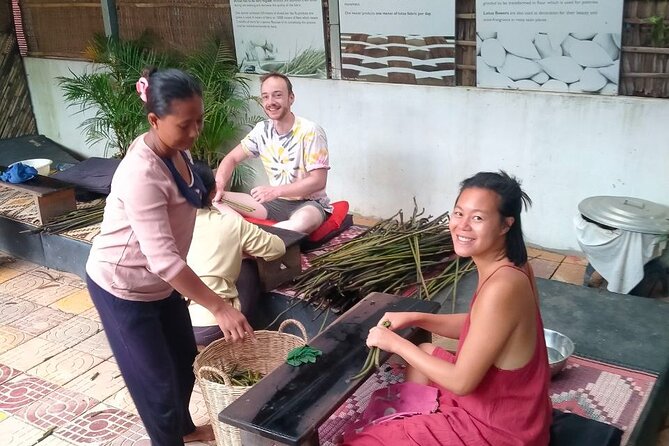
- Six lotus-based workshops: Make items such as a seed-pod bracelet, lotus paper, incense sticks, yarn, and other small crafts.
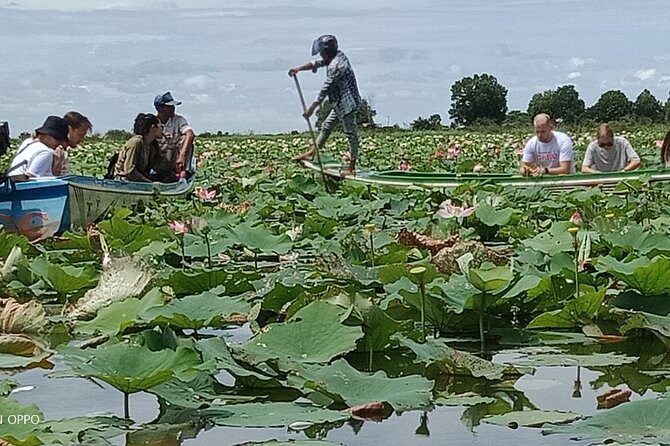
- A boat ride completes the visit: Travel out to the lotus field and see the flowers from the water.
- The lotus is used from root to blossom: The activities cover fibers, petals, seed pods, textiles, botanical uses, jewelry, and tea.
- Small groups matter here: The maximum of 15 people gives you more room to follow demonstrations and ask questions.
- You get useful souvenirs: Your own handmade items can travel home as gifts or mementos.
- Weather affects the plan: The activity requires good weather, with a different date or full refund offered if poor conditions cause cancellation.
Why the lotus farm is more than a photo stop
At first glance, a lotus field seems like a peaceful backdrop for photographs. This visit gives the flower a practical story. You see how different parts of the plant can become tea, fiber, paper, incense, beads, jewelry, and textiles.
That hands-on approach is the strongest reason to choose this experience. Instead of simply hearing that lotus fiber can be used in cloth, you extract strands from the stalk yourself. Instead of buying a finished bracelet, you work with lotus seed pods and make one.
I find that kind of activity especially useful in Siem Reap. After visiting the temples, you may want something that connects you with present-day Cambodian craft rather than another historic monument. The farm offers that change of pace while still giving you a clear look at a local plant and the artisans who work with it.
The setting also keeps the morning gentle. You begin with lotus tea, spend time at the craft tables, and then head out on the water. The boat ride is not the whole point of the visit, but it gives the workshop a quiet finish.
More Silk Farm Tours in Siem Reap:
- Siem Reap Lotus Silk Farm Discovery tour & Lake experience
★ 4.7 · 291 reviews - Siem Reap: Lotus Silk Farm- Tour, Lake & Masterclass
★ 4.9 · 77 reviews - Angkor Silk Farm & Lotus Silk Farm: Siem Reap Discovery Tour
★ 4.8 · 68 reviews
Starting with lotus tea and local craft
The activity begins at Lotus Silk Farm Siem Reap, at 11 Road 63 in Phnom Kraom, postal code 17250. The meeting point is also the end point, so you return there after the boat ride.
A cup of lotus tea starts things off. This is a small detail, but it sets the tone well. You are not rushed straight into a demonstration. The tea introduces one of the simplest ways the lotus can be used, before the session moves into more involved craft work.
You’ll also gain an introduction to the lives of the artisans connected with the farm. The available details do not name individual guides, so you should not expect a particular host by name. The important part is the chance to see how agricultural material becomes a finished object through patient handwork.
The group limit of 15 is a real advantage. Craft demonstrations are hard to follow when you are standing behind a crowd. A smaller group gives you a better chance to see how each material is handled and to get help when your first attempt does not look quite right.
Six workshops with very different results
The workshops are the heart of the experience. They cover several areas, including textiles, sustainable fashion, botanical uses, jewelry, and tea. Each one shows a different part of the lotus plant.
You may work with the following items during the session:
- Lotus fiber and yarn: Pull fine strands from the stalks and learn how this material can be used in textile work.
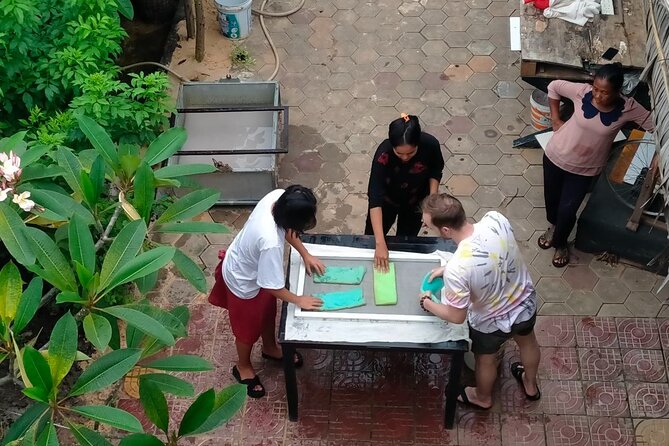
- Lotus paper: Turn plant material into a simple paper product.
- Seed-pod jewelry: Make a bracelet or necklace using dried lotus seed pods as beads.
- Incense sticks: Prepare incense using lotus-related materials.
- Folded lotus flowers: Learn how to shape the flower into a decorative form.
- Tea and botanical products: See how petals and other plant parts can be prepared for use.
The exact order may vary, and the supplied details do not give a minute-by-minute schedule. That is probably a benefit. A craft lesson works better when it allows time for people to finish what they are making instead of forcing every activity into a strict timetable.
The seed-pod bracelet is one of the most appealing souvenirs. It is light, easy to pack, and clearly tied to the plant you have just studied. The paper and incense offer a different sort of memory, while the fiber work gives you a better feel for the skill behind lotus textiles.
You should keep your expectations realistic. These are introductory workshops, not professional craft training. You’ll experiment with each material and make simple pieces under guidance. The value comes from understanding the process and trying it yourself, not from producing flawless objects.
Pulling lotus fiber from the stalk
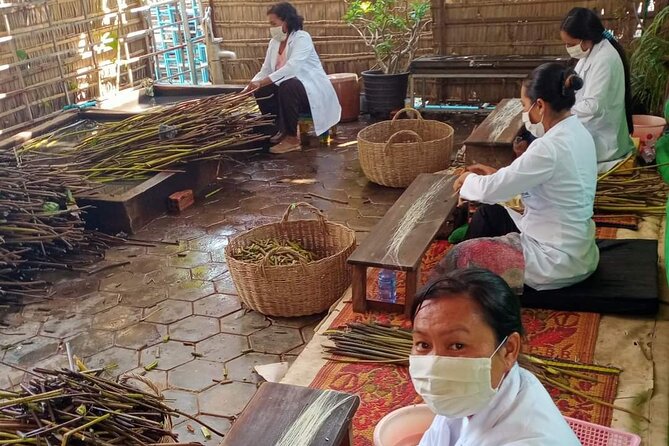
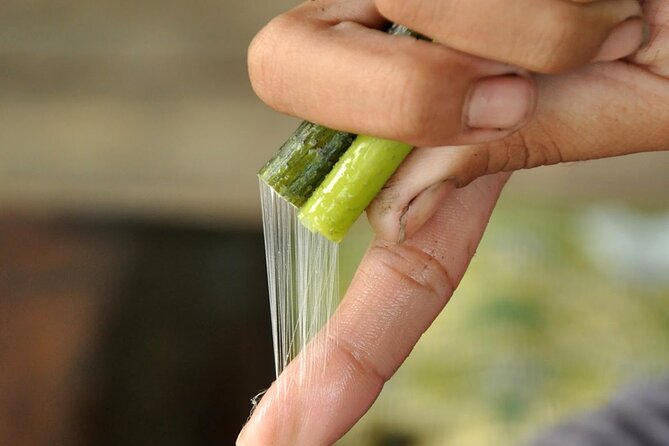
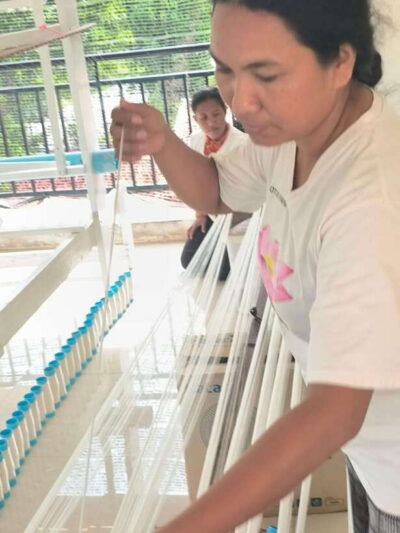
The fiber demonstration is likely to be the most unusual part of the morning. Lotus stalks can produce fine strands, and you get to extract them rather than simply seeing a finished thread.
This is where the visit moves beyond a standard souvenir-making class. The material begins as a wet plant stalk, and the process shows how much manual effort is involved before a thread can become yarn or cloth. You’ll get a quick lesson in both the plant and the patience needed to work with it.
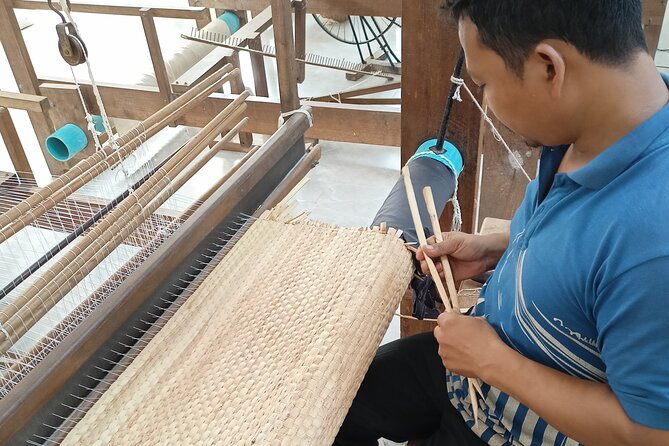
The activity also gives context to the farm’s focus on textiles and sustainable fashion. Lotus fiber is not presented as an abstract environmental idea. You handle it, see its delicate texture, and understand why turning it into fabric requires care.
Do not expect to produce a large amount of yarn. The experience is about learning the method and experimenting with the strands. That makes it suitable for curious adults, families, and anyone who enjoys seeing how ordinary materials become handmade goods.
More farm tours around Siem Reap:
- Siem Reap: Khmer Water Blessing by Monk and Lotus Farm Visit
★ 5.0 · 15 reviews - Siem Reap: Silk Farm & Countryside Offbeat Jeep Tour
★ 4.5 · 11 reviews - Traditional Khmer Water Blessing by Monk and Lotus Farm Visit
★ 5.0 · 10 reviews - Half Day Trip: Silk Farm, Satcha, and Senteur d’Angkor Tour
★ 4.7 · 10 reviews
Making paper, incense, and jewelry
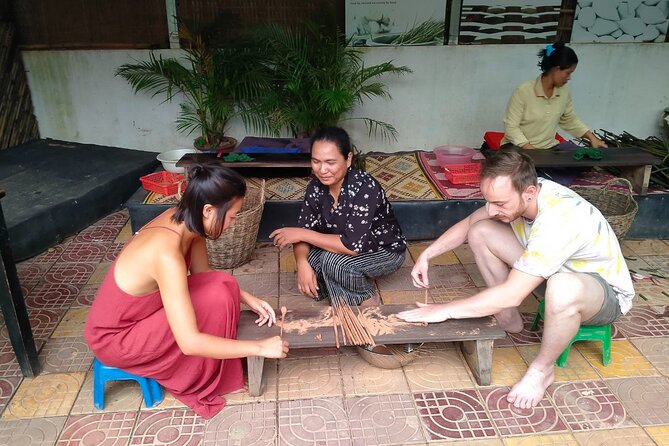
The other craft stations add variety. Making paper gives you a chance to work with processed plant material, while preparing incense shows another botanical use. These tasks are slower and more tactile than taking photographs, but they are also easier to remember because your hands are involved.
The lotus seed-pod jewelry is especially approachable. The pods can be strung as beads, creating a direct link between the raw plant and the finished necklace or bracelet. A handmade item like this makes a more meaningful gift than a generic souvenir from a tourist shop.
You may also learn to fold the lotus flower. That activity focuses on the blossom itself and adds a decorative element to the more technical fiber and paper work.
I like the mix because no single craft dominates the morning. If paper is not your thing, the bracelet may appeal to you. If jewelry does not interest you, the fiber extraction or incense work offers another way to take part. The variety helps justify the three-hour duration.
The boat ride through the lotus field
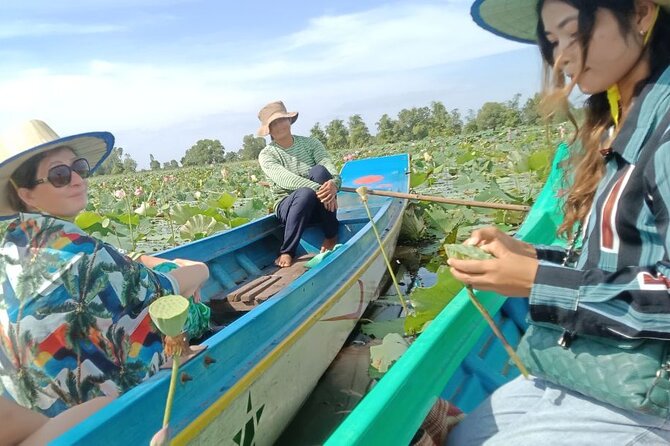
After the workshop portion, you take a boat ride to the lotus field. This is the calmest part of the experience and one of its most attractive features.
From the water, the flowers and water lilies become the focus. The ride gives you a different view of the growing area than you get from the craft tables. It also breaks up the hands-on work with a quiet stretch outdoors.
The boat ride is weather dependent, so conditions can affect the experience. The tour requires good weather, and poor conditions may lead to a rescheduled date or a full refund. If you are booking around a tight temple schedule, leave some flexibility rather than treating this as an activity that must run in all conditions.
The available information does not state how long the boat ride lasts, what type of boat is used, or what wildlife you might see. I would book it for the peaceful setting and lotus views, not for a promised wildlife trip or a long cruise.
Is $47 fair value?
At $47 per person, this is not the cheapest short activity in Siem Reap. It becomes better value when you count everything included in the morning: tea, several guided craft activities, materials, handmade souvenirs, insight into local artisans, and the boat ride.
A simple boat trip would offer scenery but little context. A basic craft class might teach you one activity and send you home. This experience combines both, with the plant itself tying the pieces together.
The price is easiest to justify if you take part fully. If you plan to watch from the side and leave quickly, you may feel you paid too much. If you enjoy making things, asking questions, and keeping what you produce, the package has more appeal.
The small-group limit of 15 also matters. You are not paying for a giant demonstration where the instructor works at a distance. The group remains compact enough for a more relaxed session, although the exact amount of individual attention can vary.
Who will enjoy this experience most?
I would recommend the farm to anyone who wants a break from temple touring. It suits visitors who like local crafts, botanical subjects, sustainable products, and gentle outdoor activities.
It is also a good choice for families and couples looking for something they can do together. The simple projects create an easy shared activity, and the finished bracelet, paper, or incense can become a small reminder of the day.
Photographers may enjoy the lotus field and boat ride, but this is not primarily a photography tour. The workshops take up much of the morning, and the main reward is participation.
Likewise, anyone seeking a fast sightseeing stop should look elsewhere. Three hours is a meaningful block of time, and the experience works best when you allow yourself to slow down. You need enough patience to follow demonstrations and try unfamiliar tasks.
Practical details for planning your morning
The activity lasts approximately three hours and ends back at the starting point. A mobile ticket is available, and confirmation is received at the time of booking.
The meeting point is Lotus Silk Farm Siem Reap, 11 Road 63, Phnom Kraom, Cambodia. The location is near public transportation, though the supplied details do not specify which routes or services are most convenient.
Because the activity depends on good weather, check the forecast before setting aside your morning. If poor weather cancels the experience, you are offered another date or a full refund.
You can cancel for a full refund up to 24 hours before the start time. Cancellations or changes made less than 24 hours before the start time are not refunded or accepted. The cut-off follows local time, so pay attention to the time zone when booking from abroad.
The honest drawbacks
The tour’s main weakness is not a problem with the concept. It is the lack of detail about the exact schedule. You know what kinds of activities are involved, but not how long you spend at each station or how long the boat ride lasts.
That matters if you have a packed day. You should keep a little breathing room around the three-hour estimate rather than scheduling a temple visit immediately afterward.
The experience also depends on your interest in crafts. Some visitors may find six small workshops more rewarding than one long lesson. Others may prefer a deeper session focused on a single product. This farm chooses variety over mastery.
Finally, the price may feel high to anyone comparing it with a short local outing. You are paying for the full combination of instruction, materials, souvenirs, tea, and the boat ride. If those parts appeal to you, the value is solid. If you only want to see lotus flowers, a cheaper visit may suit you better.
Should you book the Lotus Silk Farm?
Book it if you want a hands-on Cambodian experience that offers more than scenery. The combination of lotus tea, fiber extraction, paper, incense, seed-pod jewelry, and a boat ride gives you a fuller picture of how one plant can support many forms of local craft.
I would especially choose it after Angkor Wat, when a quiet morning and personal activity sound better than another large sight. The farm does not replace the temples, but it adds a practical, human side to a Siem Reap visit.
Skip it if your schedule is very tight, your main goal is photography, or you do not enjoy making things. For everyone else, the small group, useful souvenirs, and peaceful lotus-field ride make the $47 price easier to defend.
FAQ
How long does the Lotus Silk Farm experience last?
The activity lasts approximately three hours.
Where does the experience start and finish?
It starts at Lotus Silk Farm Siem Reap, 11 Road 63, Phnom Kraom, Cambodia, and ends back at the same meeting point.
How many people can join the activity?
The group has a maximum of 15 participants.
What will I make during the workshops?
The workshops use lotus materials to make items such as a bracelet, yarn, paper, incense sticks, and a necklace. You may also learn to fold a lotus flower and prepare lotus-related products.
Is a boat ride included?
Yes. The experience finishes with a boat ride to the lotus field, where you can see lotus flowers and water lilies from the water.
Is the activity affected by weather?
Yes. The experience requires good weather. If poor weather causes cancellation, you can choose another date or receive a full refund.
What is the cancellation policy?
You can cancel up to 24 hours before the start time for a full refund. Cancellations or changes made less than 24 hours before the start time are not accepted, and the amount paid is not refunded.
Newly listed farm visits around Siem Reap
- Full Day Siem Reap Farm Tour with Cooking Class and Monk Blessing★ 5.0 · 6 reviews
- Traditional Khmer Water Blessing by Monk and Lotus Farm Visit★ 5.0 · 10 reviews
- Siem Reap: Silk Farm & Countryside Offbeat Jeep Tour★ 4.5 · 11 reviews
- Banteay Chhmar Temple & Silk Farm Private Day Trip from Siem Reap★ 5.0 · 6 reviews
- Tuk Tuk Journey: Exploring Rural Life and Silk Farm Craftsmanship★ 5.0 · 4 reviews
- Siem Reap: Scenic Countryside & Silk Farm Jeep Tour★ 5.0 · 2 reviews
- Siem Reap: Khmer Water Blessing by Monk and Lotus Farm Visit★ 5.0 · 15 reviews
- Half Day Trip: Silk Farm, Satcha, and Senteur d’Angkor Tour★ 4.7 · 10 reviews
Silk Farm Tours, compared.
Siem Reap Lotus Silk Farm Discovery tour & Lake experience
Read our review →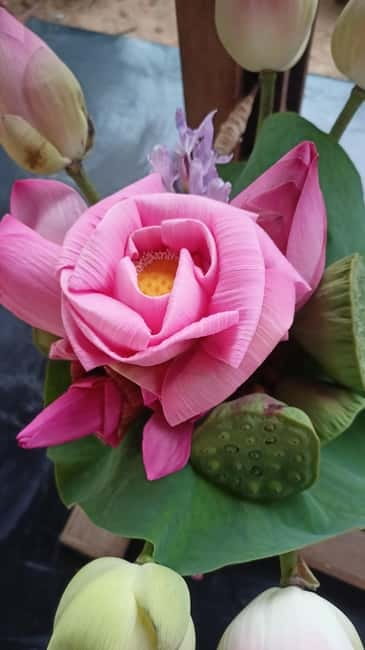
Angkor Silk Farm & Lotus Silk Farm: Siem Reap Discovery Tour
Read our review →
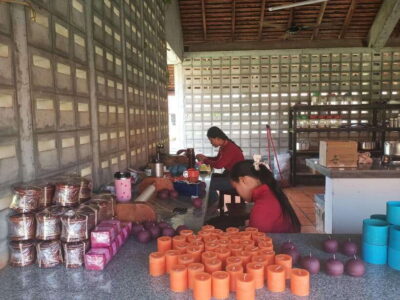
Half Day Trip: Silk Farm, Satcha, and Senteur d’Angkor Tour
Read our review →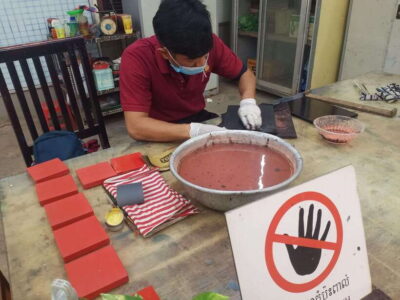

Banteay Chhmar Temple & Silk Farm Private Day Trip from Siem Reap
Read our review →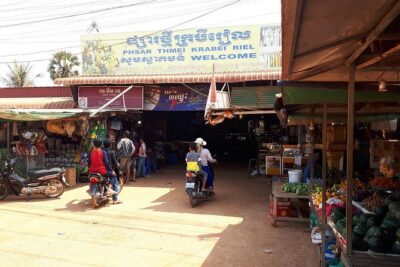
Tuk Tuk Journey: Exploring Rural Life and Silk Farm Craftsmanship
Read our review →Browse the lists this tour appears in