
Review · ITALY
Matera: Pasta Cooking Class Old Farmer Style in a Sassi Cellar
Matera’s old stone caves make a memorable kitchen. In this small class, Cosimo and Lorenzo show you how local families turn simple ingredients into Strascinate al tegamino, an ear-shaped pasta served in a traditional farmer-style meal. You knead, shape, cook, and eat in the same Sassi setting where the city’s old domestic life still feels close at hand.
I like the hands-on pasta work, especially the chance to compare your first uneven shapes with the ones you make a few minutes later. I also like the relaxed cultural exchange: the hosts talk about Matera, childhood food traditions, and the cave itself while you eat bruschetta and pasta. The main drawback is practical: the meeting point can be difficult to find, and one booking suffered a serious no-show problem, so confirm directions and contact details before setting out.
Key points at a glance
- Cook in a Sassi cellar: The stone cave is part of the experience, not just a backdrop for the meal.
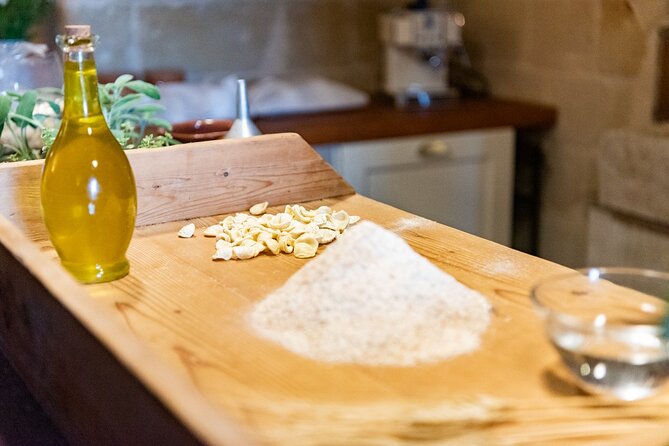
- Make Strascinate by hand: You learn to knead dough and shape the distinctive ear-like pasta.
- Meet local hosts Cosimo and Lorenzo: Their stories connect the food to family life and Matera’s traditions.
- Eat a simple regional menu: Bruschetta comes first, followed by pasta with tomato sauce in the traditional style.
- Keep the group small: The class allows no more than eight people, with the private format giving the session a personal feel.
- Plan for a full morning: The stated length is about three hours, though the meal and conversation can make it longer.
A pasta class inside Matera’s ancient stone world
Matera’s Sassi districts are made from pale stone houses, stairways, churches, and cave rooms cut into the ravine. This class uses that setting in a useful way. You are not simply eating in an old room after a cooking lesson. You are preparing food inside the kind of space that makes Matera’s past easier to picture.
The class begins at 10:30 am at Recinto Santa Maria, 8, in Matera. From there, you meet the hosts and settle into the cave space used for the meal and cooking session. The activity ends back at the meeting point, so you do not need to arrange a second pickup point.
The private format matters here. With a maximum of eight people, you should have room to work the dough and ask questions without standing behind a large demonstration group. It also allows the hosts to keep the pace loose. This is less like a timed lesson and more like a long family lunch with cooking woven into it.
More Cooking Classes in Italy:
- Cooking Class and Lunch at a Tuscan Farmhouse with Local Market Tour from Florence
★ 5.0 · 4,831 reviews - Hands-On Cooking Class & Farmhouse Tour on the Amalfi Coast
★ 5.0 · 956 reviews - Sorrento: Farm Tour with Cheese Tasting & Pizza Making Class
★ 5.0 · 503 reviews
Meeting Cosimo and Lorenzo in the Sassi
The strongest part of this experience is the human connection. Cosimo and Lorenzo are both from Matera, and their role goes beyond showing you a recipe. They explain why local food matters, share stories from their lives, and connect the meal to the city and its old cave homes.
That makes the class useful even if you are not especially interested in cooking. You get a view of Matera through food, family habits, and the practical traditions of Southern Italy. The hosts have been described as warm, funny, sincere, and easy to talk with, but the important point for you is the format: conversation is part of the morning, not something squeezed in after the lesson.
You may also hear about the cave and the home connected with the cooking space. The stone walls give the meal a strong sense of place, though you should remember that a cave room may feel more rustic than a modern cooking school. If you want polished equipment and a formal demonstration, this may not be your ideal class. If you prefer a personal setting with stories and shared food, it fits well.
Starting with bruschetta and local food customs
The meal begins with bruschetta. That simple course gives the hosts a chance to talk about bread, fresh toppings, and the role of everyday ingredients in Southern Italian cooking.
A longer version of the meal has also included a pumpkin and bread stew before the pasta, though the listed sample menu specifies bruschetta and Strascinate al tegamino. You should treat the additional dish as something that may be served rather than a guaranteed part of every session. The menu can vary with the format and the food available.
This opening course sets the right tone. You are not rushing straight to the main lesson. You first get a taste of the regional table, then watch how a few basic ingredients become something more complete. The value is not in a long list of dishes. It is in seeing how local cooking makes good use of bread, vegetables, pasta, and sauce.
Shaping Strascinate from flour and dough
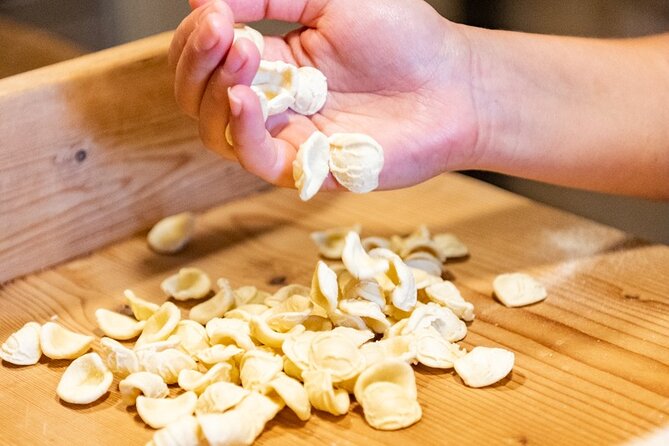
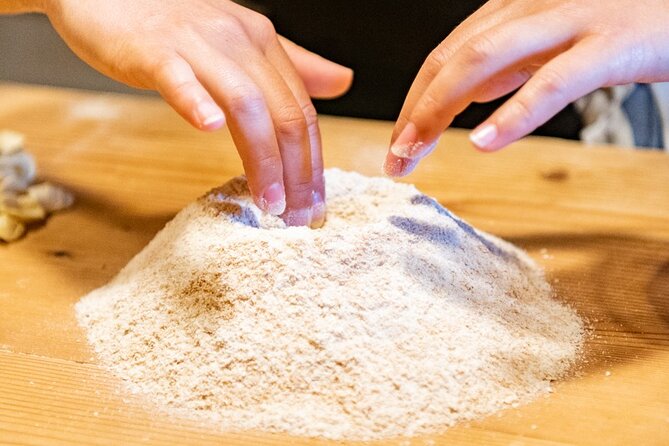
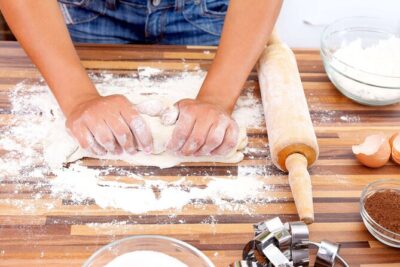
The main lesson is pasta making. Under the chef’s direction, you learn the steps from kneading dough to forming the small, ear-shaped pieces known as Strascinate.
The shape takes practice. You may not produce perfect pieces at once, and that is part of the fun. The class gives you a chance to try, adjust your fingers, and see your technique improve. Children can take part too. A 12-year-old enjoyed the class, and the hands-on stage is likely to hold a child’s attention better than a long talk about food history.
The recipe reflects the old farmer-family style described for the class. You work with carefully sourced local ingredients and learn how a traditional dish is built rather than simply watching a chef do everything. The chef prepares some parts of the meal, then brings you into the process for the pasta itself.
The lesson is best for people who enjoy learning by doing. If you want to leave with a precise printed recipe, that is not promised in the information available. What you do get is a practical feel for the dough, the hand movements, and the way the pasta looks before it reaches the plate.
More Pasta Experiences in Italy:
- Florence Pizza or Pasta Class with Gelato Making at a Tuscan Farm
★ 5.0 · 6,801 reviews - Florence: Pizza or Pasta Class with Gelato at a Tuscan Farm
★ 4.9 · 1,181 reviews - Alghero Home Cooking Pasta Class at a Farmhouse with Wine
★ 5.0 · 130 reviews - Bardolino: Garda Lake Pasta Cooking Class at Agritourism
★ 5.0 · 114 reviews
Eating pasta in a cave dining room
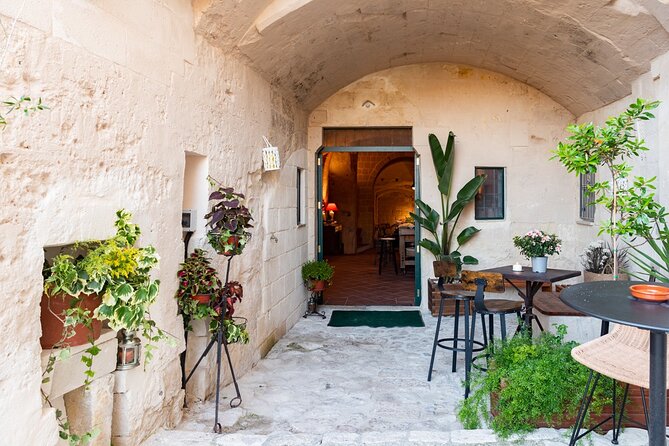
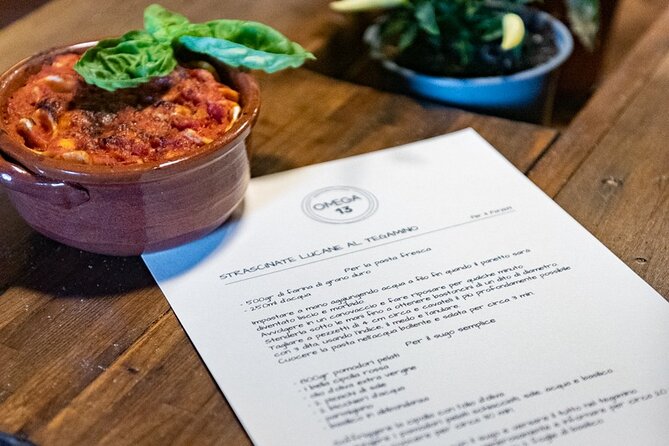
Once the pasta is shaped and prepared, you eat it with tomato sauce in the Strascinate al tegamino style. The dish is simple, but the setting and the work behind it give the meal more meaning than a standard restaurant plate.
I like this part because you can connect the result to the process. You saw the dough change under your hands, struggled a little with the shapes, and then tasted the finished dish. That small gap between making and eating is what makes a cooking class worth the time.
Come hungry. The experience is built around food, and the meal may stretch beyond the stated three hours when conversation and extra courses are included. One group spent about four hours because the morning moved at an easy pace. That can be a pleasure, but it matters if you have a timed museum visit, a bus, or a train soon afterward.
The food is meant to feel natural and regional, not elaborate. You should expect a generous shared meal rather than fine dining. The emphasis is on local ingredients, old methods, and the pleasure of eating together.
What the $132.32 price means
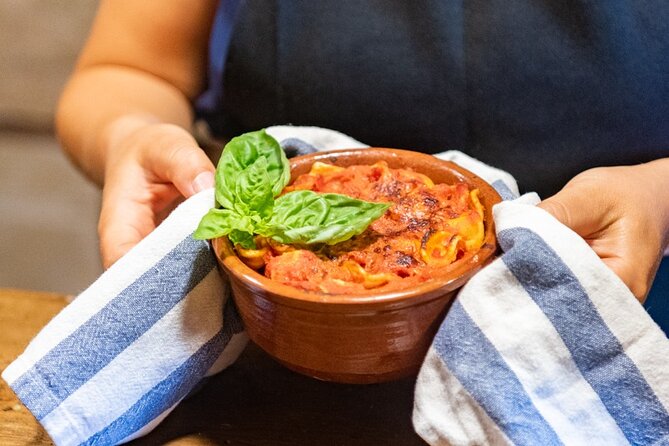
At $132.32 per person, this is not a cheap way to eat lunch in Matera. You are paying for more than a plate of pasta, though. The price covers a private cooking session, a professional chef, ingredients, the meal, the cave setting, and time with two local hosts.
The value improves if you enjoy cultural activities that combine several parts of a trip. In roughly three hours, you cook, eat, hear about Matera, and spend time in a Sassi cellar. A normal restaurant meal would cost less, but it would not give you the same access to the preparation or the personal conversation.
The price makes less sense if you only want to learn a technical pasta recipe. The class is deliberately social and relaxed. You are paying for the setting and the exchange as much as for the food.
For a family or small group, the private arrangement can also feel more worthwhile. Eight people is the maximum, so your party may have the room to ask questions and work together. Solo visitors and couples should weigh the cost more carefully, but the small format still offers a personal experience.
Timing, directions, and comfort
The meeting point is Recinto Santa Maria, 8, 75100 Matera MT, Italy. One important warning is that the location can be hard to find and signage may be limited. I would allow extra time, save the exact address, and keep the operator’s phone number ready before leaving your hotel.
The activity is near public transportation, and a mobile ticket is accepted. It is offered in English. Service animals are allowed. The supplied information does not promise hotel pickup, so plan to reach the meeting point yourself.
The class is not recommended for people with celiac disease. No separate gluten-free plan is listed, so you should not assume that the pasta or shared food can be adapted safely. Ask before booking if you have any serious food allergy or dietary need.
The cave setting may also call for sensible clothing and shoes. The activity takes place in the Sassi, where walking routes can involve old stone surfaces and steps, though specific accessibility details are not provided. Since the class ends where it begins, you can continue exploring Matera afterward without arranging transport back across town.
The one serious service concern
Most of the available feedback is strongly positive, with a 4.6 rating from 14 reviews and 93 percent recommending the experience. The repeated strengths are clear: hosts who are warm and entertaining, tasty food, a beautiful cave, useful stories, and a relaxed pace.
There is one serious exception. On one occasion, the chef did not appear, and the booking party lost the morning before reaching him by phone. The operator apologized, but the problem was still costly in time. This does not erase the otherwise strong pattern, but it is worth taking seriously because the class has a fixed start time and may be hard to replace at short notice.
I would confirm the start time and meeting point shortly before the class. That simple step can reduce the chance of getting lost or waiting in the wrong part of the Sassi. It is also wise not to schedule an important activity immediately afterward.
Who will enjoy this experience most
You should consider booking this class if you want food to open a door into Matera’s local life. It suits couples, families, and small groups who enjoy talking with hosts, trying their hand at a traditional skill, and lingering over a meal.
It is especially good for:
- Families with older children who like practical activities
- People curious about Southern Italian cooking
- Visitors who want more than a standard restaurant meal
- Small groups that value a private format
- Anyone drawn to Matera’s cave architecture and domestic traditions
It may not suit you if you need a fast, tightly timed activity, have celiac disease, dislike group meals, or want advanced culinary training. The lesson is approachable and social rather than technical or intensive.
Should you book this Matera cooking class?
I would book it if you have three or four flexible hours in Matera and the idea of making pasta in a Sassi cellar appeals to you. The best parts are specific and hard to reproduce elsewhere: shaping local pasta by hand, eating it in a cave, and hearing Cosimo and Lorenzo connect food with their own Matera lives.
Before paying, check the meeting instructions carefully and confirm the appointment close to the date. If you do that, the class offers strong value for anyone who wants a personal, food-centered look at the city instead of another quick sightseeing stop.
FAQ
How long does the pasta class last?
The stated duration is approximately three hours. It can run longer, with one session lasting about four hours because the meal and conversation continued at a relaxed pace.
What time does the experience start?
The class starts at 10:30 am.
Where does the class meet?
The meeting point is Recinto Santa Maria, 8, 75100 Matera MT, Italy. The activity ends back at the same meeting point.
What pasta will I learn to make?
You will learn to make Strascinate al tegamino, a traditional ear-shaped pasta prepared in a farmer-family style.
What food is included?
The sample menu includes bruschetta as a starter and Strascinate al tegamino as the main dish. Additional food, such as pumpkin and bread stew, has also been served during the experience, but it is not listed as guaranteed.
Is the activity suitable for people with celiac disease?
No. The experience is specifically marked as not recommended for people with celiac disease.
What is the cancellation policy?
You can cancel at least 24 hours before the local start time for a full refund. Cancellations or changes made less than 24 hours before the start time are not accepted for a refund.
Newly listed farm visits around Italy
- Sorrento Half-Day Farm Experience: Pizza, Cheese Making and Wine★ 5.0 · 17 reviews
- Amalfi Coast & Sorrento Cooking Class School at Farmhouse★ 5.0 · 25 reviews
- Sorrento: Authentic Lemon Experience at a Farm with Tastings★ 5.0 · 6 reviews
- Farm-to-Table Experience: Olive Oil, Garden Tour & Nonna’s Lunch★ 5.0 · 35 reviews
- Cooking Class & Guided Farm Tour On The Hills Of Sorrento★ 5.0 · 10 reviews
- Tasting Limoncello, Oil and Typical Products in Farmhouse★ 5.0 · 13 reviews
- Marì Cooking Class in a Family Farm with Amalfi Coast view★ 5.0 · 11 reviews
- Sorrento Villa Cooking Class with Fresh Harvest Lunch★ 5.0 · 25 reviews
Cooking Classes, compared.
Half-Day Thai Cooking Class at Organic Farm in Chiang Mai
Read our review →
Cooking Class and Lunch at a Tuscan Farmhouse with Local Market Tour from Florence
Read our review →
Authentic Cooking Class with Market & Farm Visit
Read our review →
Hands-On Cooking Class & Farmhouse Tour on the Amalfi Coast
Read our review →

Thai Cooking Class | Since 2012 | Farm to Table
Read our review →Browse the lists this tour appears in