
Review · GREECE
Santorini: Private Agri-Educational Visit to an Organic Farm
Santorini’s farm life is easy to miss behind the white villages and packed caldera viewpoints. This private visit takes you a few meters along cobblestone streets to an organic, anhydrous farm, where dry-climate crops tell a more honest story about the island than another sunset photo. You’ll see black currants, capers, thyme, prickly pears, and the cave once used to dry herbs naturally.
I like the chance to meet the owners, Dimitris and Maria, rather than simply follow a guide through a display. I also like the tasting: raisin liqueur and herb-infused olive oil give you flavors you probably will not find in a standard Santorini food stop. The main drawback is the walking. This is not a polished museum visit, and the farm has no WC facilities. Moderate walking and uneven outdoor ground make it unsuitable for some visitors.
What makes this two-hour farm visit worthwhile
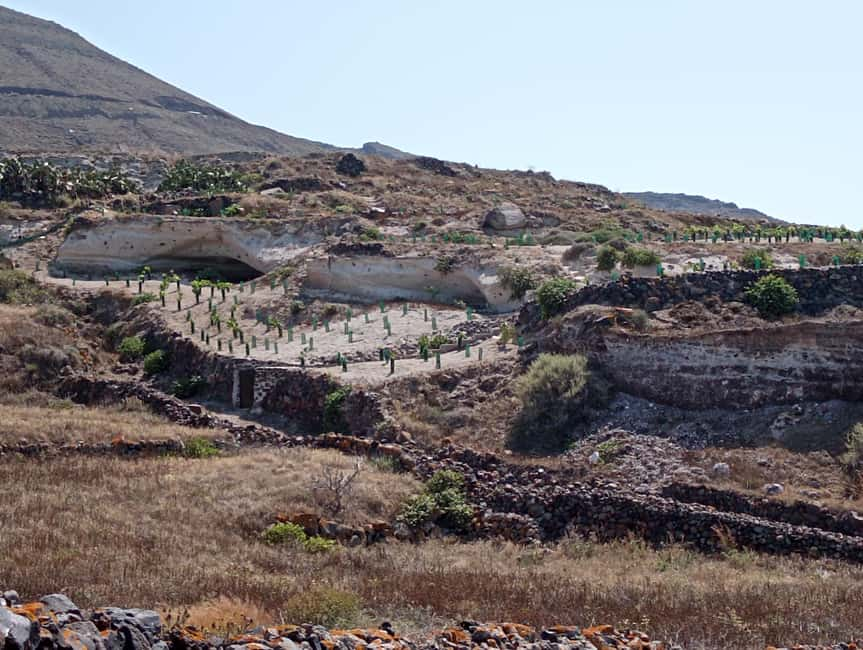
- See Santorini’s first organic black currant vineyard, a crop suited to the island’s dry conditions.
- Walk among capers, thyme, and prickly pears, with seasonal chances to pick and taste some herbs.
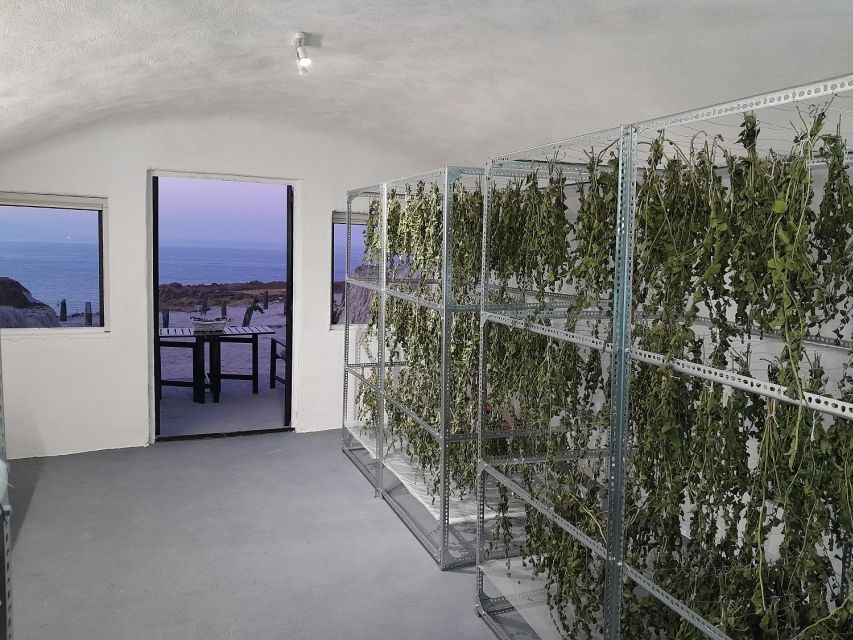
- Enter a traditional drying cave and learn how herbs are prepared without modern drying equipment.
- Meet Dimitris and Maria, the owners who share the work and purpose behind the farm.
- Taste raisin liqueur and herb-infused olive oil, along with simple organic snacks.
- Enjoy a private group visit rather than a large, fixed-format farm tour.
Why Santorini’s dry farm tradition matters
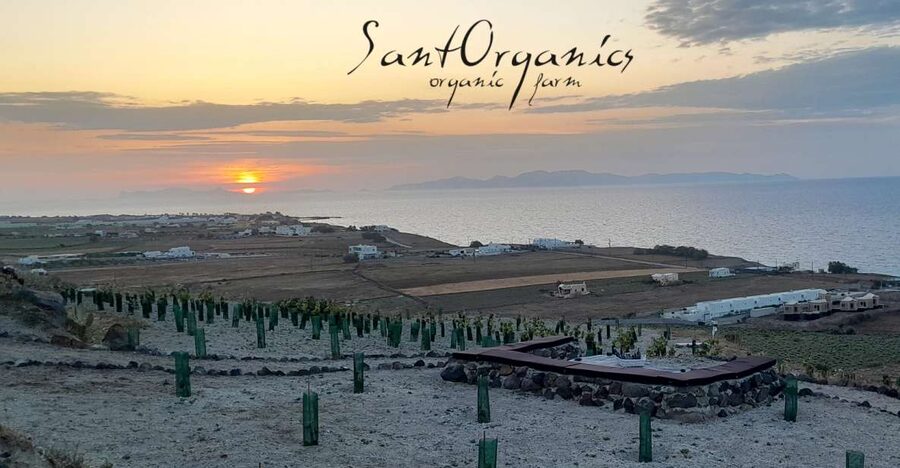
This is not a vegetable farm in the usual sense. Santorini’s climate is too dry for the broad rows of leafy produce many people picture when they hear organic farm. The island’s farmers work with crops that can handle heat and limited water, including thyme, capers, prickly pears, and black grapes used for raisins.
The farm is described as an anhydrous farm, meaning it works with very little water. That detail gives the visit its point. You are not looking at a staged country scene built for tourists. You are seeing how local agriculture responds to difficult conditions.
The farm’s dry setting also helps explain the strong flavors in the tasting. Herbs, fruit, oil, and raisins are not presented as random products. They belong to a practical food tradition shaped by sun, wind, stone, and scarce rainfall.
I find this more useful than a generic food tasting because you can connect each bite to something you have just seen growing. You walk among thyme and capers, then learn how herbs are dried. You see prickly pears, then hear about prickly pear seed oil. The experience links the field to the table in a clear, hands-on way.
More Organic Farm Visits in Greece:
- Aegina: Organic Pistachio Orchard Tour with Factory Visit
★ 4.6 · 22 reviews - Chania Area: Cooking Class at a Farm in Stylos Village (organic)
★ 5.0 · 19 reviews - Corfu: Organic Olive Oil Farm Tour with Transfer and Tasting
★ 5.0 · 8 reviews
From the meeting point to the farm
The visit begins at the stated meeting location, identified by the plus code 8G87FCC7+W5H. From there, you walk a few meters along picturesque cobblestone streets to reach the farm at 8G87FCC7+W77, then return to the starting point at the end.
That short approach matters. You are not being driven from one attraction to another. The walk gives you a small shift in pace before the visit begins, though cobblestones and outdoor surfaces are worth taking seriously. Wear closed-toe shoes with a firm sole, not beach sandals.
The tour lasts about two hours. Starting times depend on availability, and the schedule may include morning or sunset timing. The itinerary information also mentions sunrise and sunset as possible points of interest, so ask about the exact time when you book if the light matters to you.
The group is private, which is a real advantage here. Farm work is easier to understand when you can ask questions without competing with a crowd. You can also expect the guide to adjust the conversation to your interests, within the fixed two-hour visit.
Black currants, capers, thyme, and prickly pears
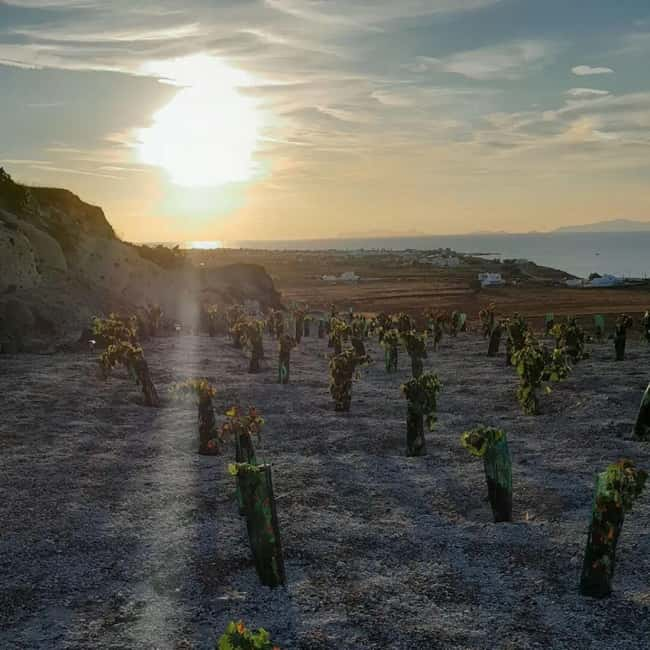
The first main part of the walk takes you through the black currant vineyard. It is described as the first organic black currant vineyard in Santorini, a distinctive feature for anyone interested in local agriculture rather than only the island’s famous architecture.
The tour then moves among local herbs and plants. Capers and thyme are specifically included, and depending on the season, you may be able to pick some and taste them. That seasonal wording is important. Do not expect the same plants or tasting opportunity on every date.
The farm’s crops also show why Santorini’s food culture is so specific. Capers bring a sharp, salty character to Greek cooking. Thyme provides the familiar dry, herbal note associated with sunny Mediterranean food. Prickly pears show how a plant can thrive in a hot, dry environment while offering fruit and seeds for further use.
You will not be touring a large commercial plantation. The appeal is closer to a working family property, with the guide explaining what is grown and how it is handled. If you want broad fields and a long agricultural lecture, this may feel small. If you want to see unusual crops up close and understand why they belong here, the compact scale works well.
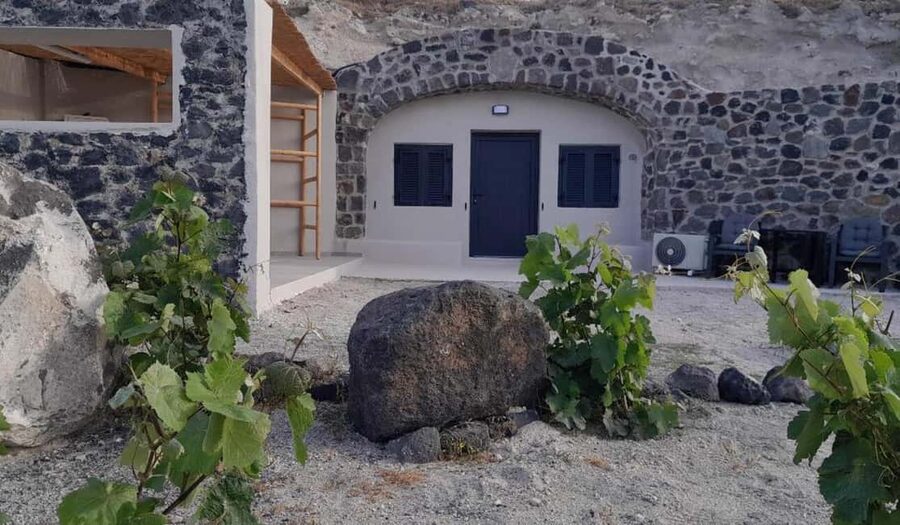
Inside the cave used for natural herb drying
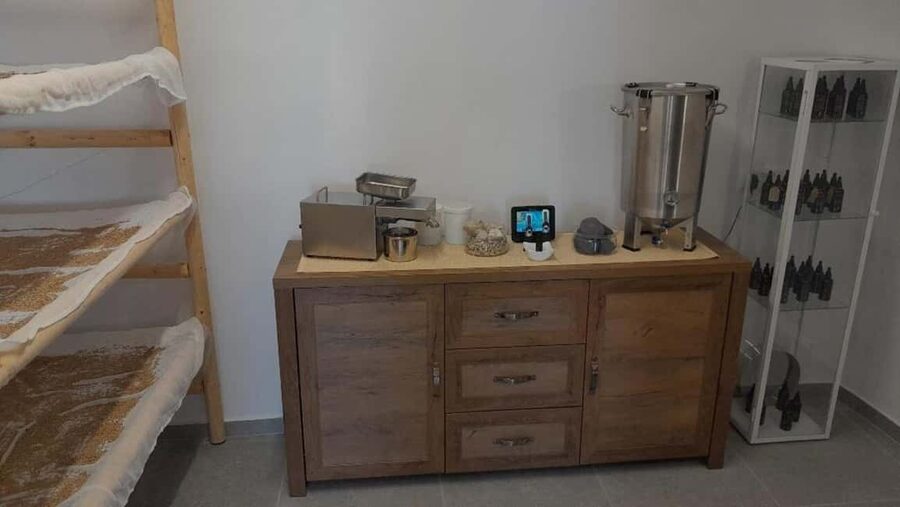
One of the most memorable stops is a cave used traditionally for the natural drying of herbs. Here, the focus shifts from growing to processing.
The cave helps explain how the farm handles harvests before they become finished products. You learn about the stages of harvesting and production, and about the role of a naturally cool, sheltered space in drying herbs. The cave is not presented as a grand monument. Its value comes from the practical method it represents.
This is also where the farm visit gains a little texture. Santorini is full of dramatic views, but a modest cave can tell you more about daily work than another lookout. You begin to see agriculture as a series of small decisions: what can grow, when it is gathered, where it is dried, and how it is prepared for eating.
The cave portion may appeal most to people who like process. You are not only told that a product is organic. You get an explanation of what happens between harvest and tasting. The information provided does not promise a long technical workshop, so expect a guided introduction rather than a formal class.
More farm tours around Greece:
- Mykonos: Farm, Ano Mera Village, and Beaches Guided Tour
★ 4.4 · 1,283 reviews - Crete: Road-trip to Lasithi, Zeus Cave & Olive Mill Farm
★ 4.4 · 451 reviews - Heraklion: Olive Farm Tour with Tasting of Local Delicacies
★ 4.9 · 411 reviews - Lassithi, Zeus Cave, Olive Mill Farm & Knossos Combo Tour
★ 4.6 · 404 reviews
The final tasting: raisin liqueur, oil, and local snacks
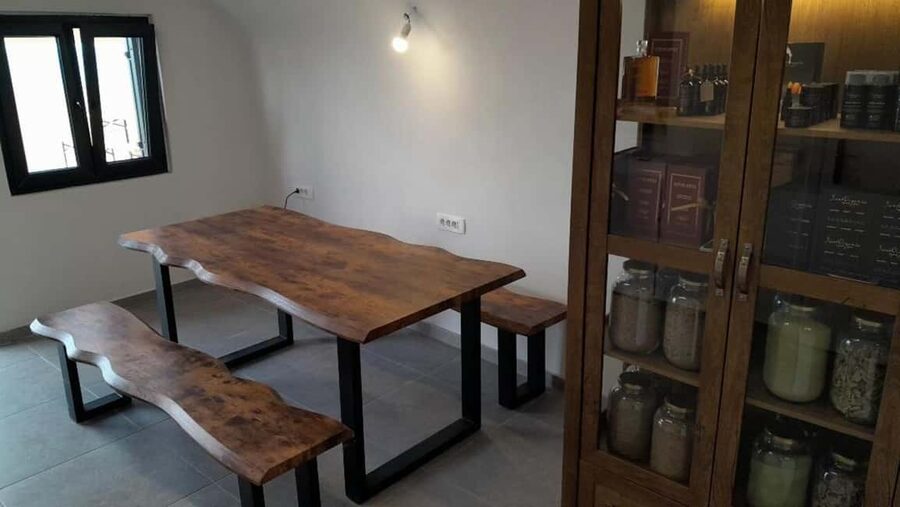
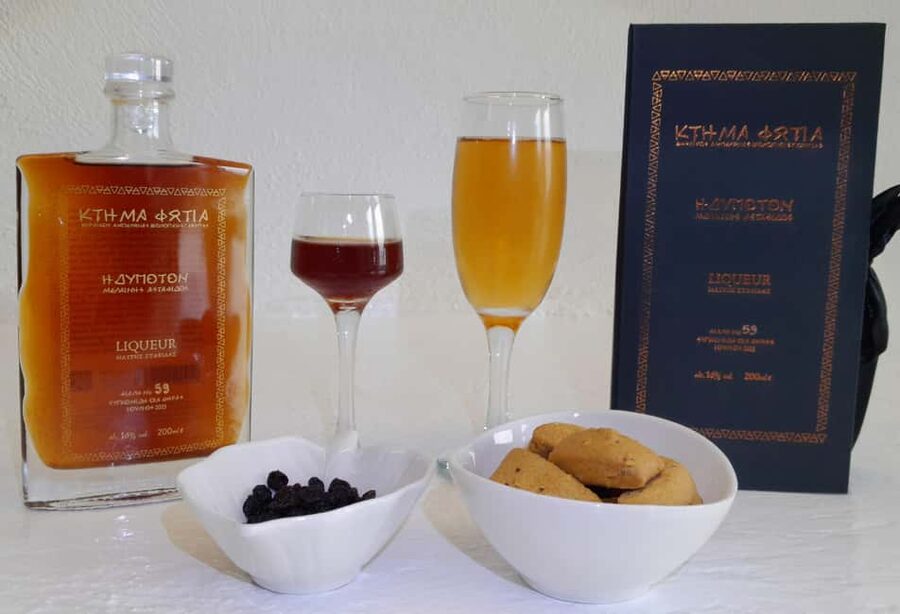
The visit ends with a tasting of the farm’s products. The most unusual pairing is liqueur raisin and infused extra virgin olive oil, served with regional bites.
The raisin liqueur gives the visit a distinctly Santorini finish. Raisins and grapes are closely tied to the island’s agricultural identity, and the liqueur offers a sweeter way to taste that tradition. The exact serving style and flavor profile are not specified, so you should think of it as a guided sampling rather than a cocktail-making session.
The olive oil tasting focuses on infused extra virgin olive oil. After walking among herbs, you have a direct reason to pay attention to the flavor. Notice how the herbs alter the oil, and ask which local plants are used in the infusions.
The included food tastings are:
- Organic must cookies
- Organic cereal breadsticks
- Organic no-sugar prickly pear juice
- Almond rusks
- Liqueur raisin
- Infused olive oil
The tasting is not a full meal. It is best viewed as a light sampler that lets you compare sweet, savory, crisp, and herbal flavors. If you need lunch, plan that separately.
The farm also introduces its organic prickly pear seed oil. This is not listed as a separate tasting, so the wording suggests an introduction to the product rather than a guaranteed sample. Ask the guide how it is produced and used if that interests you.
Meeting Dimitris and Maria
The owners are a major part of the visit. Dimitris and Maria are described as passionate about their farm and personally involved in sharing its story. That matters because the property is not simply a collection of crops. Its character comes from the people explaining why they chose these plants and how they work with Santorini’s difficult conditions.
You should expect a personal conversation rather than a scripted attraction. The guide languages are Greek and English, and pre-visit communication is available through [email protected]. Use that contact to confirm the meeting point, appointment time, and any questions about the walking route.
The private format gives you room to ask about the black currant vineyard, herb drying, prickly pear seed oil, and the products served at the end. It also makes this a better choice for people who prefer a quiet conversation to a large group with a fixed pace.
The activity currently has a 4.7 rating from three published ratings, with the strongest praise focused on meeting the owners and learning about the farm. One important point comes through clearly: this is not a conventional farm full of vegetables. Understanding that before you arrive will make the visit more satisfying.
What the $56 price includes
At $56 per person, the value depends on what you want from Santorini. This is not the cheapest way to fill two hours, especially because transportation, a meal, and restroom facilities are not included. You pay for a private farm visit, direct access to the owners and guide, the crop walk, the cave explanation, and a set of tastings.
For a private group, that can be fair value. A large bus tour may cost less per person, but it will not offer the same quiet access or personal exchange. The food samples are modest, so do not book this expecting a lavish lunch or a winery-style tasting room.
I would see the price as reasonable for someone who wants a cultural stop with context. It is less compelling if your only goal is to taste as many Santorini wines or local dishes as possible. The farm’s strength is the connection between the land, the crops, and the people who care for them.
A hiking baton is available if needed. That is a useful touch, though the activity still involves moderate walking and is not designed for people with low fitness or mobility limitations.
Who should book this visit
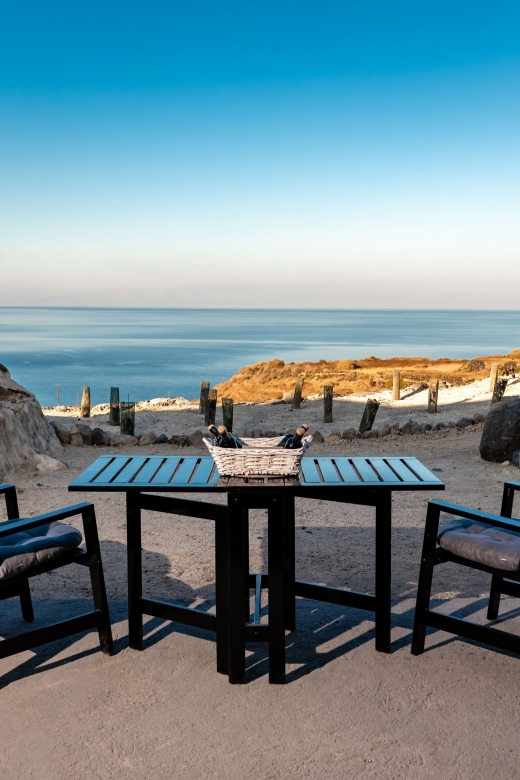
I would recommend this farm visit to you if you want a break from Santorini’s busiest sights and prefer a small, personal encounter with local life. It suits people interested in organic farming, regional food, traditional processing, and unusual island crops.
It is also a good match for anyone who has already seen the headline sights and wants a different side of Santorini. The farm gives you a look at work and food production, not just buildings and views.
You should think twice if you have heart problems, epilepsy, a visual impairment, or a mobility impairment. The activity is not suitable for wheelchair users, people over 95 years, or people with a low level of fitness. The stated requirements also make it unsuitable for anyone who cannot manage moderate walking on cobblestone and farm surfaces.
Bring a sun hat, comfortable clothing, and closed-toe shoes. Smoking, alcohol, and drugs are not allowed. There are no WC facilities, so plan accordingly before the walk begins.
Is the farm worth two hours of your Santorini schedule?
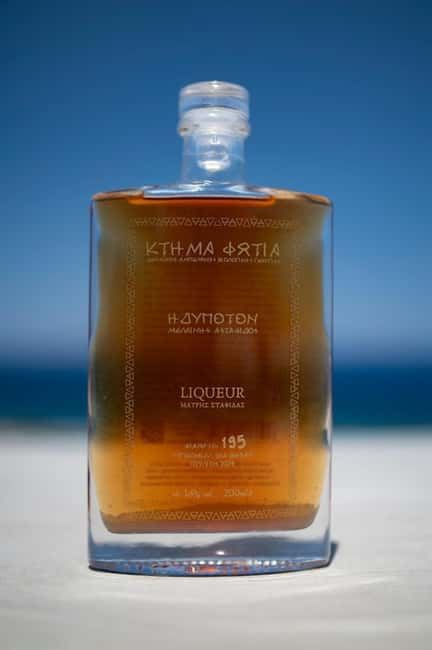
Book it if you want to meet Dimitris and Maria, see how Santorini’s dry climate shapes agriculture, and taste products connected to the plants around you. The private setup, unusual black currant vineyard, herb-drying cave, and raisin liqueur make this more distinctive than a standard sightseeing walk.
Skip it if you need hotel pickup, a full meal, easy wheelchair access, or a large selection of alcoholic tastings. The visit is short, outdoors, and focused on a working organic farm rather than a polished attraction.
For the right visitor, the best reward is not one spectacular view. It is a clearer sense of how Santorini’s people have made food from a hard, dry island, one caper, herb, prickly pear, and raisin at a time.
FAQ
Where does the Santorini organic farm visit begin?
The starting location is identified by the plus code 8G87FCC7+W5H. You walk a few meters from there along cobblestone streets to reach the farm.
How long does the activity last?
The visit lasts two hours, including the walk, guided farm tour, cave visit, free time, and tasting.
Is this a private tour?
Yes. The activity is for a private group rather than a shared large group.
Which languages are available?
The live guide speaks Greek and English.
What crops will I see?
You can see organic black currants, capers, thyme, prickly pears, and local varieties of herbs. Seasonal conditions may affect what is available to pick or taste.
Can I pick and taste herbs?
Depending on the time of year, you may be able to pick and taste some of the herbs.
What food and drink tastings are included?
The tasting includes raisin liqueur, infused olive oil, organic must cookies, organic cereal breadsticks, organic no-sugar prickly pear juice, and almond rusks.
Is hotel transportation included?
No. Hotel pickup and drop-off are not included.
Are toilets available at the farm?
No WC or toilet facilities are included at the site.
What should I bring?
Bring a sun hat, comfortable clothes, and closed-toe shoes. A hiking baton is available if needed.
Is the activity suitable for wheelchair users?
No. The activity is not suitable for wheelchair users or people with mobility impairments.
Can I cancel for a full refund?
Yes. You can cancel up to 24 hours in advance for a full refund. You can also reserve now and pay later, subject to the booking terms.
Newly listed farm visits around Greece
- Insightful Pistachio Orchard and Factory Tour★ 4.5 · 27 reviews
- Private Olive Oil tasting & Liqueur experience★ 5.0 · 17 reviews
- Santorini 5 Hour Private Oia Tour & Lunch/Dinner at a Local Farm★ 5.0 · 40 reviews
- Flavors of Santorini: Farm-to-Table Meal Wine & Authentic Village★ 5.0 · 12 reviews
- Cooking Class Sunset Dinner and Tour in Paros Farm★ 5.0 · 5 reviews
- Katakolon 7hour tour : Olympia-Honey Farm-Winery-Beach★ 5.0 · 53 reviews
- Olympia Shore Ex: Olympic site, Honey Farm & Olive Oil Tasting★ 4.5 · 57 reviews
- Naxos Farm Experience and cheese making★ 5.0 · 5 reviews
Organic Farm Visits, compared.
Half-Day Thai Cooking Class at Organic Farm in Chiang Mai
Read our review →
Evening Cooking Class in Organic Farm with Local Market Tour
Read our review →
Buggy Tour with Organic Farm, Macao Beach Visit from Punta Cana
Read our review →
Authentic Bali Farm Cooking School & Organic Farm
Read our review →
Farm To table Experience on an organic hilltop estate in Tuscany
Read our review →
Browse the lists this tour appears in