
Review · GREECE
Traditional Greek Cooking Class @ Lefkada Micro Farm
The best part of this Lefkada outing happens before anyone touches a mixing bowl. You start in the soil, learning how the farm works, then harvest ingredients that will soon become lunch. I like that direct link between regenerative farming and the finished meal, and I like the small group of no more than 10 people, which gives the cooking a friendly, hands-on feel.
Andreas leads the visit with his mother and their chef, keeping the pace relaxed rather than turning lunch into a timed kitchen drill. The only real consideration is the price, $152.58 per person, which is a serious sum for a four-hour class, although it includes the farm visit, ingredients, cooking, and a full shared meal.
Key points at a glance
- Farm first, kitchen second: Learn about regenerative farming and seasonal produce before cooking.
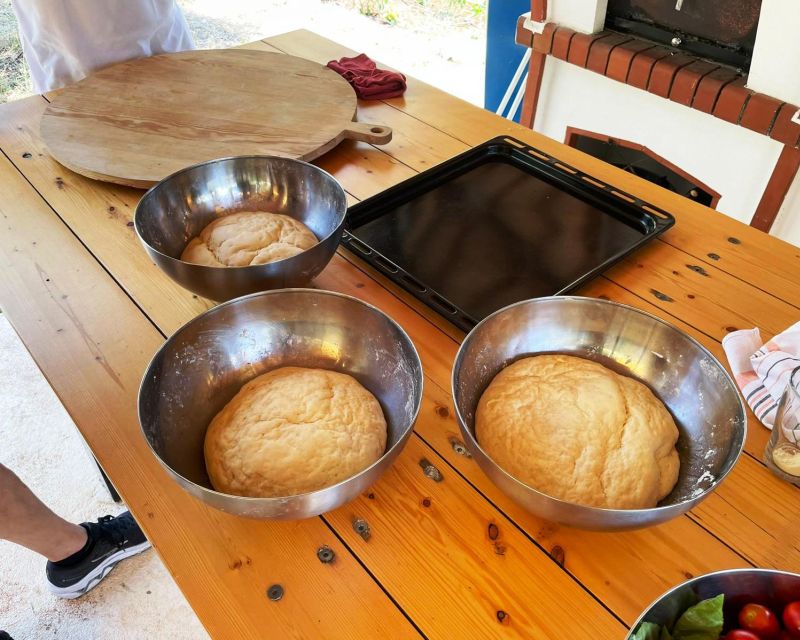
- A wood-burning oven shapes the meal: Bake bread and roast the mixed vegetables for briam in the traditional oven.
- Andreas, his mother, and their chef host the class: The setting feels personal and family-run.
- The meal is simple Greek food: Expect bread, tzatziki, Greek salad, and vegetable briam.
- Small groups keep it relaxed: The class accepts a maximum of 10 people.
- Plan around the weather: The activity takes place outdoors and may be canceled if conditions are poor.
Starting at Lefkada Micro Farm near Nidri
The class begins at Lefkada Micro Farm on the road between Nidri and Vafkeri, at E.O. Nydriou Vavkeris Rachi, Nidri 311 00. This is not a restaurant demonstration where you sit back and watch someone else do the work. The farm is part of the lesson, and the open-air setting gives the cooking a clear sense of place.
The visit is planned for about four hours. That is long enough to move through several stages without making the day feel rushed: farm introduction, harvesting, preparation, cooking, and a meal at the Farmer’s Table.
Arrive ready for a slower pace. The idea is to pay attention to the connection between the ground, the crops, the oven, and the plate. If you prefer a quick class with a long list of recipes, this may feel too gentle. If you want to understand why Greek food can taste so good with only a few ingredients, the pace makes sense.
One especially nice touch comes before the main activity begins. When an early arrival allowed extra time, Andreas invited the couple to feed the animals and offered coffee, fresh fruit, and cakes. These details are not presented as a formal part of every timetable, so I would not count on them as guaranteed inclusions, but they show the informal character of the farm.
More Cooking Classes in Greece:
- Naxos Perivoli Farm Experience & Wood-fire Cooking Class
★ 5.0 · 339 reviews - Cretan Cooking Class and Olive Oil Tasting
★ 5.0 · 178 reviews - Melanes: Naxos Perivoli Farm & Cooking Class with Wood Fire
★ 5.0 · 177 reviews
Meeting Andreas and seeing the farm’s working side
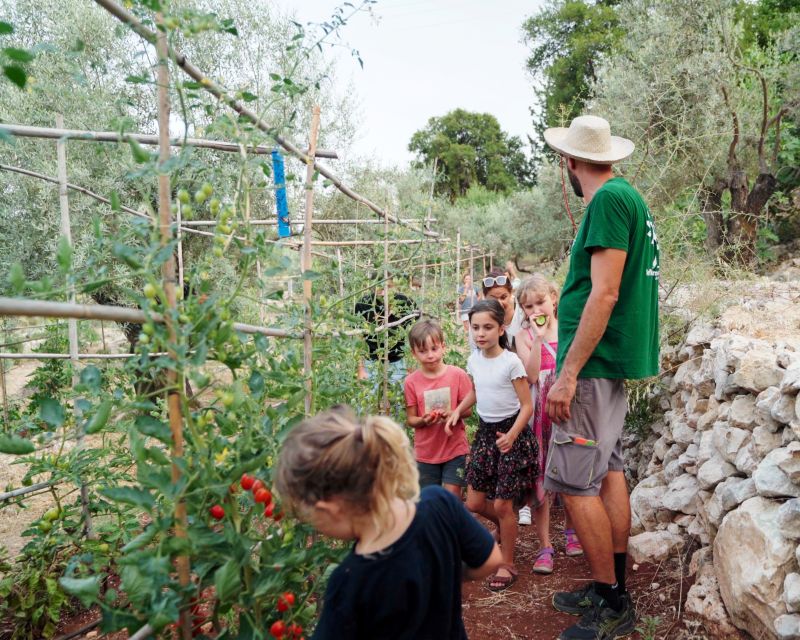
Andreas is the main host, and he is joined by his mother and their chef. His interest is not limited to cooking. He explains the farm’s approach to regenerative agriculture and the way its practices support a healthy ecosystem.
That matters because regenerative farming is easy to treat as a fashionable label. Here, it is tied to what you actually do during the visit: walk the property, see how the land is cared for, and harvest seasonal organic ingredients for the meal.
The farm is also described as an open-air museum. That phrase points to a place where the working land and traditional food methods are both part of the attraction. You are not just looking at crops as scenery. You are learning how they become part of a familiar Greek table.
The animal area adds another human touch. Feeding the animals, if the timing allows, gives the visit a little variety before the food preparation starts. Families and curious eaters may appreciate this part, while people interested only in recipes may see it as extra time.
I would pay close attention during the farm walk. The cooking is deliberately simple, so much of the value comes from understanding why the ingredients are picked at that moment and how little they need once they are fresh.
Harvesting ingredients for a seasonal Greek meal
The menu is built around produce from the farm. You work with ingredients that fit the season rather than following a fixed menu filled with imported or highly processed items.
This approach shapes the class in a useful way. You learn that Greek cooking often depends less on complex technique than on the quality and handling of basic food. Fresh vegetables, good olive oil, herbs, yoghurt, bread, and cheese do most of the work.
You will help gather the produce used for the meal. The precise vegetables may depend on what is ready in the fields, but the planned dishes include a Greek salad and briam, a mixed vegetable dish roasted in the wood-burning oven.
For anyone who cooks at home, this is a practical lesson. You can copy a recipe, but the more lasting skill is learning to judge how vegetables, seasoning, and heat work together. The farm setting makes that lesson easier to remember than a list of instructions on a printed page.
The class also gives you a look at food as a shared activity. You are not preparing separate restaurant-style plates. The group works toward food that will later sit in the middle of the table for everyone.
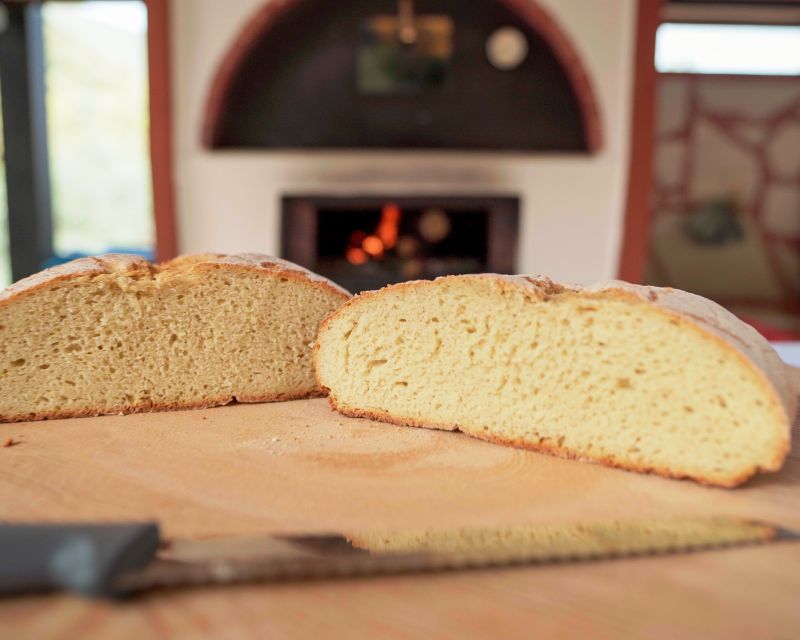
Bread from the wood-burning oven
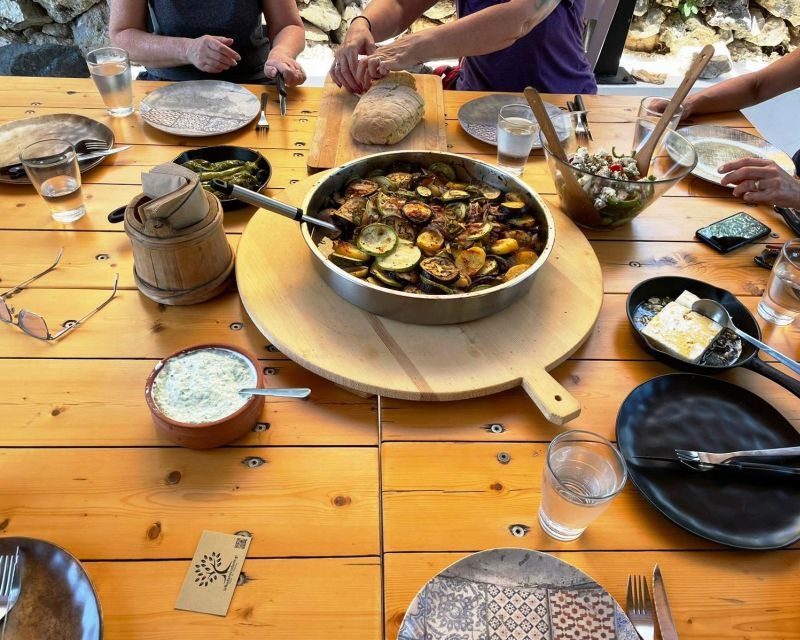
The meal begins with bread baked in the farm’s wood-burning oven. The oven is not just a photo opportunity. It controls the rhythm of the class, since traditional wood heat asks for patience and attention rather than instant results.
Bread is a smart choice for a cooking lesson. It gives you a basic introduction to dough, heat, and timing, while also providing something useful to eat with the other dishes. Fresh bread can make a simple spread feel like a full meal.
The oven also links the class to older Greek cooking methods. You are not simply told that food was once prepared differently. You see how a traditional oven changes the process and gives the group a reason to slow down.
The drawback is that a wood-burning oven may not offer the precise control of a modern kitchen. Results can depend on the heat and timing. That is part of the charm, but it may frustrate anyone looking for exact measurements and predictable results.
More farm tours around Greece:
- Mykonos: Farm, Ano Mera Village, and Beaches Guided Tour
★ 4.4 · 1,283 reviews - Crete: Road-trip to Lasithi, Zeus Cave & Olive Mill Farm
★ 4.4 · 451 reviews - Heraklion: Olive Farm Tour with Tasting of Local Delicacies
★ 4.9 · 411 reviews - Lassithi, Zeus Cave, Olive Mill Farm & Knossos Combo Tour
★ 4.6 · 404 reviews
Tzatziki, Greek salad, and the value of good ingredients
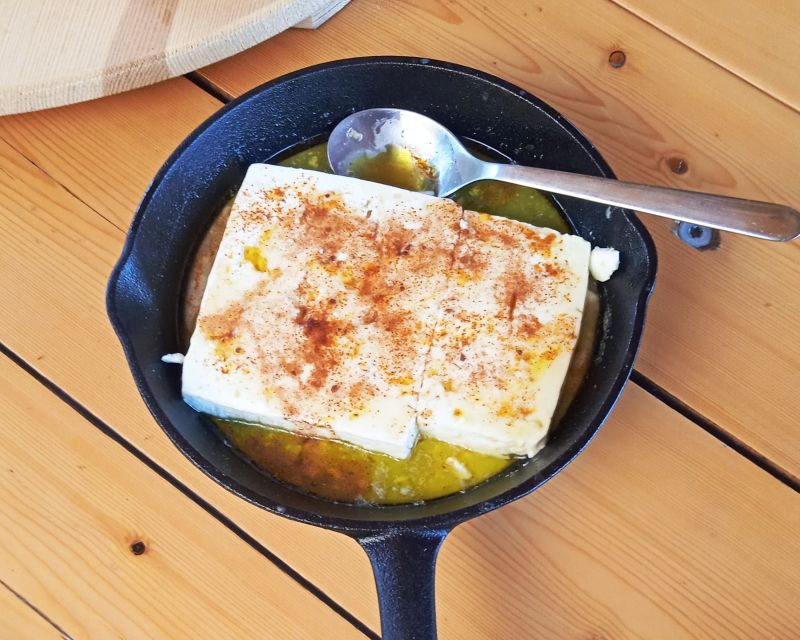
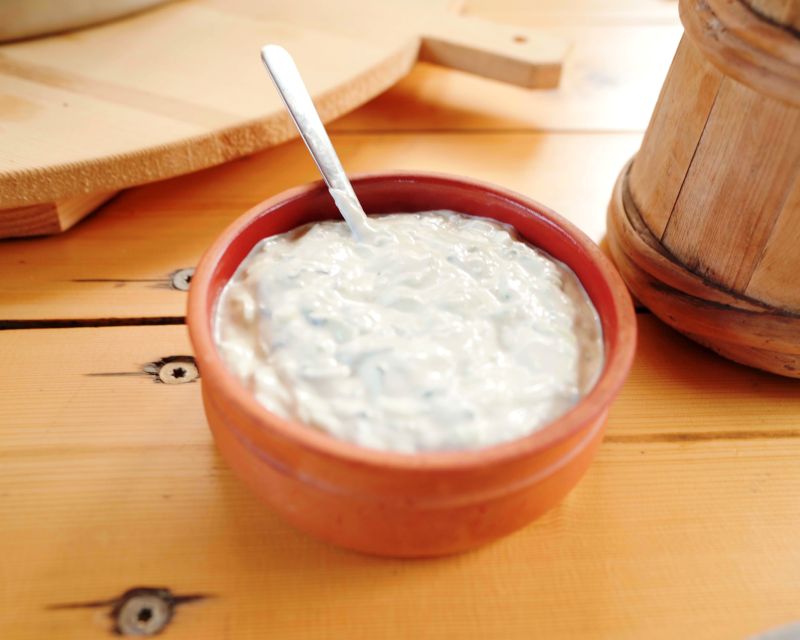
Tzatziki is made with farm-to-table vegetables and sheep’s yoghurt. It is a familiar Greek dish, but the use of sheep’s yoghurt gives the class a chance to compare the farm’s version with the thicker, more common preparations you may have tried elsewhere.
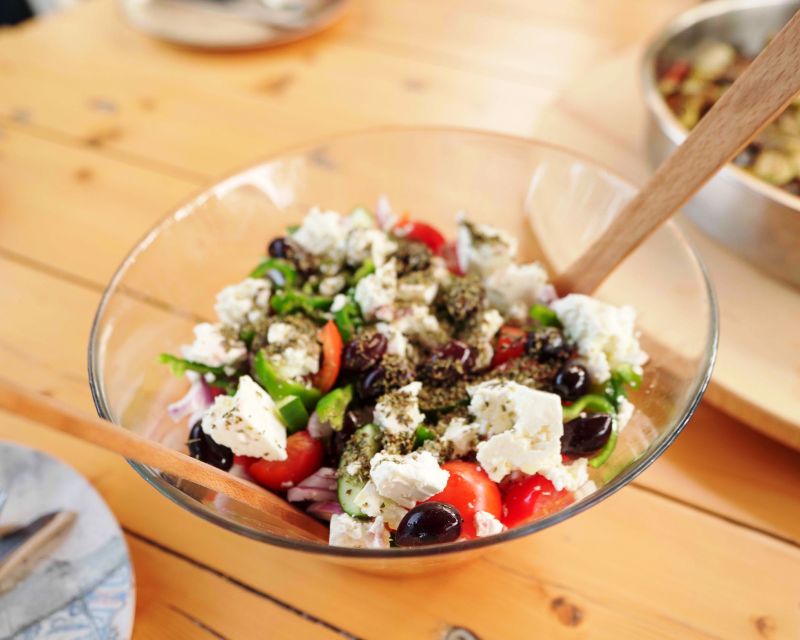
The Greek salad combines farm vegetables, goat cheese, oregano from the property, and the farm’s original extra virgin olive oil. That is a short ingredient list, and that is the point. You can see how much flavor comes from produce picked close to the time of eating, a sharp cheese, fragrant herbs, and good oil.
The farm’s olive oil is described as award-winning. I would treat that as a useful reason to pay attention during the tasting, not as a promise that every person will share the same taste. Olive oil can be a personal matter, but this is clearly one of the products the farm takes pride in.
These dishes also make the class approachable. You do not need advanced kitchen skills to take part, and you can recreate the basic methods at home. The lesson is less about mastering difficult technique and more about learning when not to overwork the food.
The salads and tzatziki also balance the roasted main dish. The cool yoghurt, crisp vegetables, cheese, herbs, and oil give the meal several textures before the oven-baked vegetables arrive.
Briam and the slow work of the oven
Briam is the main course, made from mixed vegetables and roasted in the wood-burning oven. It is a good example of Greek home cooking: seasonal produce, olive oil, herbs, and steady heat combine to make a satisfying dish without meat or complicated preparation.
The dish also makes the farm’s philosophy easy to understand. If the vegetables are fresh and the oil is good, the recipe does not need a long list of additions. The oven does the slow work, softening and concentrating the vegetables.
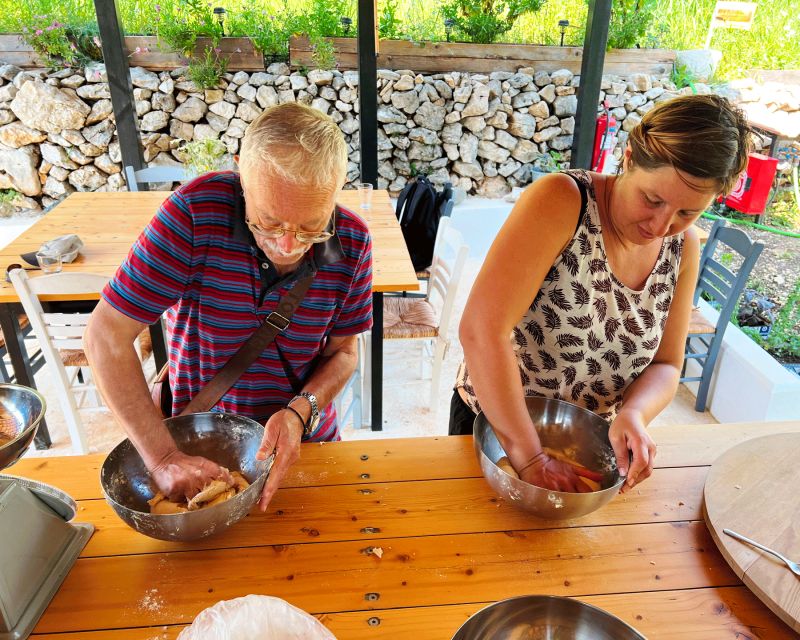
You should expect to participate as part of a group rather than prepare an individual plate. That means the class is social and cooperative. It also means you may not control every step of the dish, especially if several people are working around the same preparation area.
This is one place where the maximum group size matters. Ten people is not a private lesson, but it is small enough for a shared kitchen activity to remain manageable. The experience will suit you better if you enjoy taking turns, asking questions, and helping with a communal meal.
Sitting at the Farmer’s Table
Once the cooking is complete, everyone eats together at the Farmer’s Table. The meal includes the bread, tzatziki, Greek salad, and briam prepared during the class.
This shared finish is more than a convenient way to feed the group. It completes the farm-to-table chain in a visible way. You have seen the land, handled the produce, helped cook it, and then eaten the result in the same place.
The atmosphere is intended to feel like a family meal. That does not mean the setting will suit every personality. If you want a quiet private lunch, a formal tasting, or a class built around individual dishes, another format may fit better.
I like the fact that the menu is modest. A complicated spread could hide the lesson under too many plates. Here, the focus stays on bread, yoghurt, vegetables, goat cheese, oregano, and olive oil.
The strongest part of the meal is likely to be the freshness of the food. A prepared salad can be ordinary when the vegetables are tired, but the farm’s approach gives the ingredients a better chance to carry the dish. The same is true of the briam, where the oven and olive oil need good vegetables to begin with.
What the $152.58 price includes in practical terms
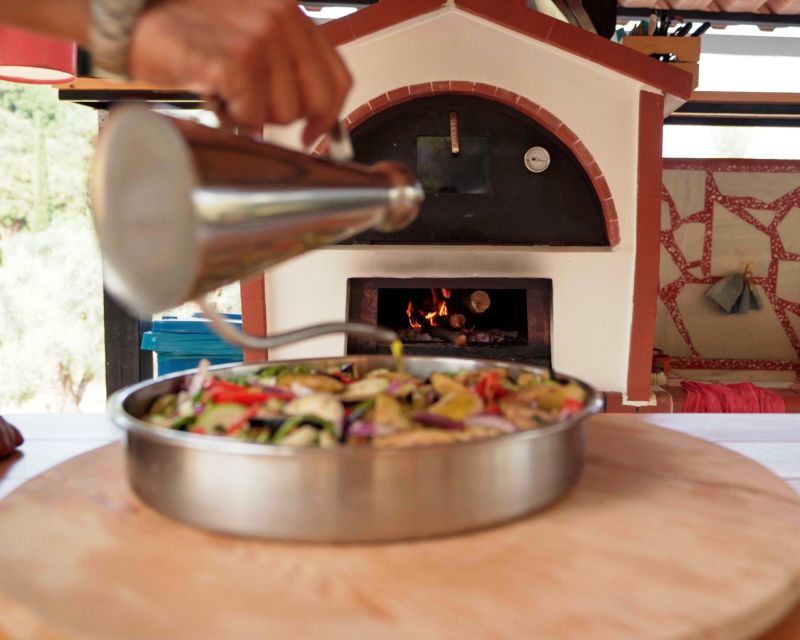
At $152.58 per person, this is not a budget lunch or a basic cooking demonstration. You are paying for about four hours of hosted time, a farm introduction, an outdoor kitchen session, ingredients, use of the wood-burning oven, and the meal you prepare together.
The price makes more sense if you value the whole process. You are not simply buying four dishes. You are paying for a small-group activity, personal hosting from Andreas and his family team, a look at regenerative farming, and a meal connected to the land where the ingredients are grown.
It makes less sense if your main aim is to eat Greek food as cheaply as possible. Lefkada has other ways to enjoy a salad, bread, and vegetable dishes. The extra cost here is tied to participation and context.
The five-star rating from 28 submitted ratings gives the experience a strong record so far. I would still judge it by your own interests. The class is best value for people who care about farming, simple food, cooking with others, and the story behind a meal.
The group limit of 10 is another part of the value. A smaller class usually gives you a better chance to speak with the host and take an active role. It is not a private booking, but it should feel more personal than a large coach-group activity.
Who will get the most from this four-hour class
I would recommend this class to you if you enjoy food with a clear origin. It is also a good choice if you want a break from beach time and sightseeing, and would rather spend half a day doing something practical.
Families may enjoy the animal area, open-air setting, and simple menu, though the supplied details do not specify a minimum age or a children’s program. Couples can expect a relaxed shared activity rather than a private cooking lesson.
Vegetarians should find the menu appealing, since the listed food centers on bread, yoghurt, salad, goat cheese, herbs, and mixed vegetables. You should still disclose any allergies or dietary restrictions when booking, since the farm asks for that information.
The class is conducted in English. That makes it a sensible choice for English-speaking visitors who want explanations as well as food preparation.
You may want to skip it if you dislike outdoor cooking, group meals, or a slow schedule. Weather is also a factor. Because the experience depends on good conditions, a poor-weather cancellation is possible.
Booking, timing, and weather notes
The activity is booked an average of 15 days ahead, so I would reserve before arriving in Lefkada if the date matters to you. Confirmation is normally sent at booking, unless you book within 10 hours of departure, when confirmation depends on availability.
You meet and finish at Lefkada Micro Farm. No separate end point is listed, so you should plan around returning to the same place after the meal.
Mobile tickets are accepted, and the class is offered in English. Service animals are allowed. Tell the farm about allergies and dietary restrictions before the day rather than waiting until food preparation begins.
Cancellation is free up to 24 hours before the start time. Inside that window, the payment is not refunded and changes are not accepted. If poor weather forces the farm to cancel, you are offered another date or a full refund.
Is Lefkada Micro Farm worth booking?
Book this class if you want to understand Greek food through the land that produces it. The strongest reasons are the farm walk, the regenerative approach, the wood-burning oven, the small group, and the chance to share food made by your own hands.
I would especially choose it for a half-day away from standard sightseeing. Andreas, his mother, and their chef create a family-run setting, and the simple menu lets the produce carry the meal.
Skip it if you are looking for a cheap lunch, a formal chef-led course, or a tightly timed list of technical recipes. At $152.58, the value depends on caring about the full farm-to-table experience, not just the final plate.
FAQ
How long does the Traditional Greek Cooking Class at Lefkada Micro Farm last?
The activity lasts approximately four hours.
How much does the cooking class cost?
The listed price is $152.58 per person.
Where does the class begin and end?
The class begins at Lefkada Micro Farm at E.O. Nydriou Vavkeris Rachi, Nidri 311 00, Greece. It ends back at the meeting point.
What food will be prepared?
The listed menu includes bread baked in a wood-burning oven, tzatziki with farm vegetables and sheep’s yoghurt, Greek salad with goat cheese, oregano, and extra virgin olive oil, plus briam made with mixed vegetables and roasted in the wood-burning oven.
Is the class offered in English, and how many people can join?
The class is offered in English and accepts a maximum of 10 people.
What happens if the weather is poor or I need to cancel?
You can cancel at least 24 hours before the start time for a full refund. If poor weather causes the farm to cancel, you will be offered a different date or a full refund.
Newly listed farm visits around Greece
- Insightful Pistachio Orchard and Factory Tour★ 4.5 · 27 reviews
- Private Olive Oil tasting & Liqueur experience★ 5.0 · 17 reviews
- Santorini 5 Hour Private Oia Tour & Lunch/Dinner at a Local Farm★ 5.0 · 40 reviews
- Flavors of Santorini: Farm-to-Table Meal Wine & Authentic Village★ 5.0 · 12 reviews
- Cooking Class Sunset Dinner and Tour in Paros Farm★ 5.0 · 5 reviews
- Katakolon 7hour tour : Olympia-Honey Farm-Winery-Beach★ 5.0 · 53 reviews
- Olympia Shore Ex: Olympic site, Honey Farm & Olive Oil Tasting★ 4.5 · 57 reviews
- Naxos Farm Experience and cheese making★ 5.0 · 5 reviews
Cooking Classes, compared.
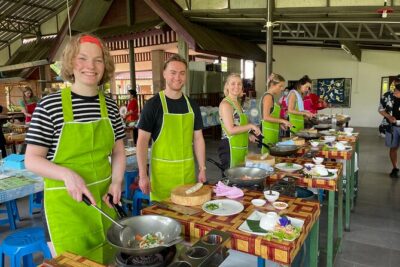
Half-Day Thai Cooking Class at Organic Farm in Chiang Mai
Read our review →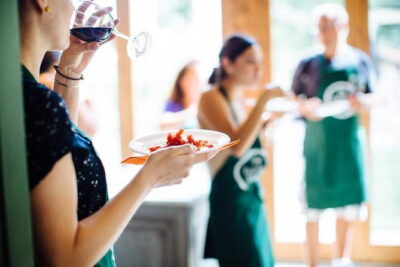
Cooking Class and Lunch at a Tuscan Farmhouse with Local Market Tour from Florence
Read our review →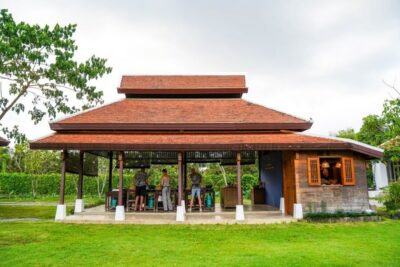
Authentic Cooking Class with Market & Farm Visit
Read our review →

Hands-On Cooking Class & Farmhouse Tour on the Amalfi Coast
Read our review →

Thai Cooking Class | Since 2012 | Farm to Table
Read our review →Browse the lists this tour appears in