
Review · BIG ISLAND
Big Island ATV Tour at Ohana Ranch
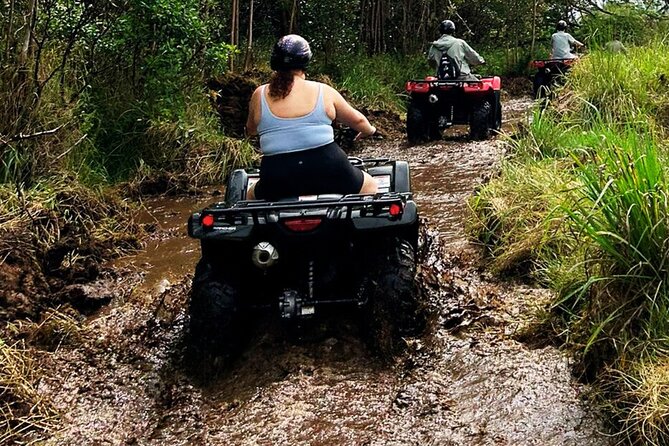
The most interesting part of this tour is that it takes you onto a working Hawaiian ranch rather than another polished resort attraction. You ride past cows, pigs, fruit trees, coffee plants, and young farm projects while guides explain how the land is used and cared for. The ATV is the doorway, not the whole story.
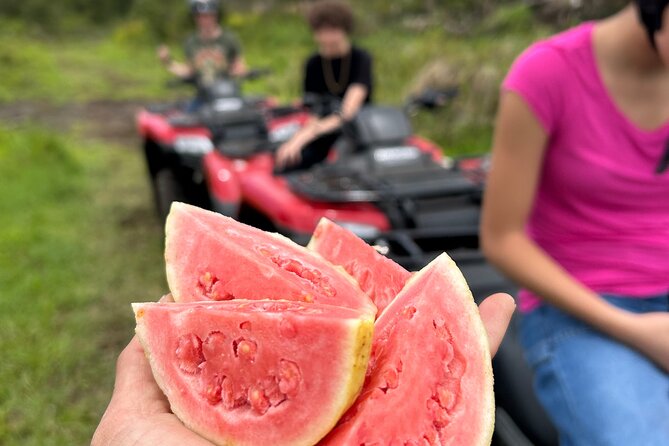
I like the hands-on farm stops, where you may taste guava or berries and learn about taro, coffee, and traditional cooking. I also like the patient guides, including Maka’ala, Hannah, Alana, Pono, and Kanoe, who help beginners while sharing personal connections to Hawaiian culture. The main drawback is clear: this is as much a cultural farm visit as an ATV ride, so anyone seeking speed and long stretches of technical riding may find it too gentle.
Key points
- A working ranch, not a race track: You ride through pasture, forest, orchards, and developing farm areas.
- Good for first-time riders: The tour includes safety instruction and practice time on flat ground.
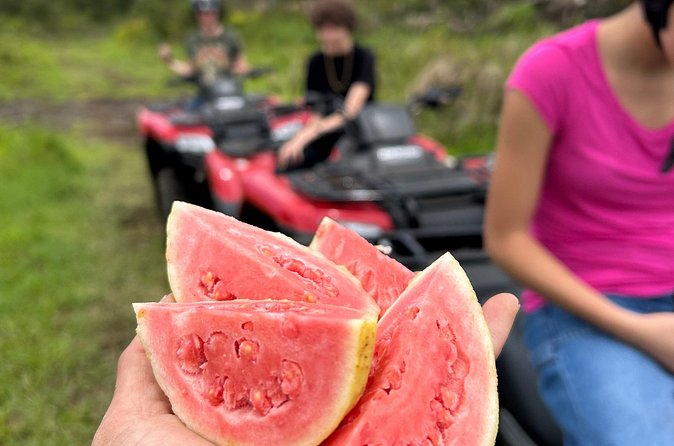
- Fresh food is part of the experience: Depending on the season, you may sample guava, berries, or other fruit from the ranch.
- The guides shape the visit: Maka’ala, Hannah, Alana, Pono, Kanoe, and others are known for patient instruction and local cultural stories.
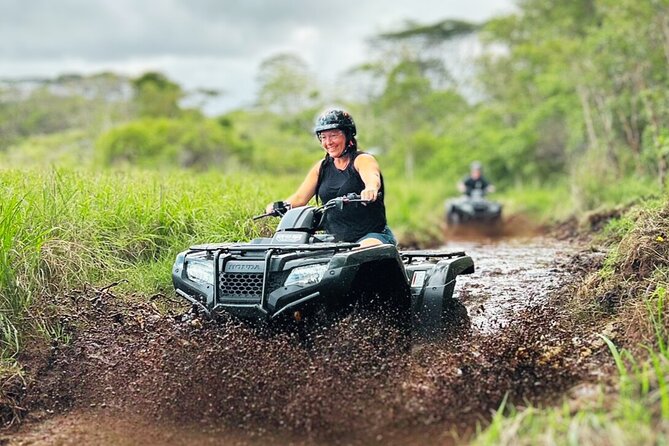
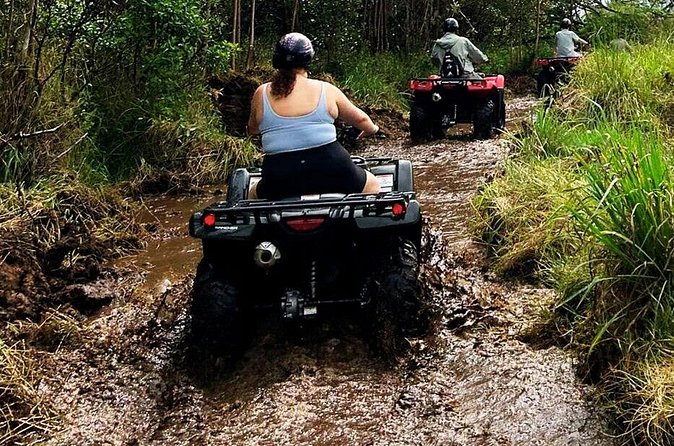
- Expect mud and rain: Wet weather can make the ride messier and more fun, but dry weather may bring dust.
- The setting is on the Big Island: Ohana Ranch is at 17 N Kulani Road near Mountain View, not on Oahu.
A farm tour with ATVs at its center
Ohana Ranch gives you a different way to see the Big Island. Instead of sticking to the coast, beaches, or major volcano attractions, you head inland toward Mountain View and explore a 150-acre ranch connected to five families with different areas of focus.
The ATV ride leads you through open pasture, native forest, and tropical fruit groves. You may see cows along the route, pigs moving through the property, and small farm animals near the ranch. The setting feels active and unfinished in places, which is part of its appeal. This is a working property with plans for growth, not a fully staged attraction built to look old-fashioned.
That distinction matters. You are not signing up for a high-speed off-road thrill ride. You are signing up to ride a quad, stop often, and learn about the land. The pace gives you time to look around and ask questions, but it also means you will spend less time racing over rough trails than you might on an ATV tour in Cabo, Greece, or another adventure destination.
More Quad Bike Trips in Big Island:
- ATV Ranch ride Big Island Hawaii
★ 5.0 · 151 reviews - Oahu Beachfront ATV Adventure and Farm Tour
★ 4.5 · 769 reviews - Siem Reap: Khmer Village and Fish Farm ATV Tour
★ 4.9 · 266 reviews
Getting started with a safety briefing
Your visit begins at Ohana Ranch, where you meet the guide, receive safety gear, and learn how to operate the ATV. A short practice ride on flat ground helps you get comfortable with the controls before the group leaves the starting area.
That practice section is important if this is your first time on an ATV. Several guides, including Hannah, Nat, Maka’ala, and Pono, have been praised for helping beginners steer, slow down, and gain confidence. You do not need to arrive as an experienced rider, and the tone is patient rather than competitive.
The group can include up to 28 people, so the size may vary from a quiet outing to a larger family group. A larger party may use a four-seat ATV driven by a guide. That can work well if you would rather enjoy the scenery and conversation without operating the vehicle yourself.
The instructions are practical, but you should still pay close attention. Riding on ranch paths can involve bumps, mud, and changes in traction. Wear clothes and shoes that can get dirty, and do not bring anything you would hate to cover with dust or wet soil.
Riding through pasture, forest, and fruit groves
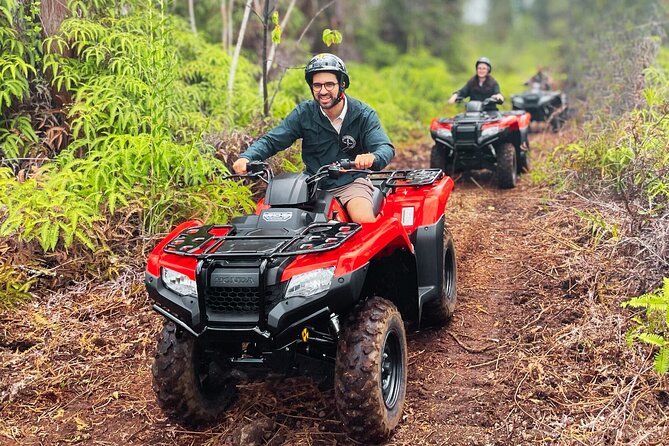
Once you leave the practice area, the ride moves through several parts of the ranch. The route may include open fields with cattle, wooded sections, and tropical plantings. Each area gives the guide something different to explain, so the ride feels more like a moving farm lesson than a single scenic loop.
The pasture is often where the Big Island setting feels most unexpected. You may pass cows while riding beneath a damp inland sky, a scene far removed from the palm-lined resort areas. The forest section provides a quieter change of pace, with time to notice the plants and the feel of the higher, wetter part of the island.
The fruit groves are among the most appealing stops. You may see guava, berries, taro, and Hawaiian coffee growing on the property. Depending on what is in season, you may be able to pick and taste fresh fruit. That small act makes the farm visit more memorable than simply hearing a list of crops.
The ride itself is generally beginner-friendly. Do not expect long fast stretches. The guides set a controlled pace, with stops for explanations and photos. If you want a thrilling, technical course, this may feel restrained. If you want a manageable ride with plenty to see, that slower rhythm works in your favor.
The farm stops add meaning to the ride
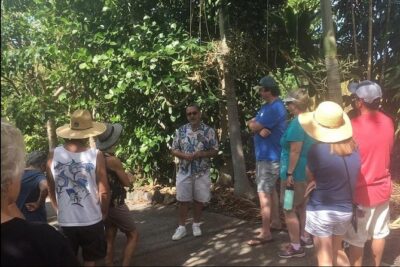
The best reason to book this tour is the connection between riding and place. You are not simply passing through scenery. You stop to see how food is grown, how the ranch is being developed, and how Hawaiian traditions connect to the land.
A guide may point out taro plants and explain how the crop is grown. You may see coffee trees that are still young, along with garden areas built using reused trees and layers of cardboard. These details show a property in progress, with sustainability treated as part of daily work rather than a slogan placed on a sign.
You may also learn about a luau pit and the preparation of a traditional pig. Some stops are visual and hands-on, while others involve standing and listening. That mix is useful for adults who want context, but it can test the patience of young children, especially in hot weather.
The farm’s larger mission is another part of the visit. The owners are working toward a sustainable operation that can feed, support, and educate future generations while keeping local traditions active. Plans may include expanding into areas such as hunting and fishing. You should treat these as developing projects, not finished attractions.
More farm tours around Big Island:
- Hawaiian Salt Farm Tour in Kona
★ 5.0 · 767 reviews - Award Winning Farm Tour: Coffee, Chocolate and Unique Gifts
★ 5.0 · 484 reviews - Small-Group Big Island Tour: Hawaii Volcanoes National Park and Kona Coffee Farm
★ 5.0 · 343 reviews - Waipi’o on Horseback: Mountain Ocean Views Working Cattle Ranch
★ 5.0 · 252 reviews
Guides who make the difference

The guide is central to this experience. ATV controls are easy enough to learn, but the quality of the visit depends on how well someone can balance safety, conversation, and time on the trail.
Maka’ala has been especially effective with first-time riders, offering calm instruction and a good sense of humor. Hannah is another strong choice for beginners, with a patient manner and a habit of answering questions while keeping the ride moving. Pono places a clear focus on safety, Hawaiian culture, and the story of the ranch.
Alana brings a personal connection to the island and often frames the farm through its people, traditions, and future. Kanoe focuses on Hawaiian culture and the way the ranch reuses materials in its gardens. Nat has helped nervous first-time riders steer and settle into the ATV.
You may not have control over which guide leads your departure, but the experience depends heavily on this team. The strongest part of the tour is not the machine. It is the chance to hear about the land from people who care about its future and want you to understand more than its scenery.
Mud, rain, and what to wear
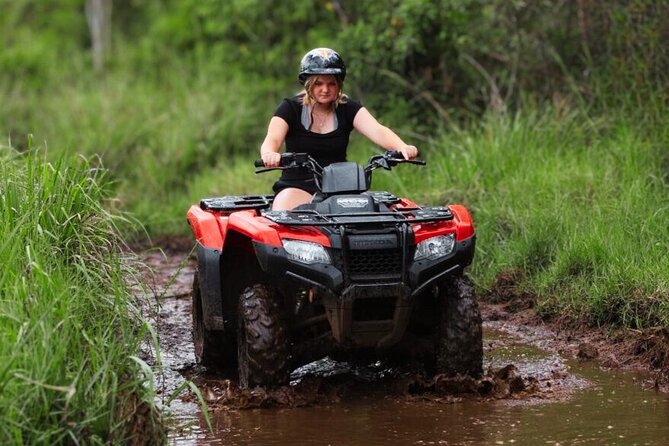
Weather can change the character of the trip. In wet conditions, the trails may become muddy, and the final part of the ride can be particularly messy. That is good news if you enjoy a little adventure and do not mind getting splashed.
Rain does not necessarily end the outing. You may still visit the farm, taste fruit, and learn about the plants and animals. In fact, damp weather can make the ATV portion more entertaining, though it also means you should dress for cleanup afterward.
In dry weather, expect dust instead. Bring sunscreen and water, and wear clothing that can handle dirt. The tour information does not list a specific clothing requirement, so practical outdoor clothing is the safe choice. Pack a change of clothes if you have plans after the ride.
The supplied safety equipment may show signs of regular use. If clean boots and helmets are a top concern, ask about the gear when you arrive and plan accordingly. This is a working ranch experience, not a luxury outfitter with polished equipment for every guest.
Is $89 a fair price?
At $89 per person for about two hours, the price is reasonable if you value both the ATV ride and the farm education. You are paying for instruction, safety equipment, a guided route, cultural interpretation, and access to a private ranch setting that you would not experience by simply driving around the island.
The value is strongest for first-time riders, families who want a shared activity, and anyone curious about Hawaiian farming. You also get a compact outing that can fit more easily into a busy Big Island schedule than a full-day excursion.
The value is weaker if your main goal is speed. The ride is controlled and includes frequent stops. You will spend time hearing about crops, Hawaiian traditions, the ranch’s future, and the surrounding property. That is a benefit for some people and a limitation for others.
Before booking, ask yourself a simple question: do you want an ATV adventure with cultural and farm elements, or a cultural farm visit that includes an ATV? Ohana Ranch is much closer to the second description.
Who will enjoy Ohana Ranch most?
This tour suits couples who want something personal and different from a beach day. A honeymoon couple can combine the ride with a plant- or tree-planting activity, creating a small connection to the property that lasts beyond the two-hour visit.
Families can also enjoy it, especially if children like animals, mud, fruit tasting, and machines. Keep in mind that kids may become restless during longer talks about rocks, farm plans, or the ranch’s future. The outing works best for families who can appreciate the educational side as well as the ride.
It is also a good fit for cautious adults. You do not need to be an ATV expert, and the practice period gives you a chance to decide how comfortable you feel. If operating the machine is not appealing, a guide-driven four-seat ATV may be available for some groups.
You may want to skip it if you have already taken several high-speed ATV tours and want a challenging course. The ranch paths are meant to be manageable, and the emphasis is on learning about the property rather than pushing the vehicles to their limits.
Location and timing matter on the Big Island
Ohana Ranch is at 17 N Kulani Road in Mountain View, on the Big Island of Hawaii. Double-check your island before booking. This activity is not on Oahu, and a reservation here will not help if your trip is based in Honolulu.
The approximate duration is two hours, which makes the tour easy to fit between other plans. Still, allow extra time around the activity if you are driving across the island. The ranch is inland, and the meeting point is not a Waikiki-style pickup area.
The experience begins and ends at Ohana Ranch. A mobile ticket is accepted, the tour is offered in English, and confirmation arrives when you book. Service animals are allowed, and most people can participate, though the operator does not list detailed physical requirements in the supplied information.
The tour is generally booked about 27 days ahead, so reserve early if your dates are fixed. You can cancel for a full refund up to 24 hours before the start time. Cancellations or changes inside that window are not refunded or accepted.
How this compares with a standard ATV excursion
Many ATV tours sell the promise of speed, mud, and dramatic off-road terrain. Ohana Ranch includes some of those elements, especially when rain turns the paths soft, but its focus is broader.
You may spend part of the ride looking at coffee trees, learning about taro, meeting farm animals, or hearing how the ranch is organized among five families. The tour asks you to pay attention to the property rather than simply hold on and accelerate.
That makes the outing more memorable for someone who wants context. A guide can explain why a crop matters, how local traditions connect to food, and what the ranch hopes to build for the next generation. You leave with a better sense of inland Big Island life, not just a layer of mud on your boots.
The trade-off is pace. There may be moments when you wish for a longer trail or a faster final run. The route is not designed as a driving challenge. Go in expecting a guided farm experience with an ATV component, and the balance makes sense.
My booking advice
I would book Ohana Ranch if you want a small taste of working farm life, patient ATV instruction, fresh fruit, animals, and Hawaiian cultural stories in one outing. The guides are the main strength, and the experience feels connected to a real community project rather than a generic motor tour.
I would not book it if your only goal is an intense off-road ride. Choose it for the people, the property, and the chance to see a less familiar side of the Big Island. Bring water, sunscreen, clothes that can get muddy or dusty, and enough curiosity to listen between rides.
FAQ
Where is the Big Island ATV Tour at Ohana Ranch?
The tour meets at Ohana Ranch, 17 N Kulani Road, Mountain View, Hawaii 96771. It is on the Big Island of Hawaii, not Oahu.
How long does the ATV tour last?
The experience lasts approximately two hours and ends back at the ranch.
Is the tour suitable for beginners?
Yes. The experience includes a safety briefing and a short practice ride on flat terrain. Guides such as Maka’ala, Hannah, Pono, and Nat help first-time riders get comfortable.
What will I see during the ride?
You may ride through open pasture, native forest, and tropical fruit groves. Stops can include taro, guava, Hawaiian coffee, fresh seasonal fruit, farm animals, and areas connected to Hawaiian traditions and sustainable farming.
How many people can join the tour?
The activity has a maximum group size of 28 people. Some groups may use a four-seat ATV driven by a guide.
What is the cancellation policy?
You can cancel up to 24 hours before the experience for a full refund. Cancellations or changes made less than 24 hours before the start time are not accepted, and the amount paid is not refunded.
Newly listed farm visits around Big Island
- Sunset Kona Salt Farm Tour★ 5.0 · 55 reviews
- Farm-to-Table Chef’s Dinner at Kulaniapia Falls★ 4.5 · 42 reviews
- Hamakua Coast Farm Small-Group Walking and Tasting Tour★ 5.0 · 4 reviews
- Edible Hibiscus Guided Farm Tour (Big Island)★ 5.0 · 31 reviews
- Farm to Table Cooking Class at Kulaniapia Falls★ 4.5 · 36 reviews
- Hala Tree Coffee Farm Tour★ 5.0 · 44 reviews
- Bottle Feed & Cuddle Baby Goats at Ohana Ranch (Big Island)★ 5.0 · 29 reviews
- Baumkuchen Farm Tour★ 4.5 · 10 reviews
Big Island Farm Tours, compared.
Award Winning Farm Tour: Coffee, Chocolate and Unique Gifts
Read our review →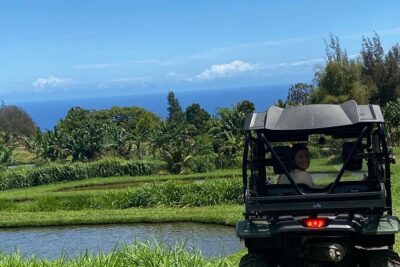
Waipi’o on Horseback: Mountain Ocean Views Working Cattle Ranch
Read our review →
Craft Chocolate Tasting and Farm Experience on the Big Island
Read our review →
Kona Tour: Bee Farm, Kona Coffee, and National Historical Parks
Read our review →Browse the lists this tour appears in