
Review · BIG ISLAND
Kona Tour: Bee Farm, Kona Coffee, and National Historical Parks
The best part of this Big Island outing is the range. In one long day, you move from ancient fishponds and petroglyphs to a working honey farm and Kona coffee orchards. Hawaiian history is not treated as background scenery here: the guide explains sacred places, old laws, and the arrival of Captain Cook as you travel the coast.
I especially like the small 12-person van, which gives the guide room to answer questions, and the way lunch, coffee, honey, water, and hotel transport are bundled into the price. The main drawback is the pace. Seven hours, several stops, and a long drive can leave you tired, and the petroglyph area may not always be accessible.
Key points to know
- Kaloko-Honokohau National Historical Park: Look for sea turtles, Hawaiian monk seals, petroglyphs, fishponds, seawalls, and sacred temples.
- Pu’uhonua o Honaunau: Learn how this seaside place served as a refuge for people who broke an ancient kapu, or law.
- Big Island Bees: Watch a working hive from a protected viewing area and taste raw organic honey.
- Bay View Farm: Walk among coffee orchards, learn how beans are processed, and enjoy lunch overlooking Kealakekua Bay.
- Small-group transport: Pickup is available from Kona and Waikoloa area hotels, major resorts, and Kona Pier.
- Plan for walking: Closed-toe shoes, summer clothing, and moderate fitness are important for the parks and farm stops.
A full day along the Kona coast
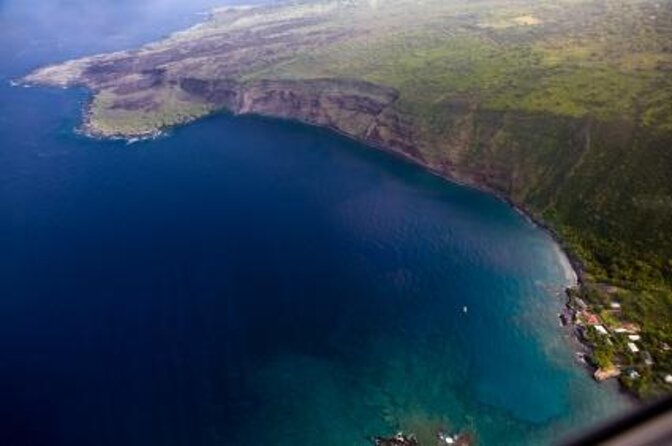
This is not a quick coffee plantation visit with a few scenic pullouts added on. It is a full west-coast history and food tour, with the Kona district as its main stage.
You begin with hotel pickup, usually between 7:00 and 8:00 in the morning. The exact time and meeting point are sent by the operator. If you stay in a vacation rental, you may be directed to a nearby hotel or shopping center rather than picked up at your door.
The vehicle is a comfortable minivan, and the group is limited to 12 people. That matters on a day with this much driving. A good guide can turn the road time into part of the tour instead of dead time. Past guides have included Dreu, Kai, Oni Oni, Kala, and Nick, with Dreu and Kai receiving especially warm praise for their command of island geology, history, and local stories.
You spend much of the day moving between coastal and upland areas. The Kona coast can be sunny and dry while the coffee country feels cooler and misty, so bring a light layer even if the morning starts hot.
More Coffee Farm Tours in the USA
- Award Winning Farm Tour: Coffee, Chocolate and Unique Gifts
★ 5.0 · 484 reviews - Small-Group Big Island Tour: Hawaii Volcanoes National Park and Kona Coffee Farm
★ 5.0 · 343 reviews - Hala Tree Coffee Farm Tour
★ 5.0 · 44 reviews
Kaloko-Honokohau and the search for sea life
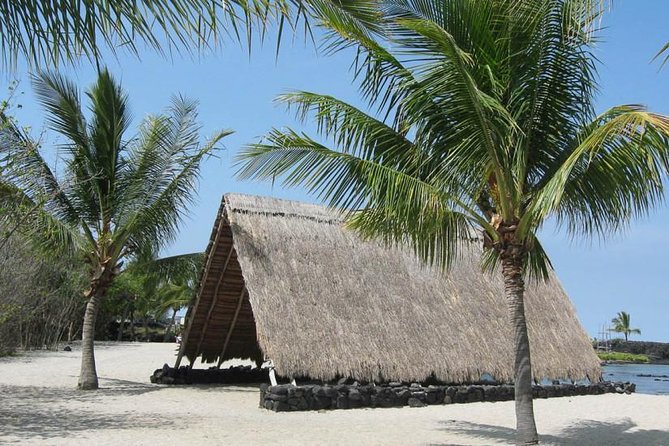
Your first stop is Kaloko-Honokohau National Historical Park, where you have about 40 minutes. This is a smart opening stop because it gives you immediate context for how Native Hawaiians lived with the coast.
The area’s fishponds and seawalls were built by hand. Abundant sea life supported settlements here for centuries, and your guide explains how these structures helped manage food supplies. You walk across black volcanic rock and along a trail toward sacred temples and petroglyph areas.
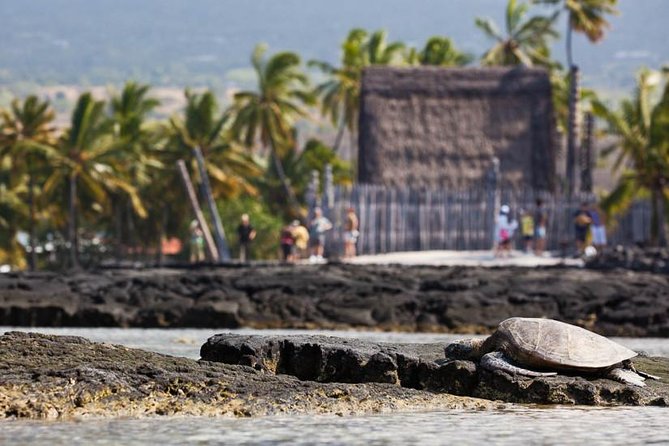
The shoreline stop is also your first chance to look for wildlife. Honokohau Beach has pale sand mixed with dark volcanic material, and sea turtles may surface nearby or rest along the shore. A Hawaiian monk seal is possible, but never guaranteed. Keep your expectations realistic and give any animal plenty of space.
This portion requires walking over uneven ground. Wear closed-toe shoes with a firm sole, not sandals that slip easily on rough rock. The allotted time is enough for an introduction, but not for a long independent hike.
One practical point deserves attention: access to the petroglyph area can change. A ranger has previously restricted access to the spot where visitors expected to see the carvings. If petroglyphs are your main reason for booking, treat them as a possibility rather than a promise. The park’s fishponds, shoreline, and temples still make this a worthwhile stop.
Kona’s old landmarks and Captain Cook’s final chapter
The route continues through Kona, where you see historic landmarks including Mokuaikaua Church. It is identified as the oldest Christian church in Hawaii, and it offers a useful look at the major changes that followed the arrival of missionaries.
The real value here comes from the guide’s explanation. This is not a day for simply photographing a building and getting back in the van. Guides such as Dreu and Kai have been praised for explaining how the island’s geology, political history, and cultural traditions fit together.
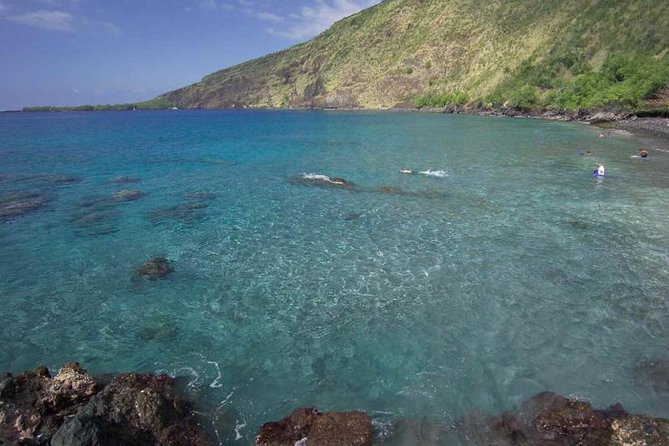
You also stop at Kealakekua Bay for about 15 minutes. The bay is linked to Captain James Cook’s arrival and death, and the guide explains the ancient village that occupied the area when Cook first reached Hawaii.
The stop is brief, so do not expect a long walk around the bay. Think of it as a scenic pause and a history lesson between the larger visits. The story is complicated, and a good guide helps you understand that Cook’s arrival was part of a major cultural encounter, not just an isolated event marked by a monument.
Big Island Bees, hives, and raw honey
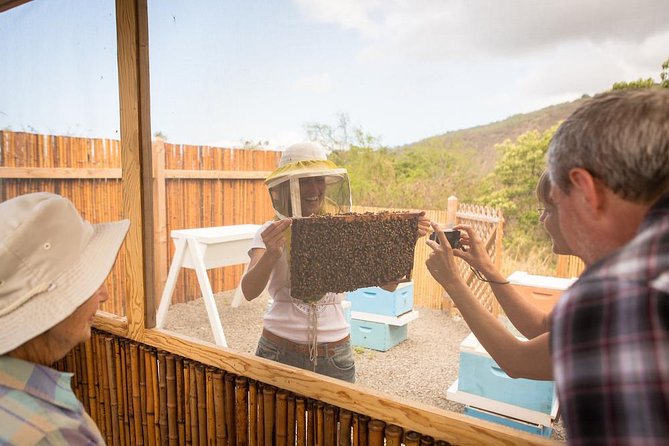
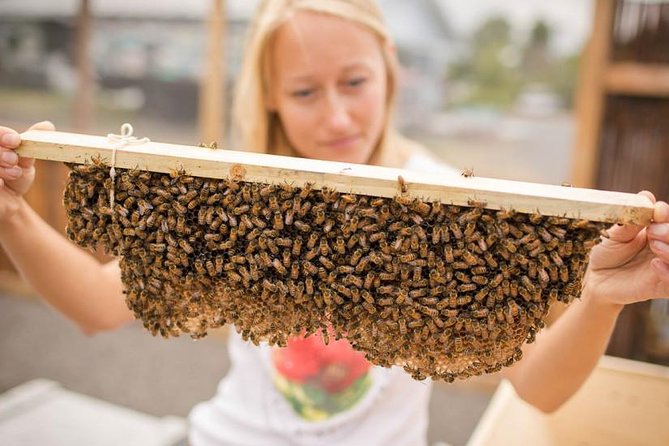
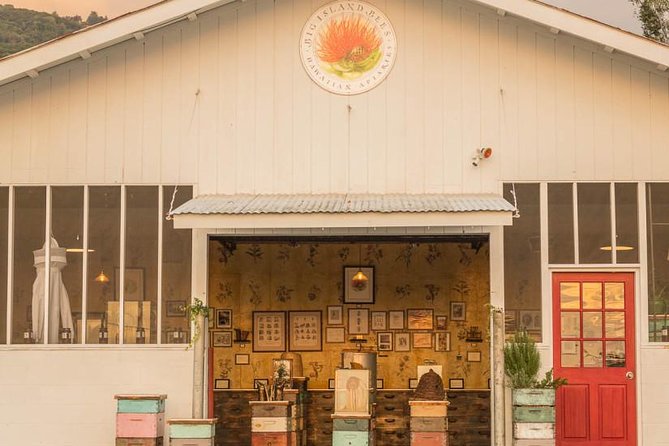
The visit to Big Island Bees lasts about an hour and adds a completely different subject to the day. The farm has produced organic honey since 1972, and you meet a beekeeper who explains the work behind the jars sold in shops.
You watch an open hive from a protected viewing area. Thousands of bees may be visible inside, but you are not placed directly in the middle of the colony. The beekeeper explains hive tools, harvesting methods, and the role bees play in a healthy ecosystem.
The tasting is the fun part, but the stop also gives you a better sense of agriculture on the island. Kona is known for coffee, yet honey production depends on the same broad mix of weather, plants, and careful farm management that shapes much of the island’s food economy.
I would keep expectations measured. The stop includes a presentation, hive viewing, and tasting, but it is not a long field study of every part of a large commercial apiary. Some of the visit takes place around the visitor-facing operation and gift area. If you are fascinated by bees, you may wish for more time. If you simply want a pleasant food stop with an unusual working subject, the hour is well used.
The honey tasting is included, as are snacks. This is one reason the tour works well for people who prefer not to organize several separate farm visits.
More Coffee Farm Tours in Big Island:
- Kona Coffee Farm Tour from Tree to Tasting Room
★ 5.0 · 36 reviews - La Herradura Coffee Farm: tour in Europe’s only plantation
★ 4.8 · 430 reviews - Big Island: Volcanoes, Waterfalls, & Coffee Farm Day-Trip
★ 4.9 · 414 reviews - Medellín Coffee Farm Tour with Trolley and Cable Car Ride
★ 4.9 · 277 reviews
Pu’uhonua o Honaunau and the meaning of refuge
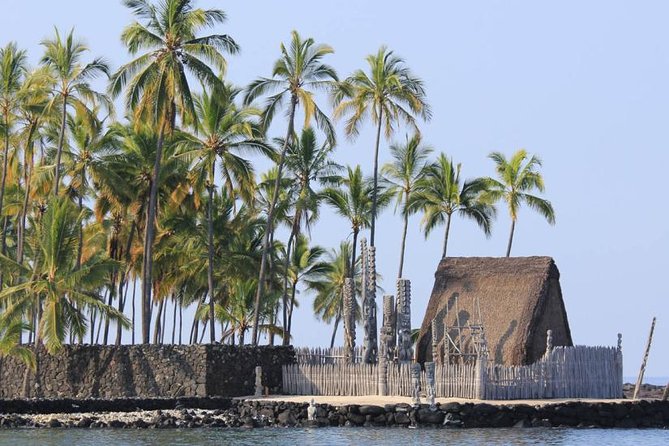
The most culturally significant stop is Pu’uhonua o Honaunau National Historical Park. You spend about an hour on a guided walking tour through what was once a place of refuge.
Under the ancient kapu system, breaking certain laws could bring severe punishment. A person who reached this seaside refuge and received absolution from a priest could return to society. Your guide explains how the site functioned and points out the structures and ceremonial setting that made it important.
This stop has more depth than a quick scenic visit. It asks you to think about Hawaiian society on its own terms, rather than viewing the island only through the period after European contact. The setting beside the water makes the story easier to picture, but the meaning of the place is more important than the view.
You will walk during this visit, and some surfaces may be uneven. The tour is suitable for people with moderate fitness, but it is not a ride-up, ride-out attraction. Take water, use sun protection, and listen closely to the guide’s instructions around culturally important areas.
Of all the stops, this is the one I would protect if time were cut short. It gives the day a strong cultural center.
Kona coffee in the mountain belt
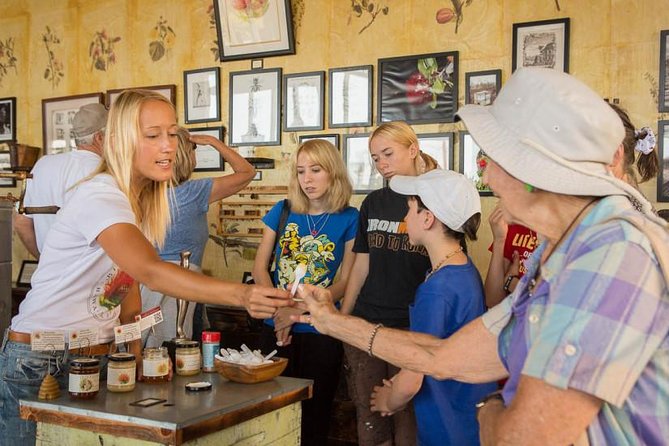
After the coastal stops, the van climbs toward the Kona coffee belt. The change is noticeable. The air is cooler and often misty, and the coffee orchards replace the hard black shoreline.
At Bay View Farm, you walk through the orchards and learn how coffee is grown, harvested, milled, processed, and roasted. The farm visit lasts about an hour and 20 minutes, making it the longest scheduled stop.
This is more useful than a simple tasting because you see the full path from plant to cup. Kona coffee has a strong reputation, and the tour explains the work behind it rather than treating the name as enough. You learn how beans move from the orchard through processing and roasting before they become the drink served at the end.
Lunch is served picnic-style on the farm, with a view toward Kealakekua Bay. Coffee is included, and the meal gives you a proper pause after the morning’s walking and road time.
The farm section is one of the strongest parts of the day for anyone interested in food production. It also gives you a chance to compare it with the honey stop. Big Island Bees focuses on pollination and hive care, while the coffee visit shows how a high-value crop is handled from harvest to finished product.
Weather can affect this portion. The coffee belt may be misty or wet, even when Kona is bright and dry. The tour operates in all weather conditions, so bring clothing that can handle a light shower. The exact conditions may make the orchard walk more atmospheric, but poor weather can reduce the comfort of the outdoor parts.
What the price includes, and where the value lies
The price is $198.17 per person. That is not a budget sightseeing loop, but it covers a lot: round-trip hotel transport, a certified guide, park admission where required, lunch, snacks, bottled water, honey tasting, and coffee tasting.
The value depends on how you would otherwise spend the day. If you rented a car, you would still pay for fuel, navigate unfamiliar roads, organize two national park visits, arrange a farm experience, and drive back after a long day. The minivan also lets you focus on the guide’s stories instead of watching the road.
The price is harder to justify if you want a relaxed day with plenty of time at each site. Several stops are short, and the route covers a broad section of the Kona coast. You are paying for range and interpretation, not long stays in one place.
The small group improves the value. With no more than 12 people, the guide can usually keep the commentary personal and handle questions more easily than on a large coach. Past guides have been praised for patience, extra explanations, and care with individual needs. That quality can vary by guide, but the format gives a good guide room to make the day memorable.
Tips for the guide are not included. Carrying some cash or arranging a gratuity in advance is sensible if the service meets your expectations.
Who will enjoy this day most
I would recommend this experience to a first-time Big Island visitor who wants history, food, and scenery in one organized day. It is especially useful if you are staying in Kona or Waikoloa and do not want to drive the coast yourself.
It suits couples, families with children over five, and friends who prefer a small group. The mix of parks and farms keeps the subject matter changing, which helps on a long day in a vehicle.
You should think twice if you dislike fixed schedules, long drives, or walking on uneven ground. The day is active without being an athletic excursion, but you need moderate fitness. Children under five cannot participate.
Cruise ship passengers can be picked up at Kona Pier, but there is an important risk. If your ship cancels its Kona port call because of high swells, the tour operator’s refund may be limited even when the cancellation is outside your control. The cruise line’s own excursion policy may offer stronger protection, so compare the cost and refund rules before booking. Travel insurance that covers missed port calls may also matter.
You can cancel for a full refund up to 24 hours before the start time. Poor weather or failure to meet the minimum number of participants can lead to a rescheduled tour or full refund.
Should you book the Kona coffee and history tour?
Book it if you want a broad, well-organized introduction to the Kona coast and prefer a guide to connect the stories. The strongest pieces are Pu’uhonua o Honaunau, the coffee farm, and the small-group commentary. The honey stop adds an unusual change of pace, while Kaloko-Honokohau gives you a chance to see turtles or, with luck, a monk seal.
Skip it if you want a slow beach day or a focused coffee tasting. The schedule is long, the petroglyph access can change, and the bee farm may feel more visitor-oriented than agricultural. For the right person, though, the combination of sacred sites, wildlife, honey, coffee, lunch, and door-to-door transport makes the $198.17 price reasonable.
FAQ
How long is the tour?
The experience lasts approximately seven hours, including transportation and visits to the parks, bee farm, coffee farm, and Kealakekua Bay.
What is included in the price?
The price includes hotel pickup and drop-off in the Kona and Kohala areas, bottled water, snacks, a picnic-style lunch, honey and coffee tastings, admission fees, and a professional certified guide.
Where can pickup take place?
Pickup is available from major hotels and resorts in Kona and along the Kohala Coast, as well as Kona Pier. Vacation rental visitors may be directed to a nearby hotel or specified meeting point.
Can cruise ship passengers join?
Yes. Pickup is available from Kona Pier, and the tour is suitable for cruise ship passengers. A canceled port call may affect your refund, so check the policy before booking.
How many people are in the group?
The tour has a maximum of 12 participants and uses a minivan.
Are children allowed?
Children under five years old are not allowed to participate.
What should I wear?
Wear closed-toe shoes and summer clothing. Moderate physical fitness is needed for walking at the parks and farm areas.
Can I see Hawaiian monk seals and sea turtles?
You can look for green sea turtles and Hawaiian monk seals at Honokohau Beach, but sightings are not guaranteed.
What happens if I need to cancel?
You can cancel up to 24 hours before the start time for a full refund. Cancellations or changes made less than 24 hours before departure are not refunded. If poor weather or insufficient participation cancels the tour, you will be offered another date or a full refund.
More History and Heritage Tours in Big Island
- Tromsø: Reindeer Camp and Sami Cultural Tour with Lunch
★ 4.7 · 3,326 reviews - Full-Day Tour Exploring History, Nature and Aloe Vera Farm
★ 4.5 · 40 reviews - Medellín: Flower Farm & Silletero History Tour
★ 4.3 · 23 reviews - Private Traditional Cooking Class on a Historic Farm near Porto
★ 5.0 · 13 reviews
Newly listed farm visits around Big Island
- Sunset Kona Salt Farm Tour★ 5.0 · 55 reviews
- Farm-to-Table Chef’s Dinner at Kulaniapia Falls★ 4.5 · 42 reviews
- Hamakua Coast Farm Small-Group Walking and Tasting Tour★ 5.0 · 4 reviews
- Edible Hibiscus Guided Farm Tour (Big Island)★ 5.0 · 31 reviews
- Farm to Table Cooking Class at Kulaniapia Falls★ 4.5 · 36 reviews
- Bottle Feed & Cuddle Baby Goats at Ohana Ranch (Big Island)★ 5.0 · 29 reviews
- Hala Tree Coffee Farm Tour★ 5.0 · 44 reviews
- Baumkuchen Farm Tour★ 4.5 · 10 reviews
Coffee Farm Tours, compared.
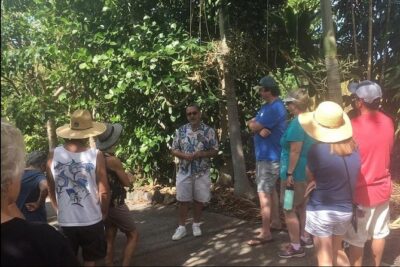
Award Winning Farm Tour: Coffee, Chocolate and Unique Gifts
Read our review →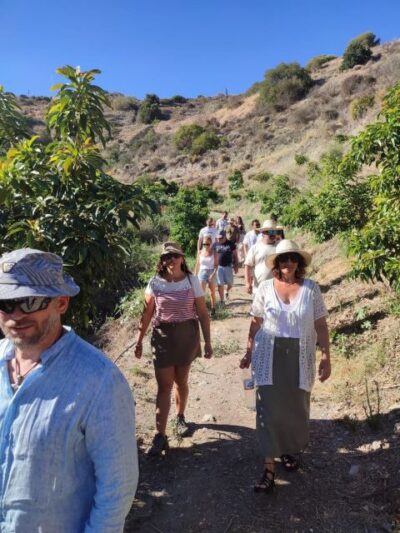
La Herradura Coffee Farm: tour in Europe’s only plantation
Read our review →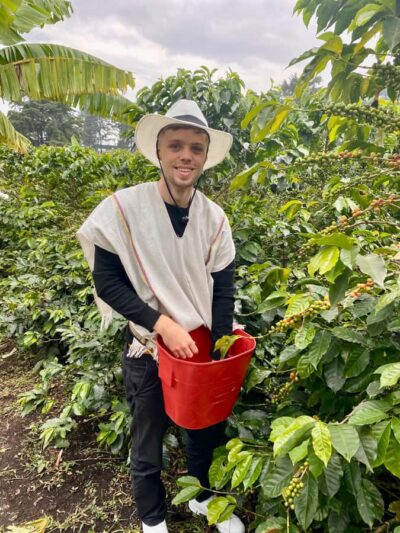
Medellín Coffee Farm Tour with Trolley and Cable Car Ride
Read our review →
Liamuiga Natural Farm Tour – St.Kitts’ Coffee Farm
Read our review →
Horseback Riding Coffee Farm Tour with Coffee Spa
Read our review →
From Bogotá: Coffee Farm and Tequendama Falls Tour
Read our review →
Coffee Farm Tour with Roasting & Tasting Workshop – Da Lat
Read our review →Browse the lists this tour appears in