
Review · THAILAND
Chiang Rai:Lanna Home Cooking Class at Give Green Farm House
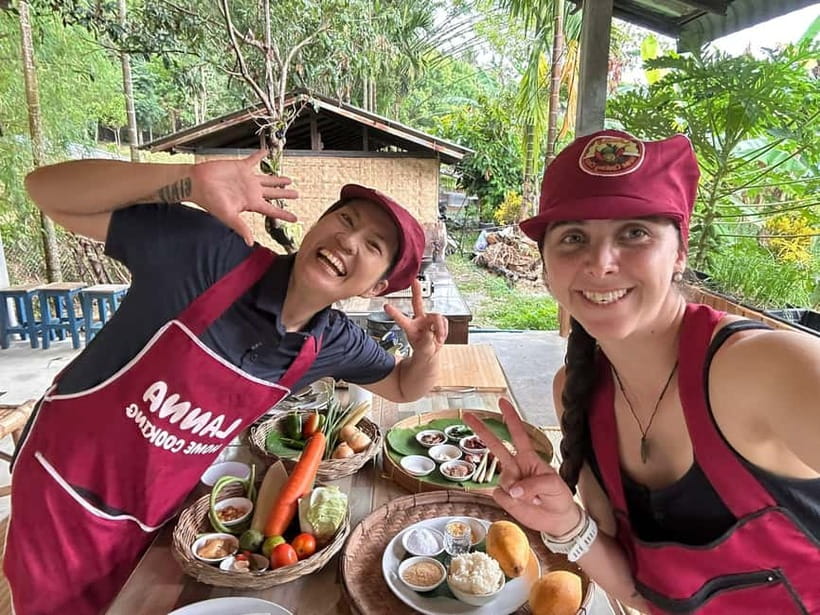
The best part of this Chiang Rai cooking class begins before the first pan heats up. Lanna takes you through a local market, explains unfamiliar ingredients, and encourages you to taste snacks along the way. Then you head to Give Green Farm House, where the class combines cooking, a family-run restaurant, and an organic garden.
I like the personal teaching and the useful choice of four food themes. I also like that you do the cooking yourself instead of simply watching a demonstration. The main consideration is that the class is built around eating a lot, so skip a large breakfast and tell Lanna about allergies or dietary needs before you begin.
Key points to know
- Market first: Learn about produce, spices, prepared foods, and local snacks before cooking.
- Four menu themes: Choose soups and curries, stir-fries, salads, or desserts.
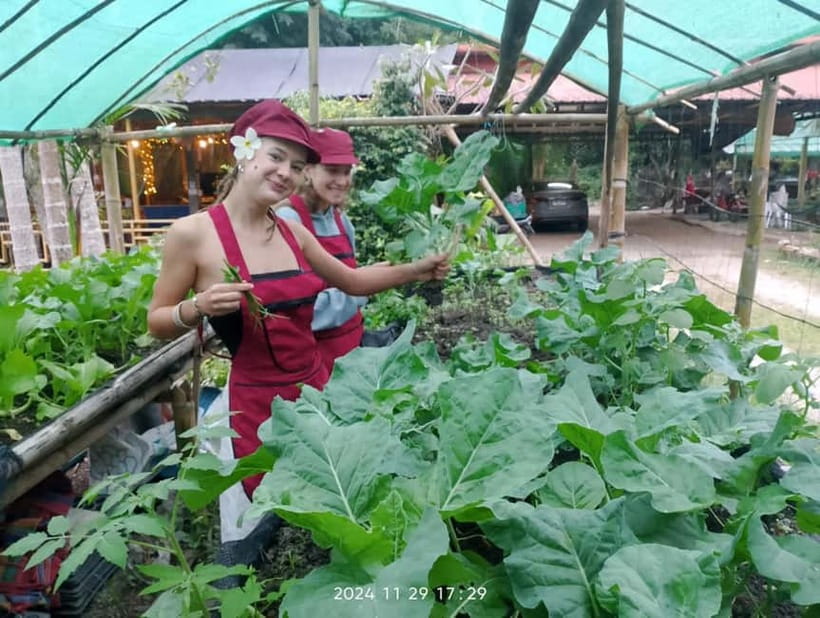
- Farm-to-table setting: Ingredients come from the organic garden and local sources.
- Lanna leads the class: Expect a warm, patient English-speaking instructor with help from her family and staff.
- Four hours with transport: Hotel pickup and drop-off are included around Mueang Chiang Rai.
- Good for beginners: Clear instructions, recipe sheets, and ingredient substitutions make the class practical at home.
Why this class feels more personal than a standard cooking lesson
Many cooking classes begin with a row of ingredients already measured and waiting. This one starts in the community. That small change matters because you first see the foods in the setting where local people buy and eat them.
Lanna is the central personality of the experience. She explains ingredients in English, shares stories about Northern Thai food and daily life, and keeps the mood light. Her family and staff help with the class, which adds to the feeling that you are visiting a working home-style food business rather than entering a formal school.
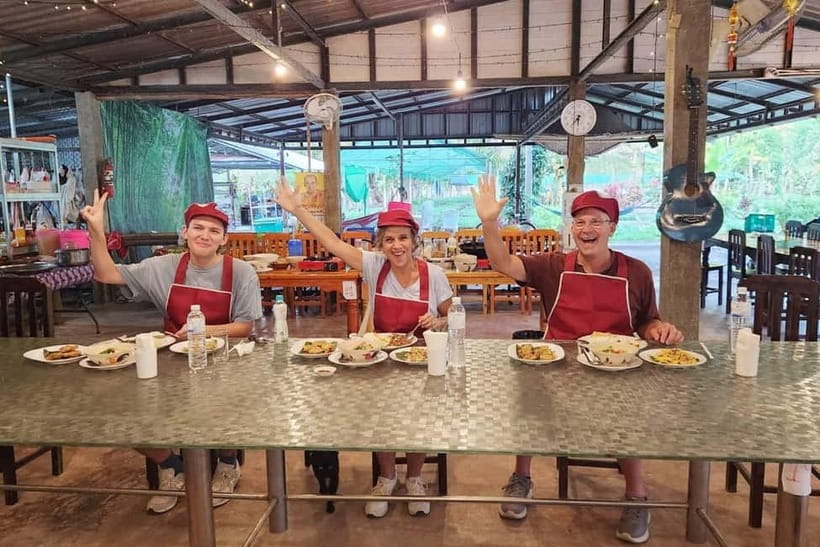
The group is described as small, allowing Lanna to give individual help. That is useful if you have never handled Thai curry paste, do not know how to balance sweet, sour, salty, and spicy flavors, or simply want someone to correct your technique before dinner is ready.
The atmosphere also suits people who like conversation. The drive to and from the activity is part of the social experience, and the class includes time to walk around the farm and learn how ingredients are grown. This is not only about collecting recipes. You get a look at how food connects with family, farming, markets, and regional identity.
More Cooking Classes in Thailand:
- Half-Day Thai Cooking Class at Organic Farm in Chiang Mai
★ 5.0 · 19,087 reviews - Chiang Mai: Authentic Cooking Class with Market & Farm Visit
★ 4.9 · 4,546 reviews - Chiang Mai: Cooking Class with Organic Farm at Mama Noi
★ 4.9 · 1,151 reviews
The local market visit comes before the cooking
Morning pickup is scheduled for 9:00 AM, and afternoon pickup for 3:00 PM. You should wait in your hotel lobby at least 10 minutes before pickup. Transport is included for locations in Mueang Chiang Rai, which removes the need to arrange a separate taxi to the farm.
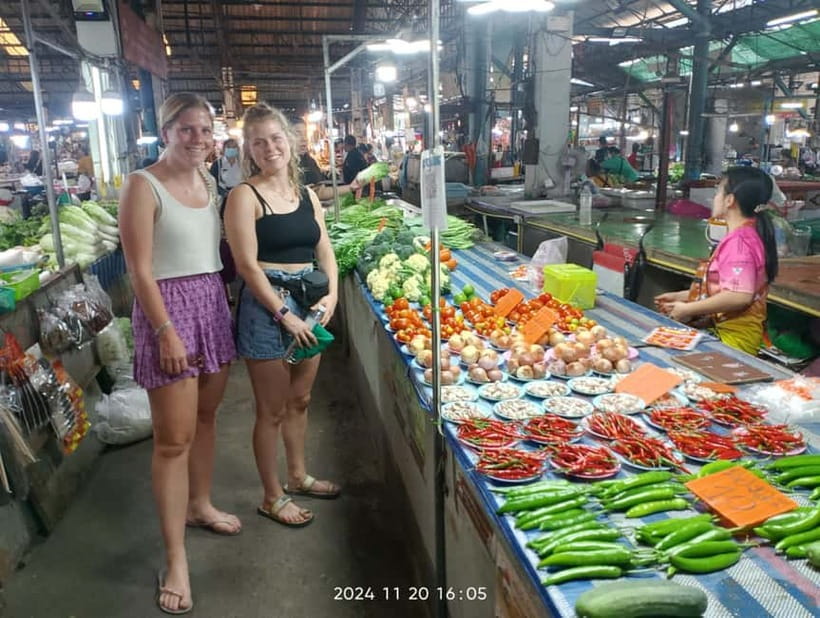
The first stop is a local market. Lanna introduces traditional ingredients, explains where they come from, and points out foods that may not be obvious to a first-time visitor. The market visit also includes tastings of local snacks and prepared foods, so arrive hungry.
This portion is especially useful if Thai food is still a puzzle to you. You might see unfamiliar herbs, spice pastes, vegetables, sweets, and ready-to-eat dishes, then learn how they appear in the recipes you will prepare later. Instead of hearing a list of ingredient names in a classroom, you can connect each item with its smell, color, texture, and use.
You should expect this to be a real local market visit rather than a polished food hall. That can mean the setting feels less controlled, and some foods may be unfamiliar. For many people, that is the point. Lanna’s guidance helps you try things with more confidence, and you can ask questions as you go.
The market also gives the class a cultural layer that a recipe-only lesson cannot provide. You learn what people buy, how foods are sold, and which ingredients matter in Northern Thai cooking. If you are interested in daily life, not just restaurant dishes, this may be the most distinctive part of the morning.
Choosing one of four Thai food themes
After the market, you continue to Give Green Farm House for the hands-on class. You select one main category from four options. The choice lets you shape the session around the kinds of Thai food you most want to take home.
Thai soups and curries
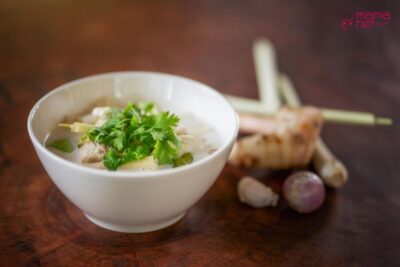
This is the choice for deep, aromatic dishes. Possible recipes include Tom Yum Kung, Tom Kha Gai, green curry, Khao Soi, and Hung-Lea with streaky pork.
The menu is particularly well suited to Chiang Rai because Khao Soi and Hung-Lea reflect Northern Thai food traditions. Tom Yum and Tom Kha offer a different lesson in balancing broth, herbs, heat, and coconut milk. If you want to understand Thai flavor building, this category gives you plenty to work with.
More farm tours around Thailand:
- Full Day Thai Cooking at Farm (Chiang Mai)
★ 5.0 · 1,127 reviews - Chiang Mai: 2-Day Jungle Trek with Elephant Farm & Raft Ride
★ 4.7 · 881 reviews - Floating & Railway Market and Coconut Farm Tour [Optional Luxury]
★ 5.0 · 835 reviews - Chiang Mai: HALF-DAY COOKING COURSE at a Thai Cooking Farm
★ 4.9 · 705 reviews
Thai stir-fries
The stir-fry category includes fried cashew nuts, Pad Kee Mao, sweet and sour dishes, fried basil, and Pad Thai.
This may be the most useful option for home cooks with limited time. Stir-fries teach you how ingredients change quickly in a hot pan and how sauces bring a dish together. Pad Thai and fried basil are familiar favorites, while Pad Kee Mao offers a chance to work with mixed vegetables and herbs.
Thai salads
The salad menu includes green papaya salad, green mango salad, egg fried salad, glass noodle salad, and lemongrass salad.
These are not bland side dishes. Thai salads typically depend on a lively balance of sour, sweet, salty, spicy, crunchy, and fresh elements. This category is a good pick if you want food that feels light but still has plenty of flavor. It also gives you a practical lesson in pounding, slicing, mixing, and adjusting seasoning.
Thai desserts
Dessert choices include mango sticky rice, bananas or pumpkin in coconut milk, banana samosas, deep-fried banana with pandan and coconut milk, and vegetable Thai spring rolls.
The spring rolls appear with the dessert choices in the supplied menu, so do not assume every selection is sweet. This category works well for anyone who enjoys coconut, fruit, pandan, and simple fried treats. It is also a good way to learn how Thai desserts use texture, not just sugar.
Hands-on cooking with room for beginners
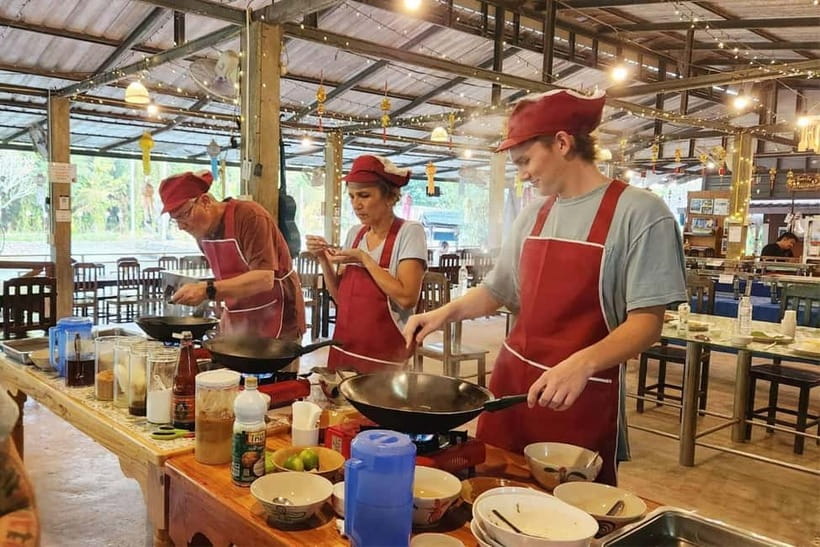
The purpose of the class is to have you prepare the food yourself. Lanna guides you through the ingredients and techniques, while assistants help with practical steps. You receive a cooking sheet so you can recreate the dishes after returning home.
No previous experience is required. The instruction is paced for beginners, and the setting allows you to ask for help as you work. That is important with Thai food because small details matter. The order in which you add ingredients, the amount of curry paste, and the balance of seasoning can change the final dish.
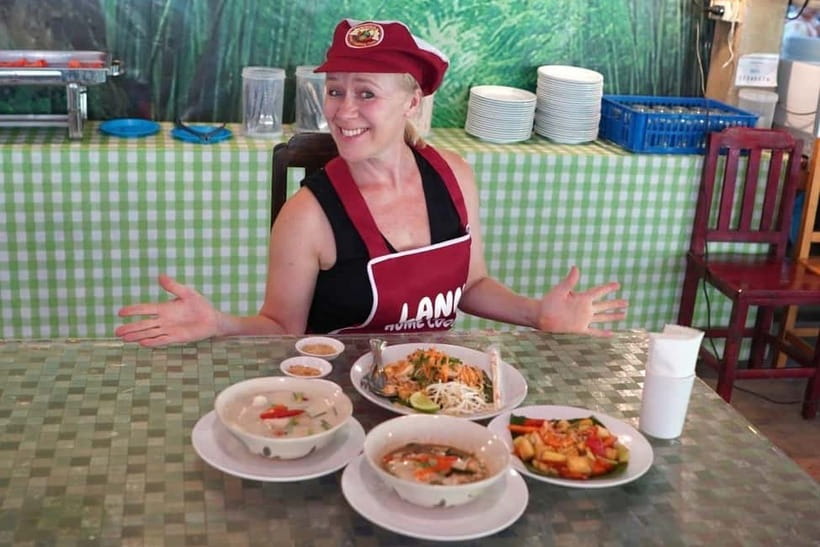
The menu is described as five signature dishes within your selected category. Actual sessions have included four dishes, while another session included five, so the number may vary by the chosen theme and class arrangement. Either way, plan to eat a substantial meal at the end.
Vegetarian adjustments are available, and tofu and extra vegetables have been used when needed. You should raise dietary requests in advance rather than waiting until the cooking begins. Allergies also need to be discussed with Lanna before the class.
The class is not presented as a chef-training course. You will not leave with a professional kitchen certificate or a long technical curriculum. You will leave with practical recipes, a better feel for Thai ingredients, and the confidence to make familiar dishes without copying every step blindly.
Give Green Farm House adds a farm and family setting
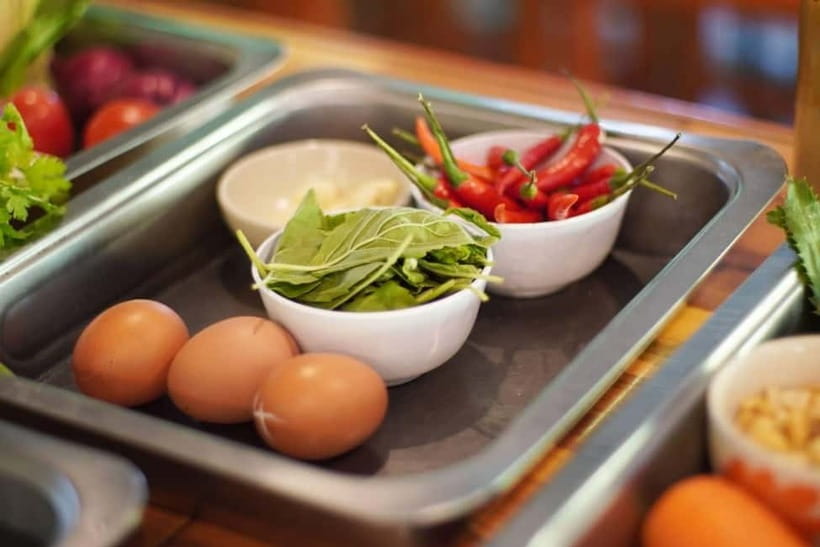
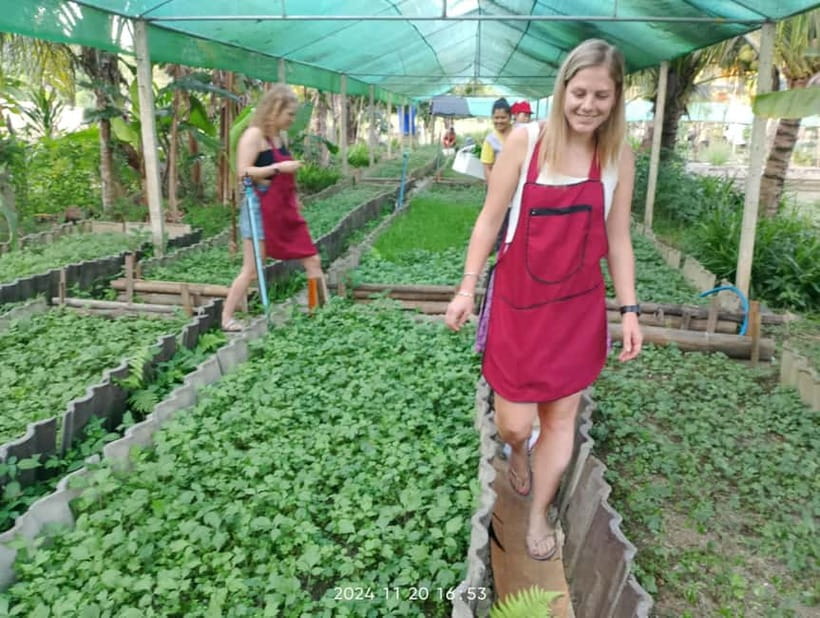
The cooking takes place at a family-run restaurant and organic farm. Ingredients are sourced locally, with produce coming from the garden when available. You also have time to walk around the farm and learn more about what is grown there.
That setting gives the meal a clear connection to its ingredients. You are not simply told that Thai food uses fresh herbs and vegetables. You can see the place where some of those ingredients are cultivated, then use them in your own cooking.
The farm visit is not described as a long agricultural tour, so keep your expectations sensible. It is part of the four-hour experience, alongside shopping and cooking. If you want a detailed farming course, this will feel brief. If you enjoy seeing the source of your food before eating it, the stop adds real value.
The restaurant setting also makes the end of the class feel relaxed. You sit down to eat what you prepared, rather than rushing straight back to your hotel. Lanna’s staff handle the background work while you enjoy the meal and talk about the recipes.
How much food you will eat
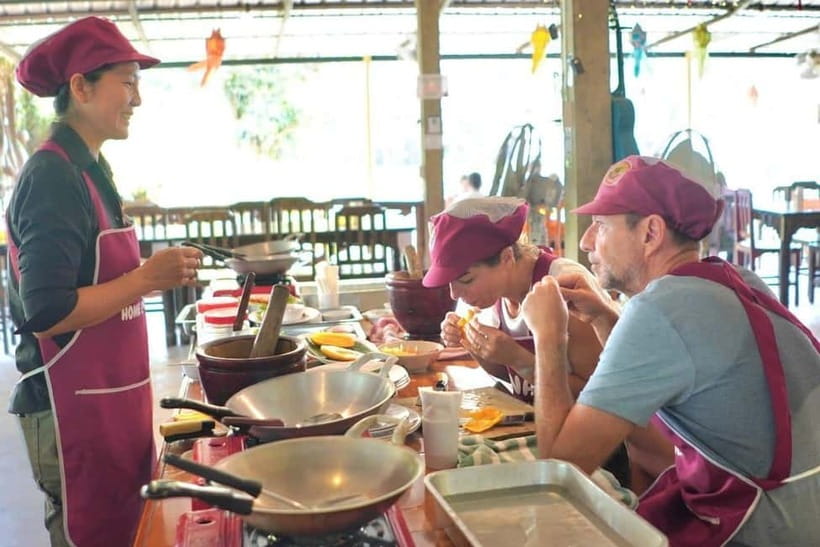
The market includes tastings, and the cooking session ends with several dishes. That makes the class a poor match for anyone hoping for a light snack or a quick lesson.
I recommend skipping breakfast before the morning class, or eating only something small. You may taste snacks at the market, cook four or five dishes, and then eat the finished food. The afternoon session has the same issue in reverse, so avoid a large lunch.
The generous food portions are part of the value. At $56 per person, you are paying for transport, a market visit, instruction, ingredients, drinks, the farm setting, and a full meal. Compared with paying for a restaurant meal and a separate taxi, the price is reasonable if you value the teaching and cultural context.
The value is weaker if you only want to watch someone cook or if you already know Thai cuisine well. The main benefit is participation. You are buying time with an instructor, not only a plate of food.
Small details that make the session practical
Drinking water is included, and a cooking sheet gives you something to use at home. Bring cash and any personal medication you need. The included pickup and drop-off are limited to the listed Mueang Chiang Rai area, so confirm that your hotel is covered before booking.
The class is conducted in English. Lanna’s teaching style comes across as patient, cheerful, and conversational, which helps if you feel unsure about cooking in a group. Her willingness to adjust food for vegetarians and allergies is another practical advantage.
Some sessions are private for couples, while the experience is generally designed for small groups. That means the exact feel can vary. You may have a very personal lesson or share the cooking with a few other people, but the format is intended to allow individual attention.
The activity has a five-out-of-five rating from 61 reviews, and 93 percent of participants gave the transport a perfect score. Those numbers suggest that the operation is dependable, but I would still confirm pickup details and arrive early at the hotel lobby.
Free cancellation is available up to 24 hours before the experience for a full refund. You can also reserve now and pay later, which is useful if your Chiang Rai plans are still changing.
Who should book this Chiang Rai cooking class?
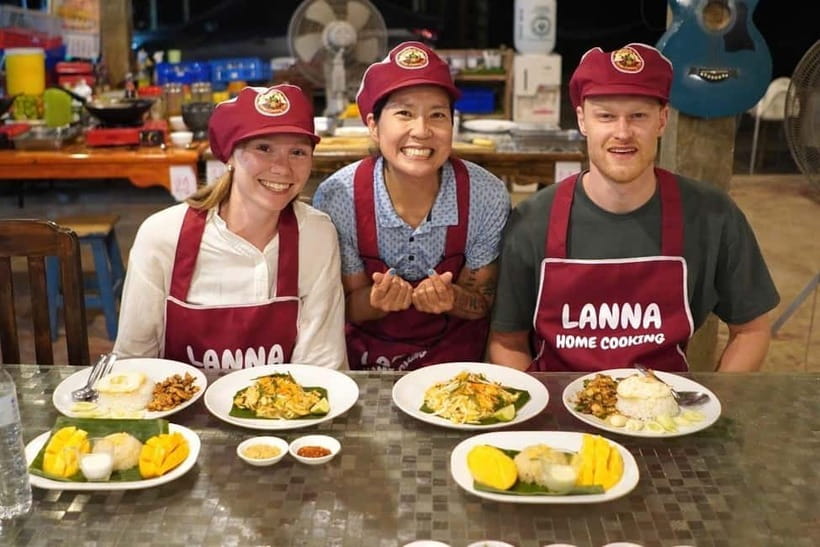
I would recommend it most strongly to first-time visitors who want an easy way into Thai food. You do not need to know the difference between galangal and ginger, and you do not need knife skills beyond the basics. Lanna and her assistants guide you through the process.
It is also a good fit for couples, families, and small groups of friends. The class has enough food and activity to keep different ages involved, though anyone with a serious food restriction should confirm the possible substitutions before paying.
Food-focused visitors will appreciate the market. People interested in Northern Thai culture will get extra value from Khao Soi, Hung-Lea, the farm, and Lanna’s explanations of local ingredients. Even if you choose stir-fries or desserts, the market and farm connect the lesson to Chiang Rai rather than making it feel like a generic Thai cooking class.
I would be less quick to recommend it to someone with limited time who only wants a single famous dish. Four hours is a real half-day commitment, and the market, transport, farm walk, preparation, and meal all take part in the schedule.
Should you book it?
Book this class if you want to cook, eat, and learn how food fits into local life. The strongest reasons are the market visit, the small-group attention, Lanna’s friendly teaching, and the chance to use farm ingredients in a family-run setting.
Skip it if you dislike long food sessions, prefer a formal chef school, or already have a packed four-hour itinerary in Chiang Rai. For most visitors, though, the $56 price is fair because it combines transport, tastings, instruction, a farm visit, and a full meal. Bring an appetite, choose your menu carefully, and give Lanna advance notice about dietary needs.
FAQ
How long does the Lanna Home Cooking Class last?
The experience lasts four hours, including transportation, the market visit, time at Give Green Farm House, the farm visit, and cooking.
What time does pickup take place?
Morning pickup is scheduled for 9:00 AM, and afternoon pickup is scheduled for 3:00 PM. You should wait in your hotel lobby at least 10 minutes before pickup.
Is hotel pickup and drop-off included?
Yes. Pickup and drop-off are included for the Mueang Chiang Rai area.
Do I need cooking experience?
No. Beginners are welcome, and the English-speaking instructor guides you through the recipes and techniques.
Can I choose what kind of Thai food to cook?
Yes. You choose one category: soups and curries, stir-fries, salads, or desserts.
Can vegetarian dishes or substitutions be arranged?
Yes. Vegetarian adjustments, including vegetables and tofu, are available. Tell the instructor about dietary needs or allergies before the class.
What should I bring?
Bring cash and any personal medication you need. Drinking water, cooking instruction sheets, ingredients, and transport are included.
Newly listed farm visits around Thailand
- Pattaya sheep Farm Entrance Tickets★ 4.5 · 2 reviews
- Chiangmai Coffee Farm Tour★ 5.0 · 34 reviews
- Plough to Plate: Be A Rice Farmer in Phetchaburi from Hua Hin★ 5.0 · 4 reviews
- Authentic Thai Cooking Class and Farm Visit in Chiang Mai★ 5.0 · 66 reviews
- Aroidee’s Farm-Fresh Thai Cooking Experience★ 5.0 · 8 reviews
- Full-Day Thai Cooking Class with Grandma – Market and Farm Tour★ 5.0 · 48 reviews
- One Day Tour Doi Suthep Temple, Palad Temple, Orchid Farm, Longneck hill tribe village (Private tour)★ 5.0 · 7 reviews
- Chiang Mai Farm Life & Khao Soy Tasting on a Half-Day Boat Tour★ 4.5 · 64 reviews
Cooking Classes, compared.
Half-Day Thai Cooking Class at Organic Farm in Chiang Mai
Read our review →
Cooking Class and Lunch at a Tuscan Farmhouse with Local Market Tour from Florence
Read our review →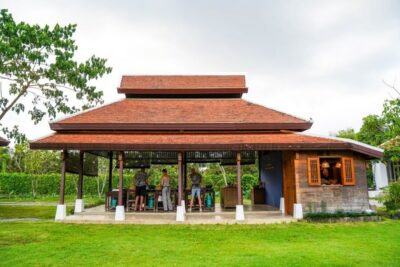
Authentic Cooking Class with Market & Farm Visit
Read our review →
Hands-On Cooking Class & Farmhouse Tour on the Amalfi Coast
Read our review →
Thai Cooking Class | Since 2012 | Farm to Table
Read our review →Browse the lists this tour appears in