
Review · DALAT
Experience specialty coffee with sustainable coffee farmers
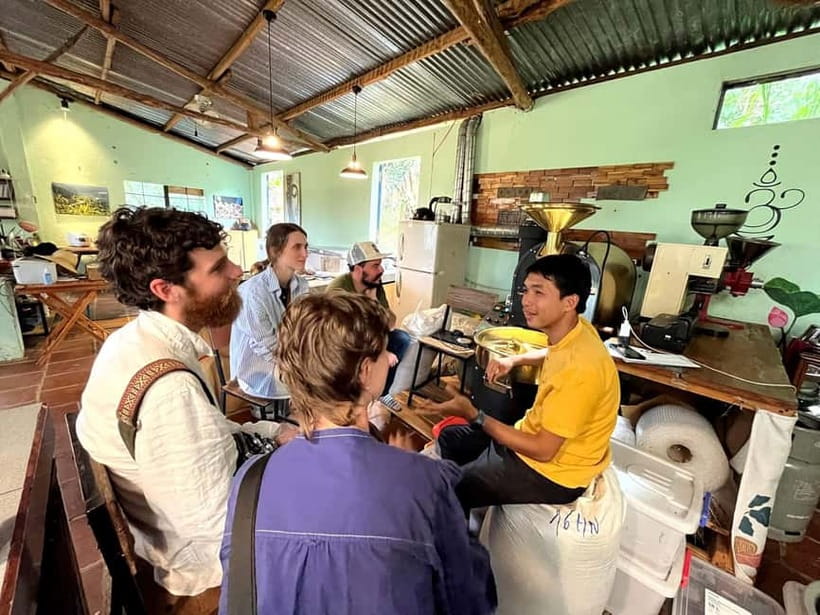
The most interesting part of this Da Lat experience is that your guide, Huy, grows and processes the coffee himself. You taste coffee as a farmer understands it: sour, sweet, fruity, light, or dark, without the added ingredients often found in everyday Vietnamese coffee. I especially like the five-coffee comparison and the chance to roast beans yourself, then make a traditional phin coffee while looking over the city.
I also like the small group size, the relaxed cafe setting, and Huy’s clear passion for sustainable farming. The main thing to consider is timing: the basic session can take about 90 minutes, while some bookings may run much longer and include a farm visit. Confirm the schedule you want, especially if you have other plans in Da Lat.
Key points to know before booking
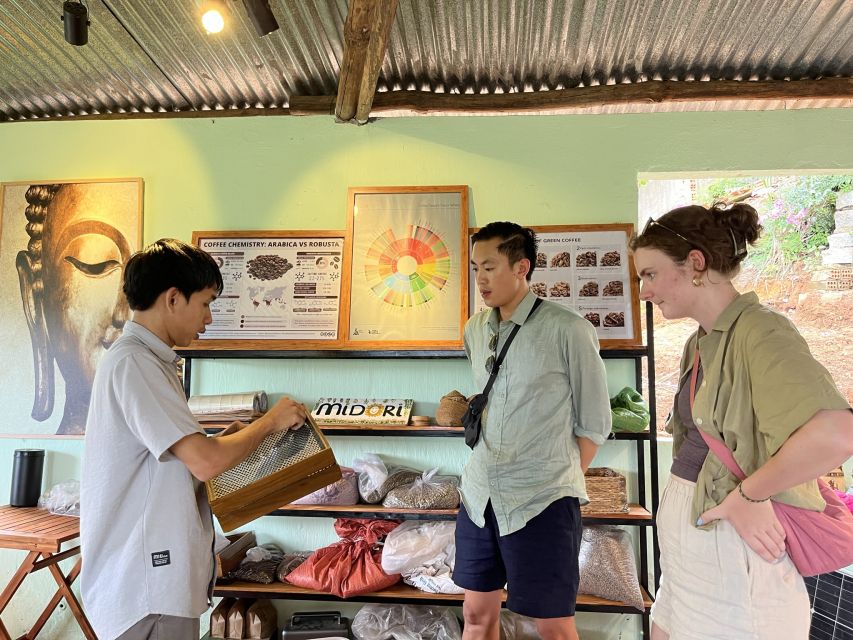
- Taste five coffees from one farmer’s production: Compare Arabica and Robusta beans prepared with different processing and roasting methods.
- Roast your own beans: Watch green beans change color and aroma as you turn them into coffee ready for brewing.
- Learn the source of the flavor: Huy explains how growing and processing choices affect sour, sweet, fruity, and darker notes.
- Make Vietnamese phin coffee: Finish by brewing your own cup with the traditional slow-drip filter.
- Meet at a central Da Lat cafe: HuyEco Coffee & Culture is reachable on foot, by motorbike, taxi, or booking app.
- Expect a personal session: Groups are limited to 10 people, and the guide speaks English and Vietnamese.
Why this Da Lat coffee session is different
Da Lat is widely associated with coffee, but ordering a cup here does not always tell you much about how it was grown or made. This experience connects the drink in your hand with the farmer who produced the beans.
Huy brings coffee from his own farm to HuyEco Coffee & Culture. That gives the session a useful focus. You are not simply being shown a menu of fashionable brewing methods. You are comparing coffee shaped by different beans, processing choices, and roast levels.
I like that the tasting is built around contrast. Arabica and Robusta do not offer the same character, and the way coffee is processed before roasting can change what you notice in the cup. One coffee may taste sharper or fruitier, while another may feel fuller and darker. You do not need a trained palate to take part. Huy explains what to look for and gives you time to compare.
This is a good choice if you have been drinking Vietnamese coffee but still think of it mainly as strong coffee with condensed milk. The session gives you a clearer look at the beans themselves and at the flavors that can be hidden by a heavy preparation.
More Coffee Farm Tours in Vietnam
- Coffee Farm Tour with Roasting & Tasting Workshop – Da Lat
★ 5.0 · 126 reviews - Dalat Countryside Motorbike Day Tour–Coffee Farms & Pagodas
★ 5.0 · 53 reviews - Dalat: MOTORBIKE TOUR TO PONGOUR FALLS- SILK- COFFEE FARM
★ 4.9 · 52 reviews
Meeting Huy at HuyEco Coffee & Culture
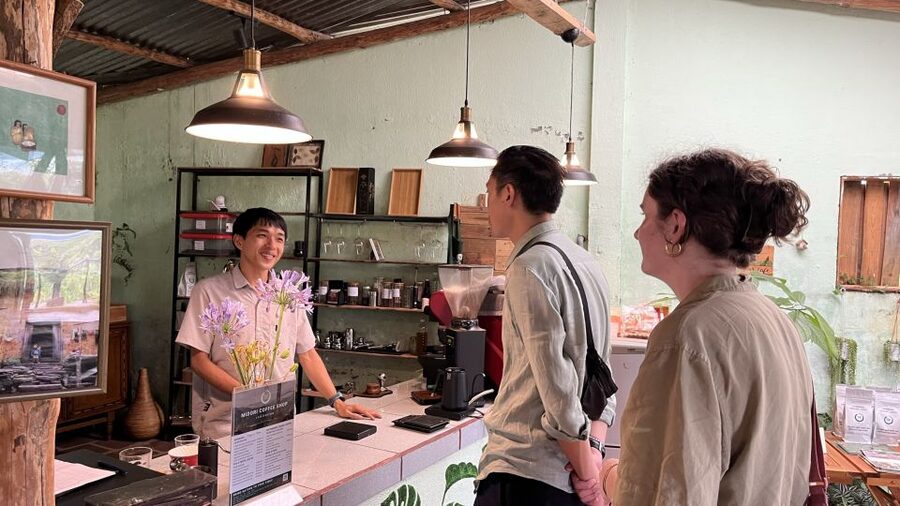
The meeting point is HuyEco Coffee & Culture in central Da Lat. You can walk there or use a motorbike, taxi, or booking app. Search for the exact name in Google Maps and check the location carefully before setting out.
The cafe is more than a place to wait for a tour. It is where Huy presents his own coffee, explains his work, and leads the tasting and brewing activities. The setting has verandas and views over the city, giving the session a calm, open feel rather than the rushed pace of a quick cafe stop.
Huy is the key part of the experience. He explains coffee in plain language, answers questions, and brings humor to the lesson. His partner may also be involved in the business, and the cafe has even been noted for its friendly kittens. That is a small detail, but it helps explain why the place feels like a working family business rather than a formal classroom.
Bring your passport, as this is listed as a requirement. You may also want a light jacket. Da Lat can feel cold, and one participant arrived without warm clothing and needed to borrow a jacket.
Comparing Arabica, Robusta, and five different cups
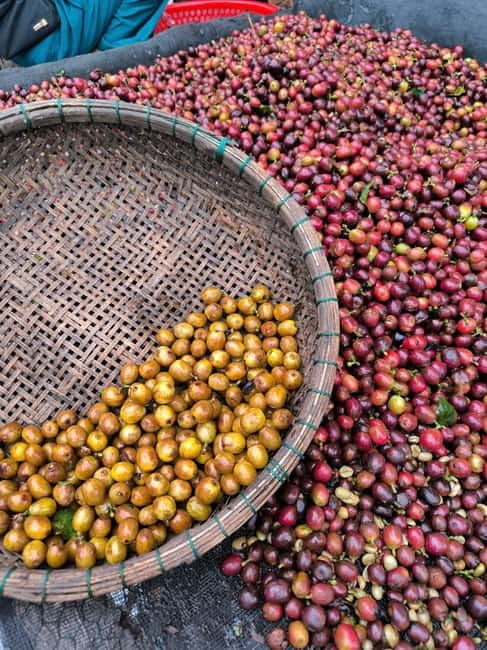
The tasting is the heart of the session. You receive five coffee drinks, included in the $14 price, and compare beans from Huy’s farm using different processing and roast methods.
The point is not to name a favorite and move on. Huy uses the coffees to show how much can change between cups. Arabica and Robusta have different qualities, and roasting can bring out different tastes in each. Light, medium, and dark roasting give you another way to see how heat affects the final drink.
A light roast can preserve more of the bean’s sharper or fruitier character. A medium roast may offer a more balanced middle ground. A dark roast generally brings a heavier, more familiar flavor. The exact taste depends on the beans and process, but the format lets you compare the results directly instead of relying on a long explanation.
I find this useful for anyone who buys coffee at home. You begin to understand why two bags labeled Vietnam can taste so different. You also get a better idea of what you prefer before buying beans or ordering specialty coffee later in your trip.
The session does not require you to have coffee vocabulary. If you can say that one cup tastes brighter, heavier, sweeter, or more unusual than another, you are already doing the important part. Huy guides the comparison without turning it into a test.
Roasting green beans by hand
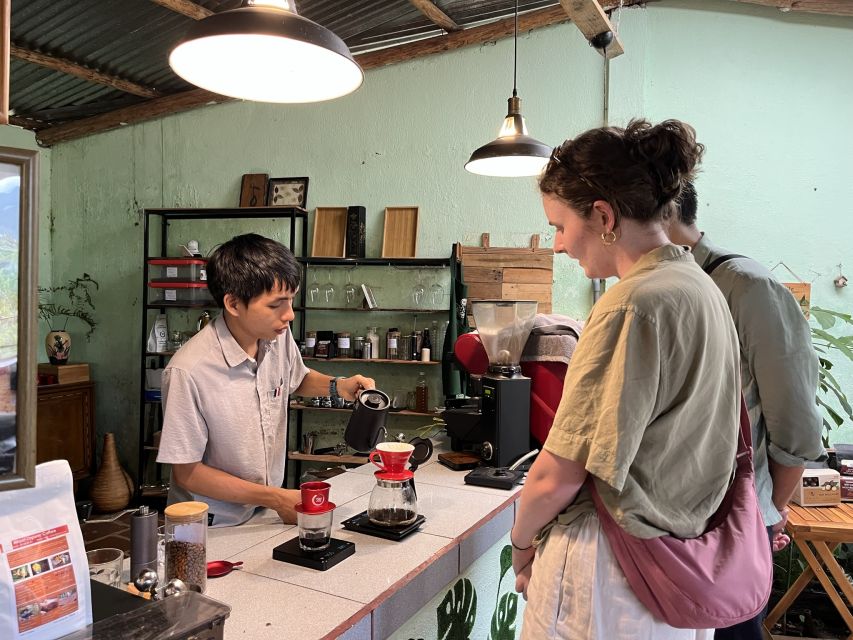
One of the most memorable activities is roasting coffee yourself. You start with green beans and watch them change into the dark brown beans most people recognize.
This hands-on step matters because it makes roasting feel like a process rather than a label on a bag. You can see that dark roast is not a separate kind of coffee. It is a choice about how far the beans are heated, with an effect on aroma, body, and flavor.
The activity also gives you a better sense of the work behind a finished cup. Coffee passes through growing, harvesting, processing, drying, roasting, grinding, and brewing. The experience does not reduce farming to a photo opportunity. It shows at least some of the practical decisions that shape the drink.
Allow yourself time to notice the smell as the beans roast. The change from green beans to roasted beans is quick and easy to understand, even if you have never handled coffee before. You may also leave with a stronger interest in trying different beans at home.
Same countryside, another kind of harvest:
- Mekong Day Trip Explore Village Bicycle CookingClass Group 12 Pax
★ 5.0 · 705 reviews - From Ho Chi Minh: Can Gio Trek – Monkey Island & Crocodile Farm
★ 5.0 · 353 reviews - Cocolocal Farm Cooking Class with market tour and basket boat
★ 5.0 · 231 reviews - Phu Quoc: Kayaking with Starfish Beach and Bee Farm Tour
★ 4.4 · 213 reviews
Learning what sustainable coffee farming means
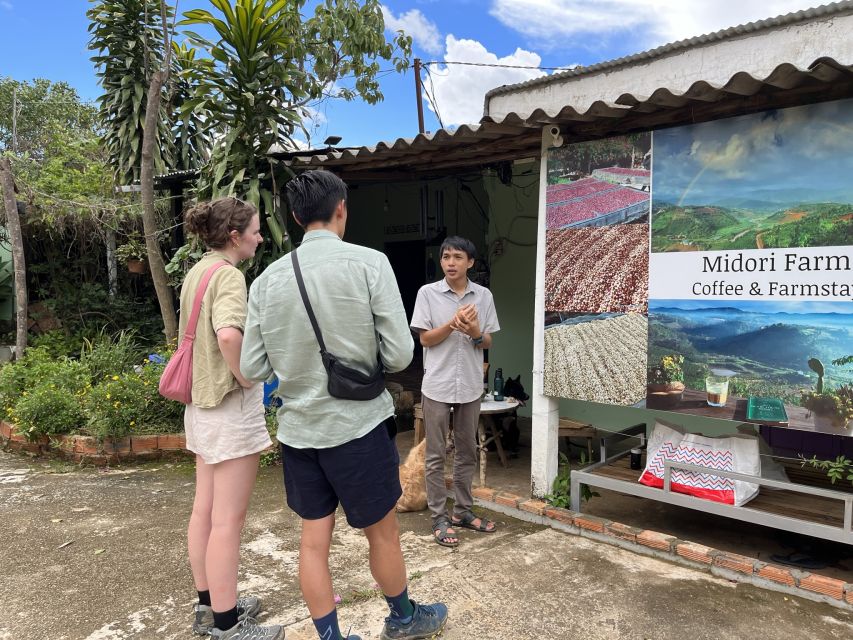
Huy talks about growing coffee in a more sustainable way and explains how he manages coffee from farm to cup. This part gives the tasting a wider purpose.
The useful lesson is that flavor and farming are connected. The coffee plant, the processing method, and the roast all influence what you drink. Huy’s approach lets you ask where the beans came from and what choices were made before they reached the cafe.
A longer version of the experience may include a farm visit, along with the vegetable garden and more time learning about the growing process. Some sessions described by participants lasted around an hour and a half, while a farm-focused outing took longer. The advertised duration ranges from 90 minutes to five hours, so you should check the available start time and format when booking.
Do not assume every booking has the same farm access. The central cafe is the stated meeting point, and the length appears to depend on the option selected. If visiting the growing area is your main goal, ask for the farm-inclusive version rather than booking the shortest coffee session.
Making your own Vietnamese phin coffee
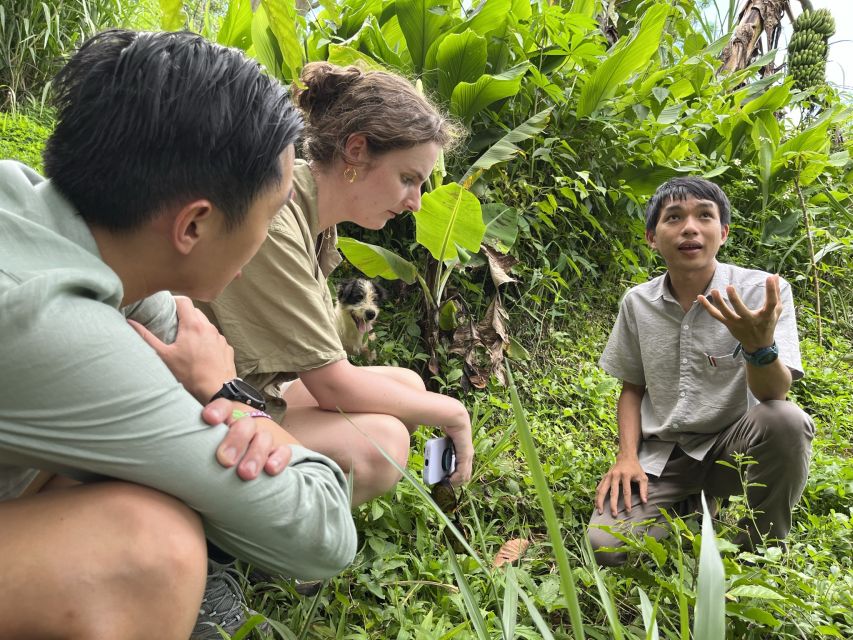
The final brewing activity uses a traditional Vietnamese phin filter. This is a simple metal filter that sits on top of your cup and lets coffee drip slowly into it.
Making the drink yourself is more useful than simply being handed one. You can see how the method differs from faster brewing systems and how it creates the concentrated coffee often served in Vietnam. Huy helps you through the process, so you do not need previous experience.
The phin is also a practical souvenir of the experience. Once you understand the basic method, you can buy a filter and recreate the drink at home. The session gives you context for the strong coffee you will encounter in cafes across Vietnam.
You make your cup while looking over Da Lat. That view adds a pleasant finish, but the brewing lesson remains the real value. The setting is attractive without distracting from the coffee itself.
How the timing affects the value
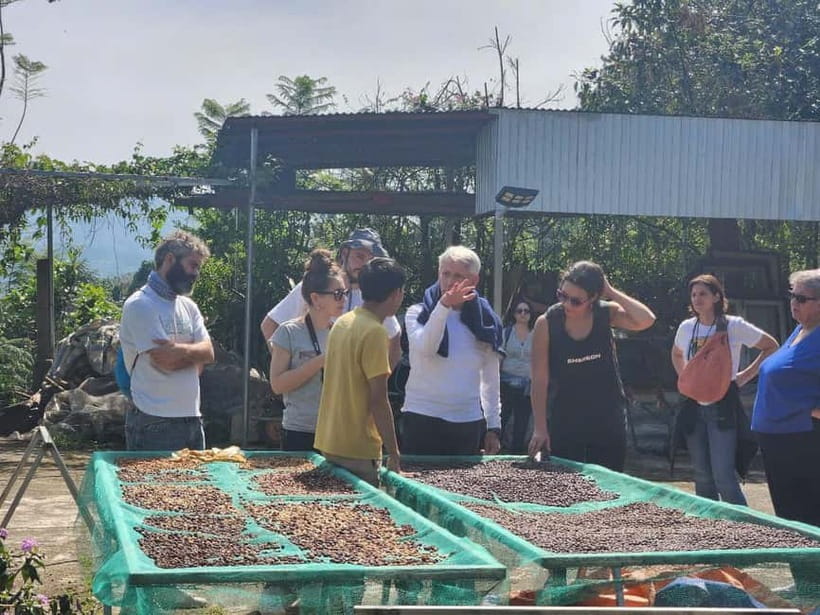
At $14 per person, this is strong value if you enjoy coffee or want one well-explained food-and-drink activity in Da Lat. Five included coffee drinks alone make the price reasonable, and you also receive instruction, roasting practice, brewing practice, and a look at sustainable production.
The price is especially fair for a small group limited to 10 people. You have a better chance to ask questions and take part in the roasting and brewing rather than simply watching a guide work.
The duration needs closer attention. A 90-minute session suits you if you want a compact activity between sightseeing stops. A longer option makes more sense if you want to visit the farm, see the vegetable garden, and spend more time discussing cultivation and processing.
Extra drinks and food are not included. Hotel and airport transfers are also not included, so you need to reach the cafe yourself. The central location makes that fairly simple, but a farm visit may require more planning. One earlier participant needed help arranging taxis to and from the farm, so ask about transport if your chosen format leaves the city center.
Who will enjoy this most
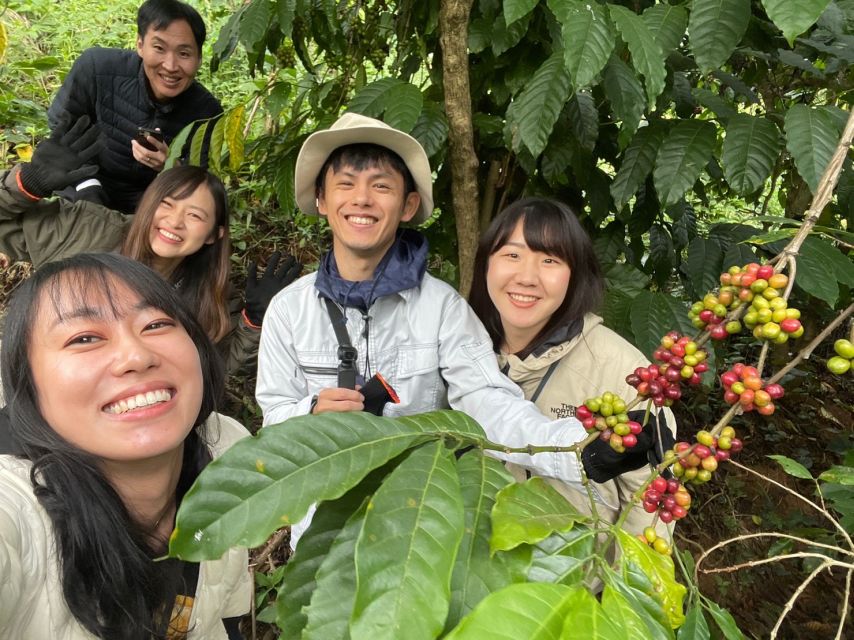
I would choose this for coffee drinkers who want to understand Vietnamese coffee beyond the usual condensed milk preparation. It also suits curious cooks, people interested in sustainable agriculture, and anyone who likes hands-on activities more than a standard sightseeing stop.
It is a good rainy-day or cool-weather choice in Da Lat. Much of the session takes place at the cafe, and the activity still works even if you are not seeking a full outdoor excursion.
You do not need to be a specialty coffee expert. Huy’s teaching is aimed at beginners as well as people who already know about beans and brewing. If you have an interest in coffee, you will have plenty to taste and compare. If you do not drink coffee, however, five cups may be more than you want, and this is not the best use of your time.
The experience also suits solo visitors and couples. A group of up to 10 keeps it social without making the session feel like a large tour. English and Vietnamese are available, so English-speaking visitors can follow the explanations.
What I would plan before going
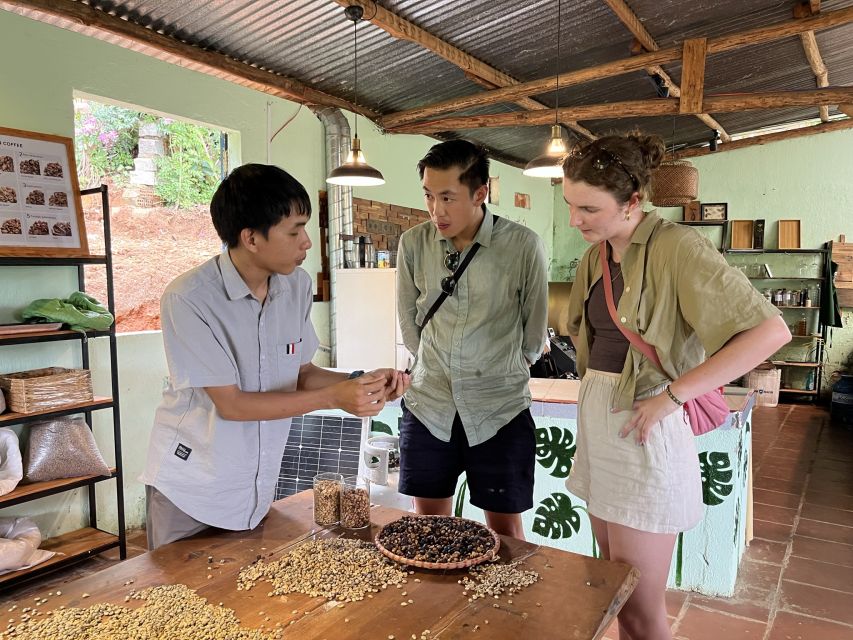
I would book a time that leaves at least two hours free, even if you expect the shortest version. The tasting, discussion, roasting, and phin brewing can fit into about 90 minutes, but questions and farm-related additions may extend the visit.
I would also confirm these points before you pay:
- Is your booking for the cafe session only or a farm-inclusive option?
- How long is the selected format?
- Is transport needed for any farm visit?
- Is the meeting point the central HuyEco Coffee & Culture cafe?
Wear something comfortable and bring your passport. A jacket is sensible in Da Lat, especially if you plan to sit on an open veranda or visit the farm.
The activity allows free cancellation up to 24 hours before the start time, and you can reserve without paying immediately. That is useful if your Da Lat plans depend on weather or transport.
Should you book HuyEco Coffee & Culture?
Book it if you want a personal introduction to Vietnamese coffee led by the farmer who grows it. The combination of five coffees, hands-on roasting, sustainable farming discussion, and phin brewing gives you far more than a normal cafe tasting for $14.
I would be more cautious if you dislike coffee, need a strictly timed activity, or expect every booking to include a full farm tour. Check the duration and format first. For most coffee drinkers, though, Huy’s small-group session is an easy way to spend part of a Da Lat day and leave with a better understanding of what is in your cup.
FAQ
Where does the coffee experience meet?
You meet at HuyEco Coffee & Culture in central Da Lat. The cafe can be reached by walking, motorbike, taxi, or booking app. Check the exact Google Maps location carefully.
How much does the experience cost?
The listed price is $14 per person.
How long does the activity take?
The available duration ranges from 90 minutes to five hours. Check the available start times and selected format when booking.
How many coffees are included?
Five coffee drinks are included. The tasting can include Arabica and Robusta prepared with different processing and roasting methods.
Do I get to roast coffee myself?
Yes. You roast coffee beans yourself, beginning with green beans and turning them into roasted beans ready for brewing.
Can I make Vietnamese phin coffee?
Yes. The experience includes making your own traditional phin coffee while looking over Da Lat.
What languages does the guide speak?
The live guide speaks English and Vietnamese. The group is limited to 10 participants.
What should I bring?
Bring your passport. A jacket can also be useful because Da Lat may feel cold, particularly in open areas.
Newly listed farm visits around Vietnam
- Sapa Half Day Local Farming Experience★ 5.0 · 3 reviews
- Hue Organic Farm Visit and Traditional Cooking Class★ 5.0 · 4 reviews
- Private Cycling Tour in Rural Hue with Farming Experience★ 5.0 · 18 reviews
- Tra Que Village Cycling And Farming★ 5.0 · 15 reviews
- Experience Buffalo Ride and Farmer in Hoi An★ 5.0 · 3 reviews
- Hoi An Rural Life And Cooking At Organic Farm★ 5.0 · 7 reviews
- Hoi An Home Hosted Meal in Rice Farmer Home★ 5.0 · 3 reviews
- Sunset photo tour with the farmers★ 4.5 · 7 reviews
Coffee Farm Tours, compared.
Award Winning Farm Tour: Coffee, Chocolate and Unique Gifts
Read our review →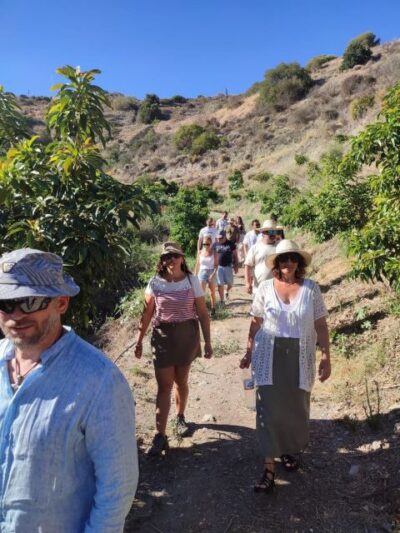
La Herradura Coffee Farm: tour in Europe’s only plantation
Read our review →
Medellín Coffee Farm Tour with Trolley and Cable Car Ride
Read our review →
Liamuiga Natural Farm Tour – St.Kitts’ Coffee Farm
Read our review →
Horseback Riding Coffee Farm Tour with Coffee Spa
Read our review →
From Bogotá: Coffee Farm and Tequendama Falls Tour
Read our review →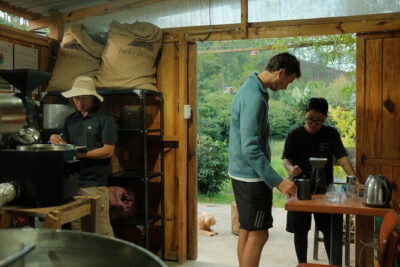
Coffee Farm Tour with Roasting & Tasting Workshop – Da Lat
Read our review →Browse the lists this tour appears in