
Review · SIEM REAP
Siem Reap: Khmer Water Blessing by Monk and Lotus Farm Visit
The most memorable part of this four-hour Siem Reap outing is the monk’s water blessing, a Cambodian Buddhist ceremony in which you sit at a local pagoda and receive sacred water, prayers, and a red ritual bracelet. It is not a quick photo stop. You get time to learn what the temple is for, why lotus flowers matter, and how local people approach the ceremony.
I like the easy mix of ordinary local life and spiritual practice. A fried-banana stop, lotus farming, and a tuk-tuk ride to Wat Po Banteaychey make the experience feel grounded. I also like the guides’ personal touch. Sarath and Hong are named by past participants as warm, capable English speakers who explain Cambodian history and daily life clearly.
The main consideration is practical but important: you will get completely wet during the blessing. Bring a towel, dry clothes, and comfortable clothing. The tour is not suitable for wheelchair users, and the $55 price is best value if you want the guide, transport, donations, snack, and farm visit bundled together rather than only the ceremony.
Key points to know before booking
- The water blessing is a full soaking: Bring a towel and a complete change of clothes, not just a spare shirt.
- The lotus flowers become part of the ceremony: You pick flowers at the farm and prepare them as an offering at the pagoda.
- You get more than a temple visit: The guide explains Buddhist beliefs, temple roles, and local customs before the blessing.
- Local food is part of the route: Try fried banana and sweet potato from a Siem Reap seller who has operated for more than 20 years.
- Tuk-tuk transport keeps the outing personal: Hotel pickup, local stops, and return to your hotel or central Siem Reap are included.
- The tour is led in English: Guides including Sarath and Hong have been praised for clear explanations and considerate help during the ceremony.
A spiritual morning that feels connected to daily life
Many Siem Reap excursions focus on monuments. This one takes a different path. You begin with a royal shrine, stop for a simple local snack, watch lotus farming, and finish at a working pagoda. The result is a small look at how religion, food, farming, and family life fit together in Cambodia.
That order matters. You do not arrive at the blessing with no context. Your guide first helps you understand the places and customs you are seeing. By the time you reach Wat Po Banteaychey, the lotus flowers in your hands have a clear purpose, and the ceremony feels less like a staged activity.
The pace is also manageable. The full outing lasts about four hours, with roughly 30 minutes at Preah Ang Chek Preah Ang Chorm Shrine, 30 minutes at the lotus farm and shop, and about an hour at the pagoda. Travel time between stops fills out the rest of the morning or afternoon, depending on the departure time you choose.
More farm tours around Siem Reap:
- Siem Reap Lotus Silk Farm Discovery tour & Lake experience
★ 4.7 · 291 reviews - Siem Reap: Lotus Silk Farm- Tour, Lake & Masterclass
★ 4.9 · 77 reviews - Angkor Silk Farm & Lotus Silk Farm: Siem Reap Discovery Tour
★ 4.8 · 68 reviews
Preah Ang Chek Preah Ang Chorm Shrine
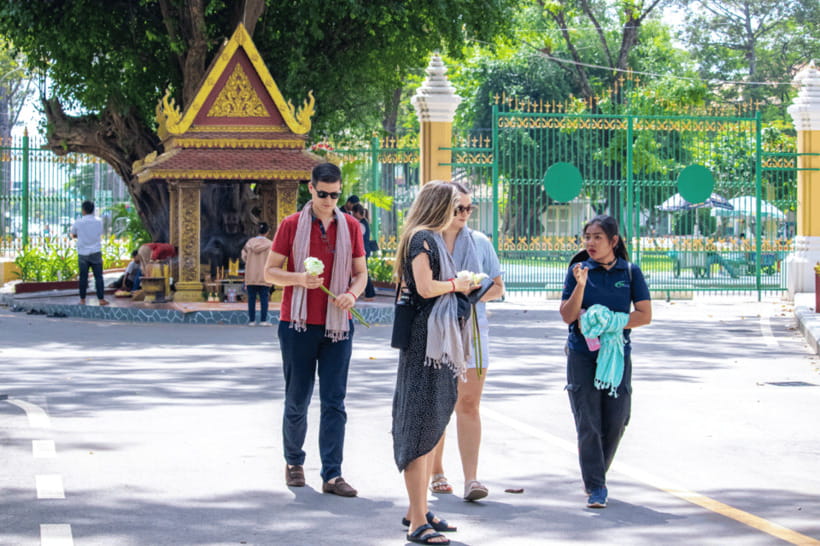
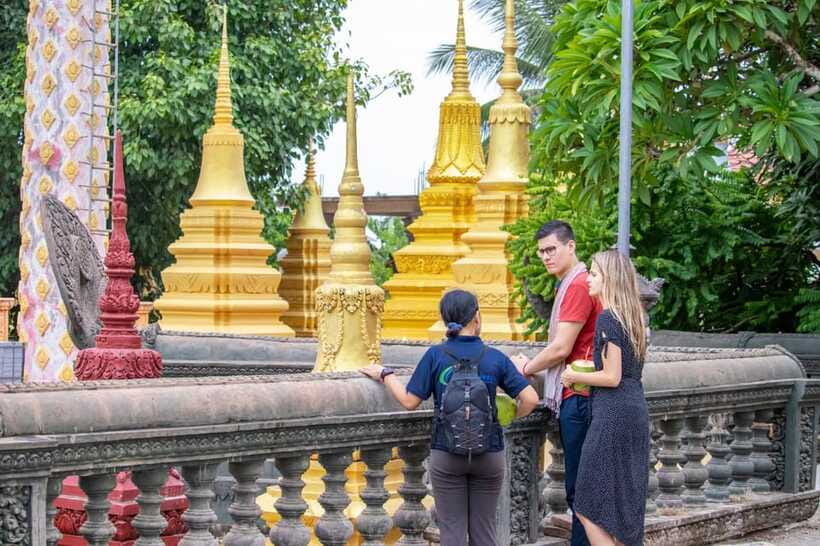
Your pickup begins in Krong Siem Reap, with transport from your hotel or another address in the city. You travel by remork, the Cambodian version of a tuk-tuk, to Preah Ang Chek Preah Ang Chorm Shrine near the Royal Residence.
The shrine and its spiritual house are regarded as important sacred places in Siem Reap. Your guide explains the religious meaning of the site and gives you time to look around. This is a useful opening because it introduces the local style of worship before you visit the pagoda later.
You should expect a short visit rather than a long architectural tour. The value here is the setting and the explanation. With a guide, you can ask about the role of the shrine and the way local people use sacred spaces. Without that context, it would be easy to treat the stop as another small temple building and move on.
The Royal Residence area also places the activity firmly in Siem Reap town before the route heads toward the lotus fields and Tonle Sap Lake. That change from town streets to open farm areas gives the outing a pleasant rhythm.
Fried banana and sweet potato from a long-running local business
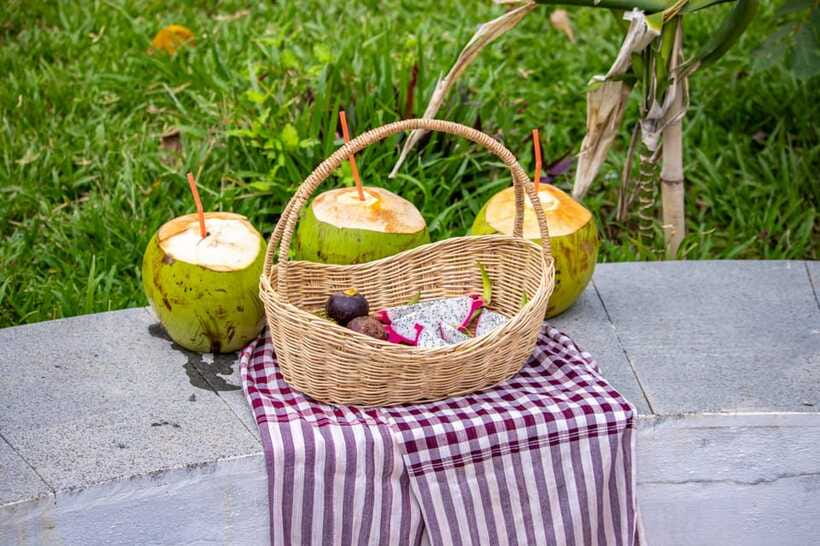
Before reaching the lotus farm, you stop at a well-known fried banana business in Siem Reap. The seller has operated for more than 20 years, and you get to try fried banana and sweet potato as a first snack.
This is a small detail, but it adds plenty to the experience. You are not simply handed a packaged snack by the tour company. You stop at a real local food business and try something simple that people in town have enjoyed for years.
Do not expect a full meal. The food is a light taste rather than lunch, so you may want to eat normally before the tour if you need something substantial. Still, the stop works well because it gives your guide another chance to explain local habits and ingredients while you eat.
Cold water and local snacks are included. Personal expenses are not, so carry some cash if you want to buy more food or other items along the way.
Lotus fields on the road toward Tonle Sap
The route to the lotus farm takes you along roads where lotus ponds can already be seen from the remork. The open views are one of the more restful parts of the outing, especially after time in town.
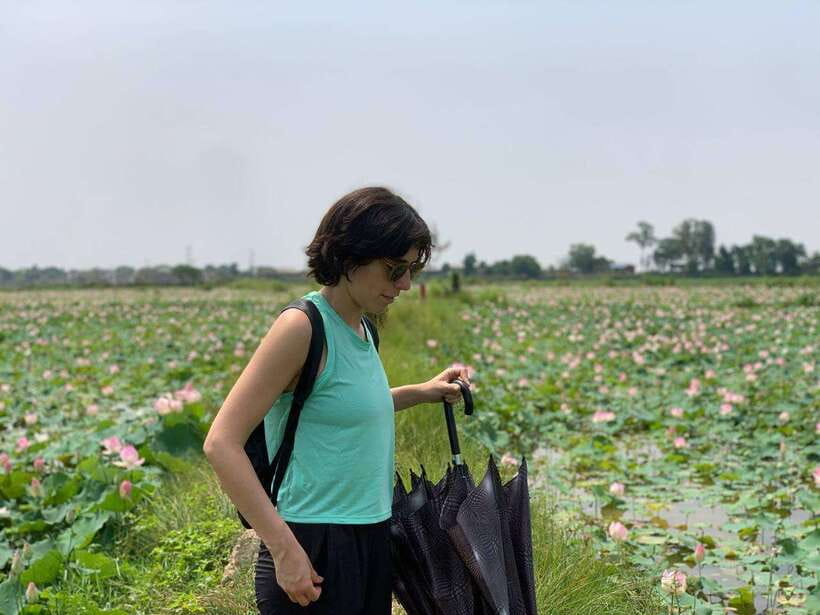
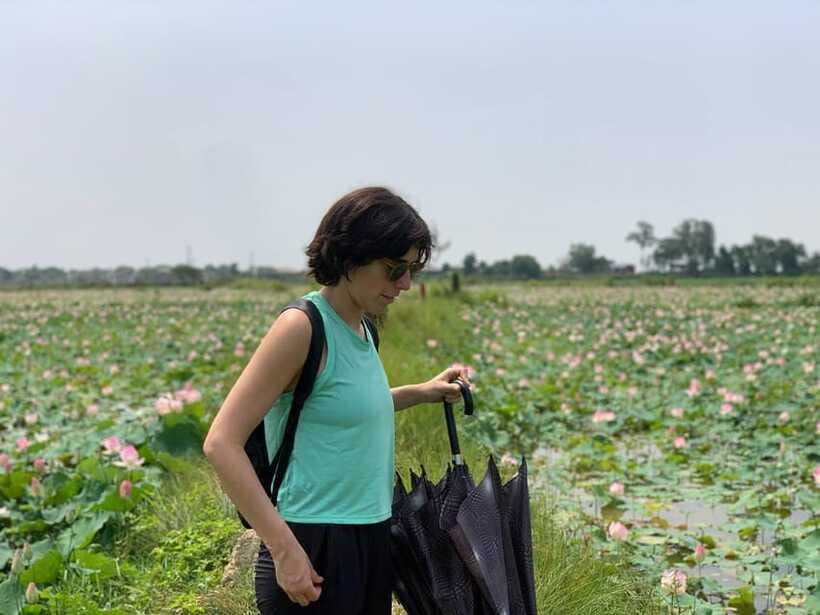
At the farm, your guide explains how lotus flowers are grown, collected, and prepared for sale. You also learn about the supply chain and harvesting methods, then pick some lotus flowers for the monk’s offering. That last step gives the farm visit a clear purpose. You are not only looking at flowers for photographs. You are preparing something you will use later in the ceremony.
The stop is listed as Lotus Silk Farm and Shop, and you have time to walk around with your guide. The supplied details focus on the lotus farming and flower collection, so you should think of this mainly as an agricultural and cultural visit rather than a dedicated silk-production demonstration.
This is also where comfortable clothing helps. You may walk around the farm, and the weather in Siem Reap can be hot. Sunglasses, water, and a camera are sensible additions to your small day bag.
Same countryside, another kind of harvest:
- Lotus Silk Farm: Discover Learn and Experiment the Lotus Flower
★ 5.0 · 45 reviews - Siem Reap: Silk Farm & Countryside Offbeat Jeep Tour
★ 4.5 · 11 reviews - Traditional Khmer Water Blessing by Monk and Lotus Farm Visit
★ 5.0 · 10 reviews - Half Day Trip: Silk Farm, Satcha, and Senteur d’Angkor Tour
★ 4.7 · 10 reviews
Learning how a Cambodian pagoda works
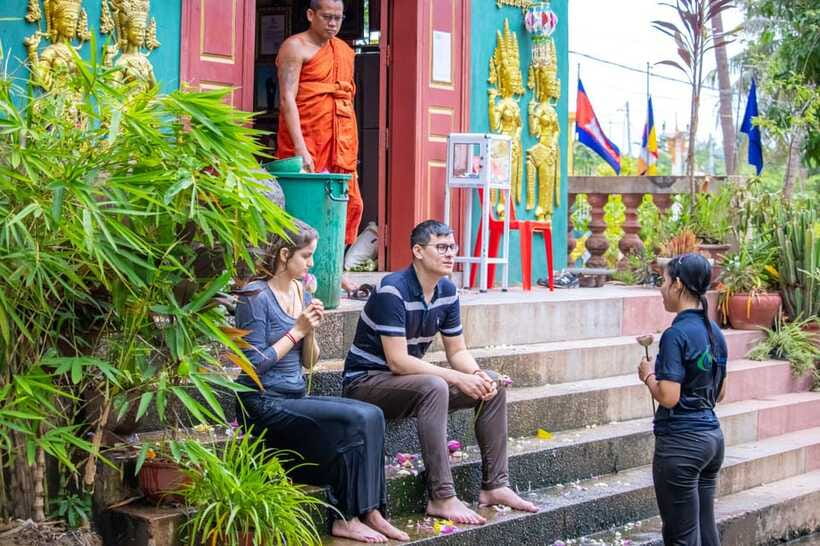
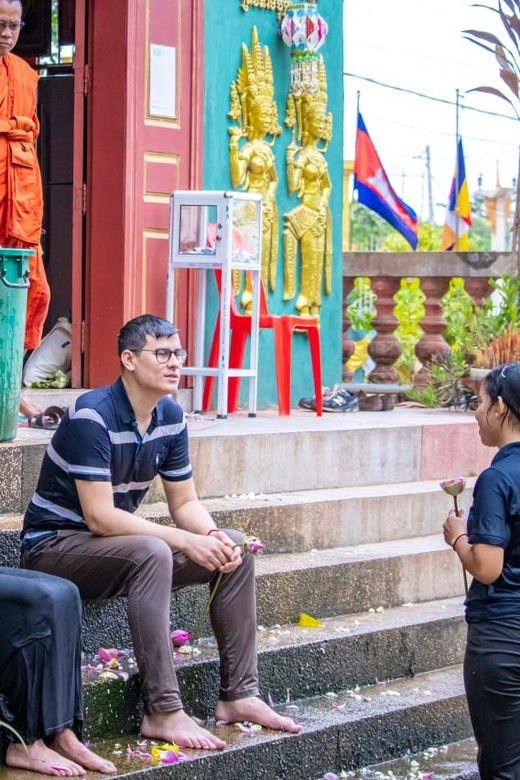
The final major stop is Wat Po Banteaychey, a local pagoda where the blessing takes place. Before the ceremony, your guide explains Buddhist beliefs, the role of a pagoda, and the activities that take place there.
That introduction is one of the strongest parts of the tour. A pagoda is not only a place where a monk conducts a ceremony. It is also a religious and community space, and your guide helps you understand its structure and purpose. You can ask questions as you walk around, rather than trying to guess what each part means.
The tone is intended to be respectful and educational. Wear comfortable clothing that is suitable for a religious site, and follow your guide’s instructions about where to walk, sit, and place the flowers. If you have questions about Buddhist practice or the ceremony, this is the best point to ask them.
The pagoda visit lasts about an hour, including the explanation, blessing, changing of clothes, and time to walk around the grounds. That gives the stop more breathing room than a quick temple photo stop.
What happens during the monk’s water blessing
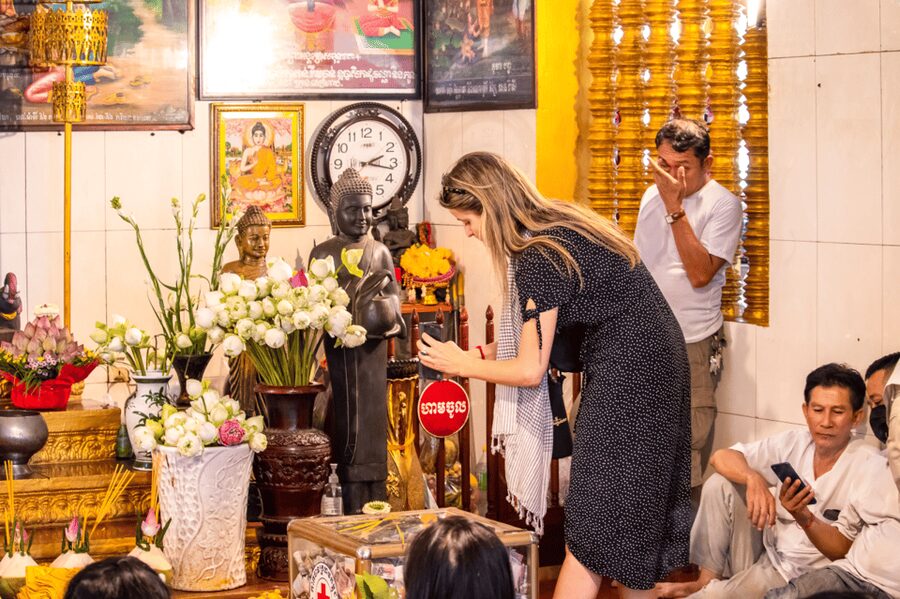
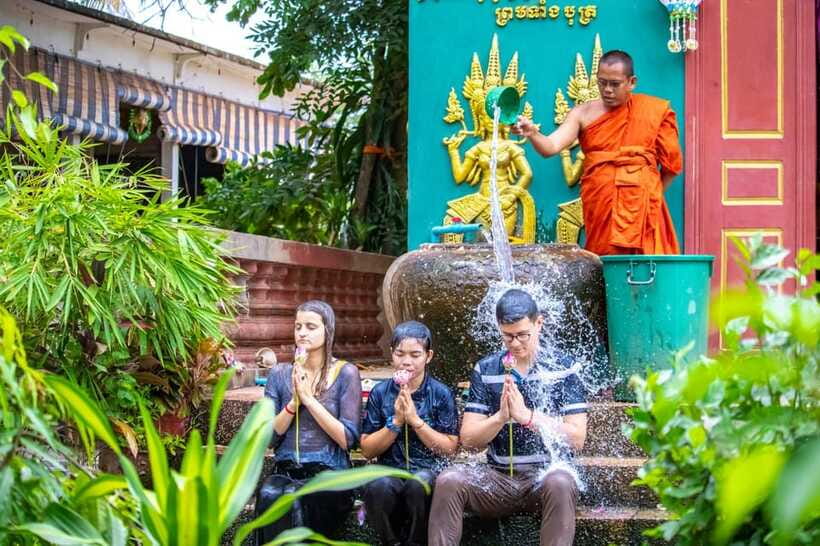
The ceremony is the heart of the experience. You bring the lotus flowers from the farm, make the offering, and receive a blessing from a monk. Water is used during the ritual, and you should expect to be completely wet.
That detail deserves more emphasis than it usually gets. Wear clothes that can become soaked, and pack dry clothes and a towel in a small bag. A camera or phone should be protected during the ceremony. Afterward, you have time to change before continuing around the pagoda.
You also receive a red ritual bracelet. The bracelet is a physical reminder of the blessing and makes a meaningful keepsake, but the ceremony itself is the main point. You are being introduced to a Buddhist practice in a local religious setting, not simply collecting a souvenir.
The conversation with the monk can be especially meaningful. One account describes the exchange as moving and inspiring, while another highlights the help given during the ritual when it was not clear what to do. That is why having a guide matters. You do not need to know every custom in advance, and you are not left to work out the ceremony alone.
Keep your expectations respectful. The blessing is not an entertainment show, and the pagoda is an active religious place. Listen carefully, follow instructions, and avoid treating the ritual as a chance to make noise or rush through photographs.
The guide can make or break the experience
This tour depends heavily on the guide. The stops themselves are pleasant, but the explanations connect them. A strong guide turns a shrine, snack stop, farm, and pagoda into one clear story about Siem Reap life.
Sarath is specifically praised for making the outing friendly and enjoyable while sharing plenty of information. Hong is also described as having strong English and giving useful explanations about Cambodian history and local life. Guides and tuk-tuk drivers have included women, which some visitors may appreciate, especially when the ceremony requires patient personal assistance.
The exact guide is not guaranteed in the details provided, so you should not book solely on the assumption that Sarath or Hong will lead your departure. Still, their names give you a sense of the style to expect: direct explanations, friendly conversation, and help with local customs.
You can ask questions throughout the outing. Use the shrine for questions about local worship, the farm for questions about lotus growing and harvesting, and the pagoda for questions about Buddhist beliefs and temple activities.
Is $55 a fair price?
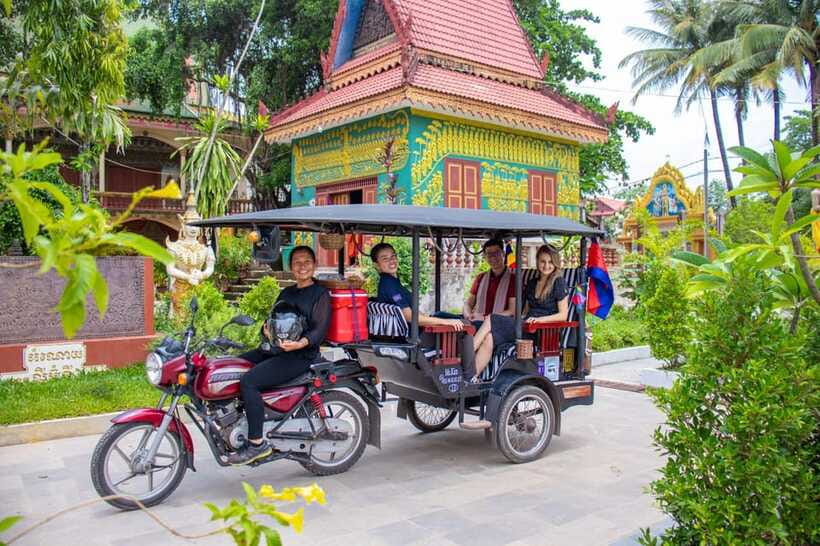
The cost is $55 per person. That includes an English-speaking local guide, remork transport, hotel pickup and return within Siem Reap City, cold water, local snacks, the monk’s offering and donations, and the lotus farm entrance fee.
For a four-hour private-style cultural outing, that package can be good value if you want everything arranged. The price covers several separate pieces: city transport, a food stop, an agricultural visit, temple interpretation, the ceremony, and the practical offering and donation costs.
It is less attractive if your only goal is to receive a blessing. You are paying for the whole route and the guide’s time, not just entry to the pagoda. The outing makes the most sense for you if you want help understanding Cambodian customs and prefer not to arrange transport, flowers, donations, and temple etiquette yourself.
Personal spending is not included. Bring cash for anything extra. The tour also offers reserve-now, pay-later booking and cancellation up to 24 hours before departure for a full refund, which helps if your Siem Reap plans may shift.
Who should book this experience?
I would recommend it to you if you want a cultural activity that is more personal than a standard sightseeing circuit. It suits first-time visitors who want an introduction to Cambodian Buddhism, couples looking for a meaningful shared activity, and solo visitors who appreciate having a guide explain unfamiliar customs.
It is also a good choice after visiting major Angkor sites, when you may want something slower and more connected to present-day local life. The lotus farm and food stop keep the outing from feeling like one long religious visit.
You should think twice if you dislike getting wet, do not want to change clothes during an excursion, or prefer a strictly historical tour. The activity is participatory, and the blessing is not optional decoration. You will need to take part respectfully.
It is not suitable for wheelchair users. The route includes tuk-tuk transport, walking, a farm visit, and movement around a pagoda, so anyone with mobility concerns should check carefully before booking.
What to bring and what to wear
The basic packing list is simple:
- A towel
- A complete change of clothes
- Comfortable clothing suitable for a pagoda
- Sunglasses
- A camera with protection from water
- Cash for personal expenses
The change of clothes is essential, not a suggestion. You will get completely wet during the blessing, so bring dry trousers or a skirt, a dry top, and whatever else you need to feel comfortable afterward.
Pets are not allowed. Pickup is available from hotels and other locations in Siem Reap City, but you need to provide the hotel name and exact address when booking.
Final decision: should you book it?
Book this tour if you want a hands-on cultural experience rather than another pass through a monument. The strongest reasons are the clear route from town shrine to lotus farm to local pagoda, the chance to prepare your own flower offering, and the full water blessing with a monk and red ritual bracelet.
The $55 cost is reasonable when you want transport, interpretation, snacks, donations, and planning handled for you. Just arrive prepared to get soaked, bring dry clothes and a towel, and approach the ceremony with respect. If you do that, this can become one of the more personal and memorable half-day activities in Siem Reap.
FAQ
How long does the Siem Reap water blessing tour last?
The activity lasts four hours. The schedule includes visits to Preah Ang Chek Preah Ang Chorm Shrine, the lotus farm and shop, and Wat Po Banteaychey.
Is hotel pickup included?
Yes. Pickup is included from your hotel or another location in Siem Reap City. You need to provide the hotel name and exact address.
Will I get wet during the monk’s blessing?
Yes. You will get completely wet during the water blessing. Bring a towel and a complete change of clothes.
What is included in the $55 price?
The price includes an English-speaking local guide, remork tuk-tuk transport, cold water, local snacks, the monk’s offering and donations, and the lotus farm entrance fee.
Do I receive anything after the blessing?
Yes. You receive a red ritual bracelet as part of the monk’s blessing.
Is the tour suitable for wheelchair users?
No. The activity is not suitable for wheelchair users.
Can I cancel the booking if my plans change?
Yes. You can cancel up to 24 hours in advance for a full refund. You can also reserve now and pay later.
Newly listed farm visits around Siem Reap
- Full Day Siem Reap Farm Tour with Cooking Class and Monk Blessing★ 5.0 · 6 reviews
- Traditional Khmer Water Blessing by Monk and Lotus Farm Visit★ 5.0 · 10 reviews
- Tuk Tuk Journey: Exploring Rural Life and Silk Farm Craftsmanship★ 5.0 · 4 reviews
- Siem Reap: Silk Farm & Countryside Offbeat Jeep Tour★ 4.5 · 11 reviews
- Banteay Chhmar Temple & Silk Farm Private Day Trip from Siem Reap★ 5.0 · 6 reviews
- Siem Reap: Scenic Countryside & Silk Farm Jeep Tour★ 5.0 · 2 reviews
- Half Day Trip: Silk Farm, Satcha, and Senteur d’Angkor Tour★ 4.7 · 10 reviews
- Half-Day: Silk Farm, Senteur Angkor, and Satcha Workshop★ 4.6 · 7 reviews
Cambodia Farm Tours, compared.
Siem Reap Lotus Silk Farm Discovery tour & Lake experience
Read our review →
Pepper Farm Tour, Salt Field, Cave & Secret Lake
Read our review →
Full-day Countryside Tour with Pepper Farm and Kep
Read our review →
Tuk Tuk Trip to Pepper Farm, Kep, Crab Market & More
Read our review →
Kampot Countryside include Pepper farm, Salt field & Lake
Read our review →
KAMPOT TRAVEL-Pepper farm. Cave.Secret lake-Crab market & Salt…
Read our review →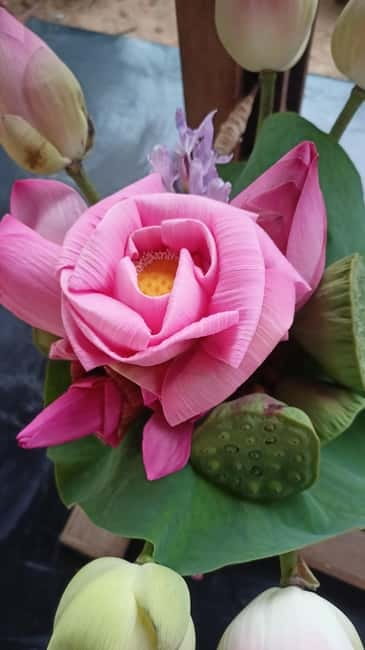
Kampot’s Countryside & Kayak Tour, Pepper Farm include Lunch
Read our review →Browse the lists this tour appears in